
Issue 59
Aug 2026
INSIGHTS
BY PROFESSOR IVO VLAEV AND PROFESSOR NICK SEVDALIS, BEHAVIOURAL AND IMPLEMENTATION SCIENCE INTERVENTIONS IN HEALTHCARE, NUS YONG LOO LIN SCHOOL OF MEDICINE
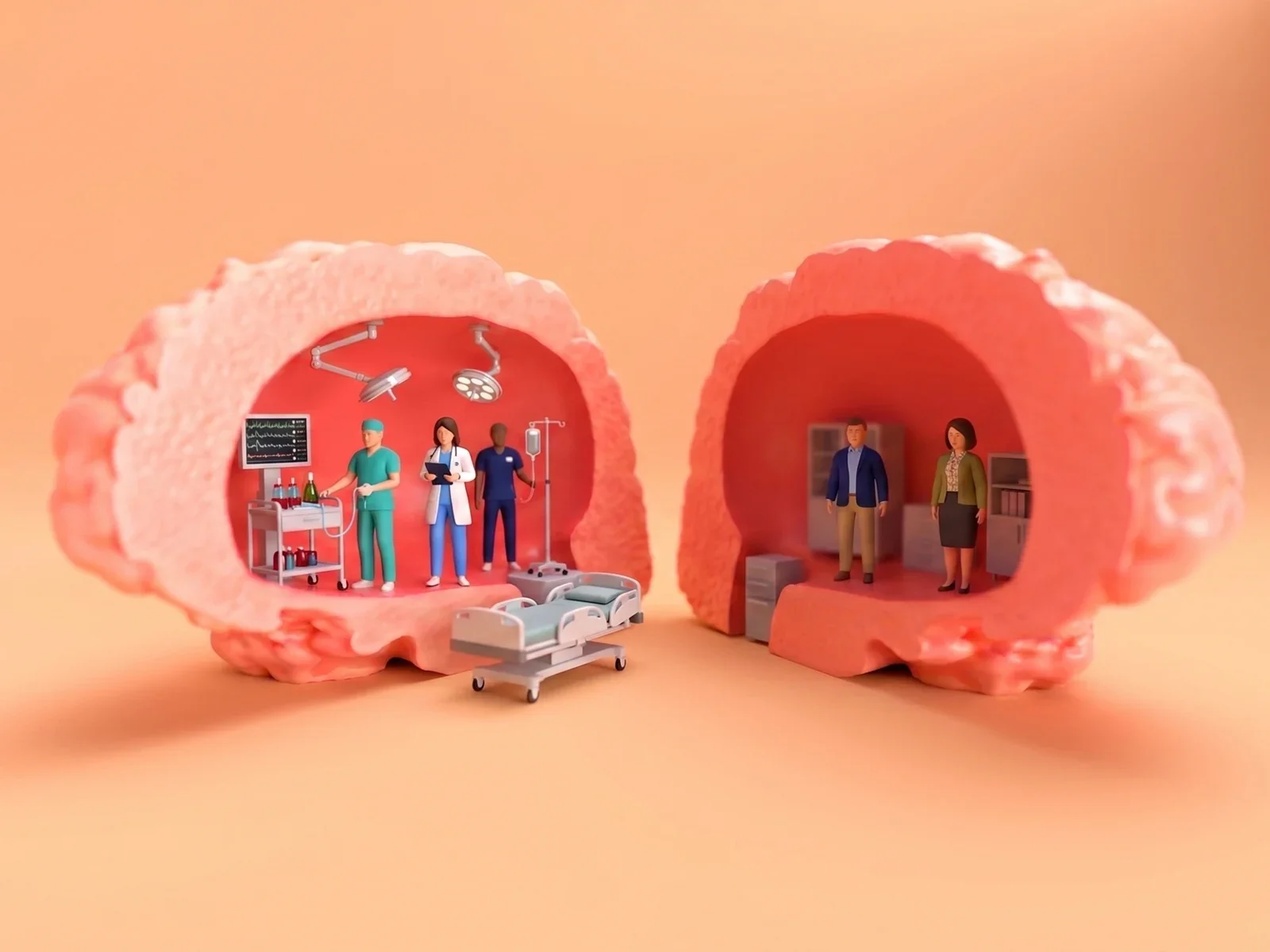
Why behavioural and implementation science could bring about better healthcare.
Every now and then, headlines announce the next advancement in healthcare: a revolutionary Artificial Intelligence (AI) tool, a new drug, or a policy set to transform patient care. Collectively, these medical innovations have allowed humanity to achieve an unprecedented level of health.
But here’s a lesser-known reality: many proven healthcare innovations take an average of 17 years to become part of routine clinical practice. In other words, even after scientists discover something that works, patients may wait nearly two decades before benefitting.
Why does this happen?
The answer lies in what we could call healthcare’s “last mile” problem—the difficult journey between scientific discovery and real-world implementation.
The hidden complexity of healthcare
Anyone who has interacted with the healthcare system knows how complex it can be. Even a simple hospital visit involves a carefully coordinated network of clinicians, pharmacists, administrators, scheduling systems, insurers and financing structures. Every part depends on another.
Now imagine introducing a brand-new technology or clinical process into this delicate system.
Even if research strongly supports the innovation, healthcare professionals still need to adopt it. Hospitals must reorganise workflows. Patients may need to change long‐standing habits. Administrators must consider budgets, staffing and training. A change in one area can ripple across the entire system.
This explains why healthcare innovations often struggle to move from journals and laboratories into everyday medical practice. Scientific evidence alone is rarely enough.
This is where behavioural science and implementation science may help.
Together, these fields pose a crucial question: How can we better understand people and systems so that effective healthcare actually reaches patients faster?
When human behaviour isn’t always obvious
People are complicated. Behavioural science explores how we make decisions—and why we sometimes act in ways that may seem irrational or surprising to others. By combining insights from psychology and economics, behavioural scientists study the mental shortcuts people use when faced with difficult or everyday choices. These shortcuts can often lead to predictable biases and mistakes.
One example comes from Professor Ivo Vlaev, a leading behavioural scientist affiliated with Yong Loo Lin School of Medicine, National University of Singapore (NUS Medicine). Prof Vlaev examined how different incentives could encourage healthier lifestyles. Although governments and public health agencies already promote healthy living through campaigns and regulations, unhealthy eating habits and low levels of physical activity remain common.
In a review of research studies on weight control and exercise, researchers analysed different methods used to motivate people to adopt healthier behaviours. Some approaches rewarded participants through lotteries, while others used “deposit contracts”, where participants would lose money if they failed to meet their goals.
The findings revealed an interesting pattern: people responded most strongly to deposit contracts. In other words, the fear of losing money was often a more powerful motivator than the chance of winning a reward—a behavioural principle known as “loss aversion”. Lottery-based incentives also showed some positive effects, while several other strategies had little impact at all.
The study highlights an important lesson for healthcare policy: understanding human psychology in theory is not enough. Policies are often most effective when they are tested in real-world settings to see how people actually behave, rather than how we assume they will behave. More broadly, behavioural science has shown that even small changes in how choices are structured can significantly influence decision‐making.
Understanding human psychology in theory is not enough. Policies are often most effective when they are tested in real-world settings to see how people actually behave, rather than how we assume they will behave. More broadly, behavioural science has shown that even small changes in how choices are structured can significantly influence decision‐making.
The power of a “nudge”
Another influential idea in behavioural science is the nudge theory—the idea that small, low-cost changes in how choices are presented can significantly influence behaviour.
A well-known healthcare example comes from a 2016 study on antibiotic prescribing. Doctors sometimes prescribe unnecessary antibiotics because patients expect them, even when they are medically inappropriate.
Instead of introducing harsh penalties, researchers tested simple behavioural “nudges”. Doctors were asked to type a short justification whenever prescribing unnecessary antibiotics. They then received monthly emails comparing their prescribing performance with peers.
The results were striking: inappropriate prescribing rates fell dramatically.
These kinds of nudges are already present in Singapore’s public policies. Singapore’s organ donation system, for example, shifted from an “opt-in” to an “opt-out” model in 1987—a subtle change in “choice architecture” that significantly increased participation. Similar behavioural strategies are now being used in schools to encourage healthier eating habits.
Sometimes, changing behaviour does not require massive reforms. Small adjustments can create outsized effects if we identify the right behavioural solution for that individual context.
From evidence to action
While behavioural science focuses heavily on people, implementation science examines systems, organisations and workflows. Its goal is straightforward but ambitious: ensuring that evidence-based healthcare practices are actually used in the real world.
One example was published in The Lancet. The researchers focused on stroke recovery and identified three simple interventions that had already been proven effective:
|
• |
rapid fever management, |
|
• |
swallowing assessments, and |
|
• |
blood sugar control. |
Despite clear evidence and inclusion in medical guidelines, many hospitals still failed to implement these measures consistently.
The problem was not lack of knowledge. It was implementation.
Researchers then designed targeted strategies to overcome barriers. They appointed nurse “champions” to guide staff, created systems to identify implementation problems quickly, and provided regular feedback to clinicians.
The impact was extraordinary. Patients receiving these interventions were significantly more likely to survive years after treatment, while the Australian healthcare system was projected to save hundreds of millions of dollars.
In other words, healthcare breakthroughs are not always about inventing something new. Sometimes, the real challenge is ensuring existing knowledge is used properly.
Combining both behavioural science and implementation science makes for a seamless combination: behavioural science explains how people make decisions, while implementation science explains how evidence-based practices can be embedded into systems and workflows. Together, they address both people and context.
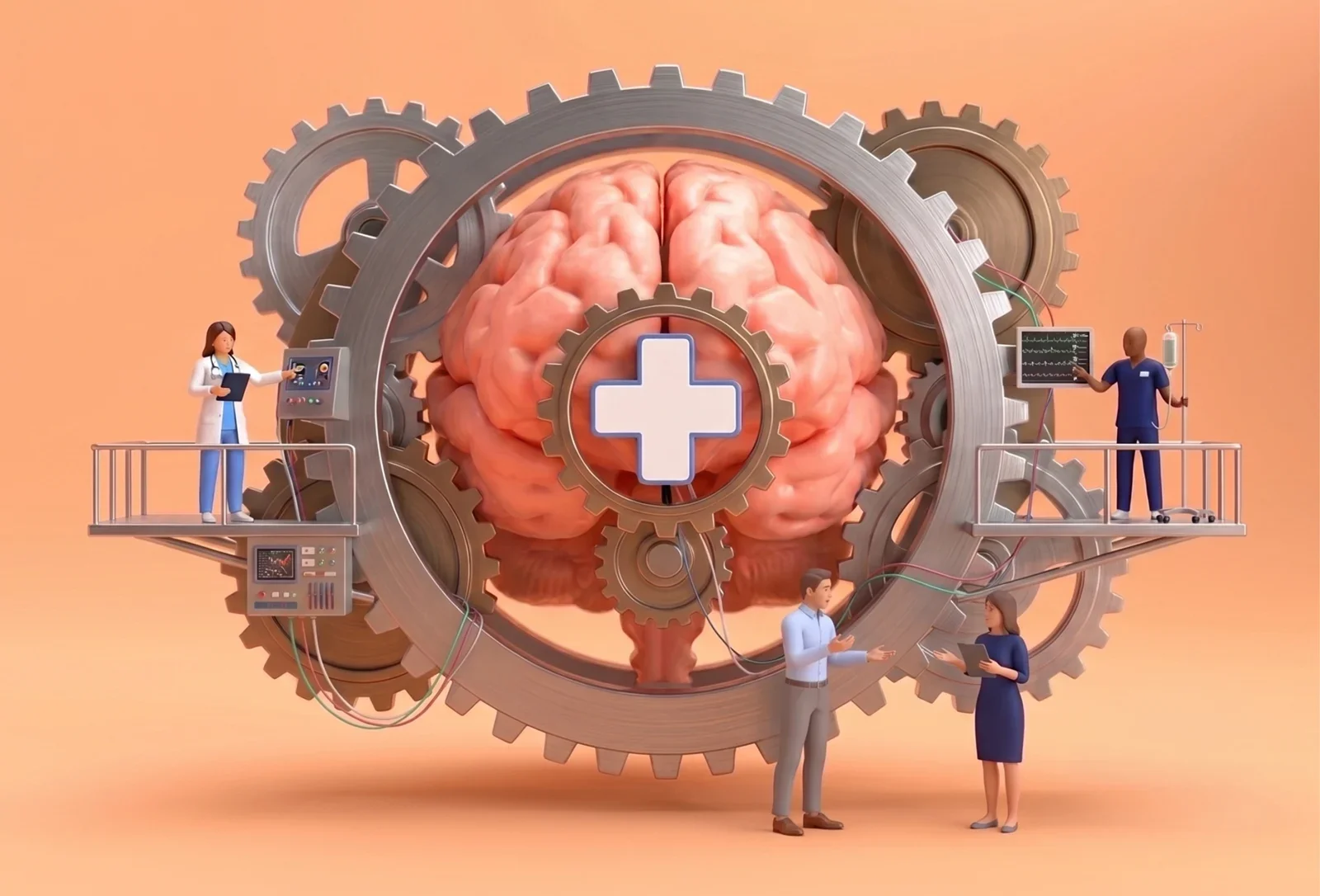
Building behavioural and implementation science in Asia
At the Centre for Behavioural and Implementation Science Interventions (BISI) at NUS Medicine, researchers are working to develop behavioural and implementation science side-by-side with Asian healthcare.
This matters because healthcare systems are deeply shaped by culture, social norms, organisational structures and public attitudes—all of which vary across countries. Strategies developed in Western healthcare systems may not always translate neatly to Asian contexts.
To address this, BISI launched the HIVE initiative, a pan-Asian research collaboration that brings together implementation science researchers across the region to coordinate priorities and share expertise. This builds on work that BISI is already doing within Singapore to help improve healthcare intervention design and implementation, ranging from projects such as NUHS@Home to increasing the rate of health screening.
The initiative will be officially launched at BISHAC 2026—the Behavioural + Implementation Sciences in Health Asia Conference—on 4 September 2026. Led by Prof Nick Sevdalis of NUS Medicine and Professor Yang Qian of Zhejiang University, alongside leading researchers from across Asia, the conference aims to connect clinicians, academics, policymakers and industry leaders, breaking down the silos that often separate different parts of healthcare.
Because ultimately, solving healthcare’s “last mile” problem is not just about better medicine. It is about better collaboration.
The road ahead
Modern medicine has achieved extraordinary things. Yet scientific discovery alone does not save lives. Healthcare only changes when effective interventions successfully reach patients.
Behavioural and implementation science reminds us that behind every policy, treatment and innovation are real people, real systems and real-world complexities.
If healthcare is to move faster, smarter and more equitably in the future, understanding human behaviour and systems may be just as important as developing new technologies.
More from this issue