57.4%
of children aged eight to nine and
82.6%
of those aged 10 to 13 had used AI tools

Issue 59
Aug 2026
DOSSIER
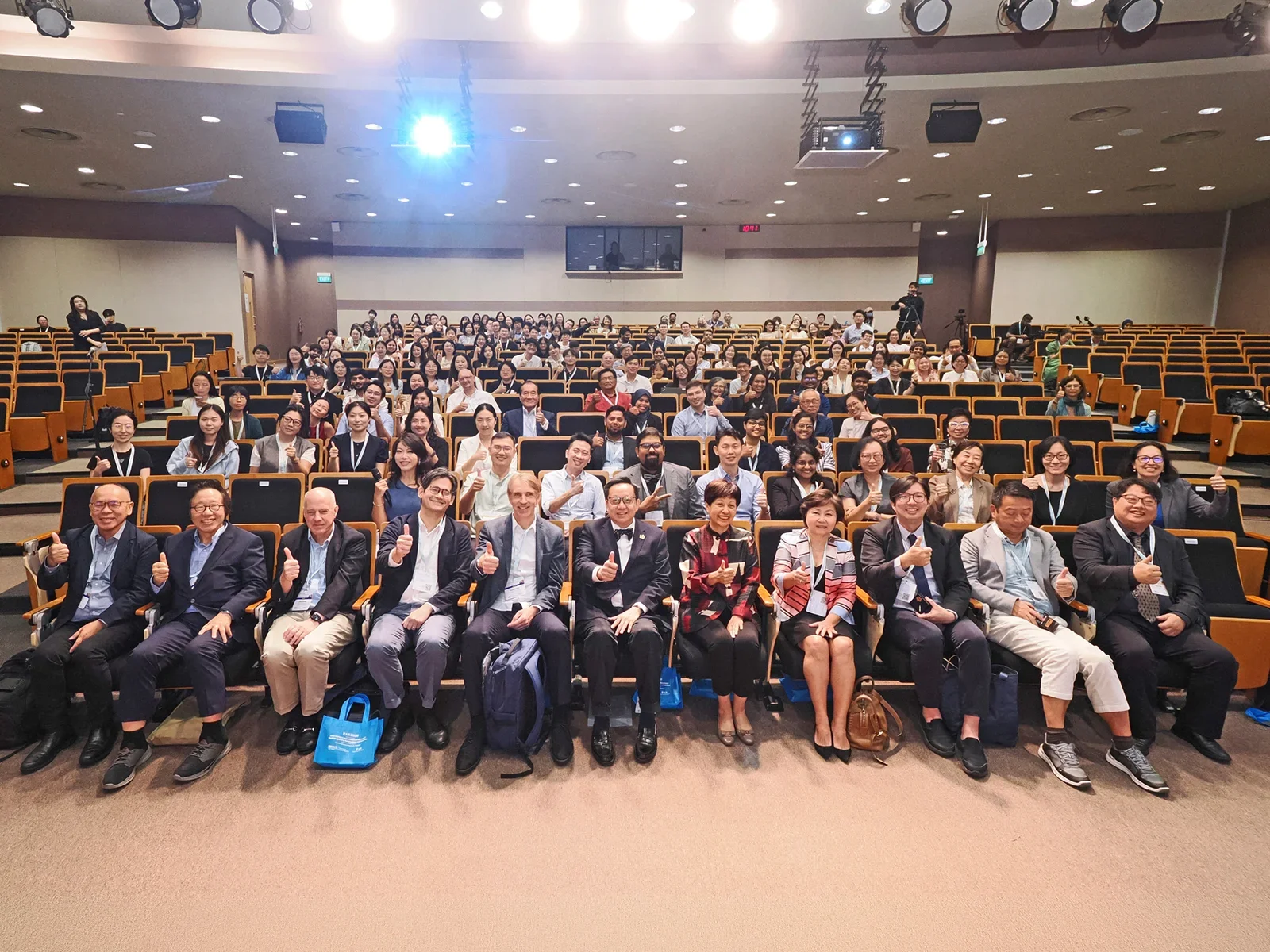
As Singapore grapples with one of the world’s lowest fertility rates, new studies presented at the Population Association of Singapore (PAS) 2026 Annual Conference jointly organised by the Yong Loo Lin School of Medicine, National University of Singapore (NUS Medicine) and PAS are shedding light on what modern families need to thrive and what policymakers, employers and society can do to better support them.
The three studies using nationally representative data from the Singapore Longitudinal Early Development Study (SG-LEADS) led by Professor Jean Yeung Wei-Jun from the Department of Paediatrics at NUS Medicine, President of the PAS, and Director of Social Sciences at the Agency for Science, Technology and Research Institute for Human Development and Potential (A*STAR IHDP), alongside researchers from A*STAR IHDP offered fresh insights into how modern family life is evolving in Singapore.

The first study suggests that Singapore’s relatively short two‐week paternity leave has little effect on couples having more children. More substantive change such as increasing paternity leave duration and shifting gender norms is critical. The second study found that children who received non‐parental care within their first 18 months showed higher achievement during their preschool years, but also found that parenting stress may increase the risk of behavioural challenges among children who experienced non‐parental care during infancy. Late entry into infant care and extended hours in care were also identified as additional risk factors. Lead researchers for these two studies called for more substantive change to better support parents through flexible work arrangements, accessible childcare, better work conditions and training for infant care providers, early childhood intervention and a broader cultural shift towards shared parenting.
The third study examining children’s use of artificial intelligence (AI) tools found that 57.4% of children aged eight to nine and 82.6% of those aged 10 to 13 had used AI tools. Researchers who led the study highlighted the need for guidance as well as the need to pay closer attention to how young children are engaging with AI.
Key insights from this conference will shape a joint white paper on fertility and human development by NUS Medicine and PAS. The paper, which will provide actionable policy and implementation recommendations, will be shared with Ms Indranee Rajah, Minister in the Prime Minister’s Office and Second Minister for Finance and National Development and the newly formed Marriage and Parent Reset Workgroup. The minister graced the event as Guest‐of‐Honour.
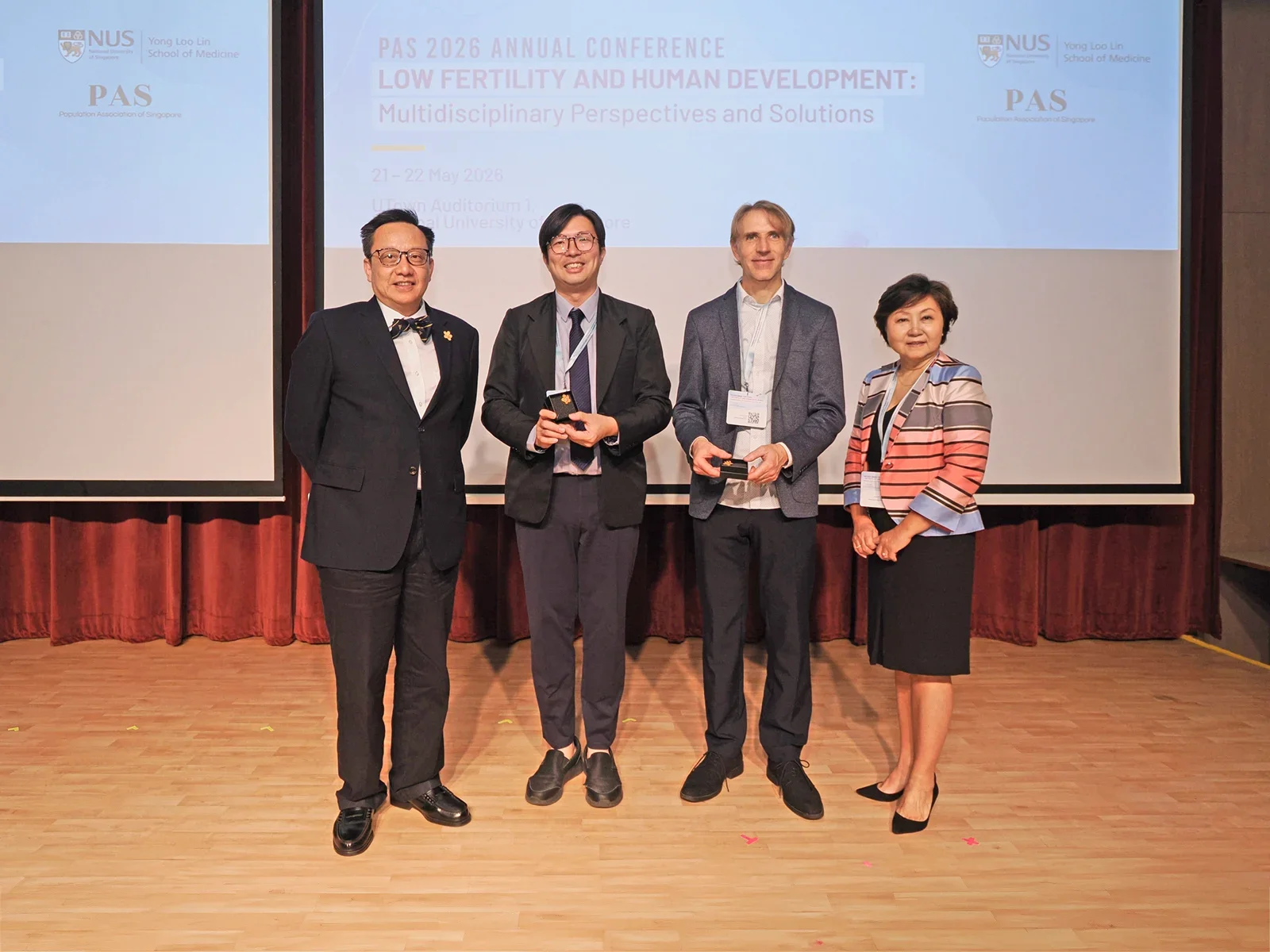
(From left to right) NUS Medicine Dean Prof Chong Yap Seng; Adj Asst Prof Huang Zhongwei, Deputy Director at the NUS Bia-Echo ACRLE; Mr Thomas Sobotka, Deputy Director of the Vienna Institute of Demography; Prof Jean Yeung Wei-Jun, Department of Paediatrics, NUS Medicine.
Family formation is not just a demographic goal, it can also be a pathway to healthy longevity. The evidence base suggests stable partnerships and co-residence correlate with longer life. The marriage-longevity association is robust across over 140 years of research across multiple countries although the protective effect is modulated by gender and relationship quality. This is the same for parenthood.”
In his remarks, Professor Chong Yap Seng, Dean of NUS Medicine underscored the need to look at marriage and parenthood as enablers of healthy longevity. He highlighted the large body of evidence which suggests that stable partnerships and co-residence correlate with longer life, whereby married individuals consistently show longer life expectancy than unmarried counterparts, as well as registry studies that consistently show that parents tend to live longer than childless individuals.
“Family formation is not just a demographic goal, it can also be a pathway to healthy longevity. The evidence base suggests stable partnerships and co-residence correlate with longer life. The marriage-longevity association is robust across over 140 years of research across multiple countries although the protective effect is modulated by gender and relationship quality. This is the same for parenthood.”
Adjunct Assistant Professor Huang Zhongwei, Deputy Director at the NUS Bia-Echo Asia Centre for Reproductive Longevity and Equality (ACRLE) delivered a keynote on tackling biological causes of low fertility in Asia and underscored the need for better translation of fertility biology into policy and care pathways. “Reproductive health and biology matter more than we think. Earlier fertility awareness, earlier assessment, and timely preconception care can help individuals make more informed decisions and seek support sooner.”
Click here to learn more about the new studies.
More from this issue
LIFE, FULL OF YEARS
Biological Determinants of Low Total Fertility Rates: The Asian Perspective

SCIENCE OF LIFE
Rising Stars Take the Stage