Master of Science in Human Potential and Performance (MSc HPP)
Scientific Approaches in Maximising Human Potential and Performance
Overview
The Master of Science in Human Potential and Performance (MSc HPP) at the NUS Yong Loo Lin School of Medicine is a postgraduate programme available full-time (1 year) or part-time (2 years). The MSc HPP is distinguished by its integration of applied neuroscience, performance psychology and applied physiology to address the growing demand for strategies to maximise human potential in the workforce. It is aligned with the RIE2025 priorities under the Human Potential domain, focusing on enhancing learning capacity and productivity in adulthood.
The programme offers a unique curriculum that combines theoretical foundations with practical, real-world applications. It emphasises on practical strategies to maximise human potential, including learning more effectively through neuroscience, enhancing health and fitness while adapting to challenging environments through physiology, and achieving peak performance through psychology for working professionals. The interdisciplinary nature of the programme bridges the gap between cognitive function, physical performance, and overall well-being, providing graduates with a comprehensive understanding of how these areas interact.
- Build knowledge and skills to maximise human potential and performance through the application of physiological, psychological, and neuroscientific principles.
- Apply physiological, psychological, and neuroscientific principles in diverse settings such as education, human resource, clinical environments, military, sports, and wellness.
- Understand the science behind performance to design and implement evidence-based strategies that improve both mental and physical capabilities.
- Develop the expertise to support high-performing individuals, such as professionals, leaders, military personnel, and elite athletes, in ehancing their learning, adaptation, and performance in today’s fast-changing world.
1 Year (Full-time)
2 Years (Part-time)
1 November 2025
28 February 2026
15 April 2026
Ideal candidates for the programme
- Graduates in sports science, life sciences, psychology, medicine, or healthcare who want to deepen their expertise in human performance.
- Coaches, trainers, and consultants in high-performance industries looking to apply neuroscience, psychology, and physiology in practice.
- Military, tactical, or emergency service professionals seeking to enhance physical and cognitive performance under pressure.
- Educators and technologists interested in applying science-backed strategies to improve learning, recovery, or performance.
- Aspiring researchers and academics in fields related to human potential and performance.
- Sports science, life sciences, psychology, medical, and healthcare graduates who want to deepen their knowledge in neuroscience, physiology, and psychology to enhance human physical and cognitive performance.
- Coaches, trainers, and performance consultants in high-performance environments (e.g. sports, performing arts, corporate) seeking to improve training techniques and optimise outcomes using scientific principles.
- Healthcare professionals (e.g. psychologists, physiotherapists, occupational therapists) seeking to expand their expertise and apply this knowledge to patient recovery and performance optimisation.
- Military, law enforcement, or emergency service professionals who want to enhance performance under stress, improve recovery, and build resilience.
- Educators, therapists, and technologists interested in using neuroscience, psychology, and data to improve learning, recovery, or performance.
- Aspiring researchers and academics in fields related to human potential and performance, such as sports science, applied neuroscience, psychology, and education.
Graduates can pursue careers in roles such as:
- Administrators and Policy Makers Related to Human Development
- Athletic Coaches and Trainers
- Consultants, Trainers, Facilitators Related to Human Development
- Key Personnels in Healthcare, Wellness and Performance Industry
- Military Performance Coaches and Consultants
- Performance Coaches, Life Coaches and Consultants
- Sport Scientists
- Sports Technologists
- Teachers, Educators, Researchers, Academics
Programme Faculty
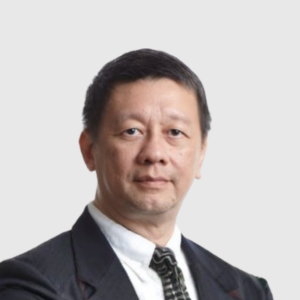
Prof John Wang Chee Keng
Programme Director
MSc in Human Potential and Performance (HPP)
NUS Yong Loo Lin School of Medicine
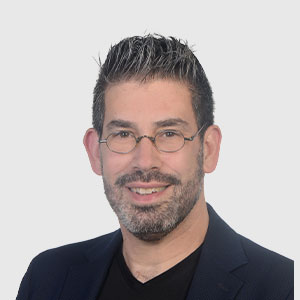
A/Prof Jason Kai Wei Lee
Co-Programme Director
MSc in Human Potential and Performance (HPP)
NUS Yong Loo Lin School of Medicine
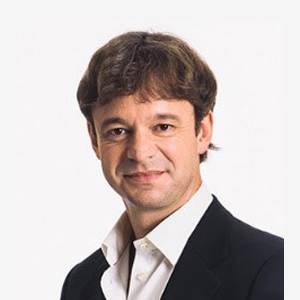
Dr Ivan Low Cherh Chiet
Specialisation Lead (Applied Physiology)
MSc in Human Potential and Performance (HPP)
NUS Yong Loo Lin School of Medicine
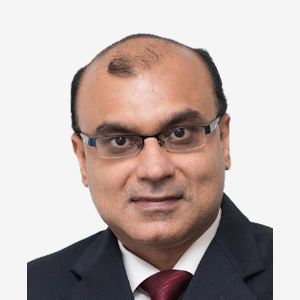
A/Prof Ajay Sriram Mathuru
Specialisation Lead (Applied Neuroscience)
MSc in Human Potential and Performance (HPP)
NUS Yong Loo Lin School of Medicine
A/Prof Yap Suen Mei, Celestial Therese
Specialisation Lead (Performance Psychology)
MSc in Human Potential and Performance (HPP)
NUS Yong Loo Lin School of Medicine
A/Prof Sanjay Khanna
Associate Professor
Department of Physiology
NUS Yong Loo Lin School of Medicine
A/Prof Ling Shuo-Chien
Associate Professor
Department of Physiology
NUS Yong Loo Lin School of Medicine
A/Prof Saji Kumar Sreedharan
Associate Professor
Department of Physiology
NUS Yong Loo Lin School of Medicine
Asst/Prof John Chua Jia En
Assistant Professor
Department of Physiology
NUS Yong Loo Lin School of Medicine
Asst/Prof Andrew Tan Yong-Yi
Assistant Professor
Department of Physiology
NUS Yong Loo Lin School of Medicine
Dr Ira Agrawal
Instructor
Department of Physiology
NUS Yong Loo Lin School of Medicine
Dr Noof Abdullah Saad Shaif
Instructor
Department of Physiology
NUS Yong Loo Lin School of Medicine
Prof John Wang Chee Keng
Programme Director
MSc in Human Potential and Performance (HPP)
NUS Yong Loo Lin School of Medicine
A/Prof Jason Kai Wei Lee
Co-Programme Director
MSc in Human Potential and Performance (HPP)
NUS Yong Loo Lin School of Medicine
Dr Ivan Low Cherh Chiet
Specialisation Lead (Applied Physiology)
MSc in Human Potential and Performance (HPP)
NUS Yong Loo Lin School of Medicine
A/Prof Ajay Sriram Mathuru
Specialisation Lead (Applied Neuroscience)
MSc in Human Potential and Performance (HPP)
NUS Yong Loo Lin School of Medicine
A/Prof Yap Suen Mei, Celestial Therese
Specialisation Lead (Performance Psychology)
MSc in Human Potential and Performance (HPP)
NUS Yong Loo Lin School of Medicine
A/Prof Sanjay Khanna
Associate Professor
Department of Physiology
NUS Yong Loo Lin School of Medicine
A/Prof Ling Shuo-Chien
Associate Professor
Department of Physiology
NUS Yong Loo Lin School of Medicine
A/Prof Saji Kumar Sreedharan
Associate Professor
Department of Physiology
NUS Yong Loo Lin School of Medicine
Asst/Prof John Chua Jia En
Assistant Professor
Department of Physiology
NUS Yong Loo Lin School of Medicine
Asst/Prof Andrew Tan Yong-Yi
Assistant Professor
Department of Physiology
NUS Yong Loo Lin School of Medicine
Dr Ira Agrawal
Instructor
Department of Physiology
NUS Yong Loo Lin School of Medicine
Dr Noof Abdullah Saad Shaif
Instructor
Department of Physiology
NUS Yong Loo Lin School of Medicine
Graduation Requirements
Total Units Required: 40 Units
To graduate, students have to:
Complete 5 core courses (20 Units)
-
- HPP5001 Applied Neuroscience and Brain Health
- HPP5002 Biopsychosocial Strategies for Mental Health and Performance
- HPP5003 Sleep for Human Performance
- HPP5004 Nutritional Physiology for Health and Performance
- HPP5005 Quantitative Methods in Human Potential and Performance Research
+ Complete 5 elective courses to graduate with a specialisation (20 Units)
- Complete 2 compulsory elective courses from your chosen specialisation (8 Units)
- Complete 1 Master’s Project from your chosen specialisation (4 Units)
- Choose and complete 2 elective courses from other specialisations (8 Units)
A portion of our MSc programme can be taken as a Graduate Certificates (GC) and Graduate Dipoma (GD), allowing you to acquire knowledge and skills pertinent to a specific topic in Human Potential and Performance.
Upon successful completion of each certificate, you will be accredited with units (previously known as Modular Credits) that can be transferred toward the full MSc degree if you choose to complete the programme.
Graduate Certificates (Any 8 Units from below):
-
- HPP5001 Applied Neuroscience and Brain Health (4 Units)
- HPP5002 Biopsychosocial Strategies for Mental Health and Performance (4 Units)
- HPP5003 Sleep for Human Performance (4 Units)
- HPP5004 Nutritional Physiology for Health and Performance (4 Units)
- HPP5005 Quantitative Methods in Human Potential and Performance Research (4 Units)
Graduate Diploma (Any 24 Units from below):
-
- HPP5001 Applied Neuroscience and Brain Health (4 Units)
- HPP5002 Biopsychosocial Strategies for Mental Health and Performance (4 Units)
- HPP5003 Sleep for Human Performance (4 Units)
- HPP5004 Nutritional Physiology for Health and Performance (4 Units)
- HPP5005 Quantitative Methods in Human Potential and Performance Research (4 Units)
- HPP5123 Human Motivation (4 Units)
Please refer HERE for the proposed study plan for full-time and part-time students.
- Full-time students are expected to complete the programme within 12 – 24 months. The maximum candidature is 24 months; excluding Leave of Absence (LOA).
- Part-time students are expected to complete the programme within 24 – 48 months. The maximum candidature is 48 months; excluding Leave of Absence (LOA).
Important:
- Download and read the Applicant Guide to the Graduate Admission System (GDA)
- Review the Checklist for Applicants. Please upload the relevant supporting documents according to the checklist when submitting your online application.
To be eligible for enrolment, applicants must meet the following requirements. However, please note that selection of candidates is based on a competitive basis and candidates with relevant industry experience will be considered favourably. Meeting the minimum requirements does not guarantee admission into the programme.
Minimum Requirements:
- Hold a relevant Bachelor’s degree (preferably a four-year programme with Honours) in any field with subjects related to either psychology, physiology, or neuroscience.
- At least one year working experience if holding a three-year Bachelor’s degree (without Honours).
- Pass an entry interview by the core programme faculty.
- International applicants from non-English speaking universities must demonstrate English proficiency with a minimum TOEFL score of 85 (Internet-based) or a minimum IELTS Academic score of 6.0. All IELTS / TOEFL tests must have been taken not earlier than 3 years before the proposed date of admission.
Tuition Fees:
Total Tuition Fees (for students enrolled in the Academic Year 2026/2027 only): S$58,860 (inclusive of Goods & Services Tax (GST))
The payment schedule is as follows (inclusive of 9% GST):
Full-Time Students
Part-Time Students
S$29,430.00
S$29,430.00
Year 2 Semester 2
–
Acceptance Fee (Including GST):
S$5,000
For more information, please visit the Office of the University Registrar website.
- Application fee for successful submission is S$50 (including GST)
- All Singaporeans and Singapore PRs will receive a 40% tuition fee rebate.
- All NUS alumni will receive a 20% tuition fee rebate.
- Upon acceptance of offer, an acceptance fee of S$5,000.00 (including GST) will be charged on the Graduate Admission System (GDA). Acceptance fees is non-refundable, non-transferable and will be credited towards the tuition fee once the programme starts.
Graduation Requirements
Total Units Required: 40 Units
To graduate, students have to:
Complete 5 core courses (20 Units)
-
- HPP5001 Applied Neuroscience and Brain Health
- HPP5002 Biopsychosocial Strategies for Mental Health and Performance
- HPP5003 Sleep for Human Performance
- HPP5004 Nutritional Physiology for Health and Performance
- HPP5005 Quantitative Methods in Human Potential and Performance Research
+ Complete 5 elective courses to graduate with a specialisation (20 Units)
- Complete 2 compulsory elective courses from your chosen specialisation (8 Units)
- Complete 1 Master’s Project from your chosen specialisation (4 Units)
- Choose and complete 2 elective courses from other specialisations (8 Units)
+ Obtain a Cumulative Average Point (CAP) of 3.00 or above
Relevant Certification Programmes
Graduate Certificates (Any 8 Units from below):
-
- HPP5001 Applied Neuroscience and Brain Health (4 Units)
- HPP5002 Biopsychosocial Strategies for Mental Health and Performance (4 Units)
- HPP5003 Sleep for Human Performance (4 Units)
- HPP5004 Nutritional Physiology for Health and Performance (4 Units)
- HPP5005 Quantitative Methods in Human Potential and Performance Research (4 Units)
Graduate Diploma (Any 24 Units from below):
- HPP5001 Applied Neuroscience and Brain Health (4 Units)
- HPP5002 Biopsychosocial Strategies for Mental Health and Performance (4 Units)
- HPP5003 Sleep for Human Performance (4 Units)
- HPP5004 Nutritional Physiology for Health and Performance (4 Units)
- HPP5005 Quantitative Methods in Human Potential and Performance Research (4 Units)
- HPP5123 Human Motivation (4 Units)
Please refer HERE for the proposed study plan for full-time and part-time students.
- Full-time students are expected to complete the programme within 12 – 24 months. The maximum candidature is 24 months; excluding Leave of Absence (LOA).
- Part-time students are expected to complete the programme within 24 – 48 months. The maximum candidature is 48 months; excluding Leave of Absence (LOA).
Important:
The University does not engage external agencies for student recruitment. Candidates should apply directly to the University and not through any agents. Applications submitted through agents will not receive any added advantage and the University reserves the right to reject such application without explanation.
Only online applications are accepted.
Before submitting your application:
- Download and read the Applicant Guide to the Graduate Admission System (GDA)
- Review the Checklist for Applicants. Please upload the relevant supporting documents according to the checklist when submitting your online application.
To be eligible for enrolment, applicants must meet the following requirements. However, please note that selection of candidates is based on a competitive basis and candidates with relevant industry experience will be considered favourably. Meeting the minimum requirements does not guarantee admission into the programme.
Minimum Requirements:
- Hold a relevant Bachelor’s degree (preferably a four-year programme with Honours) in any field with subjects related to either psychology, physiology, or neuroscience.
- At least one year working experience if holding a three-year Bachelor’s degree (without Honours).
- Pass an entry interview by the core programme faculty.
- International applicants from non-English speaking universities must demonstrate English proficiency with a minimum TOEFL score of 85 (Internet-based) or a minimum IELTS Academic score of 6.0. All IELTS / TOEFL tests must have been taken not earlier than 3 years before the proposed date of admission.
Tuition Fees:
Total Tuition Fees (for students enrolled in the Academic Year 2026/2027 only): S$58,860 (inclusive of Goods & Services Tax (GST))
The payment schedule is as follows (inclusive of 9% GST):
Year 1 Semester 1
Full-Time Students
Part-Time Students
Year 1 Semester 2
Full-Time Students
Part-Time Students
Year 2 Semester 1
Full-Time Students
–
Part-Time Students
Year 2 Semester 2
Full-Time Students
Part Time Students
S$14,715.00
Acceptance Fee (Including GST):
S$5,000
Additional Fee:
Miscellaneous student fees help meet costs incurred by the University in providing services to the student community that are either not covered or only partially covered by the tuition fees. These services include healthcare for students; facilitating student cultural, social and recreational programmes; and maintaining the shuttle bus service, IT network and other essential campus infrastructure and services.
For more information, please visit the Office of the University Registrar website.
- Application fee for successful submission is S$50 (including GST).
- All Singaporeans and Singapore PRs will receive a 40% tuition fee rebate. For more information, please visit the following website here.
- All NUS alumni will receive a 20% tuition fee rebate.
- Tuition fees are subjected to annual review and inflation.
- Upon acceptance of offer, an acceptance fee of S$5,000.00 (including GST) will be charged on the Graduate Admission System (GDA). Acceptance fees is non-refundable, non-transferable and will be credited towards the tuition fee once the programme starts.
Frequently Asked Questions
The official application requires us to submit a documentary proof of financial support in English. What does this refer to? What document can I submit as financial proof?
You may submit a bank statement (original, certified true copy or electronically generated statements will be accepted) OR a certificate of deposit in English issued by the bank as a proof that you (or your parent) have the stated amount in the bank account. If you are not the account holder indicated in the bank statement, attach another document stating your relationship with the account holder.
The financial proof should certify your financial ability to make payment for the Miscellaneous Student Fees (MSFs) and full tuition fees.

What is the maximum candidature?
The MSc in Human Potential and Performance programme is a 1 year, full-time or 2 year part-time 40 units’ degree with 3 specialisations in either Applied Neuroscience, Performance Psychology, or Applied Physiology.
- Full-time students are expected to complete the programme within 12 – 24 months. The maximum candidature is 24 months; excluding Leave of Absence (LOA).

- Part-time students are expected to complete the programme within 24- 48 months. The maximum candidature is 48 months; excluding Leave of Absence (LOA).
What are the continuation and graduation requirements?
Graduate continuation requirements will follow NUS regular Master’s degree by coursework.
To graduate with the degree of MSc HPP, candidates must complete all assignments and/or class participation requirements in all ten courses.
There will be no marks of distinction awarded for the Master’s degree. The best-performing student will receive the Gold Medal for the examination.
Students must meet minimum passing criteria for every assessment component within each module to be considered as having passed that module. Students who fail to meet the minimum passing criteria for any assessment component in the module shall re-take the failed module at the next programme intake.
For continuation of candidature a student must obtain satisfactory progress during his/her candidature (Coursework), i.e., Student will be issued a warning for any semester in which his/her GPA falls below 3.00. If in the following semester, the student’s GPA again falls below 3.00 but is above 2.50, he/she will be placed on probation.
-
- GPA< 1.5 in the first semester of study; or
- GPA< 2.50 for two consecutive semesters of study; or
- GPA< 3.00 for three consecutive semesters of study
Graduation Requirement:
- Read and pass five core courses and five elective courses that are in the course list.
- Obtained a minimum Grade Point Average (GPA) of 3.0 out of 5.0 or equivalently, an average grade of at least B-.
—
To graduate with the Graduate Diploma, candidates must complete all assignments and/or class participation requirements in all six courses.
—
To graduate with the Graduate Certificate, candidates must complete all assignments and/or class participation requirements in the two courses.
Where can I find the list of courses?
Please refer to the programme website under “Curriculum” tab for the full list of courses.
Please refer to NUSMods for more information regarding the courses.
Please note that the courses may only be available once per academic year (AY) and you are to refer to NUSMods or the programme website for more information.
How many courses am I allowed to take per semester?
The maximum workload for full-time and part-time students is 24 Units (6 courses) and 12 Units (3 courses) respectively.
The minimum workload for full-time and part-time students is 20 Units (5 courses) and 8 Units (2 courses) respectively.
Students are highly encouraged to complete their course of study within the maximum candidature or earlier. Please pace and select your course choices across the semesters within the candidature.
Am I allowed to change my choice of specialisation?
How do I register for the courses?
Where can I find the lesson schedule?
Voices That Inspire
I offer my strong and enthusiastic support for the Master's programme in Medical Pharmacology at the NUS Yong Loo Lin School of Medicine. The development of totally new types of courses in pharmacology – interdisciplinary in nature – that explain the entire cycle of development of these new biotherapeutics, ranging from laboratory discoveries through the multiple pre-clinical and clinical development stages…(these) courses are essential to training the new generation of pharmacological scientists who will work in both the industry and academic sectors… should be very attractive to talented students throughout Asia and beyond…"
Harvey F. Lodish
Whitehead Institute for Biomedical Research, Massachusetts Institute of Technology
…I find the concept, the content and the focus of this new course very useful and suitable for the students aiming at a career in the pharmaceutical industry or in a CRO working in respective areas.….”
Prof Dr Jörg Kreuzer