

Researchers from the NUS Alice Lee Centre for Nursing Studies (NUS Nursing) and Mahidol University have come together to develop a mobile application to enhance teen mental health and psychological well-being among secondary school students.
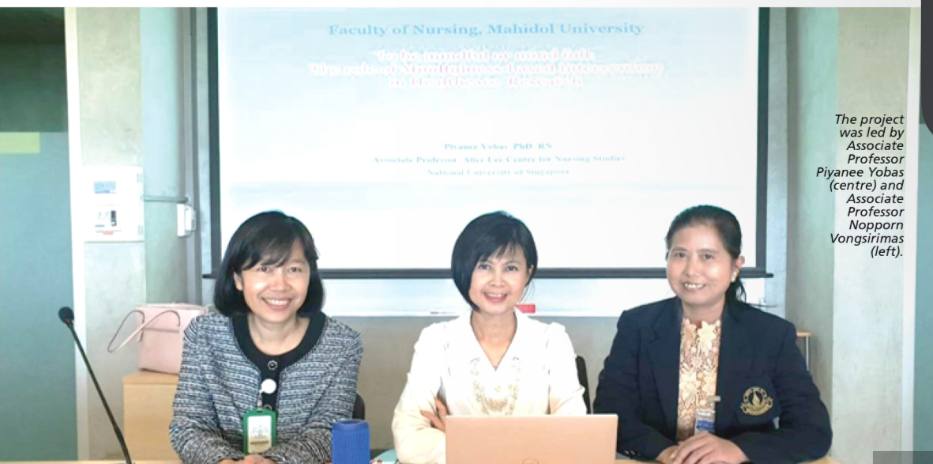
The app was developed as part of a mixed-method research collaboration aiming to investigate factors contributing to the psychological well-being of adolescents as well as discover an effective intervention. The project was led by Associate Professor Piyanee Yobas from NUS Nursing and Associate Professor Nopporn Vongsirimas from Mahidol University’s Faculty of Nursing.
“Adolescents are the future of every nation; however, during the developmental stage, they face physical, emotional and social challenges. The World Health Organization estimates that 10 to 20 per cent of adolescents experience teen mental health problems including anxiety, depression, excessive anger, eating disorders, self-harm and suicides, which impose considerable effects on their well-being,” says A/Prof Yobas.
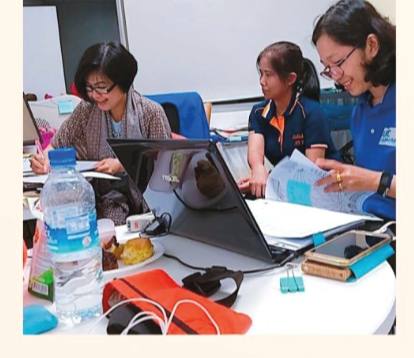
The principal investigator of the first two phases of the project, A/Prof Yobas carried out research to examine factors affecting the psychological well-being of students, their experiences of stress and their management strategies.
STRESS AFFECTS PSYCHOLOGICAL WELL-BEING
A/Prof Yobas and her team of researchers developed a psychological well-being promotion model based on Neuman’s system theory and Eudaimonic psychological well-being theory to serve as a roadmap for their project.
“The model proposes that adolescents who experience stress are more likely to report lower levels of psychological well-being. Additionally, several protective factors minimise stress and similarly, several levels of interventions can be developed to help the young manage stress,” she explains.
Quantitative research was then conducted in different countries to test a hypothesised model of the various protective factors that contribute to psychological well-being in adolescents. “We published our findings in 14 publications, which showed that a combination of resilience, mindfulness, self-efficacy and social support enhanced the psychological well-being of adolescents,” A/Prof Yobas reports.
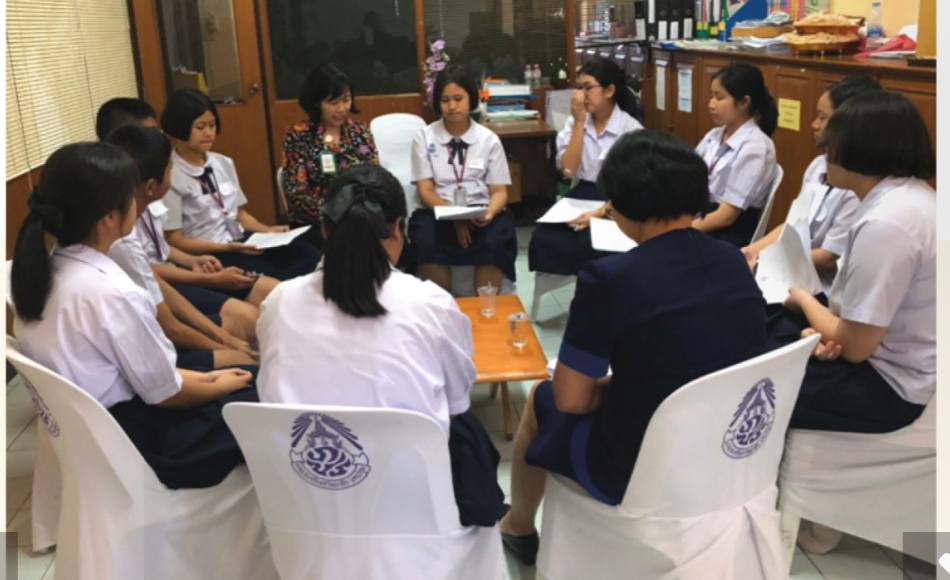
The last phase of data collection centred on qualitative research conducted on baccalaureate nursing students in Singapore to garner their feedback on an eight-week mindfulness intervention programme, and on secondary school students in Thailand to explore their causes of stress and coping styles.
“Two strong themes that emerged from these studies were the need for a school care system and mobile applications to enhance teen mental health,” says A/Prof Yobas. “We also found that academics was a source of stress for Thai students, while support from parents, teachers and friends was a stress management strategy,” she adds.
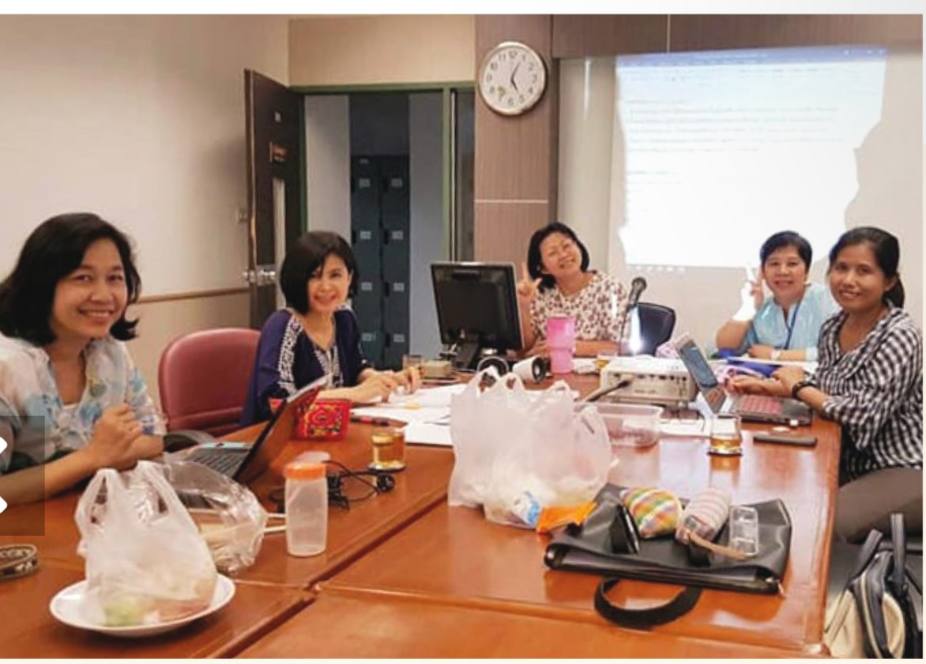
Data from the Singapore-led studies were then used by A/Prof Yobas’ Thai collaborator A/Prof Vongsirimas to guide her team’s development of a mobile app targeted at high school students. Known as the “MU MyMind” program, the app was developed under a grant of 8.6 million Thai baht awarded by the National Research Council of Thailand.
The app seeks to promote mental health and reduce the risk of mental health problems in adolescents through three functions: screening, mental health education, and support. It was developed in collaboration with software engineers from Kasetsart University’s department of computer engineering over the course of a year.
The screening system assesses key indicators established in earlier research using the Psychological Wellbeing Scale, Depression Anxiety Stress Scale-21 and Mindful Attention Awareness Scale. The students are required to complete the three screening tools before and after completing the education component of the app.
The mental health education tool provides an intervention programme through animation videos and practice exercises the students have to complete in stages. These engage users in breathing exercises to release stress, body scan observations, emotional awareness and thought adjustment.
The support notification system sends an alert to students assessed to be in need of help or direct intervention. Users with high scores and depressive symptoms are prompted to contact the research team. Should students choose not to do so, they are given supportive information.
A BOOST TO MENTAL HEALTH
Pilot testing for the app on 48 students aged 12 to 17 over a one-month period showed it was effective in promoting mental health and reducing the risk of mental health problems.
Participants scored higher in mindfulness and psychological well-being scales post-test, with significantly lower depression and anxiety stress scale readings.
Interviews with the students also corroborated the findings. “This program allows us to know about our own emotions. Repeatedly viewing the video clips allows me to process and vocalise my thoughts better, which then helps me to be more conscious of and subsequently curb negative emotions,” says a male student.
A female student says, “I really like the ‘Breathe to Relieve Stress’ session. I share it with my friends and it calms everyone down.”
A/Prof Vongsirimas has since shared the team’s research findings with the school and worked with it to develop a care system featuring the app.
The research team plans to conduct a larger-scale randomised controlled trial before deciding whether the app can be made available in Thailand. A/Prof Yobas reveals
that there are plans for the app to be translated into English and tested on Singaporean adolescents before it is made available to students here.
“This shows that collaborative research is a powerful vehicle in any project,” she adds.
