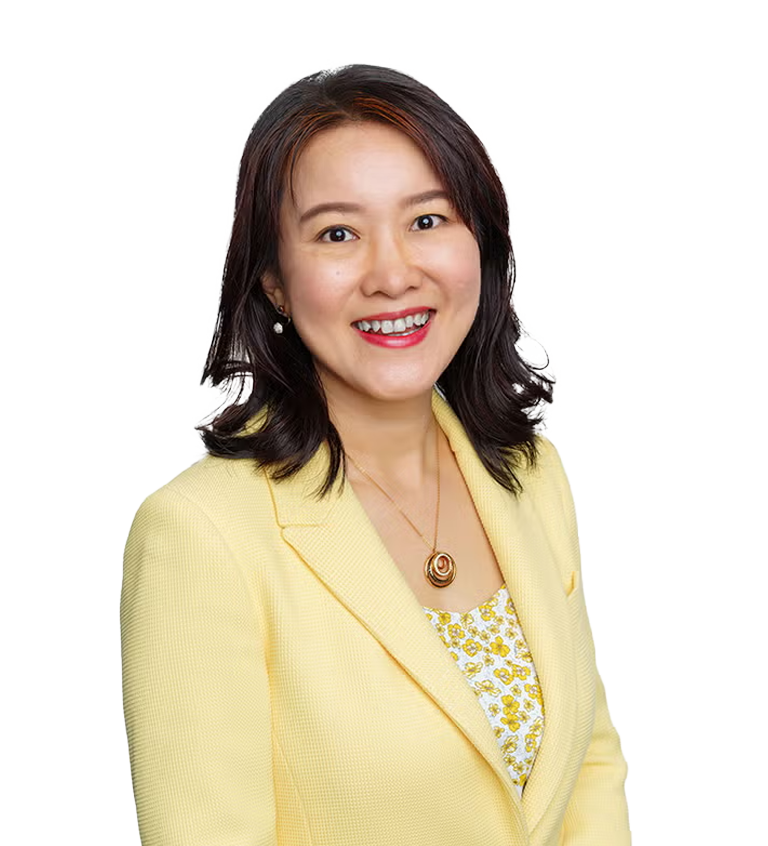


With Singapore’s ageing population, how can we help older adults live not only longer, but better? Assistant Professor Vivien Wu Xi shares what she is doing to develop and implement strategies that support seniors to live their golden years in good health.
Back when she worked in the neuroscience intensive care unit (ICU), Assistant Professor Vivien Wu Xi noticed older adults’ challenges often went beyond their medical and physical conditions. She said, “I had a patient who used to be very independent. But after her stroke, she had to rely on others to move around. I saw first-hand how losing mobility negatively affected her quality of life and deepened her sense of isolation.”
For Dr Wu, that was the spark that set her on the path to researching healthy ageing interventions. “I realised that healthy ageing was more than managing chronic diseases—it was about addressing emotional, cognitive and social challenges so that older adults could live fulfilling and independent lives.”
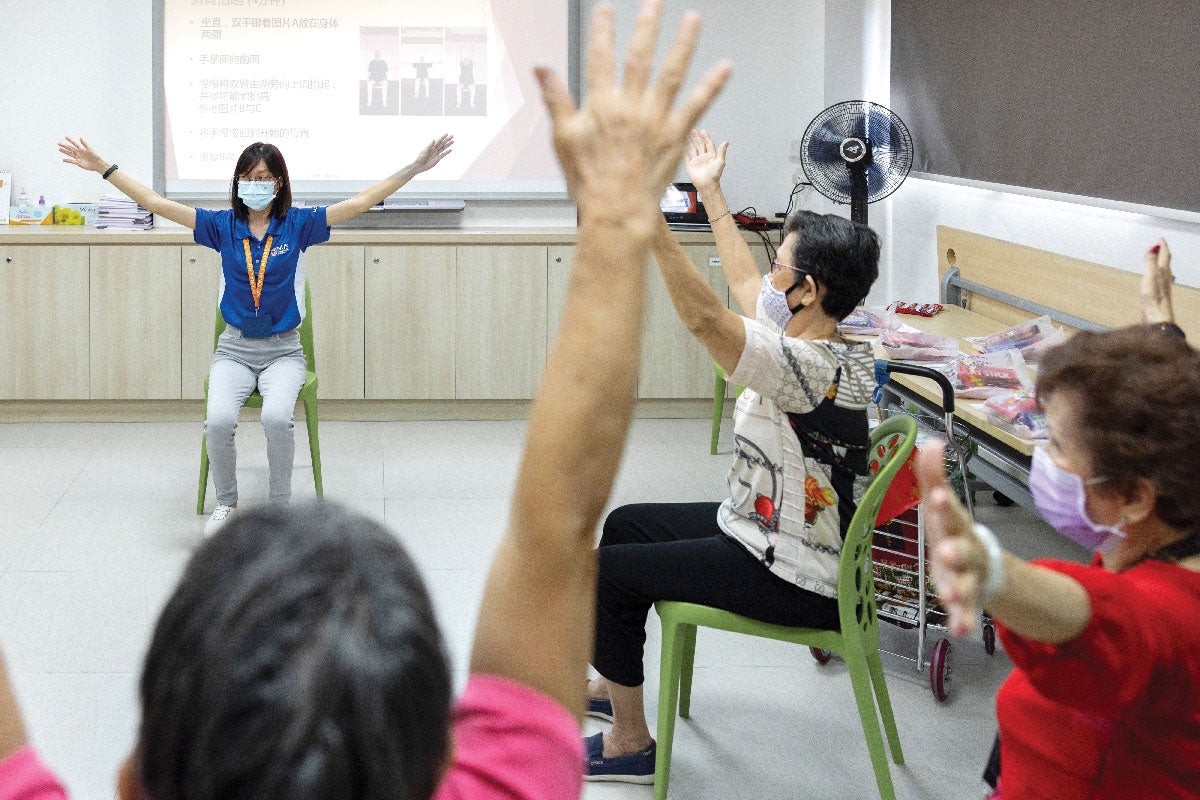
A face-to-face session of Dr Wu’s CeHP for Older Adults with Chronic Diseases.
The Curiosity of Seniors
Over the years, Dr Wu has had the satisfaction of seeing her interventions make a difference. One of which is the Community-Based e-Health Programme (CeHP) for Older Adults with Chronic Diseases, a 12-week programme consisting of both face-to-face sessions led by the research team and use of an accompanying app, Care4Senior.
The project was sparked by a simple question—how can we help older adults stay healthy and independent at home? Dr Wu and her team’s solution: health education, social support system and a touch of technology in the form of a mobile app. Putting their solution to test, the team conducted face-to-face health education sessions to coach older adults on topics such as exercise and diet. Further supplementing these efforts, the team also introduced the Care4Senior app to help them track their health measurements such as blood pressure, as well as access information on how to manage their chronic conditions.
Dr Wu said, “What we realised was that the seniors were keen to manage their health and diet—they were very curious and asked many questions. They also enjoyed having a peer support system with the other seniors during the sessions.” These observations tallied with the positive findings. Dr Wu and her team found that the participants showed improvements in quality of life, blood pressure, cholesterol levels and self-confidence in managing chronic conditions.
At the same time, the conclusion of the project was bittersweet—“Many of them asked when we would return during the last session. Some even made gifts for us. That part of the project may have concluded successfully, but seeing the benefits from this run, we hope to extend similar e-health solutions to more vulnerable older adults in Singapore—particularly those in the lower income groups.”
Dr Wu is currently working on a project in collaboration with Changi General Hospital and Active Ageing Centres to identify older adults at risk of cognitive impairment and frailty, with plans to keep the seniors physically and mentally active through early intervention.
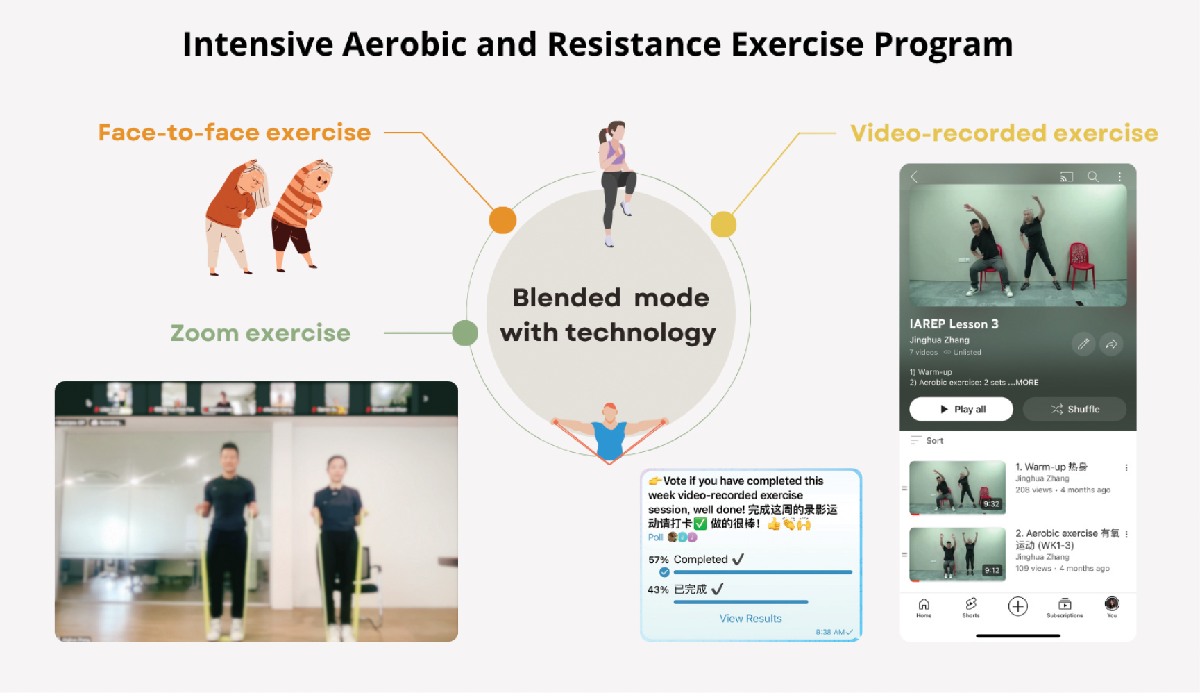
An example of how Dr Wu’s intervention for middle-aged and older adults with Type 2 Diabetes blends face-to-face sessions with digital modes.
The Importance of Gratitude
Today, Dr Wu continues to be driven by the conviction that evidence-based solutions can influence healthcare practice and policy, and importantly—improve the lives of older adults. She said, “Our population is ageing, and we are shifting towards a more preventive healthcare system. I envision my healthy ageing interventions as integral to this shift, where we proactively manage our health rather than reactively wait for treatment.”
And she sees Nursing to be at the heart of it all. “Nurses are uniquely positioned—we can be found at every point in the healthcare system, from hospitals to various community settings. At Alice Lee Centre for Nursing Studies (NUS Nursing), National University of Singapore Yong Loo Lin School of Medicine, we are doing our part by equipping students with the skills and leadership to drive this transformation and develop new approaches to care.”
That’s why in addition to continuing her research work as a nurse scientist, Dr Wu is dedicated to mentoring the next generation of researchers in the field of healthy ageing. “I hope to inspire younger researchers to join this important work—and carry on the mission to help our ageing population live fulfilling lives, as well as contribute to a more inclusive and resilient healthcare ecosystem.”
In recognition of her work on population health, Dr Wu was awarded the 2024 Clinician Scientist Award in the Health Promotion, Preventive Health, Population Health, and Health Services Research (HPHSR) domain by the National Medical Research Council. She is also the recipient of the Sigma 2022 Emerging Nurse Researcher/Scholar Award, and the first nurse researcher from Singapore to receive this award. Read her thoughts here.
Two Researchers, One Mission
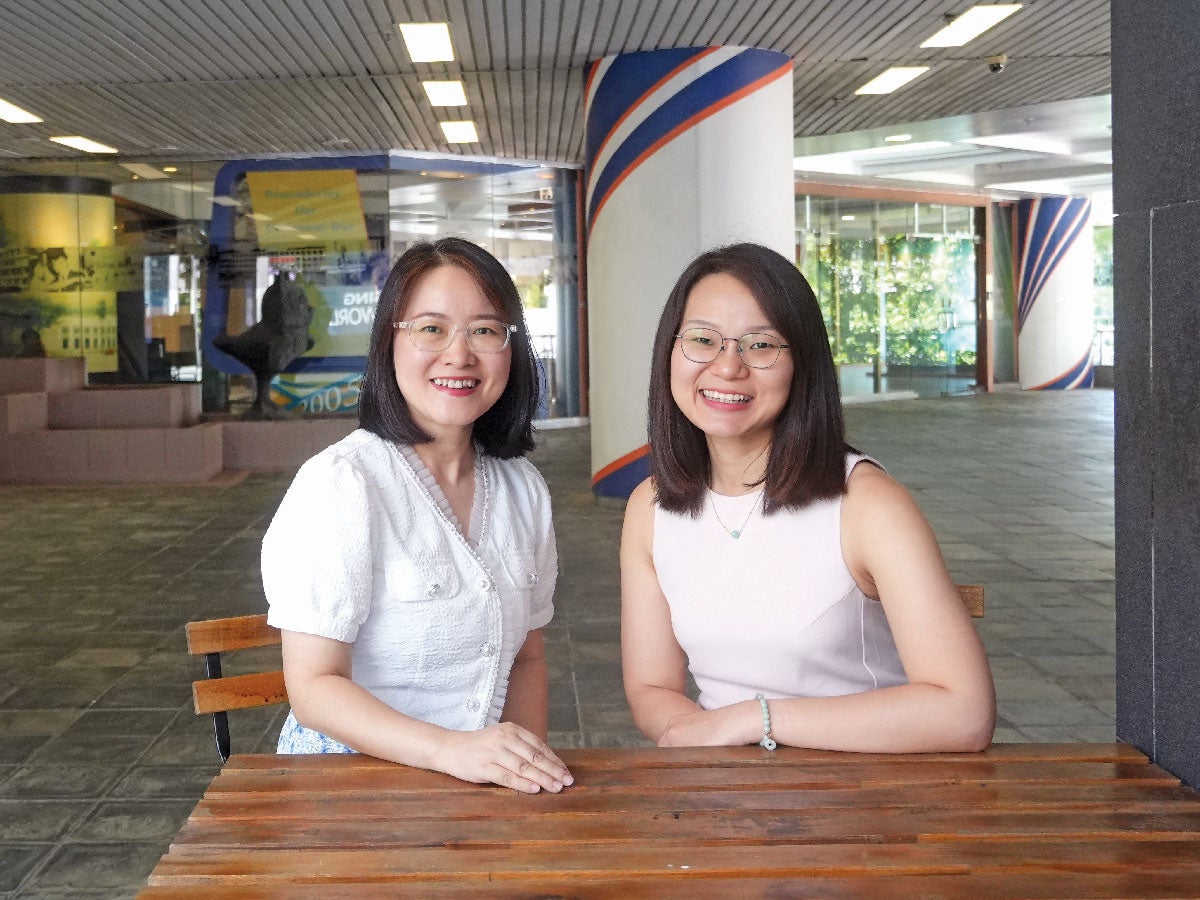
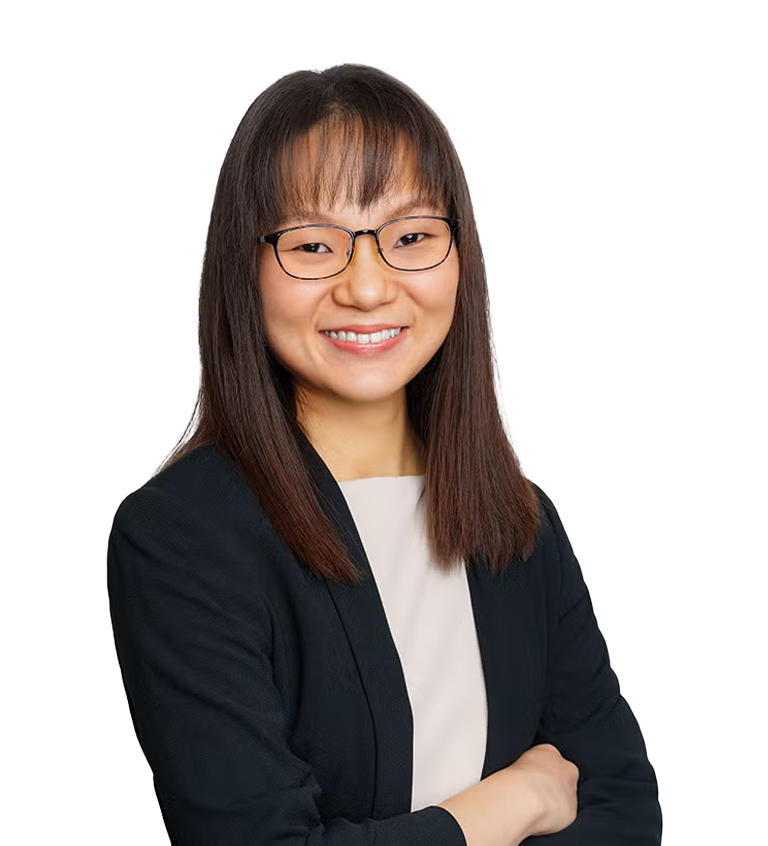
Dr Vivien Wu (left) and Dr Seah Betsy (right).
For Research Assistant Professor Seah Betsy who is working in the same field of healthy ageing research, having Dr Wu as mentor, collaborator and sounding board has been invaluable.
Even though the pair knew each other as far back as 2016—when Dr Seah joined Dr Wu’s teaching team for the Medical-Surgical III course—they only hit it off at a National University Health System (NUHS) Clinician Scientist Bootcamp in 2023.
Project Kickstarter
In collaboration with an oncologist at the bootcamp, Dr Seah and Dr Wu came up with the Rebuild, Reconnect, Revitalise (3R) programme for older cancer survivors. The 3R programme was eventually developed into a four-week intervention, demonstrating positive outcomes in patients’ coping ability, stress levels and quality of life.
Dr Seah said, “Our research interests have always been very much aligned. But this marked the point where we started to intensively explore how else we could collaborate in the area of healthy ageing interventions.” Besides working on an expanded study for the 3R programme, the two have since embarked on another project to look into raising digital health literacy for socially disadvantaged older adults in this digital age of health misinformation and information overload. Dr Seah is leading a multidisciplinary team for this project to develop an evidence-based digital health literacy programme for older adults at Active Ageing Centres.
Sounding Board
Reflecting on her experience working with Dr Wu, Dr Seah said, “We bring different strengths and perspectives to the table. While Vivien is interested in leveraging technology to help older adults manage chronic conditions, I’m focused on interventions that address social determinants of health—the non-medical factors, such as socioeconomic status, education, and the environment and their impact on health outcomes. In a way, working together has helped us further refine our areas of focus.”
Dr Wu added, “Having each other as a sounding board—has undoubtedly made our work richer and more robust. Betsy’s ability to read widely and delve deeply into the complexities of issues often adds a different dimension to our discussions.”
On her part, Dr Seah appreciates Dr Wu’s openness in sharing her experiences as a researcher. She said, “For instance, Vivien’s advice on how to approach our Active Ageing Centre partners went a long way in improving how I collaborated with them—making the process not only easier for myself, but also for our partners.”
Even though Dr Wu admits that her feedback can, at times, be too direct. “Sometimes I belatedly realise that I’ve been too blunt when I see Betsy’s disappointed expression. Thankfully, she doesn’t take it personally and recognises that I was just trying not to give her any false hopes—or let her go through the same painful lessons I went through myself,” she mused.
Shared Mission
Despite these occasional disappointments, Dr Seah has no intention of stopping her work with Dr Wu. She said, “I value her candour; I know I can trust Vivien to have my best interests. In fact, I don’t even ask myself—am I going to keep working with Vivien? It’s become an automatic process to collaborate again when we have such rapport and synergy.”
Dr Wu agrees. “I hope by combining our strengths, we can move our healthy ageing research into more advanced levels.”
Beyond their shared research interests, the two share another common interest: food. Dr Seah fondly recalled their mission for good food when they went to Hong Kong for the East Asian Forum of Nursing Scholars (EAFONS) conference in 2024. She said, “We found this really great porridge (thick and piping hot) at a local market—and until now, we still reminisce about how good it was.”
They haven’t found anything comparable in Singapore yet—but in the meantime, their regular lunches together remain a highlight for both. “I tend to be laser focused on my work in the office; but lunch with Betsy is always a cherished time for me to relax and generate ideas with her,” Dr Wu said with a smile.