

Having taught at Alice Lee Centre for Nursing Studies (NUS Nursing), National University of Singapore Yong Loo Lin School of Medicine since day one, NUS Nursing Head and Professor Liaw Sok Ying has nurtured her fair share of students. One student stands out from the others—Assistant Professor Chua Wei Ling. What started out as a shared research interest in patient safety has led to a collaborative partnership spanning over 10 years for the pair.
In an alternate world, Dr Chua thinks she would still be doing research. She said, “I’ve always wanted to do something research-related—starting from my Honours year when I was first exposed to it. I enjoyed the entire process such as data collection and having autonomy over my time.”
The person who shaped her first positive research experience? Her Honours thesis advisor—Prof Liaw, who was a Senior Lecturer at the time. But how she landed on her thesis topic was also part of the journey. She recalled, “During one of my clinical postings, an Enrolled Nurse simply told me that the patient was under the care of another nurse when I notified her about a deteriorating patient. That incident inspired me to research the communication between Enrolled and Registered Nurses, and how that affects clinical deterioration.” This led the then-young Wei Ling to approach Prof Liaw—knowing her expertise in patient safety—to be her thesis advisor.
However, there was a catch—her research topic on looking into Enrolled Nurses’ experience with caring for deteriorating patients required her to do qualitative research and conduct interviews with the nurses. She said, “I’ve always been more of a numbers person, but that wasn’t enough in this case. So the stress was real when I had to conduct my first interview. Luckily, Prof Liaw accompanied me for the first few interviews and even showed me how it was done during the first session. I was very thankful for how supportive she was.”
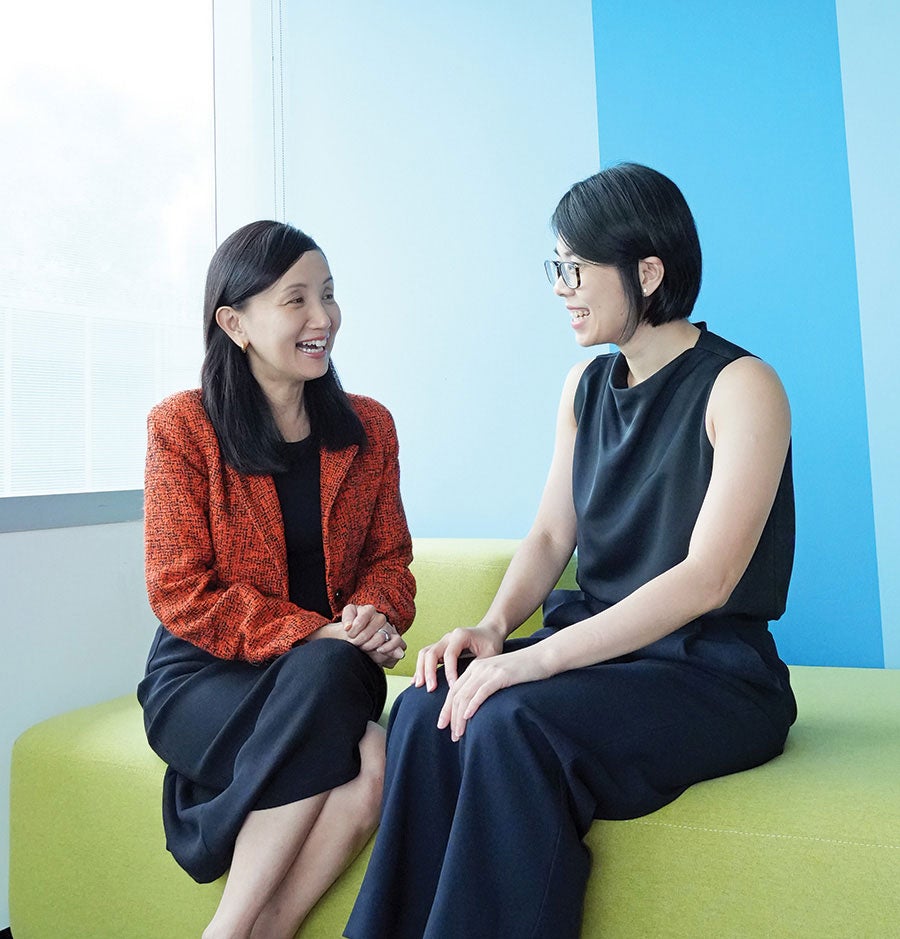
Prof Liaw (left) and Dr Chua (right). |
From Receiving to Giving The thesis was successfully completed and she graduated with Honours—but the pair kept in touch. Recounting her first conference experience in 2014, Dr Chua shared, “I attended my first ever conference with Prof Liaw. I was just starting out in my Nursing career then, and Prof not only invited me to join her for the International Conference of Medical Emergency Teams held in Amsterdam, but also offered to pay for my registration fee and allowed me to stay with her. Without her support, I probably wouldn’t have attended that conference at all.” |
Prof Liaw has little recollection of her kind gesture, “It all happened very naturally, I was merely nurturing a student’s growing interest in patient safety. This was an extension of my own experience when I started out as a junior faculty member. I remember when our first Head, Professor David Arthur told me that he was sending me to the US for my first conference. I was like, ‘wow, are you sure!?’”
As it turns out, the nurturing and supportive culture isn’t unique to the NUS Nursing department—it’s part of the broader ethos of Yong Loo Lin School of Medicine, National University of Singapore (NUS Medicine). Prof Liaw added, “And that was just one of the instances. For example, a huge part of how I came to be so passionate about simulation—and research in the field—is the result of an invitation from NUS Medicine’s Associate Professor Chen Fun Gee (now retired) to collaborate on simulation projects.”
From Teaching to Inspiration
Dr Chua worked in the intensive care unit at Tan Tock Seng Hospital after graduating, but continued working with Prof Liaw to prepare her Honours thesis for publication. She said, “From time to time, I would share some of my challenges at work with Prof. I would also help out with some of Prof Liaw’s Honours students when they did data collection in the hospital. It was my way of showing support and paying it forward for her guidance during my Honours.”
In 2015, their relationship took a leap forward when Dr Chua returned to do her PhD at NUS Nursing under Prof Liaw’s encouragement. She said, “Although we had always been close, our relationship had been more formal—like that of a teacher and student. Things changed during my PhD. The intensity of the programme—and the fact that I was pregnant with my firstborn when I began—I started leaning into Prof as a mentor. She was totally supportive and let me progress at my own pace without pressure.”

Prof Liaw (centre) with Dr Chua (second from left) during Dr Chua’s undergraduate days. |
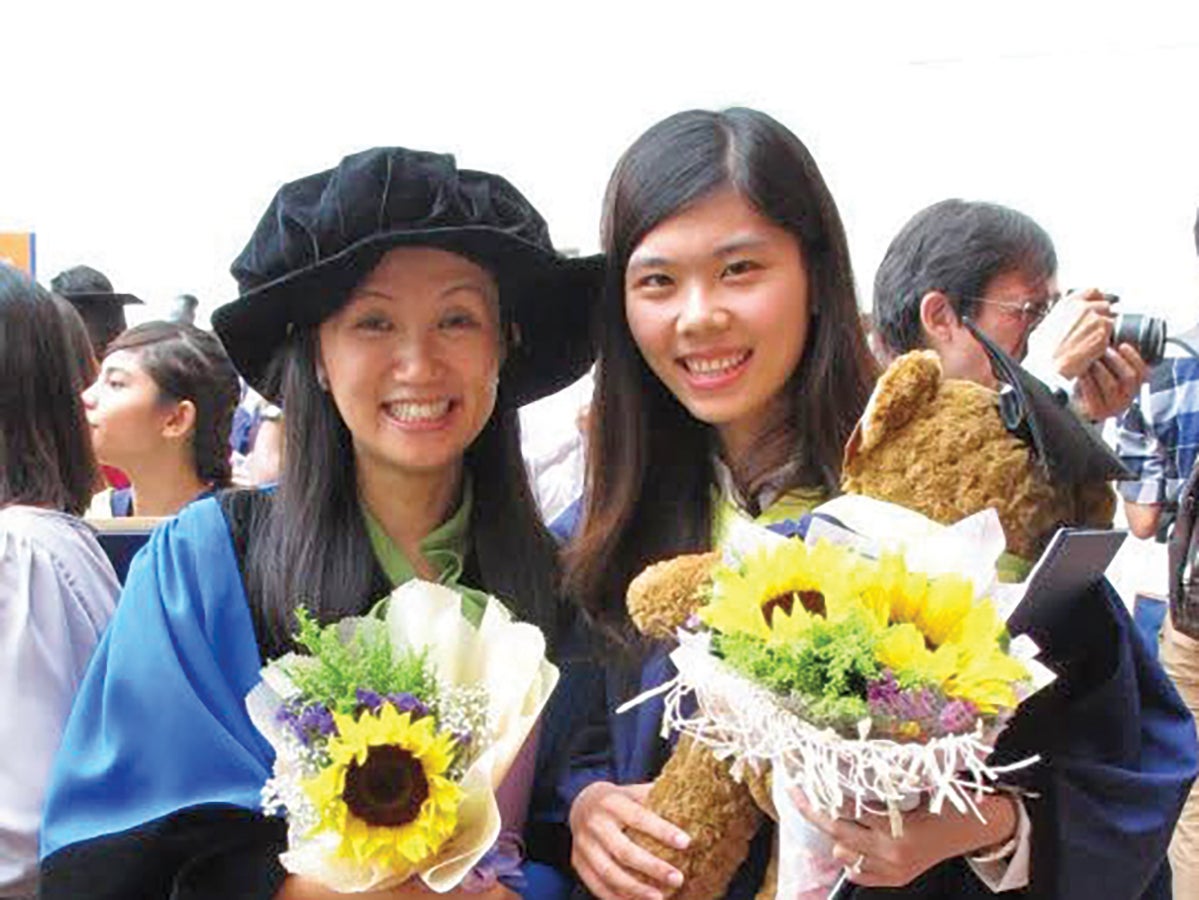
During Dr Chua’s graduation. |
As far as Prof Liaw is concerned, there was never a doubt that her mentee would complete her doctorate: “I had total confidence in Wei Ling—she’s always been a capable and hardworking student. So I simply told her to do her best, and that even if this doesn’t work out, she could always try again elsewhere.”
Little did Prof Liaw know—her own PhD journey was an inspiration for Dr Chua to persevere. Dr Chua said, “Prof shared her story about how she juggled doing her part-time PhD while being a Senior Lecturer—waking up early to work on her PhD before her teaching duties, and continuing with her thesis at night after work. I was blown away by how persistent and disciplined she was.”
From Listening to Discussion
Notably, Dr Chua’s PhD work presented an opportunity for the pair to further collaborate in the area of patient safety. Prof Liaw explained, “Wei Ling’s PhD was an extension of her Honours thesis—looking into the collaboration between Enrolled and Registered Nurses in caring for deteriorating patients. Meanwhile, my research delves into developing our Nursing students’ ability to spot signs of clinical deterioration. Our overarching theme is the same—patient safety—but our foci complement each other, with Wei Ling looking at improving Nursing capability in the hospitals.”
Fast forward to today, Prof Liaw and Dr Chua are working on a project to develop intraprofessional relationships between Enrolled and Registered Nurses—in the form of an escape room simulation where both groups can learn to work together more effectively through play. The team aims to pilot it by the end of the year.
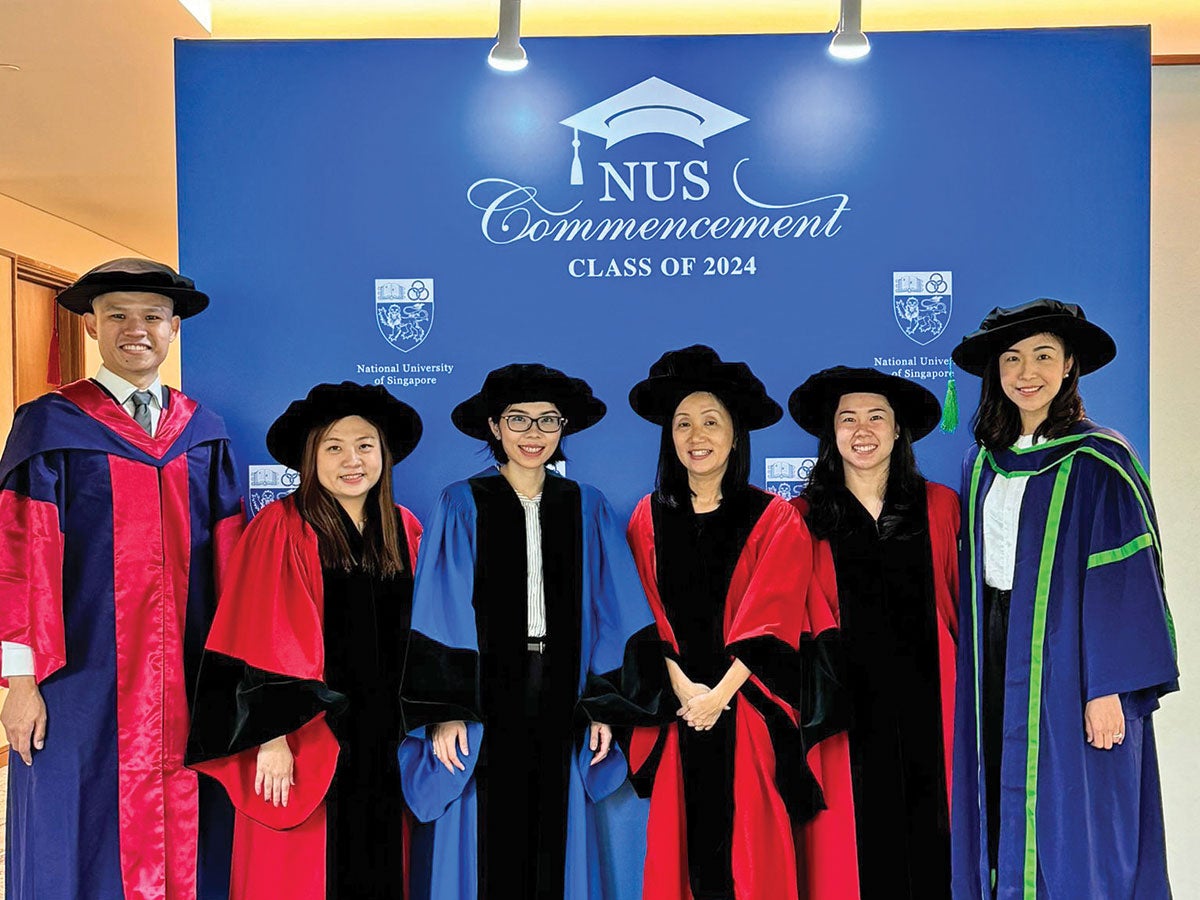
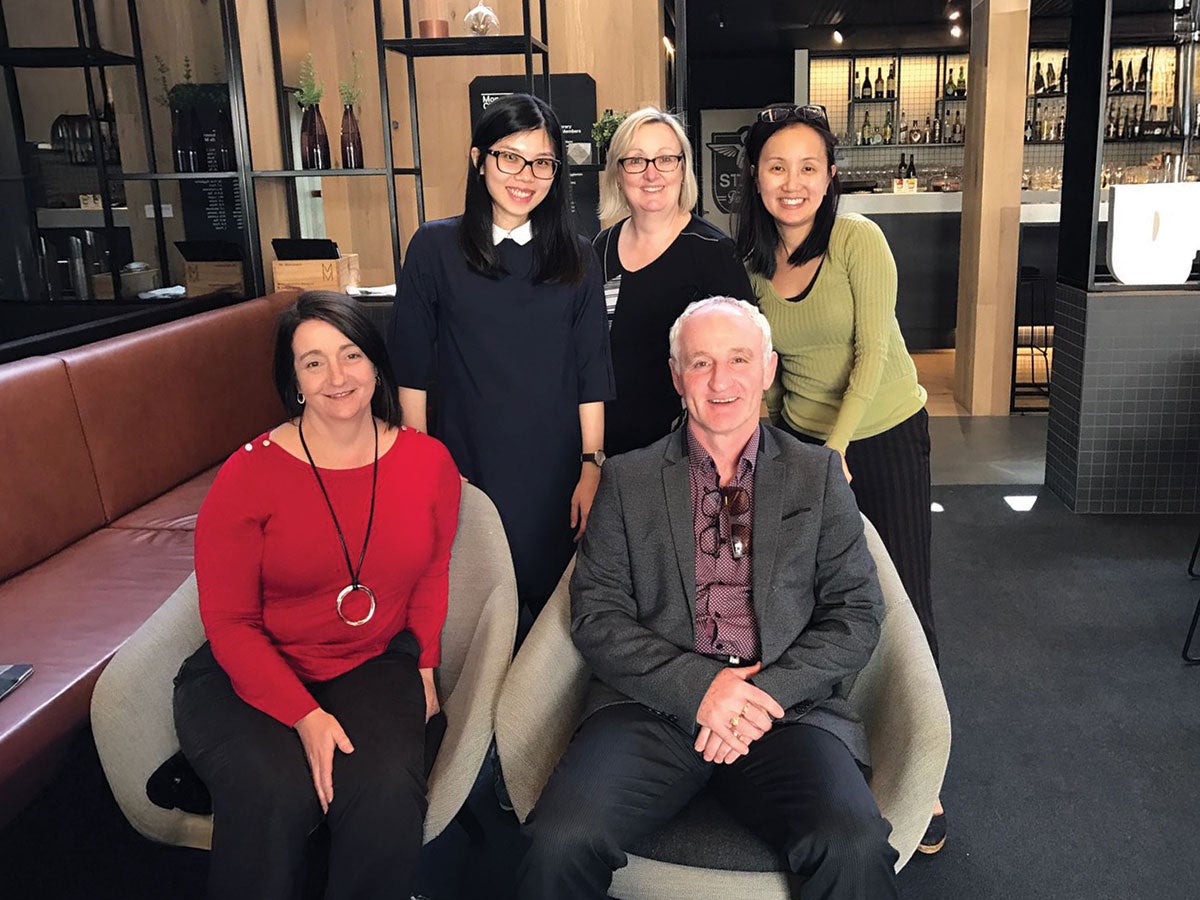
Prof Liaw (back row, first from right) and Dr Chua (back row, first from left) with international collaborators.
With years of collaboration behind them, the pair reflected on how their collaborating style has changed. Dr Chua said, “In my student days or even when I was a new Research Fellow, I tended to take my cue from Prof Liaw. But now it’s more of a two-way conversation where I can confidently discuss my ideas or concerns about the research direction with Prof.”
Concurring, Prof Liaw said, “Wei Ling brings her strengths to the table—I admire her skill with statistics and ability to develop instruments for evaluating outcomes. Whereas I am more focused on designing novel interventions.” Dr Chua added, “We gel in terms of working style too—Prof looks at the broad picture while I pay attention to the finer details.”
From Receiving to Paying It Forward
The relationship has developed in more ways than one—with Prof Liaw becoming Head of NUS Nursing in mid-2023, and Dr Chua joining the faculty as an Assistant Professor in late 2023. “But our relationship has remained the same at heart,” Dr Chua reflected.
“Prof Liaw is still very kind and genuine,” she continued. “That was probably the reason I could open up to her as a student.” This has influenced Dr Chua’s own approach to mentoring her own students today. “In any mentor-mentee relationship, I think it’s important for mentees to be able to speak up and discuss freely with their mentor.”
Which is why Dr Chua mirrors Prof Liaw’s mentoring style with her own students. “Just like how I received support from Prof Liaw, I want to create a safe and supportive environment for my students where they are not fearful of approaching me with any questions.”
 |
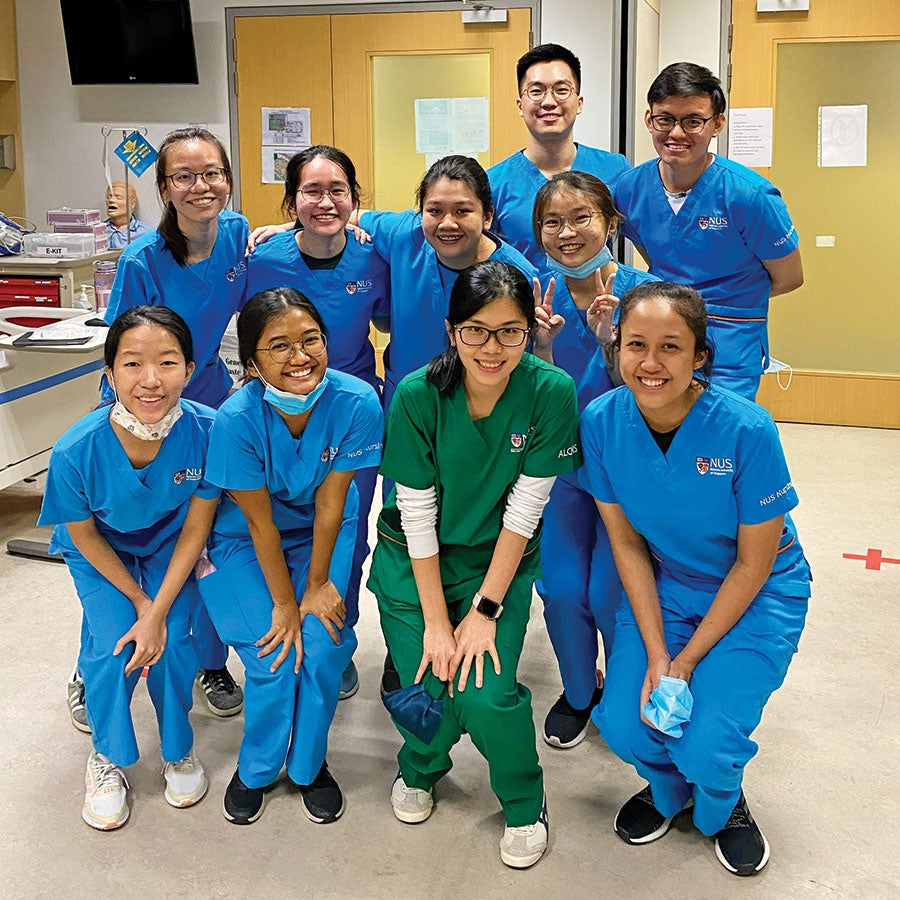 |
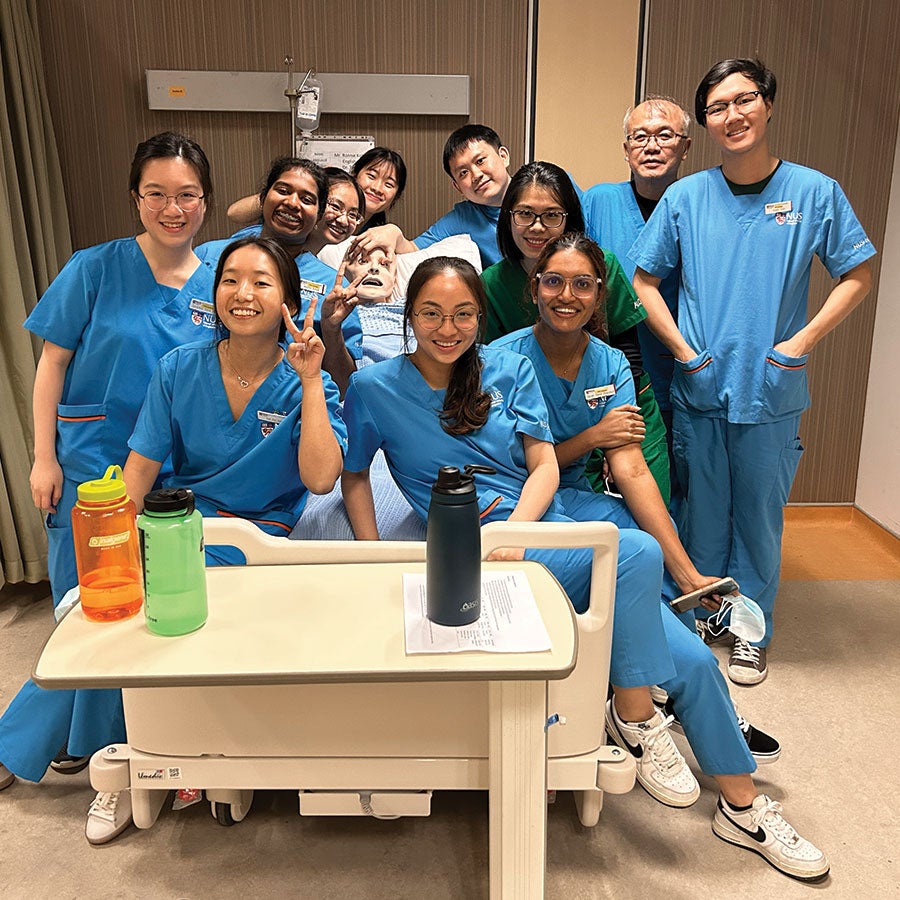
Dr Chua (in green) with her students in the ward simulation lab.