Issue 58
May 2026
THE LAST MILE
By Dr Noreen Chan, Senior Consultant, Division of Palliative Medicine, National University Cancer Institute, Singapore
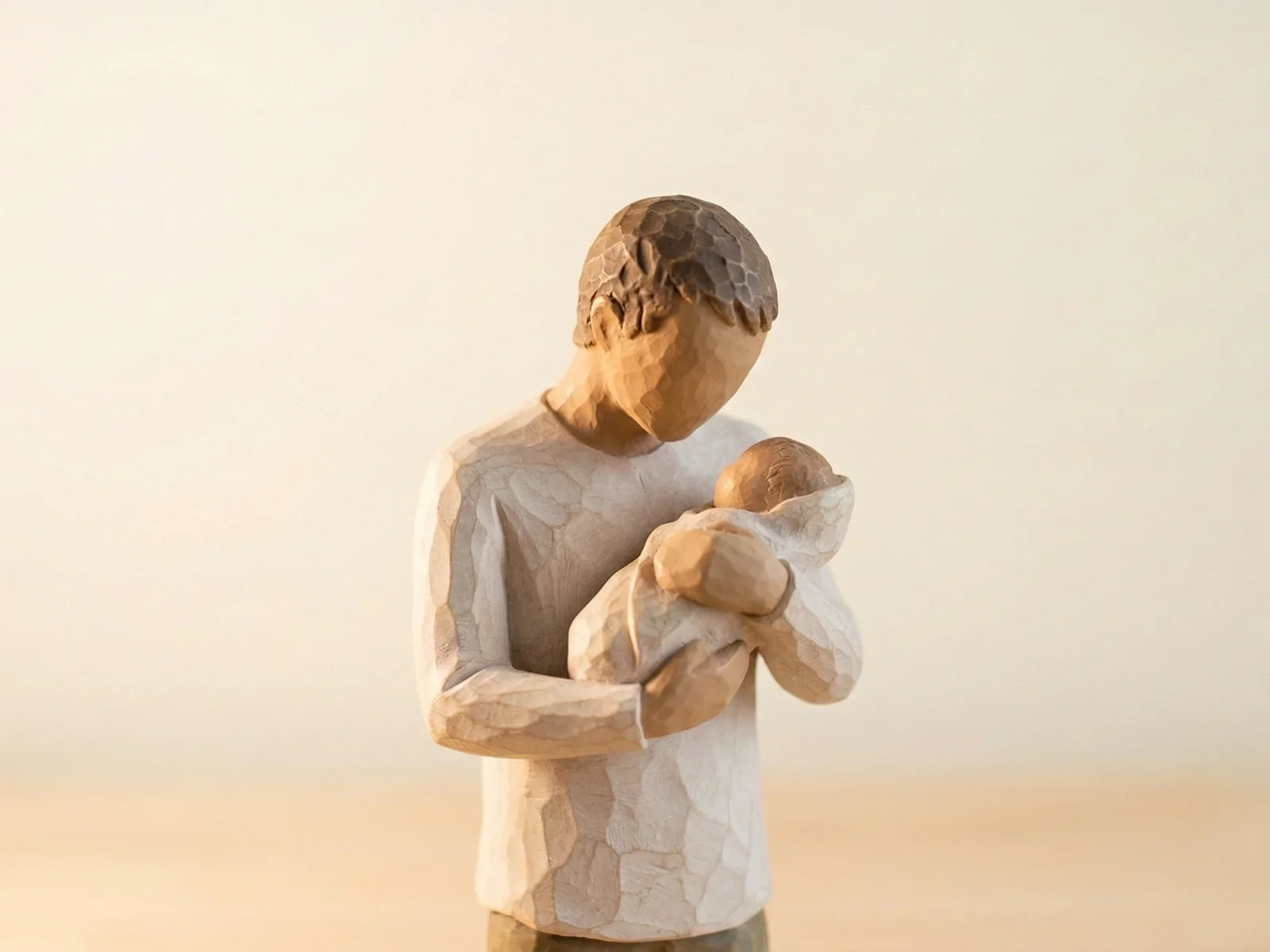
“Dr Chan, can you come now, he wants to see you.” My heart sank. I was in the middle of reviewing patients, work was piling up … but I heard the hesitation in the voice at the other end of the line and knew that this call would only have been made after everything else had been tried.
It was not a surprise given the situation. The request had come from the father of a patient who had spent the last month or so in the Paediatric ICU (Intensive Care Unit). G was an infant girl who, at three months of age, was struck with a devastating bacterial infection which had left her with injuries to multiple organs, including severe brain damage. She could not breathe on her own and was dependent on a ventilator. Medications were needed to maintain her blood pressure. In short, multiple means were being used to support vital functions but eventually they would stop working. She was dying.
The PICU team had sought my help to support the family, as we worked out what to do going forward. Gradually, over the days, a decision was made to withdraw life support and allow the child to pass away naturally and without suffering. Working with the nurses and medical social worker, mementoes like photographs and hand and foot prints were made for a keepsake box; extended family members came to provide support and to say goodbye, everything seemed to be going according to the agreed plan.
Then on the morning when the breathing tube was to be removed, G’s father asked to see me. He had been distant when we first met, but always asked many questions, including about test results, what was the blood pressure, etc. Like any parent, he wanted what was best for his baby girl and he had seemed certain—or as certain as any parent can be—about the decision. Was he going to change his mind?
As we sat facing each other in the PICU conference room, I had so many questions, but only asked one. “What’s on your mind?”
“Am I doing the right thing,” he asked, with a stricken expression. I didn’t answer. He had asked this question before, several times, and we had gone over it again and again. He was not asking me—that I was sure of.
Then he started to talk. Head bowed, hands clasped, he told me about his childhood, when his father used to abuse him verbally and physically, punished him by tying him up and deprived him of food. He spoke about broken relationships, work struggles, challenge after challenge. And finally, when things were working out, this happened.
Like any parent, he wanted what was best for his baby girl and he had seemed certain—or as certain as any parent can be—about the decision. Was he going to change his mind?”
A few times I opened my mouth to say something, then realised he just wanted me to listen. So I sat there while he lamented and raged at the world and life and fate. I thought about how my mobile phone, which I had left outside at the nurses’ station, was probably buzzing with messages. I wondered if his wife knew even half of what he was pouring out. But mostly I thought about how I was going to deal with this wave of long-buried pain that was coming at me.
After what seemed like an eternity, he calmed down. He looked me in the eye and said, “I sometimes wonder what I will do after she’s gone.” I returned his gaze. “You’re not going to do something drastic, are you?” A long pause. “Nah… she wouldn’t want that.” We both relaxed. I realised that he was already contemplating how to go on after his daughter’s death.
He stood up and shook my hand. “Thanks Doc. Let’s do this.” We walked to his daughter’s room, along the way I gave a nod to the hovering PICU staff and visibly relieved, they followed Dad into the room. I had meant to return to catch up with both parents, but my day ended late, and by the time I had time to go back to the PICU, the room was empty.
I’ve often thought about that encounter: most of the time, we are dealing with patients’ distress, and I had forgotten how much their families may be suffering. It was also a reminder about how, in Palliative care, our role may be less about doing, and more about being. Healthcare professionals tend to be task-focused; we like to diagnose situations, identify problems and then fix them. But there are many circumstances which are not “fixable”; Atul Gawande in “Being Mortal” had listed ageing and death as two examples. I would add to that past traumas which come bubbling to the surface.
Too often, patients’ distress is seen as a problem to be analysed and solved, rather than a human experience that deserves time and presence.”
An article by Mateus Eduardo Romão and colleagues, published in the journal Palliative Medicine in early 2026, explored what it means for palliative care professionals to “be with dying”. Called “One must know things, but above all, one must know how to be”, it was based on interviews with staff working in community-based palliative care services.
“Being” was not simply a passive state nor was it “being kind”. Rather, staff described it as an active accompaniment of patients and families, comprising three intertwined dimensions:
• |
Presence – staying with patients and families in their distress, without the need to fix anything; |
• |
Ethical engagement – upholding dignity and respect, continuing to journey with patients and families; |
• |
Emotional attunement – recognising emotions (others’ and one’s own) without becoming overwhelmed or detached. |
Most were not taught this formally, but developed it gradually over many interactions with patients and families. As one participant said, “Professionalism in palliative care is not only about prescribing the right medication, but about knowing how to connect with people, how to listen, understand and be available.”
Ironically, this kind of compassionate presence is described as a “soft skill” when in reality, it can be incredibly hard. Part of the difficulty is that we ourselves have to be part of the therapeutic relationship—if you are disengaged, the patient and family will know it—and it is accurately described as emotional labour. It is also tough to sit with all that suffering, when we cannot make the pain go away, or to continue engaging with individuals whom we think are “unreasonable” or “unrealistic”.
It is not something you can learn out of a book, but it can be taught and its practice supported within teams. Pain and symptom control are still core competencies for any palliative care professional, but we should not be too quick to switch into “fix it” mode. Too often, patients’ distress is seen as a problem to be analysed and solved, rather than a human experience that deserves time and presence.
We would do well to remember the words of Rachel Naomi Remen (2002):
Helping, fixing and serving represent three different ways of seeing life. When you help, you see life as weak. When you fix, you see life as broken. When you serve, you see life as whole. Fixing and helping may be the work of the ego, and service the work of the soul.
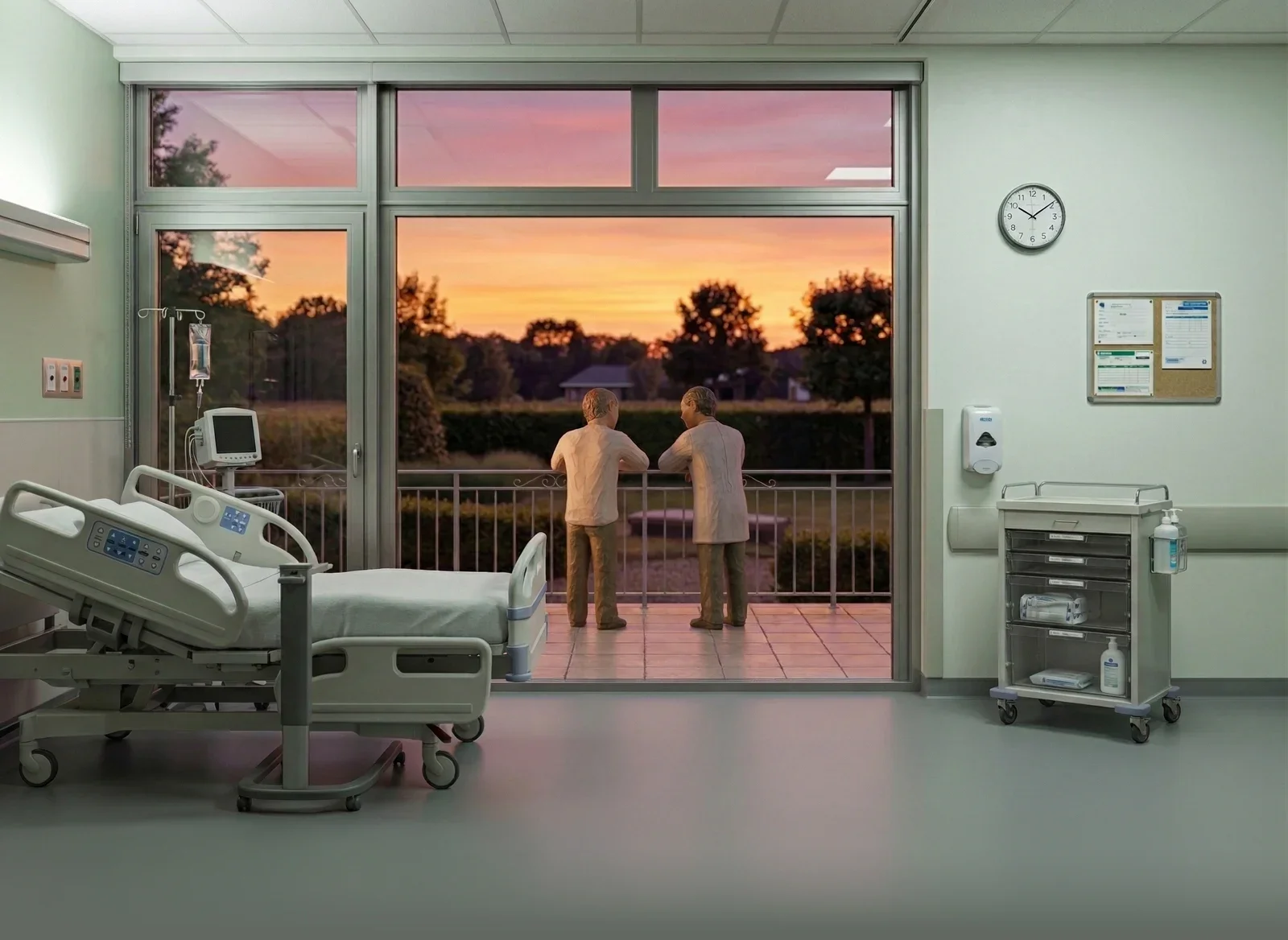
When You Hate Yourself for Revisiting Old Wounds
You revisit old wounds for the same reason
birds will come back to the places
their nests have been destroyed
The mind walks into the same room because it wants to know how to fix
those floorboards, paint the walls, turn this into a more habitable place
if it tries something different from the last time.
This is survival.
This is learning how to live through pain once the skeletons have decided to walk out
of the closet and refuse to go back in again.
Call it the worst story you ever owned,
a car crash within your bones that you cannot stop staring at.
But the only way to understand pain
is to look at it and feel it
without turning away.
There is no shame in this.
Eventually, it will scab over and heal.
More from this issue

NURSING
Dawn of The Cyber Nurse
IN VIVO
Beyond Mere Teaching