
Issue 58
May 2026
IN VIVO
By Debraath Pahari AND YONG REI EN, KERA RUTH, Second Year Students, NUS Yong Loo Lin School of Medicine
“I am not a teacher, but an awakener.” – Robert Frost
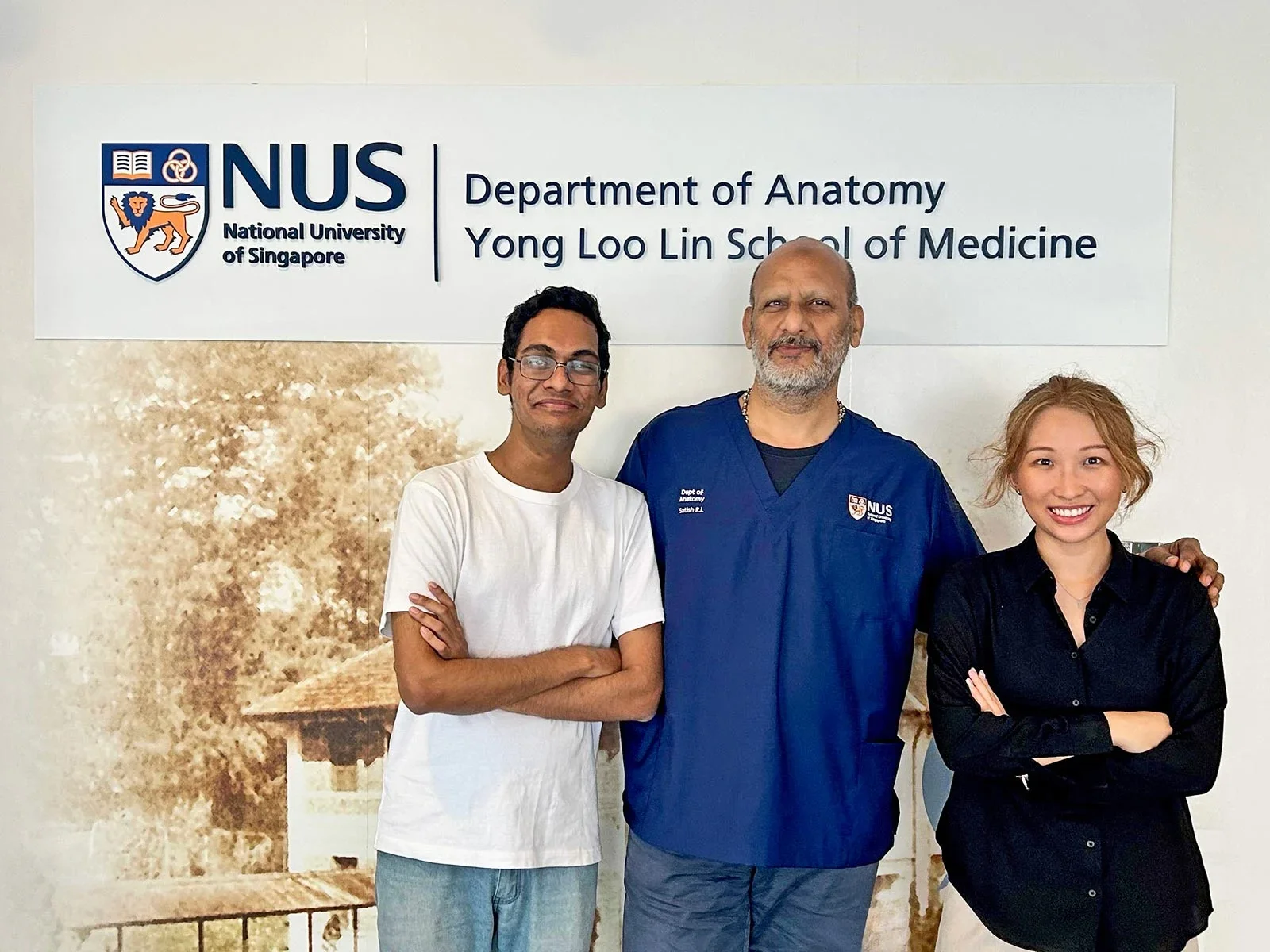
We first met Dr Satish Ramapatna Lakshminarasappa as wide‐eyed Phase I medical students in Anatomy class on a Tuesday morning. From the very first session, his passion for teaching and love for the subject shone through. Classes were never boring monologues, but rather boisterous discussions about theory and its applications in clinical cases. His approach to teaching highlighted students’ current knowledge and then built on any gaps that were present. Instead of asking us to memorise lists of signs and symptoms, he patiently walked us through the clinical reasoning behind each case.
His classes left a deep impression on us, not just because of how clearly he explained complex concepts, but also because of the way he modelled what it meant to be a thoughtful, humane clinician. Whenever he spoke about patients, he did so with a mix of curiosity and respect that encouraged us to think of patients as people with stories, instead of cases to be diagnosed.
Becoming good doctors
Dr Satish changed how we understood the study of Medicine. He reminded us that our goal should be understanding, not mindless memorisation of content. From him, we learnt that what matters most in being a good doctor is clinical acumen, a desire to learn more and the ability to connect the dots.
Some of our most enduring memories of Dr Satish are not from formal teaching sessions, but the moments in between—chatting after Foundations of Clinical Practice sessions in the hospital wards, at Anatomy Hall in MD10, or during Project I2Eye trips when he would ask how we were coping and offer a listening ear. He demonstrated how it is possible to love Medicine without letting it consume every other aspect of our lives.
In getting to know him better, we also learnt something about ourselves: in Dr Satish, we see the kind of doctors we aspire to become.
A passage from India
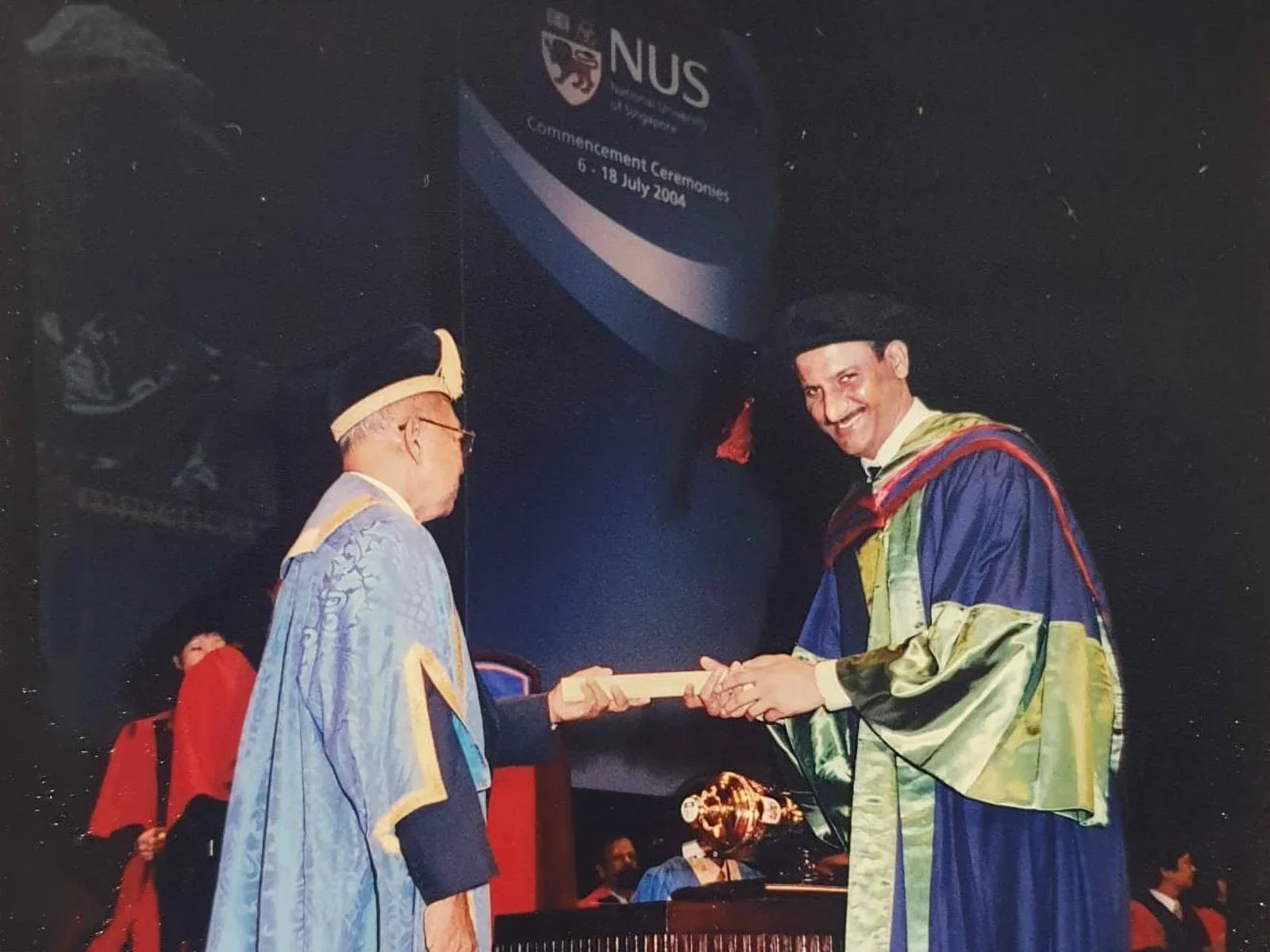
Dr Satish did not decide on a career in medicine early on. In his youth, he took life as it came and without a concrete idea of what he wanted to do after high school since his family had given him complete freedom and never pressured him. His father was a strong pillar of support, whose silent dedication and sense of discipline instilled in Dr Satish values he carried up to this day.
Although his brother-in-law discouraged him from applying to medical school, citing his grades as a reason, Dr Satish nevertheless sat for entrance examinations for both Medicine and engineering and earned a place at the Bangalore Medical College.
Upon completing his MBBS, he began as a Junior Resident in Neurosurgery in May 1991 at the All India Institute of Medical Sciences in New Delhi, one of India’s premier medical institutions. Six months later, he transferred to Safdarjung Hospital, where he spent a year working in both Rehabilitation Medicine and Haematology as a medical officer. During his posting in Haematology, a chance encounter changed the course of his career—a junior house officer sought his assistance for a minor procedure, and days later, mentioned a job opening in Singapore while they were chatting in the library.
Dr Satish seized the opportunity and came to Singapore in 1996 to pursue his PhD on peritoneal healing post‐laparotomy under Professor Steven Chan. Having spent the first 25 years of his life in India, Dr Satish found Singapore to be “heaven on earth”; to the point he did not visit his family for nearly five years!
Finding purpose in teaching
His greatest satisfaction in his career comes from the energy he draws from engaging with students. He feels energised the moment he steps into the classroom, despite however little rest he has had and constantly reminds his students to attend classes regularly. He believes that student attendance and active participation are essential for deeper understanding.
Balance, he emphasises, is crucial: “Medicine is demanding, and even if you study every day, you can never finish everything in the syllabus. Be realistic, do your best, and make time for the passions that nurture your spirit—music, art, whatever you like.” He is heartened that the medical curriculum has shifted away from rigid grading towards nurturing comprehension and appreciation for the discipline’s beauty.
While topics like Pharmacology, Microbiology and Anatomy were taught in isolation, today’s integrated curriculum allows learners to perceive the intricate connections that bring Medicine to life. To him, good doctors are not necessarily those with perfect grades, but those who have cultivated sound clinical judgement and genuine curiosity.
His advice to every aspiring doctor is simple: take each day as it comes, stay grounded, and remain grateful to the family, friends, and teachers who have supported them along the way.
More from this issue

SCIENCE OF LIFE
Unforgettable
THE LAST MILE
Being Present to Suffering