Two Weeks in Chengdu: NUS Medicine Students Reflect on the HUAXI MedElite Global Summer Programme
Published: 19 Aug 2026
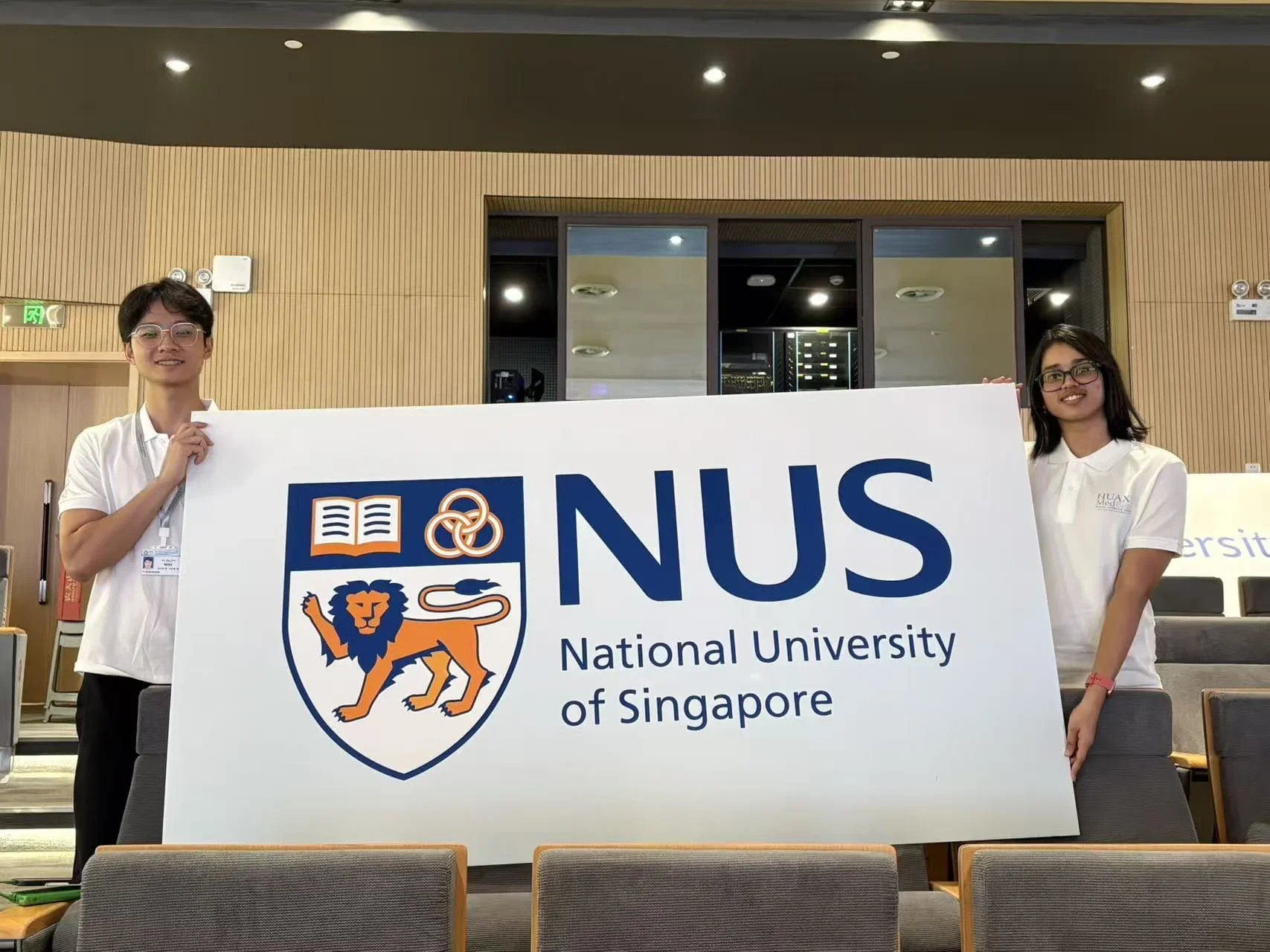
Phua Jun Hao and Prabakaran Sahana, Year 2 medical students, representing NUS Yong Loo Lin School of Medicine at the HUAXI MedElite Global Summer Programme.
The HUAXI MedElite Global Summer Programme, hosted by West China School of Medicine, Sichuan University, brought together medical students from around the world for two weeks from 5 to 17 July 2026 in Chengdu. It combines expert-led lectures, hands-on clinical skills training, and the Model International Conference for Medical Students, with courses covering everything from suturing and robotic-assisted surgery to Traditional Chinese Medicine. The goal is to build clinical insight, academic communication skills, and cross-cultural collaboration.
For Phua Jun Hao and Prabakaran Sahana, two Year 2 students from NUS Yong Loo Lin School of Medicine, the HUAXI MedElite Global Summer Programme opened with uncertainty and closed with a markedly broadened outlook on what medical training abroad could offer.
The course content ranged from suturing and knot-tying to microsurgery, laparoscopic techniques, robotic-assisted surgery, and Traditional Chinese Medicine (TCM), with the broader goal of building clinical insight, academic communication skills, and cross-cultural collaboration.
Jun Hao arrived without firm expectations, but left with new perspectives on surgery, a sharpened sense of curiosity, and lasting international friendships. The surgical skills training left a strong impression: watching experienced surgeons operate with precision, he found it strikingly difficult to replicate their technique, a reminder that surgical competence is built through sustained, deliberate practice rather than observation alone.
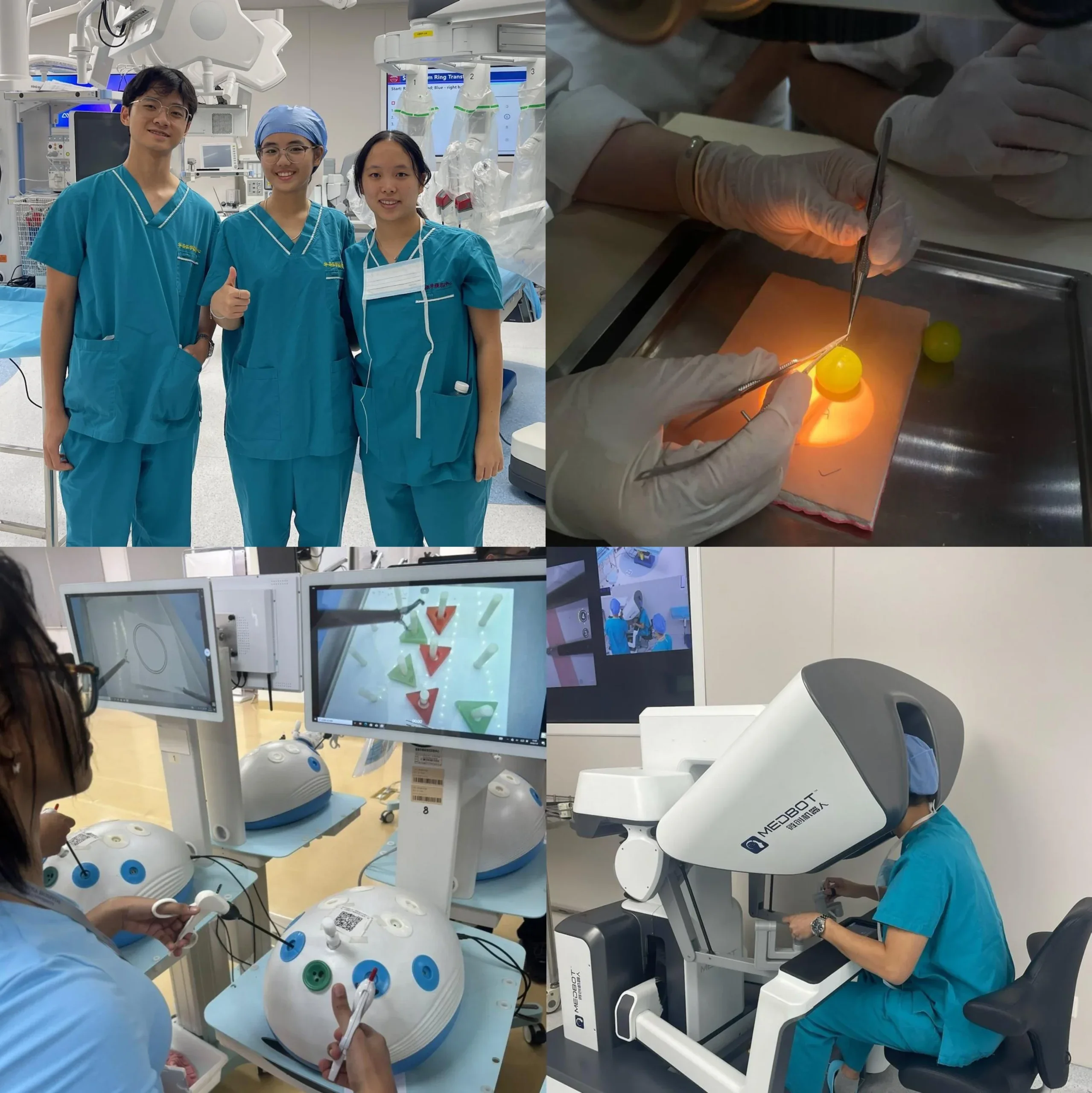
Students trying their hand at suturing, microsurgery, and robotic-assisted surgery using the MEDBOT surgical robotics system at West China Hospital.
Sahana’s highlight was presenting her research from Tan Tock Seng Hospital at the 3rd Model International Conference for Medical Students. On her Principal Investigator’s suggestion, she opened her presentation with a self-introduction in Mandarin, a language she had not used seriously since secondary school. She saw the moment as an opportunity to draw a parallel between Singapore’s multiculturalism and multilingualism and the cross-cultural communication that patient-centred care demands globally. She was awarded first runner-up in the Oral Presentation category.
Jun Hao presented on student life at NUS Medicine in the Poster Presentation category. Listening to peers from around the world present their research, he observed that the strongest work consistently stemmed from genuine interest rather than a desire to impress, an idea reinforced during a dinner conversation with Associate Professor Koh Dow Rhoon, Director of International Relations at NUS Medicine, in Chengdu, who encouraged the students to let curiosity guide their medical careers, whether in research or specialisation.
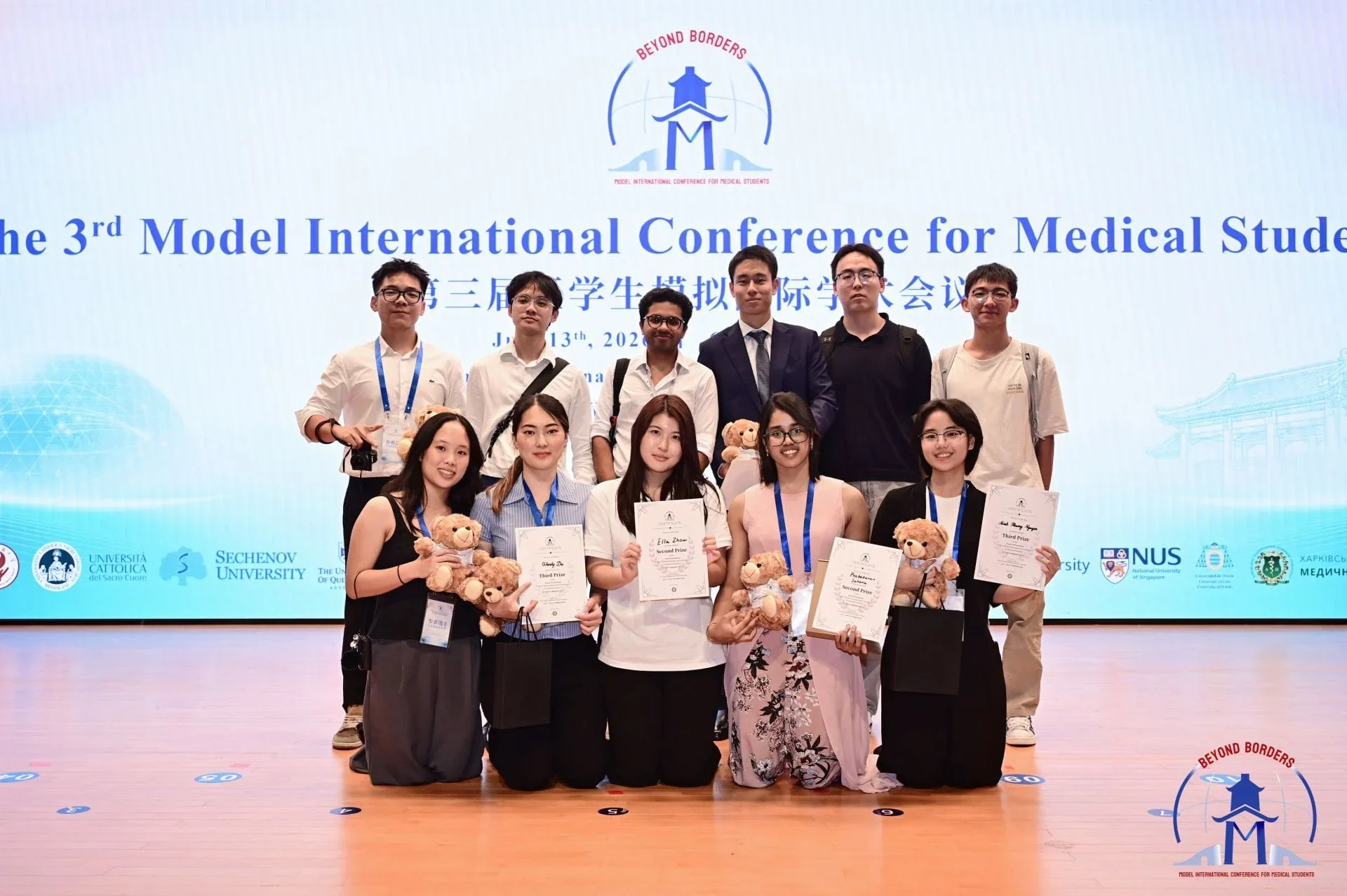
Jun Hao and Sahana with fellow participants and awardees at “Beyond Borders: 3rd Model International Conference for Medical Students.”
That same interest led Sahana to the Sichuan Museum of Science and Technology, where she learned how China’s technological progress is intertwined with its history. The visit prompted comparisons with Singapore’s Science Centre and left her reflecting on how such conversations remain relevant to future medical professionals and informed citizens alike.
Having read Professor Song Xuanke’s The Reasoning of Traditional Chinese Medicine beforehand, Sahana found the course’s progression from theoretical foundations to hands-on practice in moxibustion and acupuncture far more comprehensive than she had anticipated, deepening an appreciation for a discipline she had only briefly encountered in Singapore and through her senior’s account of her own TCM elective experience in Year 3, as part of her NUS Medicine curriculum.
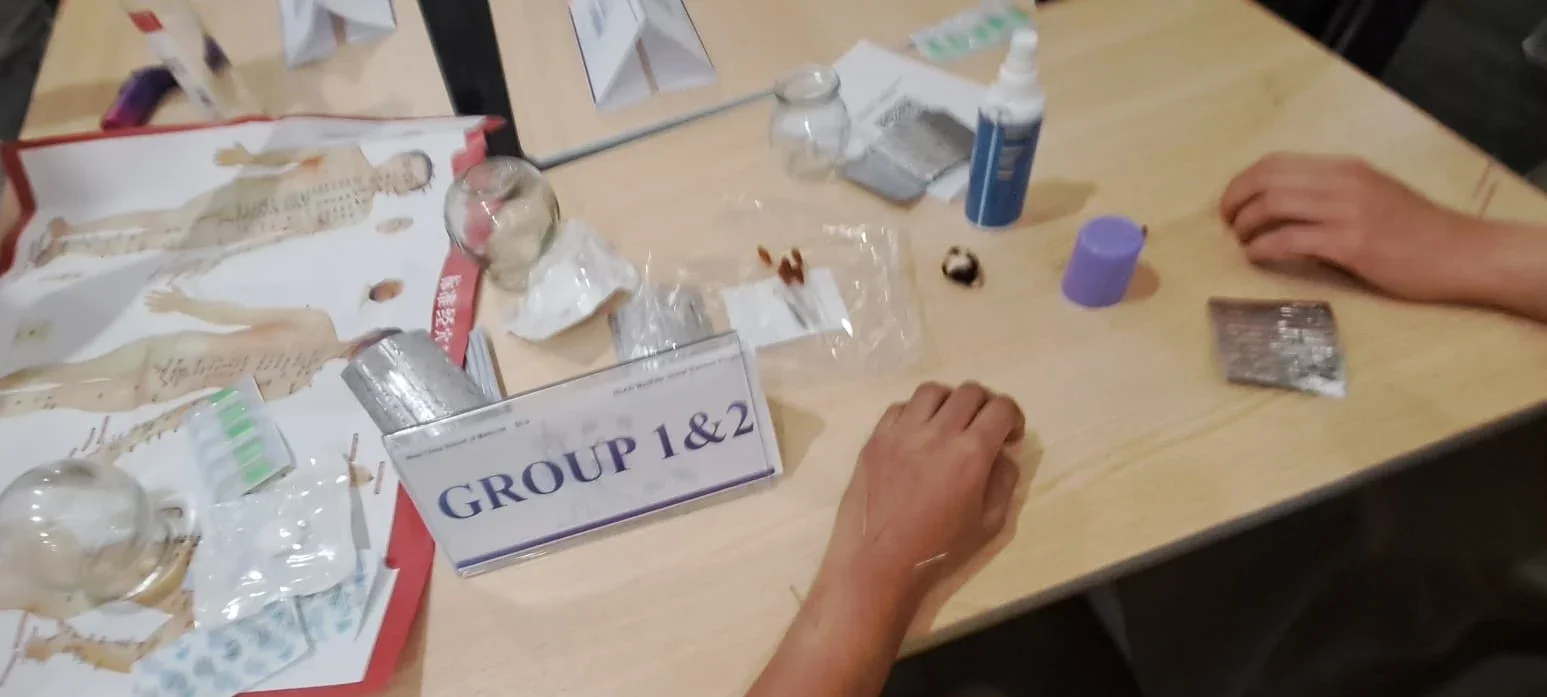
Students practising acupuncture and cupping techniques during the Traditional Chinese Medicine course.
Beyond the formal curriculum, both students point to the transnational friendships they built as the most enduring takeaway. Alongside peers from Vietnam, Australia, Italy, and China, they explored Chengdu and Chongqing together, an experience Jun Hao describes as feeling “less like a programme and more like a home away from home.” Sahana recalls one particular moment of care: when she burnt her forearm late one night, their friend group immediately researched burn treatment and arranged for medication after nearby pharmacies had closed, building trust faster than an expected two weeks abroad could allow.
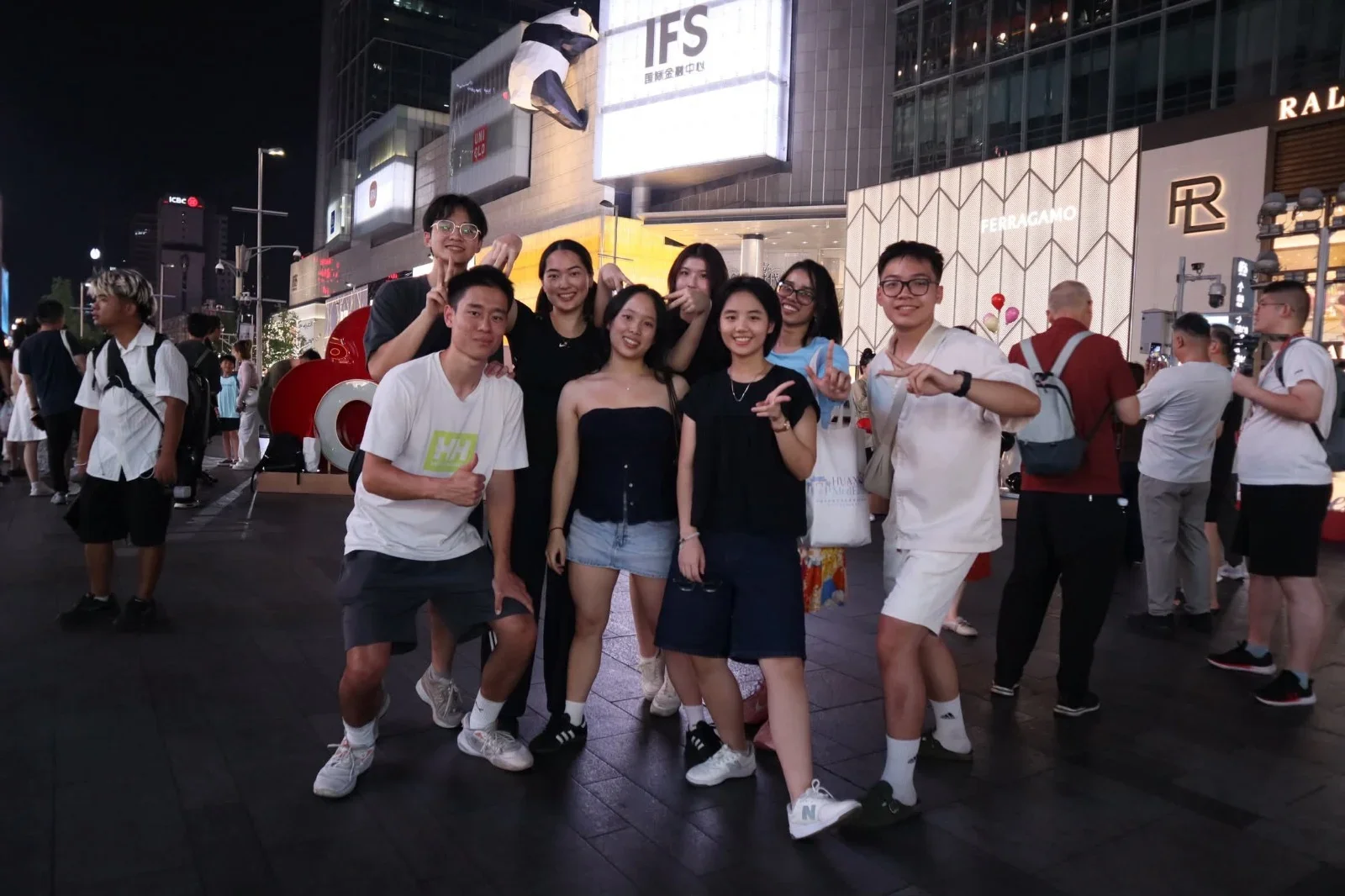
Jun Hao, Sahana, and their transnational friend group exploring Chengdu together.
Reflecting on the experience as a whole, Jun Hao noted that it reinforced his commitment to lifelong learning and technical mastery, and broadened his understanding of how technology and infrastructure shape healthcare and society. Sahana similarly observed that the programme reaffirmed her belief that technical competence and cultural fluency are inseparable in medicine, both essential to how clinicians ultimately care for patients.
Both students encourage future participants to approach such exchanges with an open mind. “Overseas exchanges like this are genuinely transformative,” said Jun Hao. “They could reshape how you see medicine, relationships, and even your own identity. If the opportunity comes knocking, say yes and let the rest unfold.” Sahana added that some of the most meaningful growth came from leaning into discomfort, whether presenting in an unfamiliar language or trying a new discipline altogether: “How much you take away depends entirely on how much you are willing to challenge yourself. So, get out there and may the odds be ever in your favour!”