Public Health Service 2026: Advancing preventive health through community care
Published: 01 Sep 2026
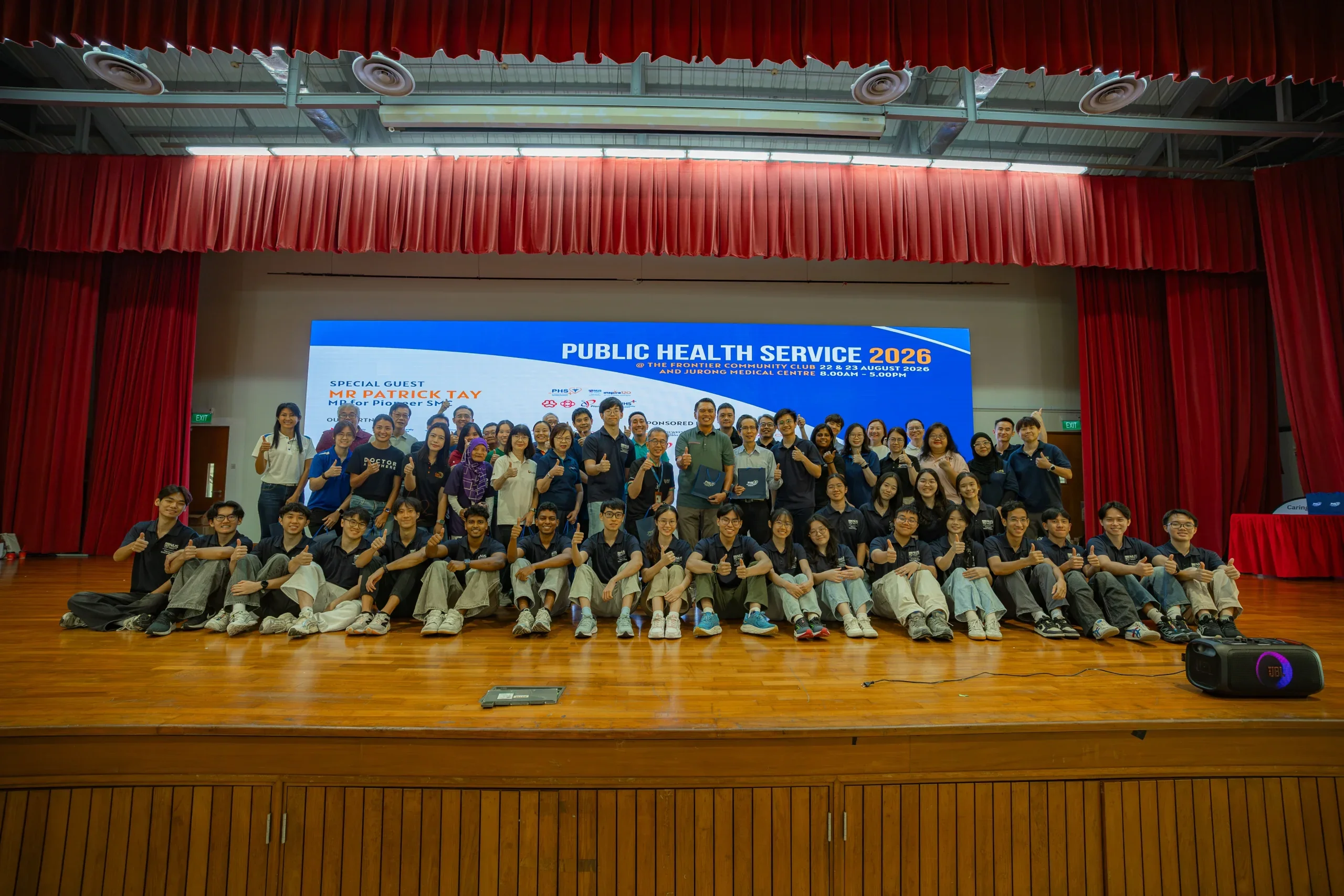 Guest of honour Mr Patrick Tay (standing middle, in green), Member of Parliament for Pioneer Single-Member Constituency (SMC), alongside NUS Medicine faculty, external partners and sponsors, and the organising student committee of Public Health Service.
On 22 and 23 August 2026, the Public Health Service (PHS) held their annual flagship health screening and health exhibition at Frontier Community Centre. This year, the health screening received 811 participants, served by 282 volunteers from various local healthcare schools and relevant faculties, such as NUS Yong Loo Lin School of Medicine (NUS Medicine), NUS Alice Lee Centre for Nursing Studies, NUS Faculty of Dentistry, NUS Department of Social Work, NTU Lee Kong Chian School of Medicine, Duke-NUS Medical School and SIT allied health.
Established in 2004, PHS is the longest serving Local Community Involvement Project (LCIP) in NUS Medicine. Across its 22-year history, PHS has tirelessly focused on health education and chronic disease management in the community setting, reaching out to youths and elderly alike. PHS’s core mission is best embodied in its motto “Promoting Health, Spreading Awareness”, striving to champion preventative health and empower individuals to live longer and healthier lives. By taking its flagship health screening into the community setting, PHS increases the accessibility of preventative care, complementing the existing work of polyclinics and general practitioners and working closely with HealthierSG programmes to bring the best care to residents.
PHS’s flagship health screening catered for Singaporeans and Permanent residents aged 40 years and above, provided a comprehensive range of 18 modalities such as geriatric screenings, cancer screening, subsidised vaccinations, and conversations with doctors, medical students, dentists, dieticians, social workers, and physical and occupational therapists. Throughout the screening, volunteers from Tzu Chi Foundation engaged and guided participants who required dialect or language translation, or additional support in navigating through the premises, ensuring that every participant can enjoy the screening smoothly and efficiently. Each participant’s screening journey was also tracked in real time through PHS’s own app, the PHS App, which has been in use since 2023 and was developed in partnership with students from the NUS School of Computing.
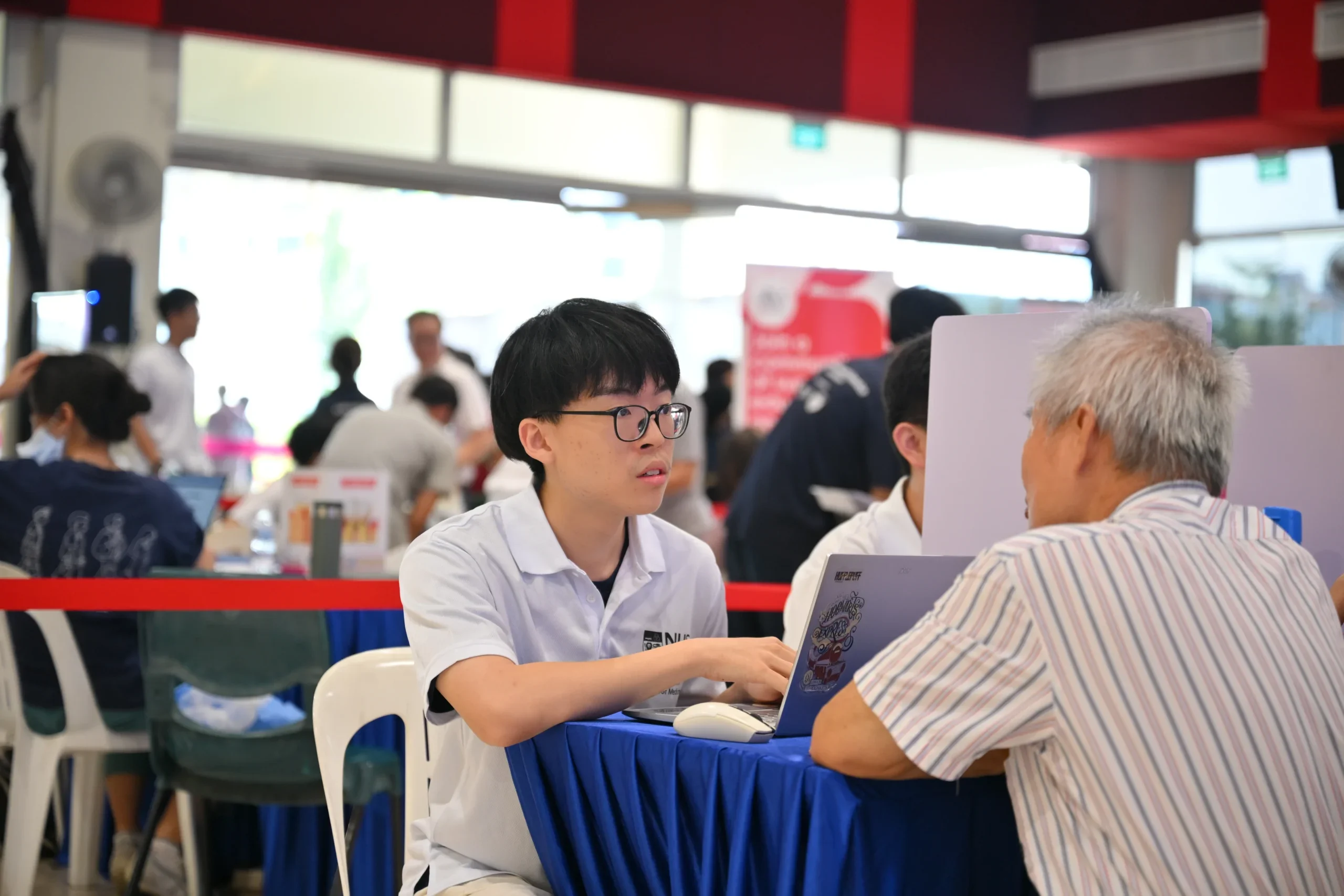 An NUS Medicine student volunteer taking a medical history from a participant to better understand their health situation and determine eligibility for downstream screening modalities.
This year, PHS placed greater focus on cancer screening. According to the Singapore Cancer Society, cancer incidence continues to rise throughout the years. However, cancer screening uptake is low, with just between 35 to 45% of eligible residents attending regular screenings. PHS provided numerous cancer-related modalities in the screening, such as on-site HPV testing, breast cancer self-screening, a free mammobus and a booth by 365 Cancer Prevention Society which shared more about less well-known screenings like lung cancer and gastric cancer screening. By educating participants on cancer prevention, PHS hopes to encourage participants to continue follow-up cancer screenings with their healthcare providers and make more informed decisions about their health.
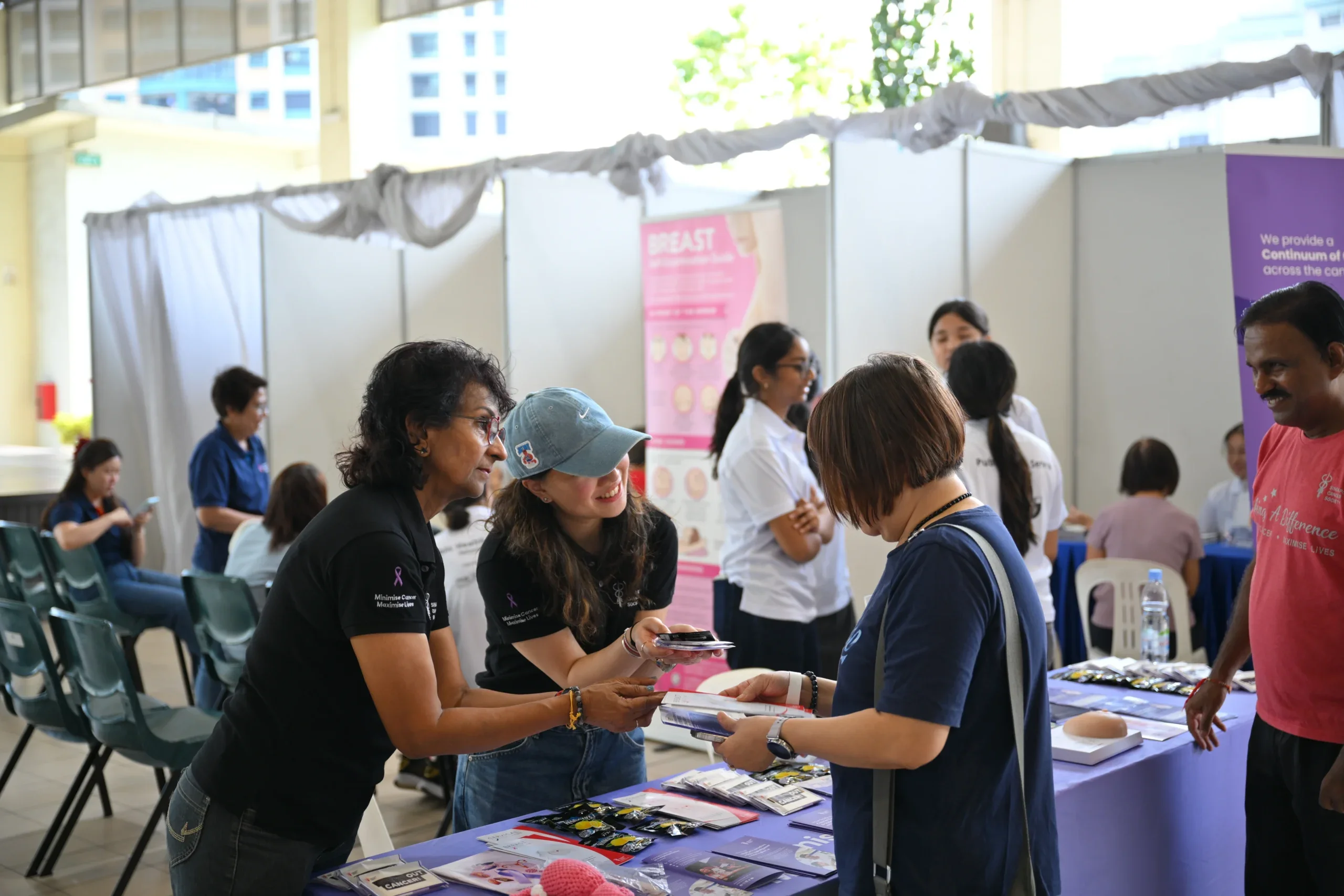 External partners from Singapore Cancer Society teaching a participant about cancer awareness and sharing pamphlets for further reading.
This year’s Health Screening also featured a health exhibition for screening participants run by PHS’s external partners, such as the National Kidney Foundation, National Arthritis Foundation, Dementia Singapore and Caregiving @ Southwest. Covering topics ranging from obesity, heart and kidney health and stroke prevention to palliative care and caregiver burnout, these booths served to increase health literacy and equip participants with the most applicable knowledge based on where they are in their health journey—from healthy adults focused on preventing the onset of chronic disease, to frail seniors and their caregivers navigating the burden of chronic disease.
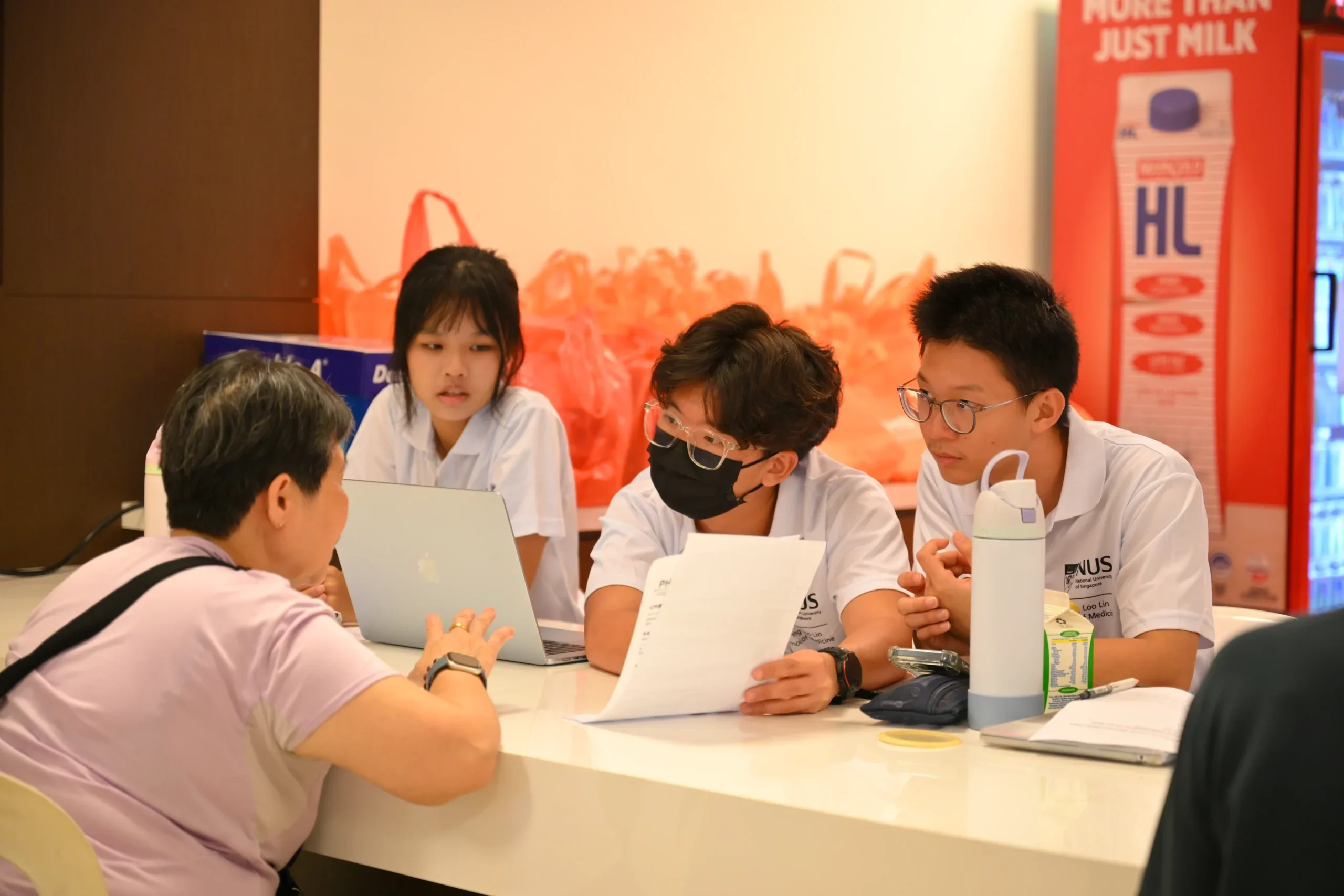 NUS Medicine student volunteers explaining the comprehensive screening report results to a participant.
Prior to the screening, Public Health Service conducted door-to-door publicity in the Boon Lay neighbourhood over two weekends. Student volunteers and organising committee members visited various HDB flatsand public spaces to speak to residents personally, encouraging them to pre-register for the screening and the mammobus service. On the screening days, members of the organising committee and volunteers visited nearby coffee shops and neighbourhoods to publicise the health screening, drawing crowds in to take part.
This year, the Public Health Service continued its Long Term Follow Up Programme for participants, engaging with elderly who have been identified and are interested in longitudinal care to manage their chronic diseases. This programme engages elderly through home visits, promoting healthy habits such as healthy recipes, eating habits and simple fitness exercises. Furthermore, PHS aims to reconnect these participants with their neighbourhood Active Ageing Centres (AAC), to further strengthen the continuity of care by ensuring strong grassroots support. Through the Long Term Follow-Up Programme, PHS aims to provide motivation and empowerment for participants to take steps towards improving their own health and quality of life.
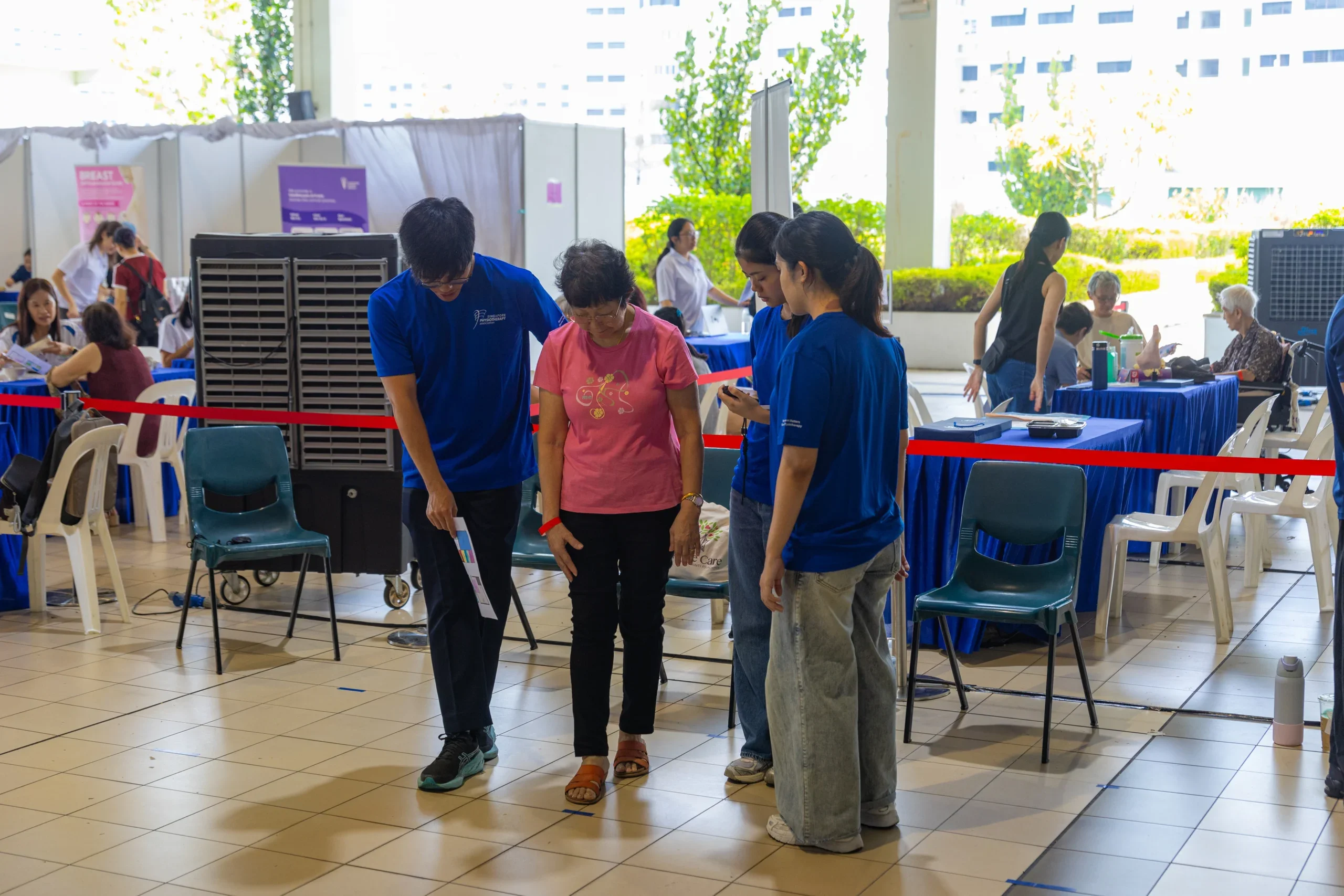 Volunteers from Singapore Physiotherapy Association assisting a participant through exercises.
This year’s screening was made possible thanks to the support of Frontier Community Club, Jurong Medical Centre, South West Community Development Council and partners and sponsors such as National University Health System, Agency for Integrated Care (AIC), Singapore Cancer Society (SCS), NTUC Health and the numerous, above-mentioned community health nonprofits.