NUS Medicine launches Heartcare: Guarding the Gift That Never Rests
Published: 17 Aug 2026
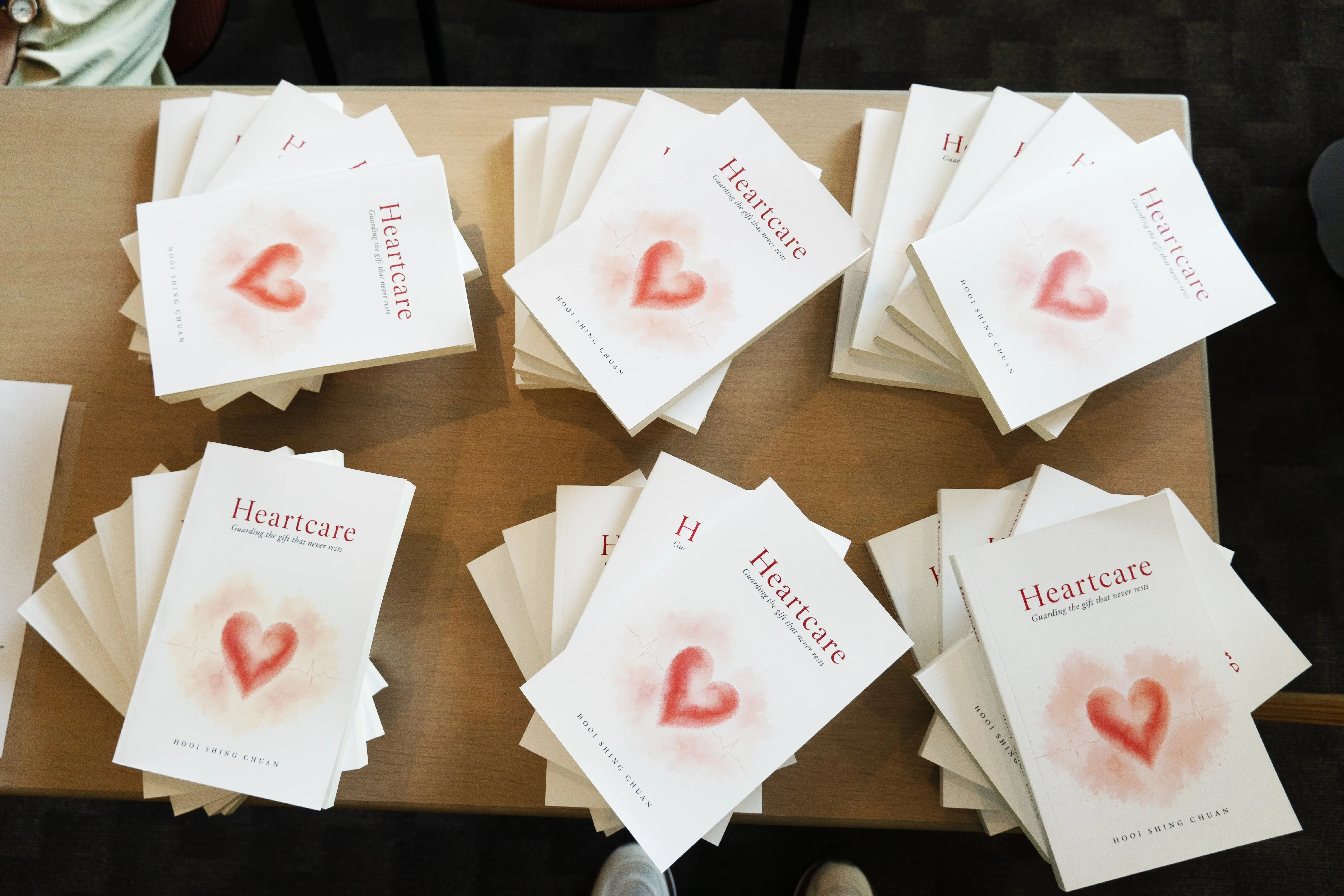
On 5 August 2026, the NUS Yong Loo Lin School of Medicine (NUS Medicine) launched Heartcare: Guarding the Gift That Never Rests, a new book by Professor Hooi Shing Chuan from the Department of Physiology. Held at the University Hall Auditorium and attended by faculty, staff, students and members of the wider NUS Medicine community, the launch highlighted the School’s commitment to public health education and to making the science of the human body accessible beyond the lecture hall.
The morning began with a Welcome Address by Professor Reshma Taneja, Head of the Department of Physiology, before the book was formally launched by Guest of Honour Professor Chong Yap Seng, Dean of NUS Medicine. In their remarks, they spoke of the value of translating rigorous physiological science into resources that general readers can understand and act on, and of the role educators play in shifting the public conversation from treating disease to preserving health.
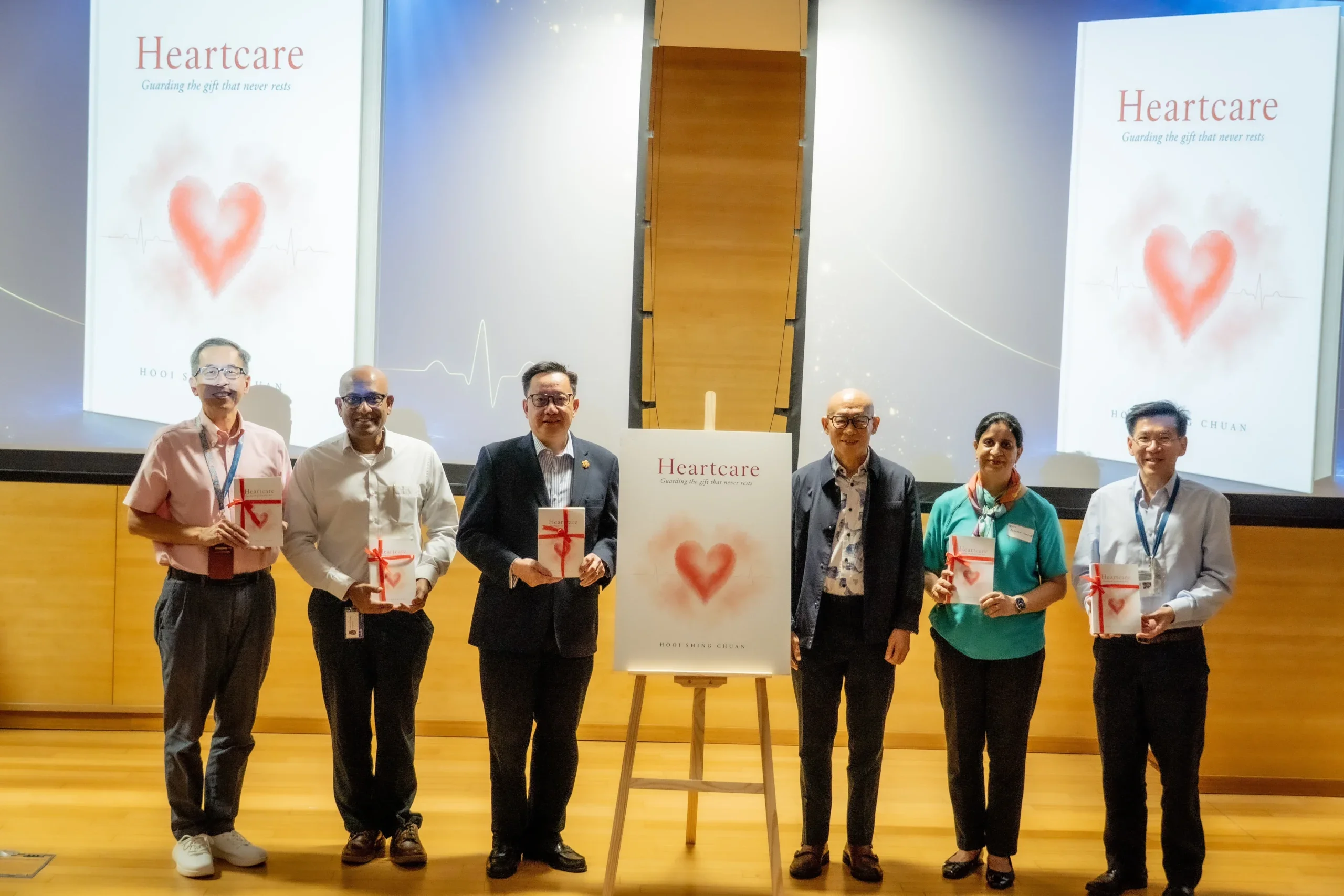
(From left to right) Adj Prof Lau Tang Ching, Vice-Dean (Education), NUS Medicine; Dr Dujeepa Samarasekera, Director of the Centre for Medical Education, NUS Medicine; Professor Chong Yap Seng, Dean of NUS Medicine; author Prof Hooi Shing Chuan, Department of Physiology, NUS Medicine; Prof Reshma Taneja, Head of the Department of Physiology, NUS Medicine and Prof Roger Foo, Vice-Dean (Research), NUS Medicine.
The occasion was graced by senior academic leaders from NUS Medicine, including Prof Chong Yap Seng, Dean; Professor Lau Tang Ching, Vice-Dean (Education); Professor Roger Foo, Vice-Dean (Research); Prof Reshma Taneja, Head of the Department of Physiology; Professor George Yip, Head of the Department of Anatomy; and Dr Dujeepa Samarasekera, Director of the Centre for Medical Education.
Written for the general reader rather than the medical student, Heartcare asks readers to do more than see the heart clearly. It asks them to be astonished by it. An organ the size of a fist, firing its own electricity from a cluster of cells no larger than a grain of rice, beats some one hundred thousand times a day and close to three billion times over a lifetime — beginning before we are born and continuing, without rest, complaint or a single day off, until our last. The book’s conviction is that this is not a fact to be memorised but a gift to be recognised, and that gratitude, far more reliably than fear, is what moves a person to act.
There are three movements to the book. The first is physiology, written to spark wonder at the sheer work the heart does and to cultivate a sense of awe and thankfulness for it. That appreciation opens naturally into the second: how to care for the heart in practical, sustainable, evidence-based ways, through everyday habits that the evidence supports — physical activity, sleep, nutrition, slow breathing and the management of stress. The third turns to what happens when things go wrong: the pathophysiology of high blood pressure, heart attacks and heart failure, set out without jargon so that readers gain the agency and confidence to take a more active part in their own care. Ageing is treated separately and deliberately not as a malfunction, but as a natural process — understanding the changes it brings helps readers tell what is modifiable from what is not and direct their effort accordingly.
The proceeds from the first 100 books sold have been donated to the NUS Medical Bursary Fund.
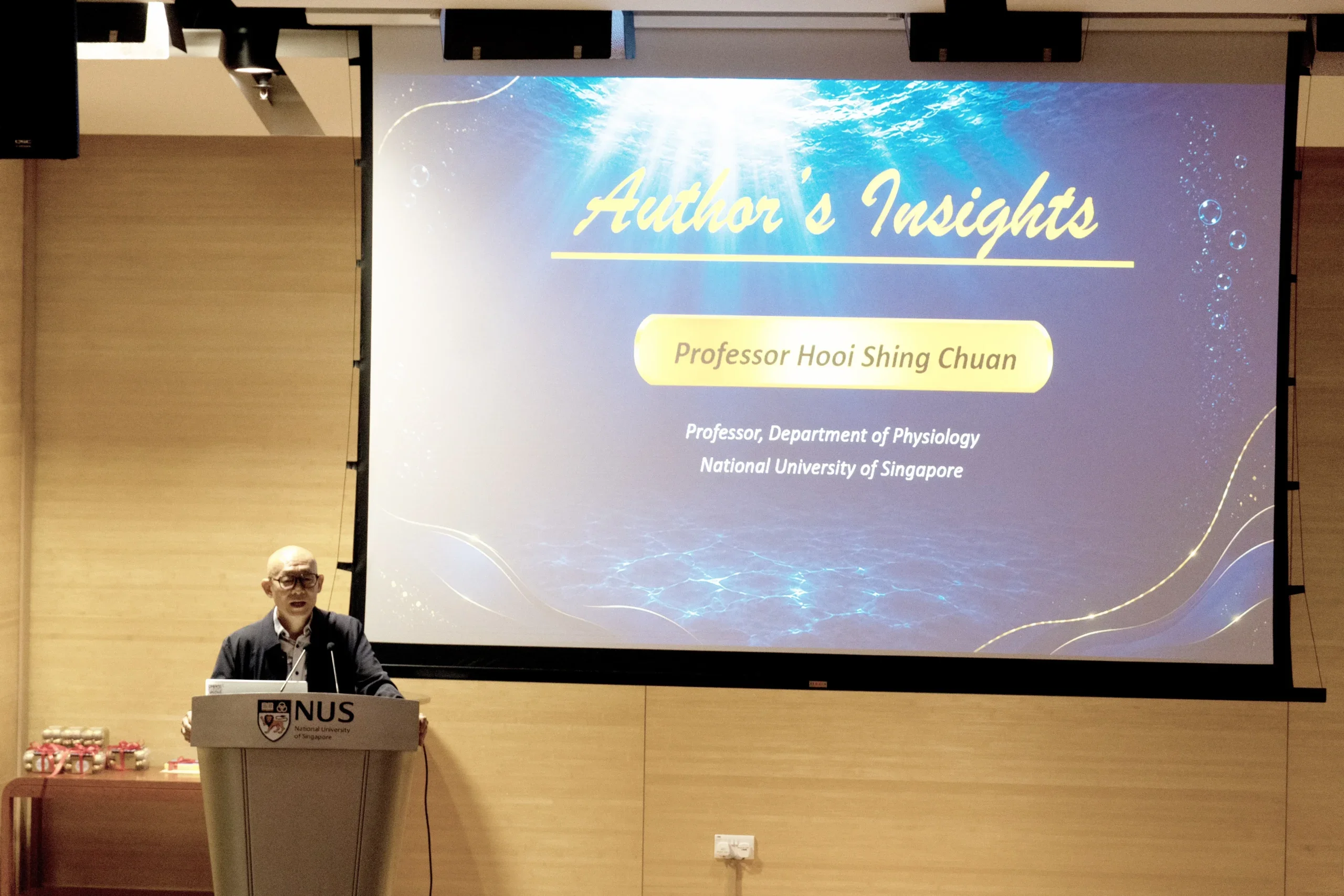
Prof Hooi sharing insights about the book
Professor Hooi is Professor of Physiology at NUS Medicine, where he has taught healthcare and life science students for more than thirty years. He holds an MBBS from NUS and a PhD from Harvard University, and has served as Head of the Department of Physiology and Vice-Dean (Education) at NUS Medicine. His teaching has earned several awards, the most prestigious being the NUS Outstanding Educator Award, the University’s highest teaching honour. In 2023, at the 20th anniversary edition of the Asia Pacific Medical Education Conference (APMEC), he received the MILES Award, a distinction conferred on local and international scholars who demonstrate exceptional leadership, mentorship and innovation in medical and health professions education. The book grew out of that teaching: after decades of explaining the cardiovascular system to successive cohorts of students, he writes, the heart still fills him with wonder, and he wanted to share that feeling with readers who will never sit in a physiology lecture.
The launch formed part of the Department of Physiology’s staff day, which also featured a team bonding activity, the Physio Spotlight Awards, and the presentation of the Henry Lee Huat Mong Prize in Physiology to Nicole Wong Xin Le, a Phase 2 student, and the Healthy Living Video Competition prizes to three teams of medical students. The programme closed with lunch, followed by a departmental outing to the Singapore Oceanarium.