Shaping allergy care from the start of life
Published: 15 Jul 2026
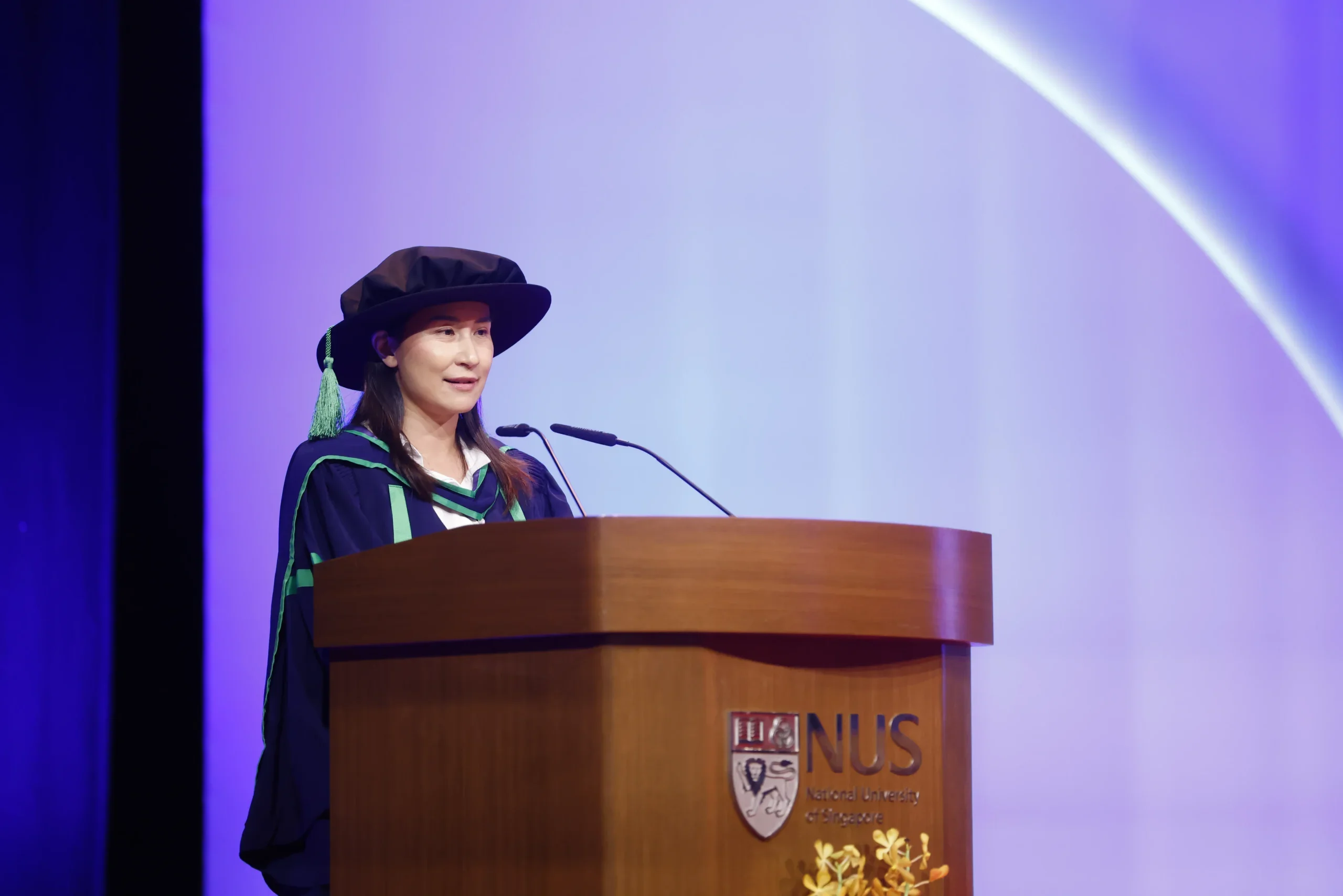
Assoc Prof Elizabeth Tham, Department of Paediatrics, NUS Medicine, and Head of the Division of Paediatric Allergy, Immunology & Rheumatology, Department of Paediatrics, Khoo Teck Puat – National University Children’s Medical Institute, NUH.
For Associate Professor Elizabeth Tham, childhood allergy is not simply a condition to be managed after it appears, but a window into how the earliest chapters of life can shape lifelong health.
A Senior Consultant and Head of the Division of Paediatric Allergy, Immunology & Rheumatology at the Department of Paediatrics, Khoo Teck Puat – National University Children’s Medical Institute, National University Hospital, Assoc Prof Tham is also Associate Professor at the Department of Paediatrics, Yong Loo Lin School of Medicine, National University of Singapore (NUS Medicine), and Assistant Dean (Research) at NUS Medicine. She is part of the 2026 graduating cohort who completed the Doctor of Philosophy (PhD) programme at NUS Medicine, and was awarded the university-level Too Joon Chew PhD Prize in 2026.
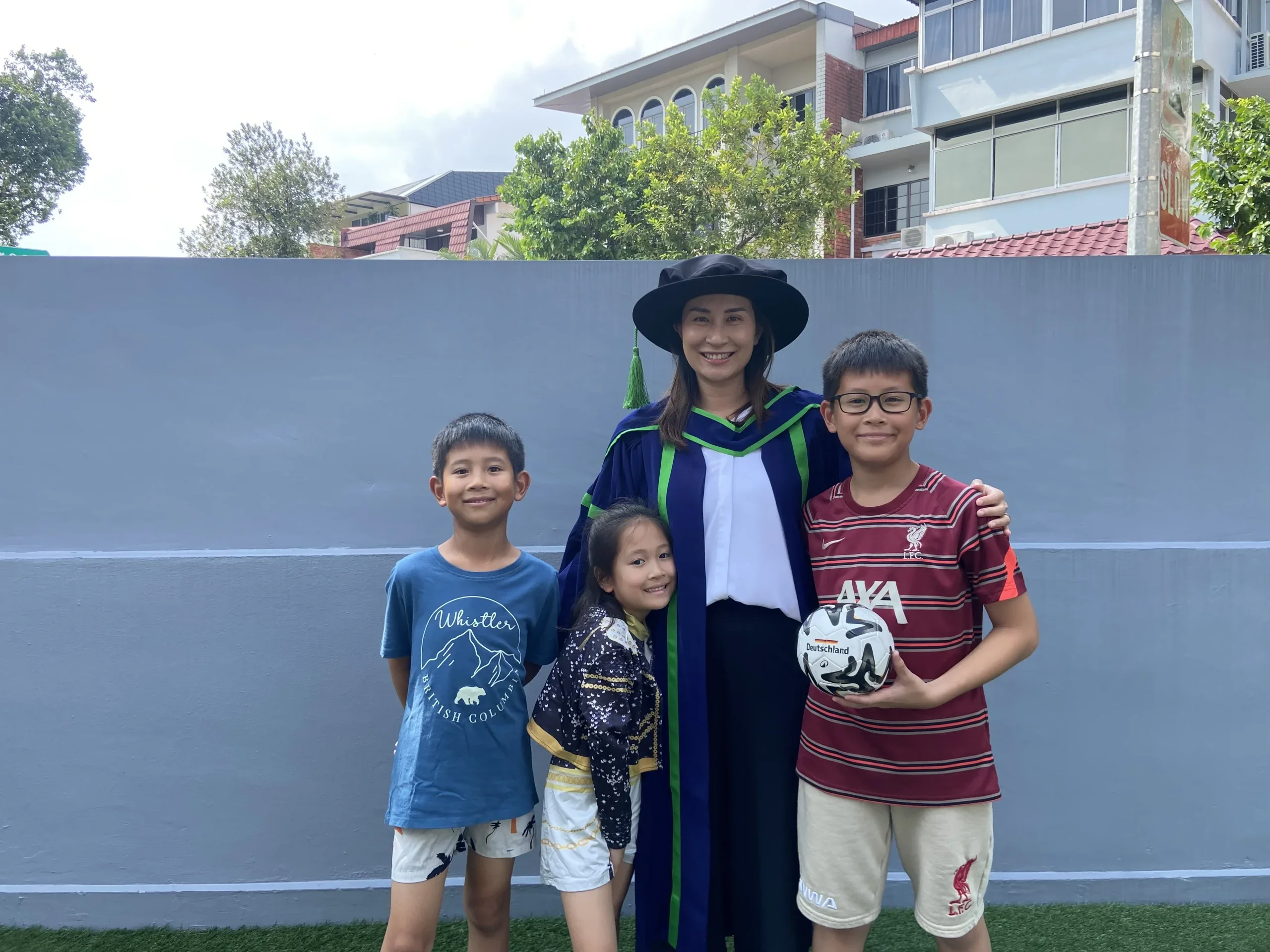
Assoc Prof Tham in her graduation gown with her children
Her PhD thesis, titled “The Impact of Antenatal and Early Life Factors on Childhood Atopic Dermatitis and Food Allergy”, reflects a question at the heart of her clinical and research work: can allergic diseases be prevented before they become firmly established?
“Early life represents a critical window of developmental plasticity where the immature immune system is uniquely primed for antigen-driven tolerance induction and immune modulation,” she explained. In simpler terms, the first years of life may be when the immune system is most open to being guided towards tolerance, before allergic pathways become harder to modify.
This focus grew out of what she saw repeatedly during her paediatric training. Allergic diseases, including food allergy, eczema, asthma, and allergic rhinitis, affect up to 20 to 30 per cent of children, and were among the most common conditions she encountered. Beyond the symptoms themselves, she saw how these disorders could weigh heavily on children and their families, affecting sleep, school, food choices, social activities, and daily routines.
“Children with these disorders, along with their families, often experience substantial socioeconomic and psychological burden,” she shared. This clinical exposure motivated her to improve symptom control, develop more durable treatment approaches, and find ways to prevent allergic diseases before they take root.
While existing therapies can suppress symptoms, they rarely offer a satisfying cure. When Assoc Prof Tham began her research journey, allergy prevention was still in its infancy. “To move beyond conventional therapy into personalised novel interventions through research, I needed rigorous scientific training,” she said. Her thesis helped sharpen that path. Through her research, distinct atopic dermatitis phenotypes were identified, each linked to different risk factors and allergic outcomes. This highlighted how childhood allergic disease is not a single uniform condition, but a varied and complex group of disorders requiring more precise approaches.
Her work also showed that early-onset atopic dermatitis differed markedly between Australian and Singaporean Asian children, underscoring the importance of environmental influences. Another key finding was that prophylactic emollient therapy in high-risk infants could reduce the risk and delay the onset of atopic dermatitis, supporting its role in primary prevention. At the same time, despite delayed peanut introduction, peanut allergy remained exceptionally low in Singapore, suggesting that prevention strategies effective in Western populations may not be directly applicable in Asia.
Taken together, these findings point to the need for population-specific allergy prevention strategies based on local disease patterns, risk factors, and evidence. Her work has informed regional and national allergy prevention guidelines, including APAPARI recommendations on allergenic food introduction, and Singapore guidance supporting moisturiser use from birth in high-risk infants.
Today, this research continues to inform her wider clinical and academic work. As a Principal Investigator in the Growing Up in Singapore towards Healthy Outcomes (GUSTO) and Singapore PREconception Study of long-Term maternal and child Outcomes (S-PRESTO) cohorts, as well as the Human Potential Translational Research Programme at NUS Medicine, Assoc Prof Tham studies childhood allergic disorders, early life immunomodulation, and the Developmental Origins of Health and Disease. Her research also examines how the skin, gut, and environmental microbiomes may influence the risk and control of atopic dermatitis
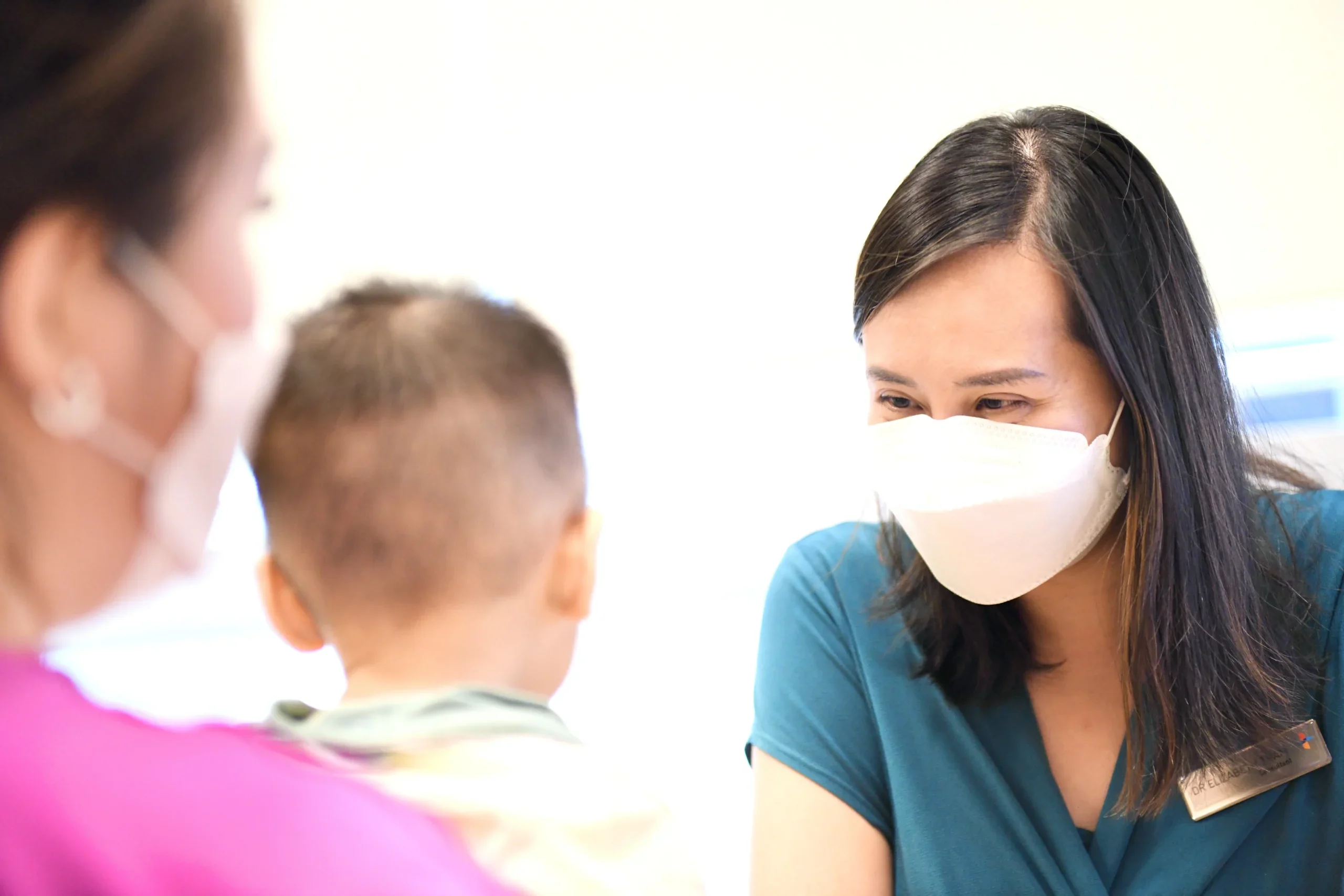
Assoc Prof Tham conducting a consultation.
Yet significant gaps remain. Most treatments still begin only after allergy has developed, and childhood allergies are often managed with a one-size-fits-all approach. Clinicians also lack precise tools to predict which babies are at highest risk, or which interventions will work best for each child. Another challenge is turning scientific findings into practical advice that parents can follow and sustain at home.
Her PhD journey was demanding. She pursued it while managing full-time clinical and administrative responsibilities, building her academic career at NUS, and caring for a growing family. Through it all, she credits the support, sacrifice, and encouragement of her family, friends, and mentors for helping her reach this milestone.
Receiving the Too Joon Chew PhD Prize was deeply meaningful to her. “It recognises the inherently challenging journey of the clinician-scientist,” she said. To Assoc Prof Tham, the award affirms that bridging the clinic and laboratory is worthwhile, and that the University values and supports those who choose this path.
Her PhD has also changed the way she practises medicine. She now approaches clinical guidelines with a more analytical lens, carefully evaluating the evidence behind them so she can better counsel patients and personalise care. More than that, she has moved from simply applying evidence to helping generate it, contributing to standards of care, especially in Asia.

Assoc Prof Tham and her family.
To clinicians and researchers considering the same path, her advice is clear: “View a PhD not just as an academic milestone, but as a platform that provides the rigorous, structured scientific training and essential skillsets needed to turn a beginner clinician-researcher into a true clinician-scientist.”
For Assoc Prof Tham, the journey may be demanding, but it is also what allows clinicians to move beyond practising medicine, and towards shaping the future of patient care.