New tele-dentistry programme supports early intervention for children at risk of caries
Published: 22 Apr 2026
Credit: National University Health System
For many families, dental care decisions tend to be reactive, made only when a child experiences pain or visible dental problems, by which time treatment can be more complex. Addressing childhood dental risk early not only improves health outcomes but also supports better use of healthcare resources by ensuring children receive the right level of care at the right time.
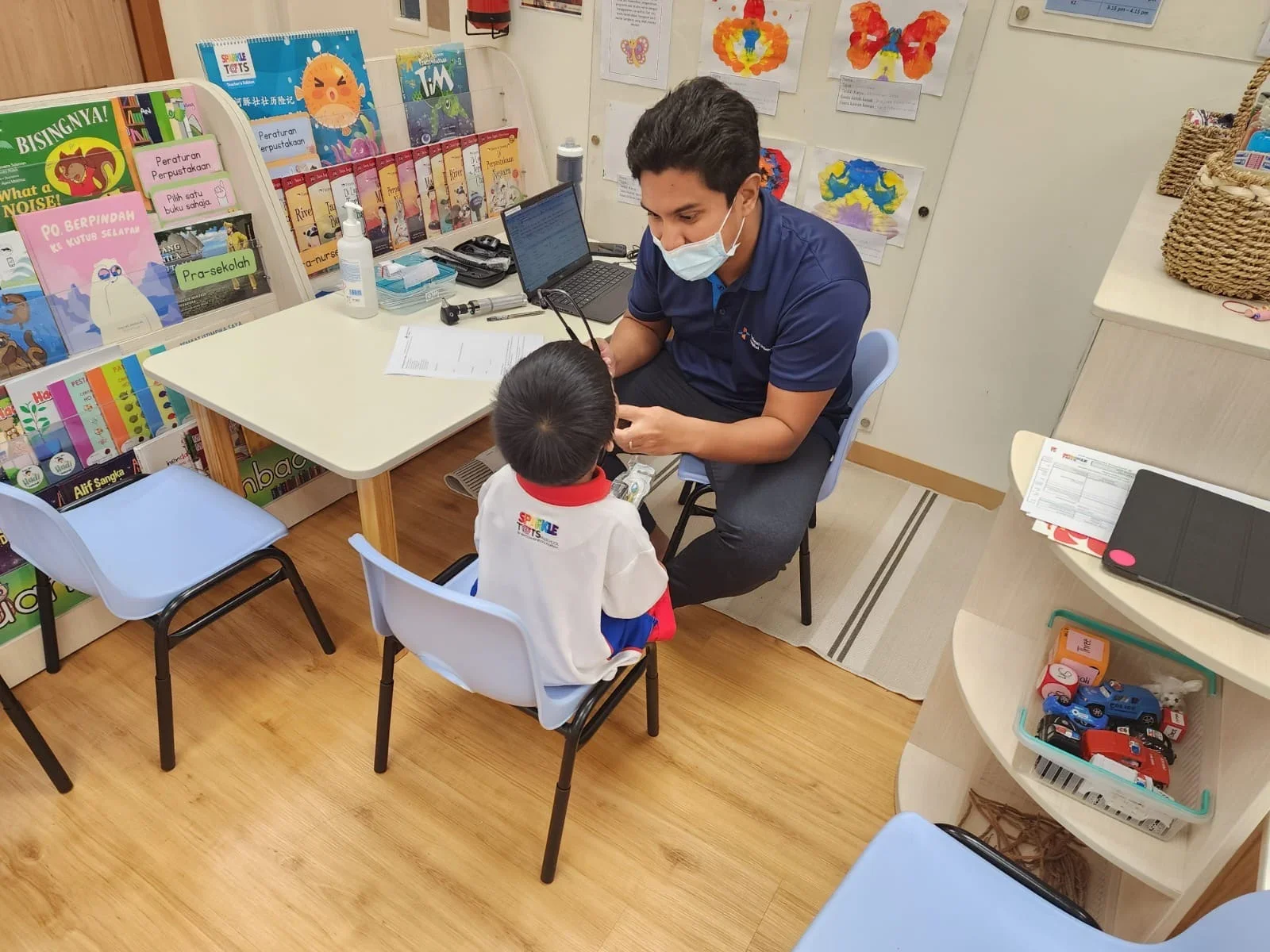
In January 2023, a multi-modal tele-dentistry programme which combined behavioural risk assessment with image-based assessment, was launched as part of the HEAlth and Development SUpport in Preschool Partnerships (HEADS-UPP) initiative. HEADS-UPP is a community-based preventive health programme delivered in partnership with Care Corner Singapore and PAP Community Foundation (PCF) Sparkletots Preschool, providing health and developmental screenings, targeted health and parenting education, and support to children from lower-income families.
As of 20 January 2026, a total of 355 children aged 18 months to six years from 17 PCF Sparkletots preschools in western Singapore had benefitted from the programme.
The tele-dentistry programme brings together the clinical, academic and public health expertise from the National University Hospital (NUH), the Faculty of Dentistry, National University of Singapore (NUS Dentistry), the National University Centre for Oral Health, Singapore (NUCOHS) and the Yong Loo Lin School of Medicine, National University of Singapore (NUS Medicine) to support early identification of caries risk and timely parental action. Through this cross‑institutional collaboration, the programme aims to enable earlier intervention and, over the longer term, help narrow oral health disparities among preschool children from vulnerable families.
“What we are seeing from this tele-dentistry programme is encouraging,” said Associate Professor Catherine Hong, Vice Dean (Research, Innovation and Enterprise), NUS Dentistry and Senior Consultant, Division of Paediatric Dentistry, NUCOHS. “By bringing dental assessment and clinical advice closer to where children are, we are able to identify risks earlier and support lower‑income families who might otherwise face barriers to timely care. This helps address gaps in early detection during a critical stage of a child’s development.”
Adjunct Associate Professor Chong Shang Chee, Head of Division and Senior Consultant, Division of Developmental and Behavioural Paediatrics, Department of Paediatrics, Khoo Teck Puat – National University Children’s Medical Institute, NUH, and programme lead of HEADS-UPP, added: “Looking ahead, we see tele‑dentistry as an important part of how HEADS‑UPP encourages families to take proactive action through structured guidance, such as individualised reports that clearly prioritise next steps so parents are not overwhelmed.”
“Going forward, we aim to enhance the dental screening process through the integration of artificial intelligence (AI). AI can help review the intraoral images, evaluate responses from the Caries Risk Assessment questionnaire and integrate these data to generate oral health reports. These reports contain customised oral health recommendations that allow parents to intervene early, reducing the risk of progression of dental caries and gum inflammation. These enhancements will streamline the dental screening process, enabling the programme to reach more children and expand to additional preschools, while reducing reliance on manual processes. “
Read more in the press release here.