
Issue 58
May 2026
INSIGHTS

Good research can shape policy, shift mindsets, change behaviours and provide solutions to health challenges. In the second instalment of the NUS Medicine Inspire120 Professorial Lecture, Professor Chong Yap Seng, Lien Ying Chow Professor in Medicine and Dean, Yong Loo Lin School of Medicine, National University of Singapore (NUS Medicine), shared how he and his team successfully harnessed research insights to impact practice and policy with the Growing Up in Singapore Towards Healthy Outcomes (GUSTO) study.
Starting life with GUSTO
Launched in 2009, GUSTO is a collaborative effort across Singapore following 1,200 mothers and their children to understand how early-life conditions shape health and development. The research team collected DNA, microbiome and blood samples from the mothers, while the babies underwent EEG assessments on their first day, whole-body MRIs at one week, repeated every two years from age four. The study also tracks the children’s neurodevelopment, body composition and cardiometabolic health and as they reach their teenage years, the focus expands to social behaviours and connections.
With a total population of just 6.11 million1, human capital is Singapore’s most important resource. Prof Chong, GUSTO’s Principal Investigator said, “We are convinced that healthy, successful adults start young, as many critical socio-emotional skills, habits and executive functions develop in the first few years of life. In particular, the period between ages two and four presents a key window between developmental stability and plasticity for shaping outcomes that give children the best possible start in life.”
Findings from another study—the Dunedin Multidisciplinary Health and Development Study—support GUSTO’s mission. The study, which has been following children in New Zealand since 1972, found that poor executive functions or self-control in childhood is predictive of poor outcomes in adulthood. These individuals earn less over their lifetime, have less savings, and are more likely to be financially dependent on family or public subsidies.
The uniqueness of GUSTO lies not only in its depth and longitudinal scope, but more significantly in how its findings influence clinical practice and healthcare policymaking in Singapore. “Bringing science into practice is not a simple or straightforward process—and usually takes years,” Prof Chong explained. “But because GUSTO is already contextualised to the Singapore setting, our government has been very ready to translate findings and insights into pilot interventions as well as full-scale implementation at the population level.”
Addressing unmet needs in women’s health
One example was the revision of guidelines for gestational diabetes mellitus (GDM) screening. A GUSTO study found that around 20% of mothers had GDM, while another study found that 44% of these women became either pre-diabetic or diabetic within six years of their initial diagnosis. Yet only half were identified through the prevailing high-risk screening approach. This resulted in missed opportunities for timely intervention and lifestyle modifications, which have been proven to reduce the incidence rate by nearly 60%.
Accordingly, the Singapore Ministry of Health (MOH) adjusted its guidelines in 2018 to introduce universal GDM screening between 24 and 28 weeks of gestation and again in 2022, recommending lifelong diabetes screening for women with a history of GDM. “This exemplifies the proactiveness of Singapore’s policymakers in turning research into policy and their willingness to revise guidelines as new findings emerge,” Prof Chong said.
Maternal blues affect offspring
In another study, the GUSTO team screened women for symptoms of perinatal depression during pregnancy and after delivery and found that about 40% presented with probable clinical or subclinical depression. These high levels of depressive symptoms were associated with microstructural changes in regions of their newborns’ brains that process negative emotions. When these children were assessed at four years old for school readiness with the Whole Child Panel, they performed significantly worse than their peers.
“The findings suggest maternal emotional health has an impact on the child’s neurodevelopment and subsequent performance,” Prof Chong said. “More importantly, it highlights the importance of screening and supporting women for emotional distress before, during and after pregnancy. I am glad to share that this is now routinely practised at National University Hospital (NUH), KK Women’s and Children’s Hospital (KKH) and Singapore General Hospital (SGH). We are also exploring ways to scale this across private hospitals in Singapore.”
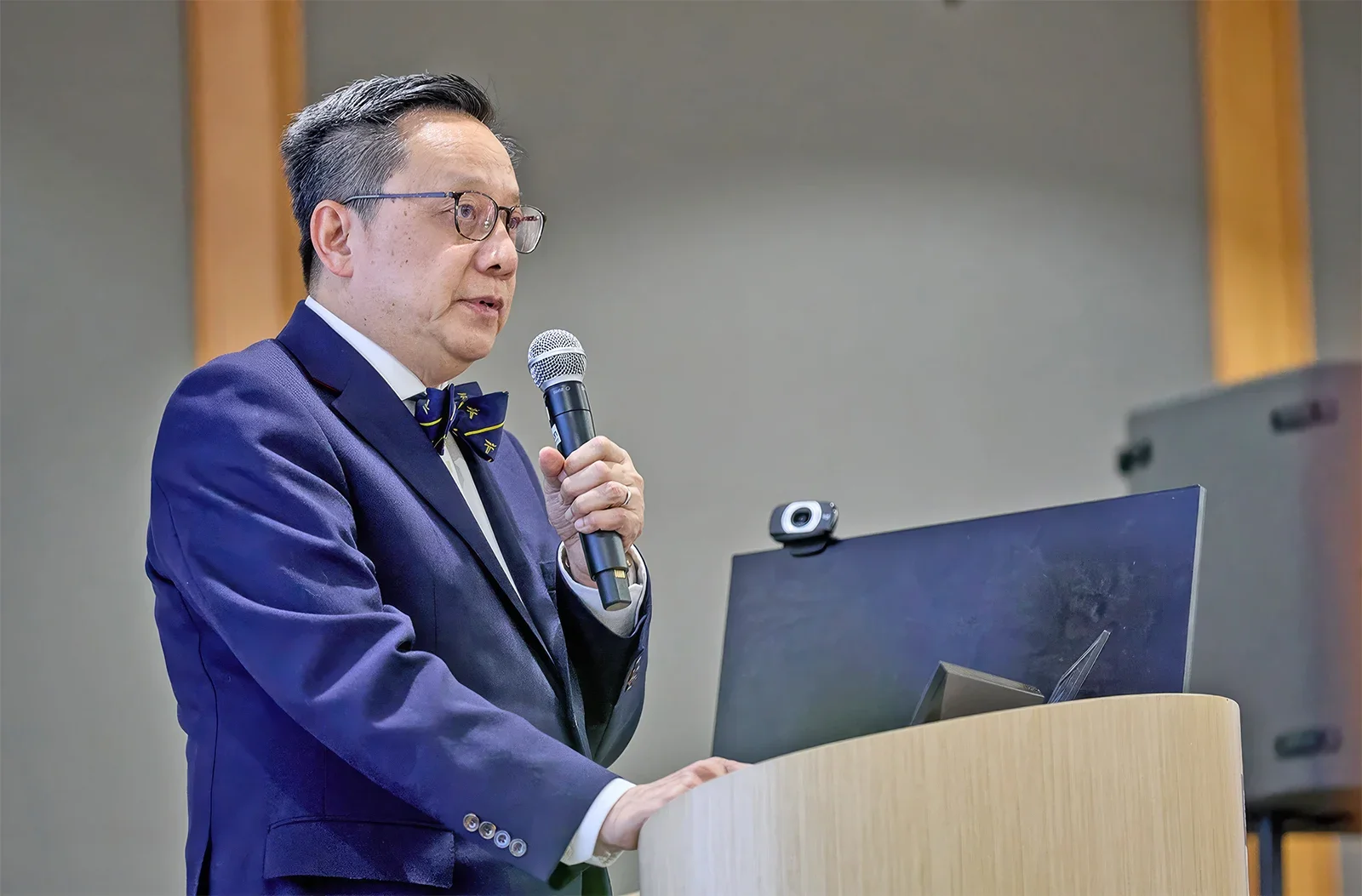
Research cannot be translated into interventions and policies that will benefit communities without researchers going beyond publications, philanthropic support to pilot interventions, and policymakers adopting and scaling up interventions that work—we need to work together and go beyond to give our children the best start to life.”
Enabling kids to do well
GUSTO’s commitment to give children the best possible start in life led the team to examine school readiness. Building on the understanding that factors such as family demographics, pregnancy, health and preschool executive functions play a key role, the GUSTO team partnered with the Singapore Ministry of Education (MOE) to pilot the Whole Child Panel, engaging four-year-olds in teacher-led self-regulation activities in a few MOE kindergartens. Notable gains in cognitive flexibility were observed in children who spent an average of 44 minutes per week over eight weeks on the executive function playbook—demonstrating that targeted interventions before age five can effectively strengthen early executive function.
“Following the pilot, we are now working closely with the Early Childhood Development Agency (ECDA) and MOE to roll out the Whole Child Panel across preschools in Singapore,” Prof Chong said. “We are also testing an application we’ve developed to help teachers better evaluate children’s language skills, social perception and other abilities.”
No screen time for infants and toddlers
The team’s research has also shaped national guidance beyond the classroom. After uncovering that early screen exposure can adversely affect neurodevelopment, GUSTO researchers recommended that infants and toddlers below 18 months not be given screen time. This recommendation was quickly adopted by the Health Promotion Board (HPB) and rolled out to parents and childcare teachers through various channels. MOH also issued the first ever parental advisory on children’s access to and use of devices like mobile phones and tablets in March 2023 and revised it in 2025 with more specific advice—another example of research translating swiftly into national policy.
Their findings on childhood obesity have been similarly well received. In collaboration with HPB and the childcare sector, the Appetite Toolbox developed by Dr Keri McCrickerd was piloted with more than 300 preschoolers. Children aged three to six showed improved ability to recognise feelings of hunger and fullness. Educators expressed support for continuing its use. These encouraging outcomes point to real opportunities to shape healthier eating habits early, building foundations for lifelong well-being.
Generational transformation needs many hands
The GUSTO team does not take these achievements lightly, with Prof Chong attributing the study’s success to strong transdisciplinary partnerships among healthcare scientists, social workers, policymakers and the community.
“Research cannot be translated into interventions and policies that will benefit communities without researchers going beyond publications, philanthropic support to pilot interventions, and policymakers adopting and scaling up interventions that work—we need to work together and go beyond to give our children the best start to life,” he said.
Looking ahead, he expressed hope for the GUSTO cohort to reach full adulthood, around 30 years of age—in 14 years’ time. “Our journey hasn’t always been easy, but the study has already delivered clear value and impact to our community. I am optimistic that GUSTO will continue to be a useful resource for Singapore.”
Click here watch Prof Chong’s Professorial Lecture.
Click here to watch the fireside chat.

Prof Chong’s lecture was part of the NUS Medicine Inspire120 Professorial Lecture series, celebrating the school’s 120th anniversary and highlighting excellence in medical education, research and healthcare, as well as the impact of academic philanthropy in advancing medical breakthroughs. The lecture also marked the 30th anniversary of the Lien Ying Chow Professorship in Medicine, established in 1995 to provide leadership in medical research and education, and shape Singapore’s healthcare landscape.
National Population and Talent Division site. (June 2025). Retrieved 23 February 2026 from https://www.population.gov.sg/our-population/population-trends/overall-population/.
More from this issue

ETHICALLY SPEAKING
What Does Ethically Sound Nursing Care Look Like?
PEOPLE OF NUS MEDICINE
Innovating the Way To Better Health