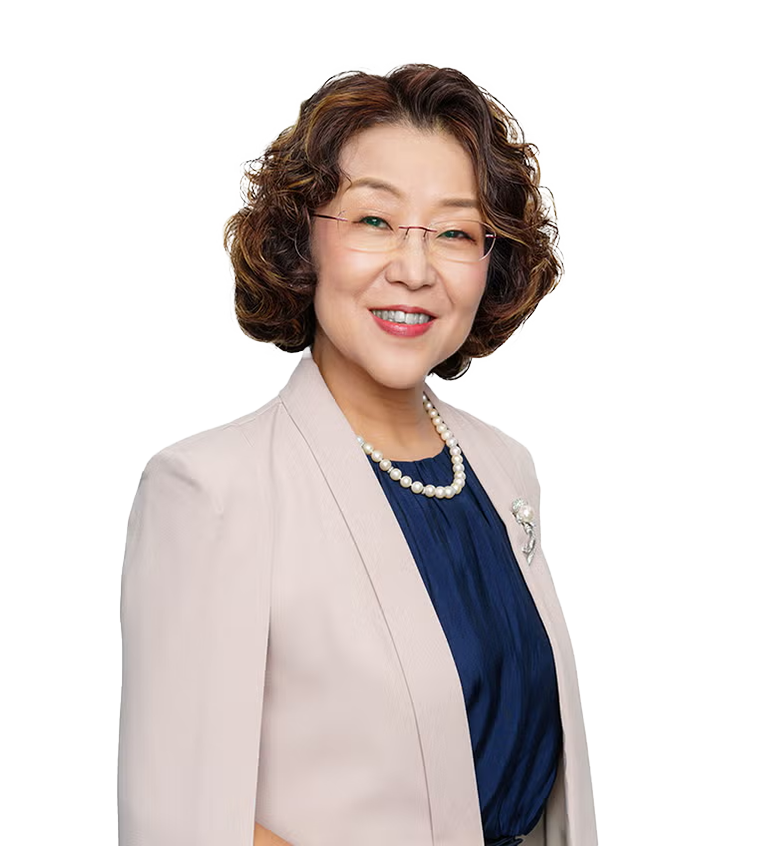

Long-time Alice Lee Centre for Nursing Studies (NUS Nursing), National University of Singapore Yong Loo Lin School of Medicine, faculty members Professor Wang Wenru and Assistant Professor Jiang Ying have each shown their mettle by proving naysayers wrong and persisting despite challenges. Unwavering in their quest to carve out fulfilling research careers at NUS Nursing, they are connected by their shared passion for research today.
From Unknown to Renowned: A Veteran’s Journey
“Wow, nurses do research?”, or even outright surprise that NUS had a Nursing department—were reactions that NUS Nursing’s Professor Wang Wenru often faced in the early days.
As compared to today, things were vastly different when Prof Wang first joined the department as an Assistant Professor in 2012. Fresh from her role as Associate Professor at the Macao Polytechnic Institute, she was initially apprehensive.
She recalled, “When Professor Sally Chan (NUS Nursing’s third Head) invited me to join the department, it was relatively small with only three to four tenure-track faculty members. They were trying to develop the research culture and didn’t have much of a track record—so grants were naturally hard to come by.”
Pioneering Spirit
Fortunately, Prof Wang was no stranger to being a pioneer. Having graduated from one of the first batches of undergraduate Nursing students at Xi’an Jiaotong University, she ventured to Thailand for her Master of Nursing at Chiang Mai University because at that time, there were no postgraduate Nursing programmes in China. She went on to become the first Nursing student from China to complete a PhD at the Chinese University of Hong Kong.
After joining NUS Nursing, Prof Wang dived into the opportunity to work with the then newly-established National University Heart Centre Singapore (NUHCS) on cardiac-related projects. This leveraged on her existing interest in cardiac research, from her Master’s days. The strong support from NUS Nursing leadership—initially from Prof Chan, followed by Professor Emily Ang (the School’s fourth Head), and Professor Liaw Sok Ying (the current Head of Department)—went a long way to smooth her transition. Not to mention, the passionate colleagues and students she met also inspired her to soldier on.
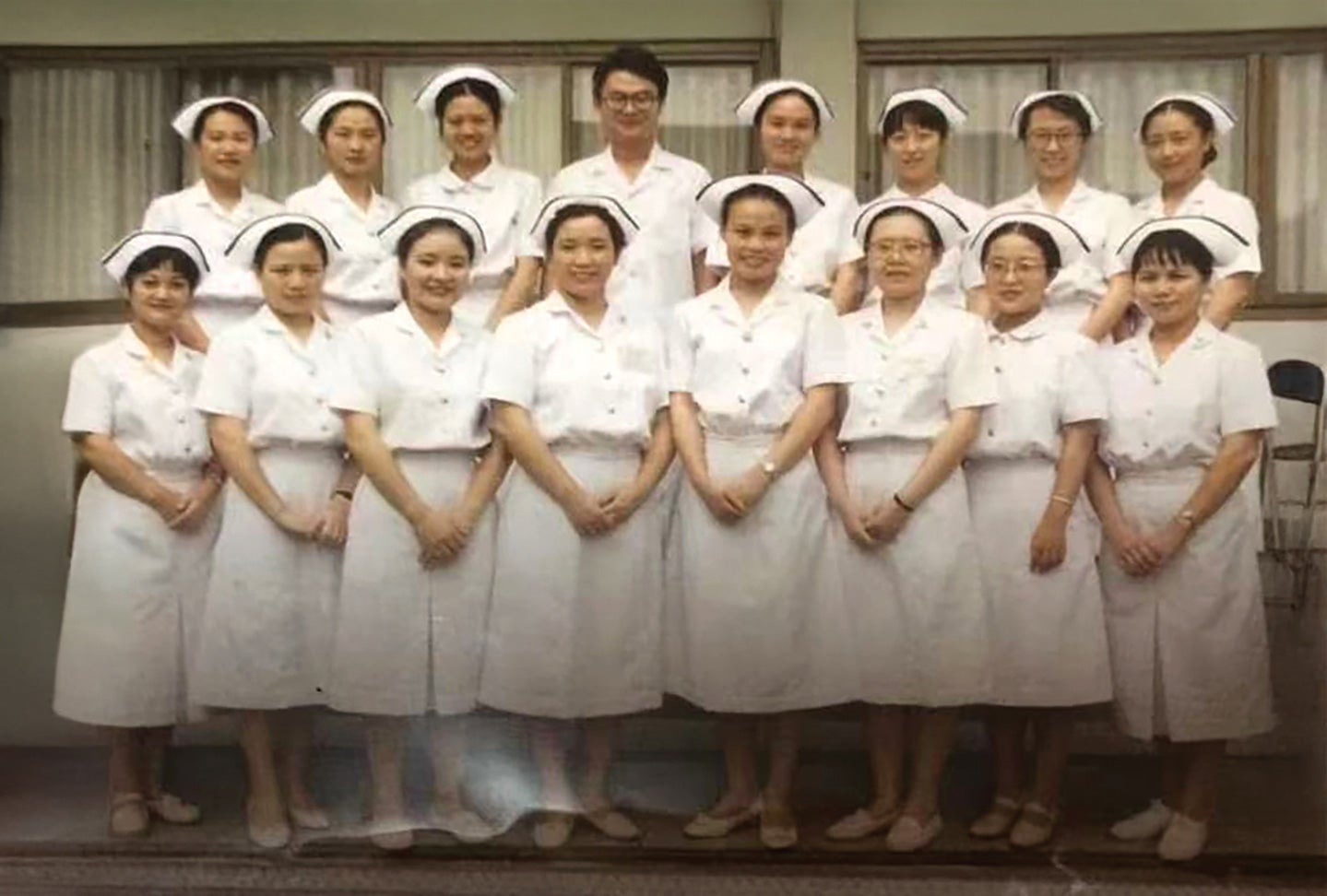
Prof Wang (front row, second from right) with her Master of Science in Nursing classmates. |
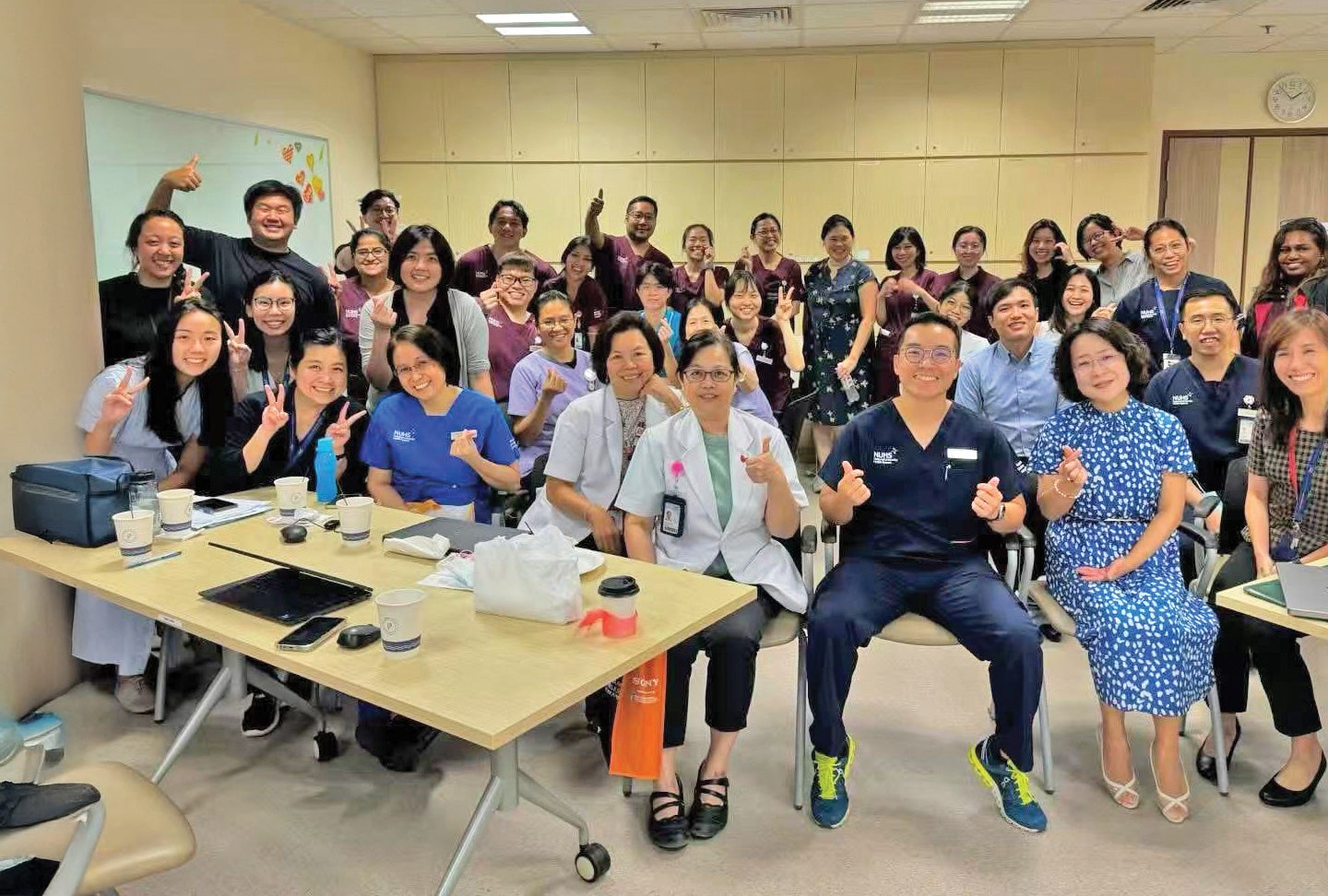
Prof Wang (front row, third from right) and her NUHCS collaborators. |
Looking back, she reflected, “NUS is such a research-intensive and competitive university that there were times when I worried for myself and NUS Nursing—whether we could survive. But I’m glad to bear witness and contribute to NUS Nursing’s rapid growth all these years, and for the collaborative culture we’ve built.”
Research Matters
In the intervening years, Prof Wang’s research areas grew—informed by national and global healthcare needs. Her focus expanded to include active ageing and chronic illnesses such as diabetes. She said, “People used to wonder about my job as a nurse researcher—but research is actually core to our mission of advancing Nursing education and practice.”
She continued, “It’s only through research that we can generate new knowledge, refine clinical techniques and create innovative care models.” Thankfully, with NUS Nursing’s growing reputation, there’s increasing recognition of nurse researchers in Singapore.
Prof Wang’s research efforts have also borne fruit. She was named an American Academy of Nursing Fellow (one of the highest accolades in the Nursing profession) in 2020, and inducted into the Sigma International Nurse Researcher Hall of Fame in 2023.
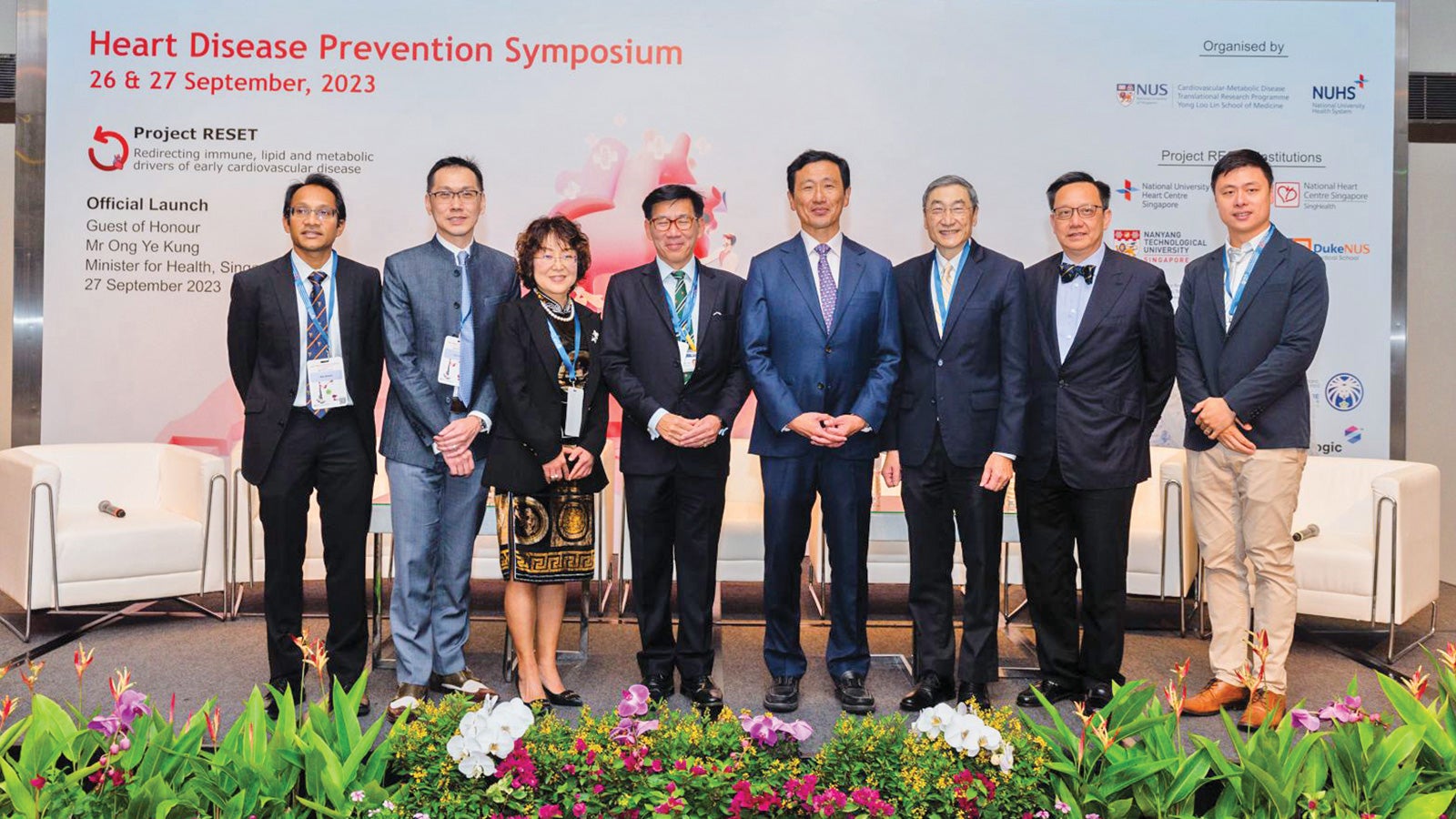
Prof Wang (third from left) at the official launch of Project RESET.
Some of Prof Wang’s recent projects include Integrative Cardiac Rehabilitation Employing Smartphone Technology (I-CREST), Preventing Diabetes via Volunteers Engaging Residents using Technology (P-Divert)—funded by the National Medical Research Council (NMRC)—and Project RESET (Redirecting Immune, Lipid and Metabolic Drivers of Early Cardiovascular Disease). Project RESET is a five-year prospective cohort study aimed at understanding metabolism, heart, liver health and lifestyle behaviours of the Singapore population to prevent heart diseases, including heart attack and stroke. This large-scale initiative involves collaboration among medical schools, public healthcare clusters, industry, and community partners.
“I’m one of four theme lead-PIs on the project, in charge of developing an artificial intelligence (AI)-powered app to support lifestyle interventions for participants. Unlike my own projects where I have clear protocols to adhere to, the scale of this project means we often have to figure things out as we go along. It’s challenging—but fun,” said Prof Wang.
Pushing Upward
In addition to her research activities, Prof Wang has leant into her role as a mentor for junior faculty and students—given her experience as a pioneer faculty member.
“Mentoring younger researchers is a big part of my focus these days, especially in my role as Chair of NUS Nursing’s Chronic Illness and Long-term Care Research Programme, she said. “I work closely with our Research Fellows and PhD students to guide them on their projects—which have the potential to improve quality of life for the growing number of older adults in Singapore with multiple chronic conditions.” Recognising her contributions to the mentorship of PhD students, Prof Wang was awarded the Graduate Mentor of the Year (GRAMMY) Award in 2024 by the Yong Loo Lin School of Medicine, National University of Singapore (NUS Medicine). She is the first person from NUS Nursing to receive this honour.
Prof Wang also serves on NUS Medicine’s faculty-level promotion and tenure (P&T) committee. She is the first member of the NUS Nursing team to do so. She explained, “Nursing representation on the committee is important—having that voice to advocate for our Nursing community.”
“Familiarising myself with the NUS benchmarks for tenure-track academics has been eye-opening. I can now offer better guidance to our junior faculty when they prepare their P&T applications—especially at this crucial stage when we are pushing for more Nursing talent to join our ranks,” she continued. “It’s not just about hitting the numbers, but doing quality research with translational potential.”
And eventually, when they move up in seniority—she hopes that they too, can mentor the junior staff who come after them. “That’s one of my greatest wishes—that our junior faculty can continue the NUS Nursing culture of inclusivity and mutual support, and ultimately, work together to bring NUS Nursing to the next level,” Prof Wang concluded.
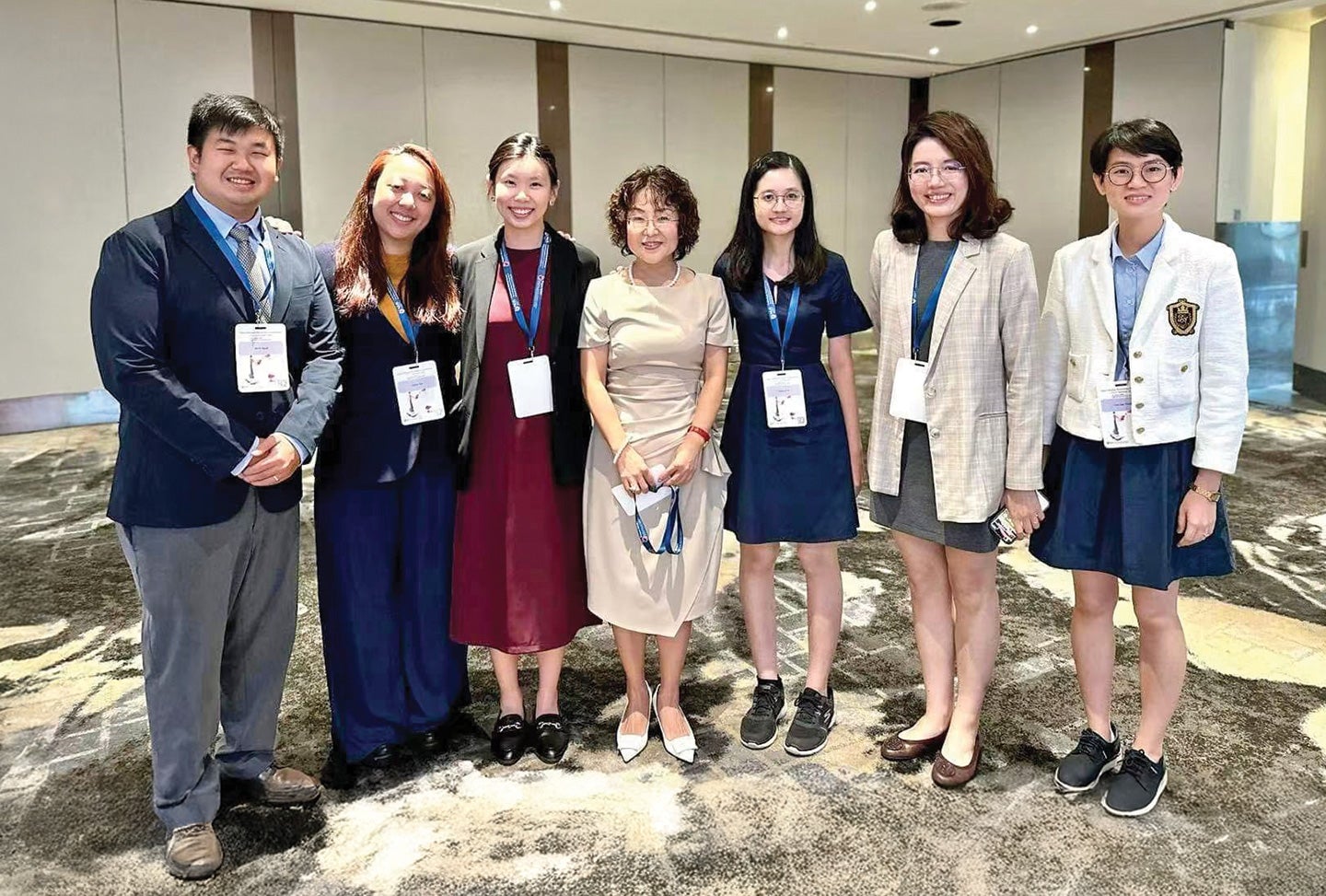
Prof Wang (centre) and her PhD students, including Dr Jiang Ying (second from right). |
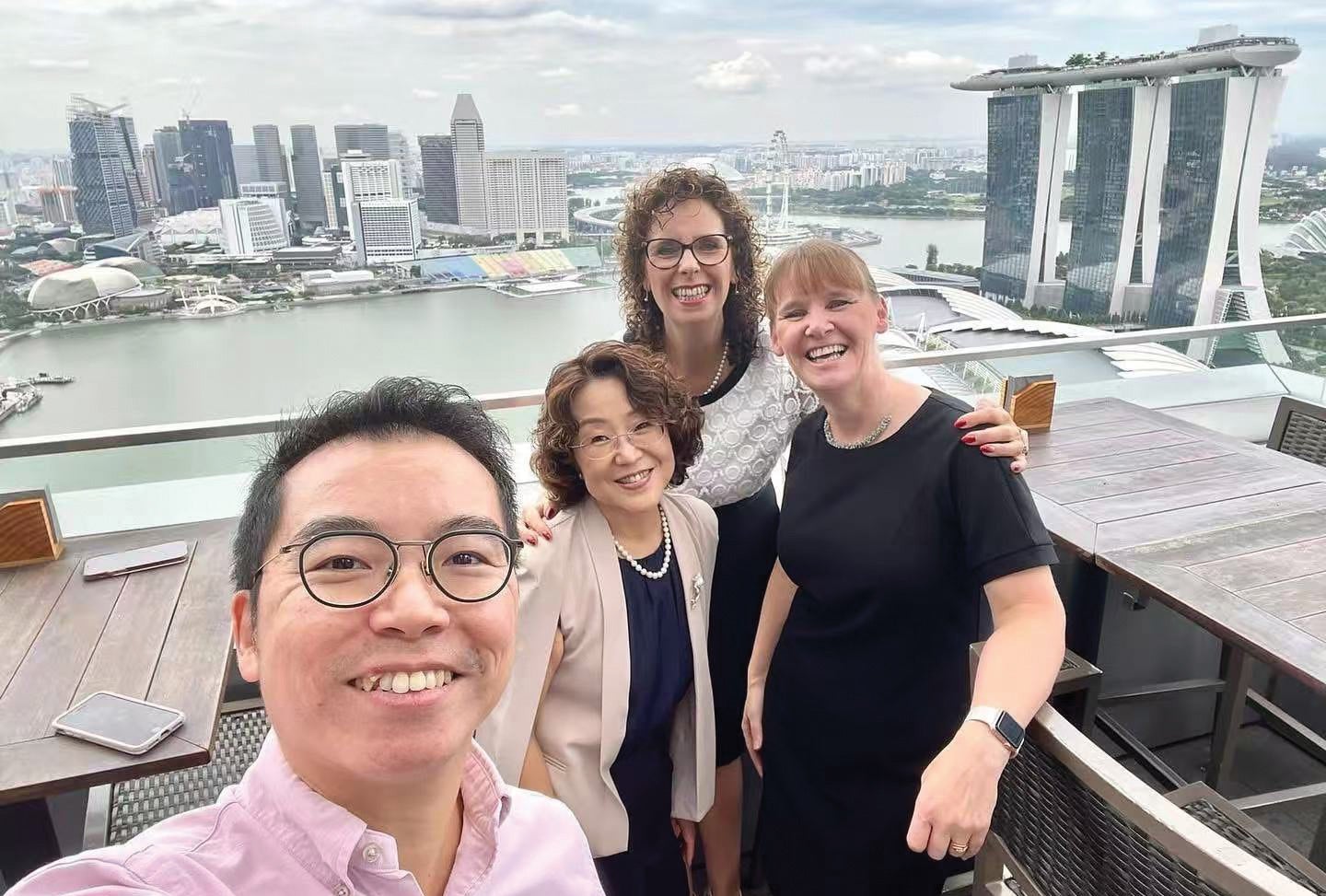
Dr Yeo Tee Joo (first from left) is one of Prof Wang’s (second from left) long-time NUHCS collaborators on the I-CREST project. |
From Uncertainty to Discovery: A Detour into Research
For Assistant Professor Jiang Ying, her journey at NUS Nursing began as a temporary foray into research while she was pregnant with her first child. Her short stay has since become a 11-year research career—and counting.
Then working in mental health clinical services at the National University Hospital (NUH), Dr Jiang wanted to take a step back from long hours in the hospital. She shared, “At that time, I needed more flexible working hours and family time—and a friend working as a research assistant in the department invited me to join her here.”
But to Dr Jiang then, she thought that the research stint would be a temporary one. She said, “I enjoyed my clinical work in the community, and figured that once my child was older I could return. My boss at NUH also left the option open for my return when I was ready.” With her clinical background, Dr Jiang successfully applied to NUS Nursing to work as a research assistant on mental health-related projects.
Unfortunately, months after Dr Jiang came onboard as a research assistant, two PIs she was attached to left NUS Nursing in quick succession.
Third Time Lucky
That left Dr Jiang at a crossroads—to stay at NUS Nursing or return to clinical work. “My baby was almost due, but my position at NUS Nursing was precarious. At the same time, if I went back to clinical now, I would have learnt nothing about research.” The desire to try again cemented her decision to stay at NUS Nursing. As the saying goes, third time’s a charm.
Dr Jiang joined Prof Wang’s research team—marking the beginning of a long, collaborative journey for both. It so happened that Prof Wang was working on a home-based manual-based cardiac rehabilitation programme for patients with coronary heart disease. “Prof Wenru told me that while there wasn’t much budget for this project, it would be a good start for my research career.”
Taking a leap of faith, Dr Jiang started working on the project with Prof Wang. This was followed by a couple of smaller-scale projects. Her experience eventually led to a desire to undertake a Master of Science in Nursing. At around the same time, Prof Wang received a National Medical Research Council (NMRC)-funded grant for research into a nurse-led, home-based self-management programme for heart failure patients.
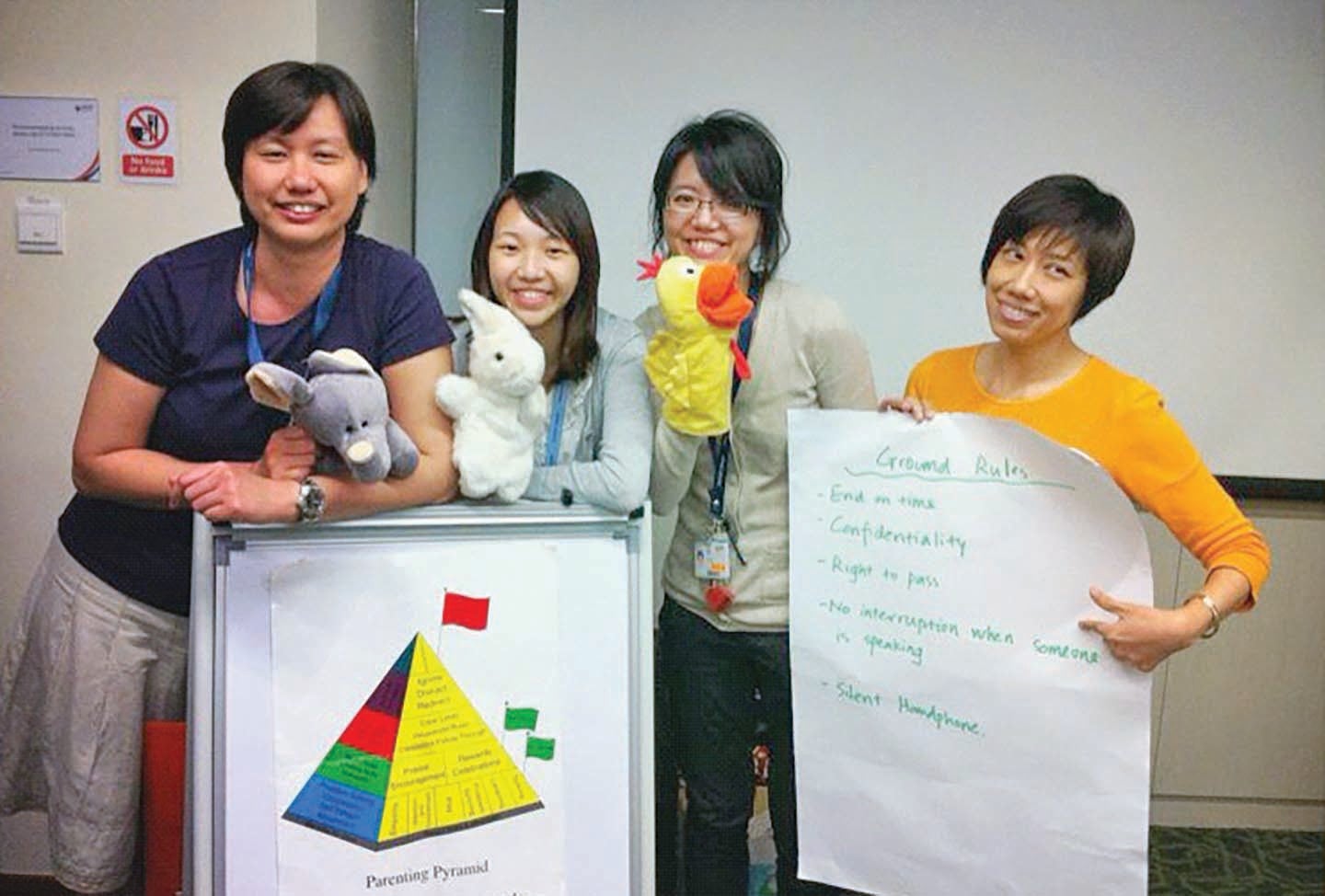
Dr Jiang (second from right) conducting a parenting workshop with her former clinical colleagues. |
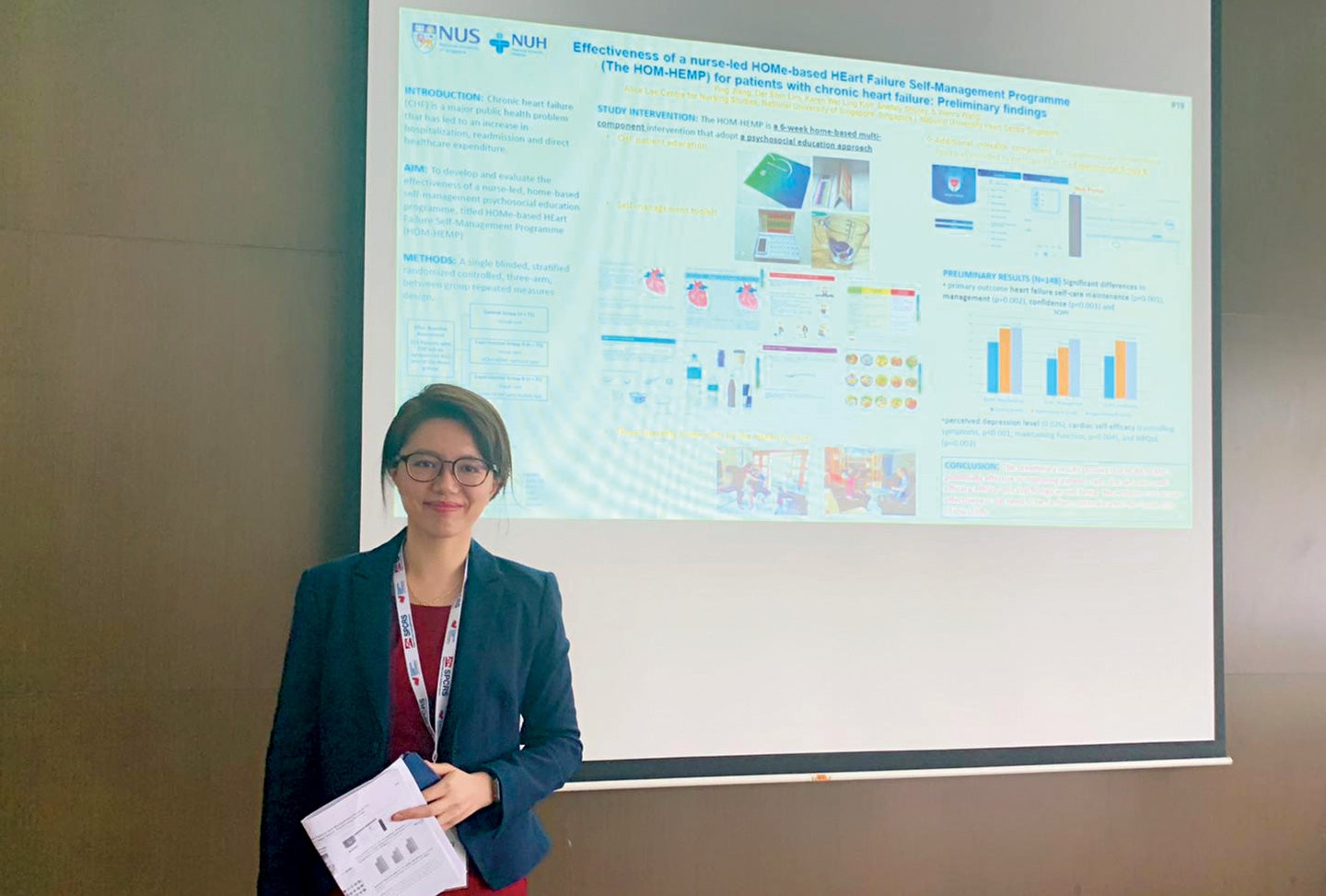
Dr Jiang’s presentation at the Singapore Prevention & Cardiac Rehabilitation Symposium 2023. |
Home is Where the Heart Is
Dr Jiang took up the project for her Master’s—which was eventually converted to a PhD—with Prof Wang serving as PI. “We noticed the worrying trend of some heart failure patients having high readmission rates. What happened was that they would be readmitted, treated for their conditions and discharged before the cycle repeats,” Dr Jiang recalled.
Contributing to this was the lack of patients’ knowledge and confidence in adhering to the treatment plans and self-care after being discharged from hospital. “It tracked with my own clinical experience,” Dr Jiang reflected. “We would always educate patients on managing their conditions, but they might not always be in the best frame of mind to listen—maybe because they were overwhelmed by the information or still feeling unwell.”
The team decided to explore the effectiveness of biweekly patient home visits over six weeks by Dr Jiang (in the role as a trained nurse), coupled with a manual and toolkit. A subset of the intervention group also received access to an accompanying app. Collaborating with the National University Health System (NUHS)’s CareHub, 213 heart failure patients were recruited for a randomised control trial.
Through the study, the team found that the group that received intervention demonstrated higher levels of self-care and cardiac self-efficacy, better health-related quality of life and lower levels of depression. Dr Jiang and the team also shared study materials and findings with the NUHS CareHub, shaping a more structured approach to educating patients on self-care and management.
Her successful experience also reinforced Dr Jiang’s interest and purpose in research—“I enjoyed interacting with the participants, getting their feedback and helping to find solutions to their challenges. Even if we didn’t get it right every time, we were trying to be part of the solution to fix real issues. I just hope that patients can benefit from our work—which would make all the hard work worth it.”
Practice Makes Perfect
Looking back at her comparatively roundabout PhD route, Dr Jiang said, “As compared to other candidates who jumped into working on their own research, my experience working with Prof Wenru gave me the opportunity to practise and hone my research and writing skills. When it came time to work on my PhD—I was ready.”
Today, Dr Jiang is focused on developing her research area—home-based community interventions. One of her proudest projects includes an AI-powered, dance movement exergame (short for exercise game) intervention for older adults. She said, “I wanted to offer older adults a tool for engaging in physical activity at home, and dance is well-known to be beneficial and enjoyable. The gaming element added points of interest, as well as avenues for feedback.”
With the conclusion of a successful pilot, Dr Jiang has plans to develop a digital platform for the intervention—where dance will be one of the options available, alongside other programmes such as tai-chi. “Given our current shortage of healthcare professionals, I hope my interventions can help our ageing population stay active and healthy.”
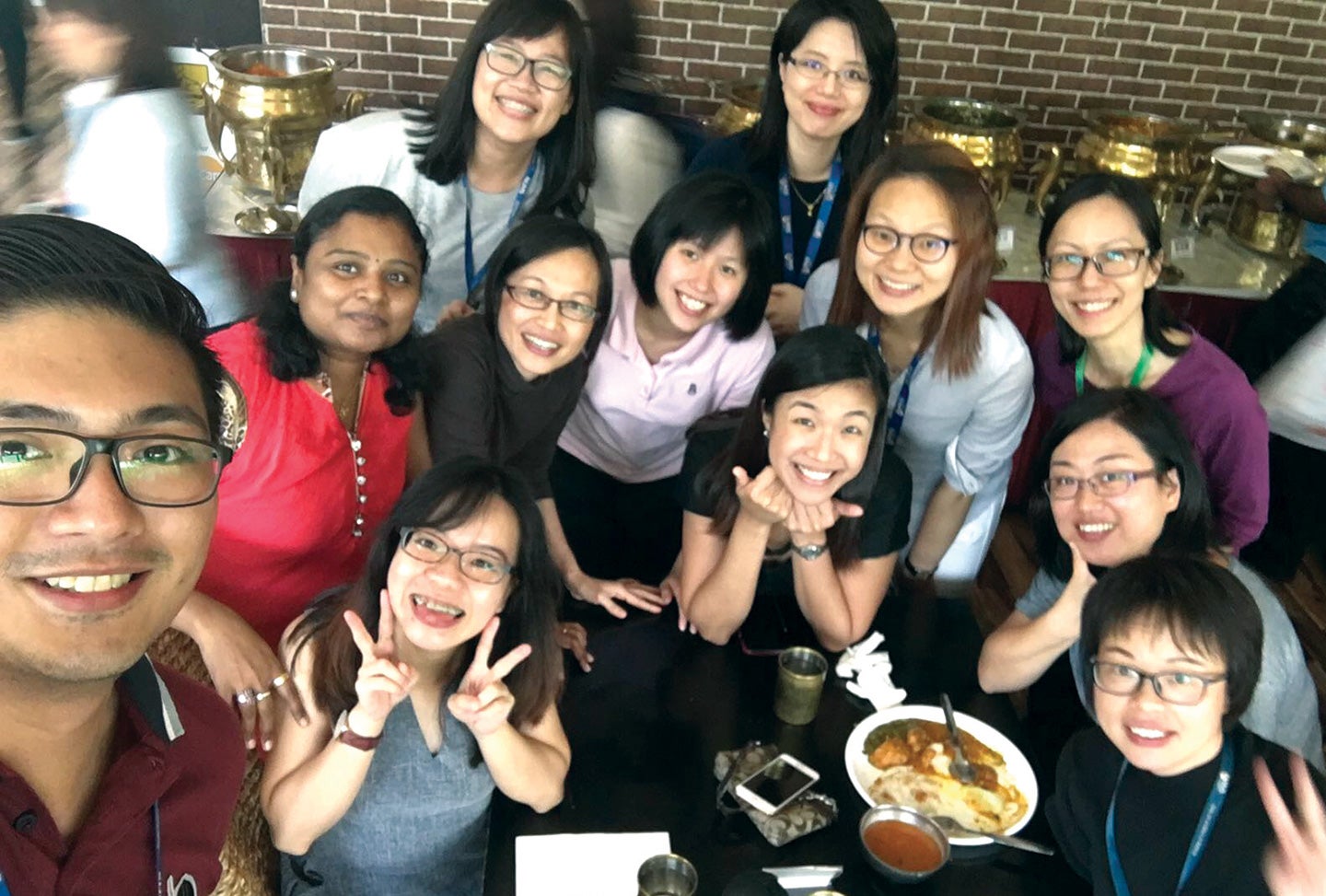
Dr Jiang (third row, first from right) enjoying a casual meal out with NUS Nursing colleagues.
Quiet: The Resounding Influence of a Great Mentor
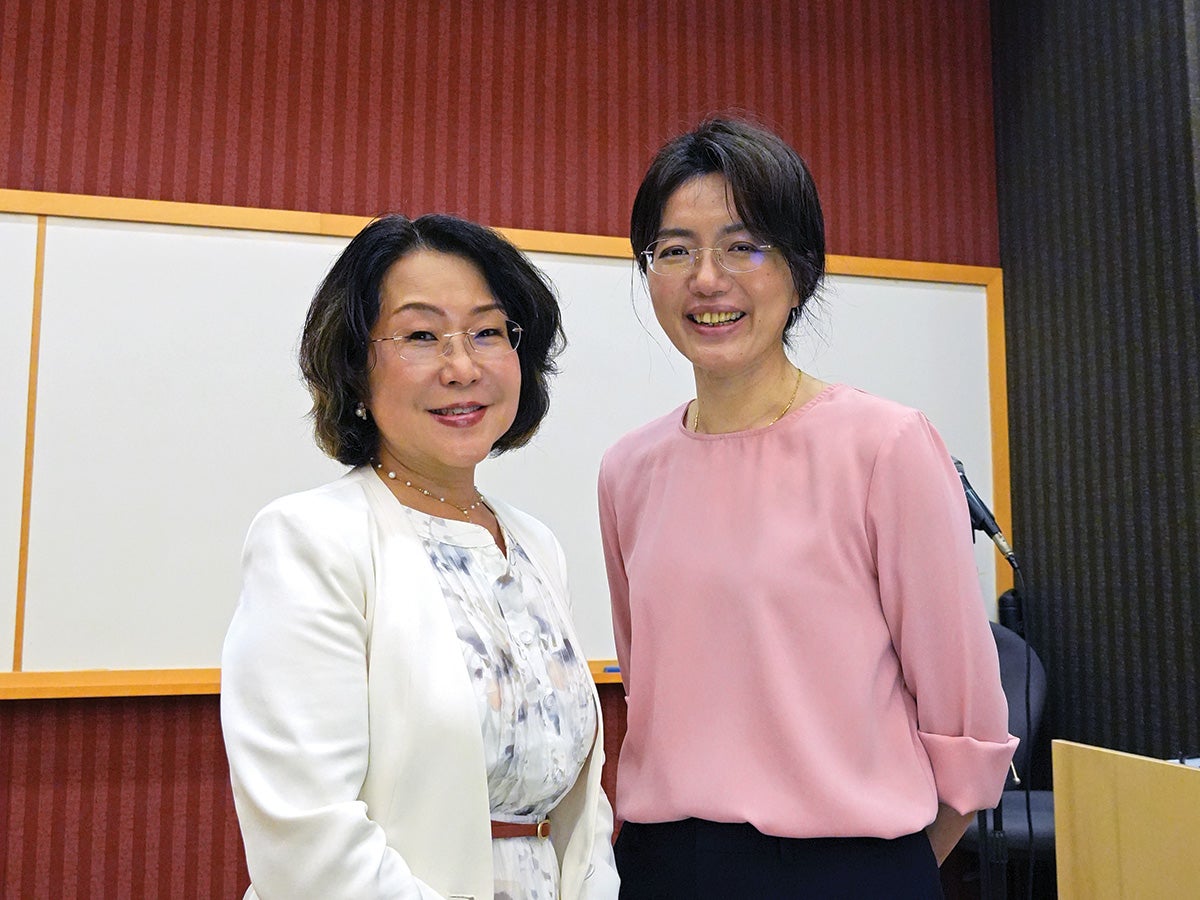
Prof Wang (left) and Dr Jiang (right).
Looking back to the beginning of their relationship, Prof Wang recalled what made her decide to take Dr Jiang on as a researcher then, “It wasn’t easy to find Nursing research talent at that time—and not only did I find Jiang Ying talented, she was reliable. I knew she wouldn’t give up and quit halfway.”
The desire to nurture Dr Jiang’s academic career also saw Prof Wang encouraging her to take up a stint teaching an NUS Nursing course on mental health—despite knowing it would take time away from her role as a researcher. “I told her she should go and do it. The experience would be good for her,” Prof Wang said. Exceeding expectations, Dr Jiang went the extra step of refining the course curriculum using her clinical training.
“With that, Jiang Ying proved she could do both—research and teach—essential skills for any academic,” Prof Wang said with pride. However to Dr Jiang, the credit was not all her own. She said, “Prof Wenru gave me plenty of teaching advice when I started out—I still remember her telling me that teaching isn’t limited to just 40 minutes in the classroom. It’s also how we can help students outside of it—engaging with their concerns after class or helping to manage their anxiety during the exam period. I would also discuss my ideas for making classes more interesting with her.”
An Assistant Professor for two years now, Dr Jiang is expected to find her independent footing as a researcher. As such, she has to distance herself academically from Prof Wang. “When I told her to stop crediting me in her papers, Jiang Ying was very sad,” Prof Wang shared. “I was touched, but it had to be done.”
Dr Jiang said, “I’m mostly independent these days because of the foundation Prof Wenru helped me build; I saw it as my duty and honour to give back. But even now, she is always ready to help whenever I’m stuck.”
She paused. “Prof Wenru is my role model. You often hear about how one has to be a certain way—outspoken, sociable—to be successful. But she has shown me that it’s okay to strive and succeed in our ways.”
“Prof may be a quiet person, but she’s one of the most persistent people I’ve ever met. No matter what happens, she’s always focused on what we can do to improve the situation,” she elaborated. “When you work with someone like that, you stop looking at the roadblocks and start seeing what’s possible.”