
Before her hip replacement surgery, Rose* had a small circle of friends. Persistent hip pain and limited mobility post-surgery forced Rose to opt out of most gatherings. Staying alone didn’t help either.
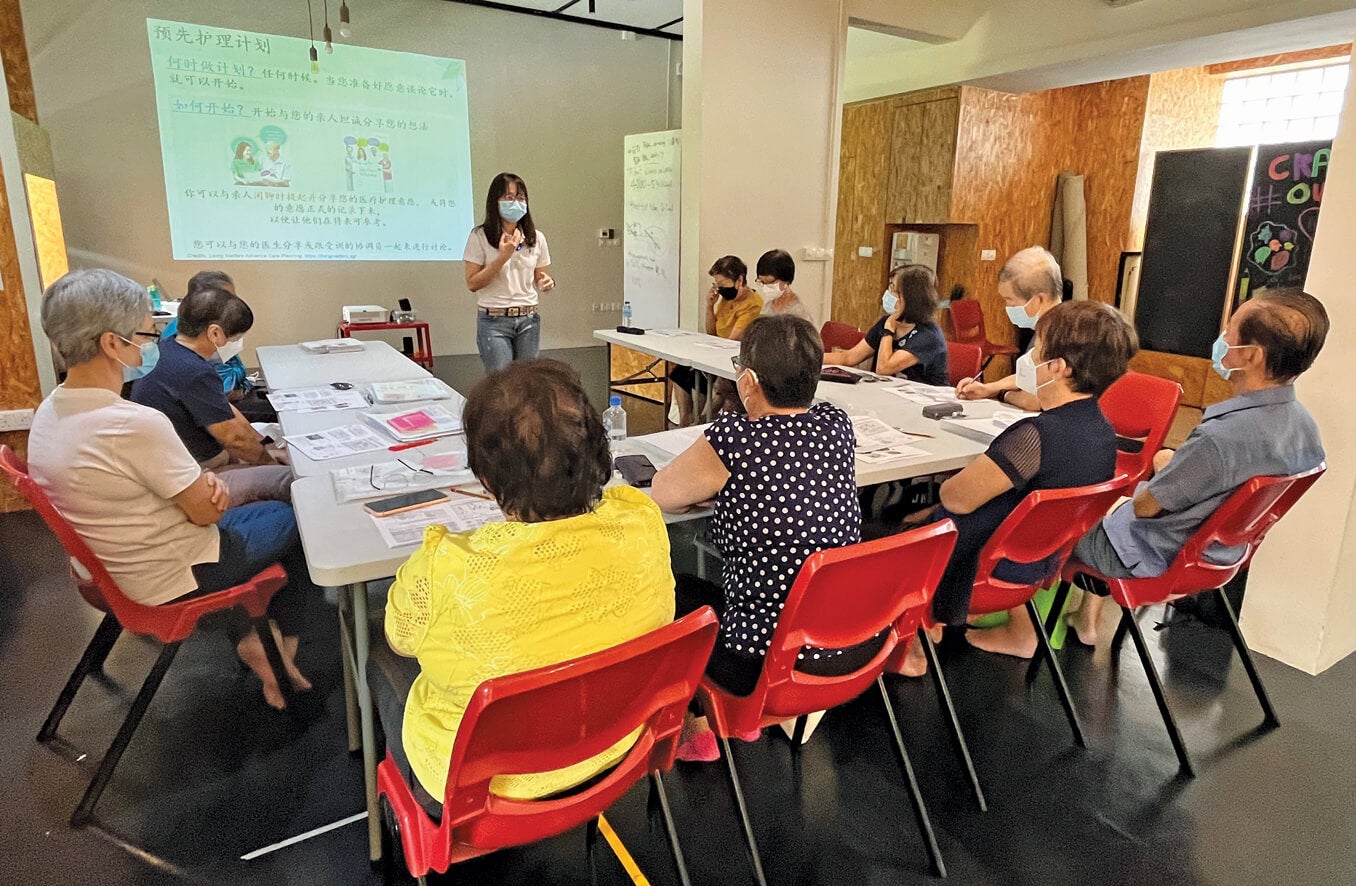
Dr Seah conducting a group session in Chinese, catering to the Chinese-speaking seniors.
Statistically, 25% of patients pass away within two years after a hip fracture1 and older adult patients with hip fractures are three to four times likelier to die within one year after surgery than the general population2.
For seniors like Rose, the SHAPE (Salutogenic Healthy Ageing Programme Embracement) intervention piloted by Dr Seah Betsy, Research Fellow at the Alice Lee Centre for Nursing Studies (NUS Nursing), National University of Singapore Yong Loo Lin School of Medicine, presented a means to help them cope with the stress of ageing and usher forth a healthy ageing process.
“When we first worked with Rose, she was walking slowly and with a limp. By the end of the 12-week intervention, we were heartened to note that her muscles no longer ache as much—thanks to the functional exercises taught. She has also become more confident and active in partaking in outings with her friends,” said Dr Seah.
TAKING SHAPE: RESEARCH OBJECTIVES
Dr Seah first embarked on the SHAPE intervention in 2016, as a PhD project. She explained, “One of the key tenets for a successful healthy ageing process in Singapore is to empower seniors to live independently in their homes and the community for as long as possible. Towards this end, the Singapore government has put in place various senior-friendly programmes and schemes ranging from healthcare to community support and services.
“However, we recognised that seniors may not always be equipped or savvy enough to tap into these useful resources. Particularly, we noted that seniors who live alone or only with their spouses are socially vulnerable and at risk of social isolation. Hence, we designed the SHAPE intervention with them as the target beneficiaries.”
IN SHAPE: THE INTERVENTION
Comprising 12 weekly structured group sessions, two home visits and a resource book, the programme takes a holistic yet tailored approach to helping seniors embrace physical, psychological, social and spiritual health to have a healthy ageing process.
Dr Seah said, “With SHAPE, we are trying to minimise the unpredictability of ageing-related challenges for seniors by enabling them to utilise available health assets and encouraging them to adopt health-promoting behaviours. In addition, we also want to inspire them to live each day purposefully through personal reflection and sense-making of their experiences.”
Dr Seah elaborated, “Given the all-encompassing nature of our goals, the intervention programme is naturally comprehensive. We don’t only cover subjects such as nutrition, or how to better manage emotional health and get help. The programme also addresses falls prevention and how to prepare for end-of-life care. During the sessions, we teach the seniors exercises that they can do at home to help them in their daily movements—for example, reaching out for items on cupboards or squatting to pick up things from the floor.
“A central part of the intervention is the follow-up home visits. Here, we take the opportunity to galvanise what they have learnt from the group sessions and personalise the knowledge and information to their situation. We will then set goals together,” Dr Seah said.
IN GOOD SHAPE: OUTCOMES
Despite the team’s initial challenges in recruiting participants for the research, seniors who took part in the intervention had high praise for it. Dave* said, “The programme teaches us how to cope with living as older adults. It also helps us to understand how we can face events such as illness and death.”
Other participants, like Glory*, decided to take better ownership of their lives, and set about drafting a will and checking on their health. “I have already called the clinic to arrange for influenza and pneumococcal vaccinations. Next, I will arrange to do my mammogram and get my hearing checked,” she said.
The positive outcomes were not limited to these too. Dr Seah shared, “The seniors made friends with one other, organised outings together, and stayed in touch even after the intervention. This is a wonderful development, especially if you note that some of them used to be socially invisible.”
THE SHAPE OF THINGS TO COME
Dr Seah continued, “The success of the intervention has strengthened our belief in the value of SHAPE as a health resource programme for all seniors—beyond seniors who live alone or only with their spouses. That sowed seeds for the establishment of our charity organisation, Health Concepts and Measurements – HealthierSG Ltd.
“With HealthierSG, seniors go through a similar 12-week intervention. We then do a follow-up with them at regular intervals to track their well-being, as well as ensure that gains made during the intervention are sustained.”
If it takes a village to raise a child, it certainly also takes a community to care for seniors. Dr Seah said, “In ensuring that seniors age healthily and successfully, HealthierSG advocates taking a multipronged and upstream approach to health. We facilitate that with our multidisciplinary team. We have a nurse, psychology-trained therapist, physiotherapist and occupational therapist among us. And that is just a starting point. We are always looking for opportunities to expand our team so as to grow the programme—and benefit more seniors.”
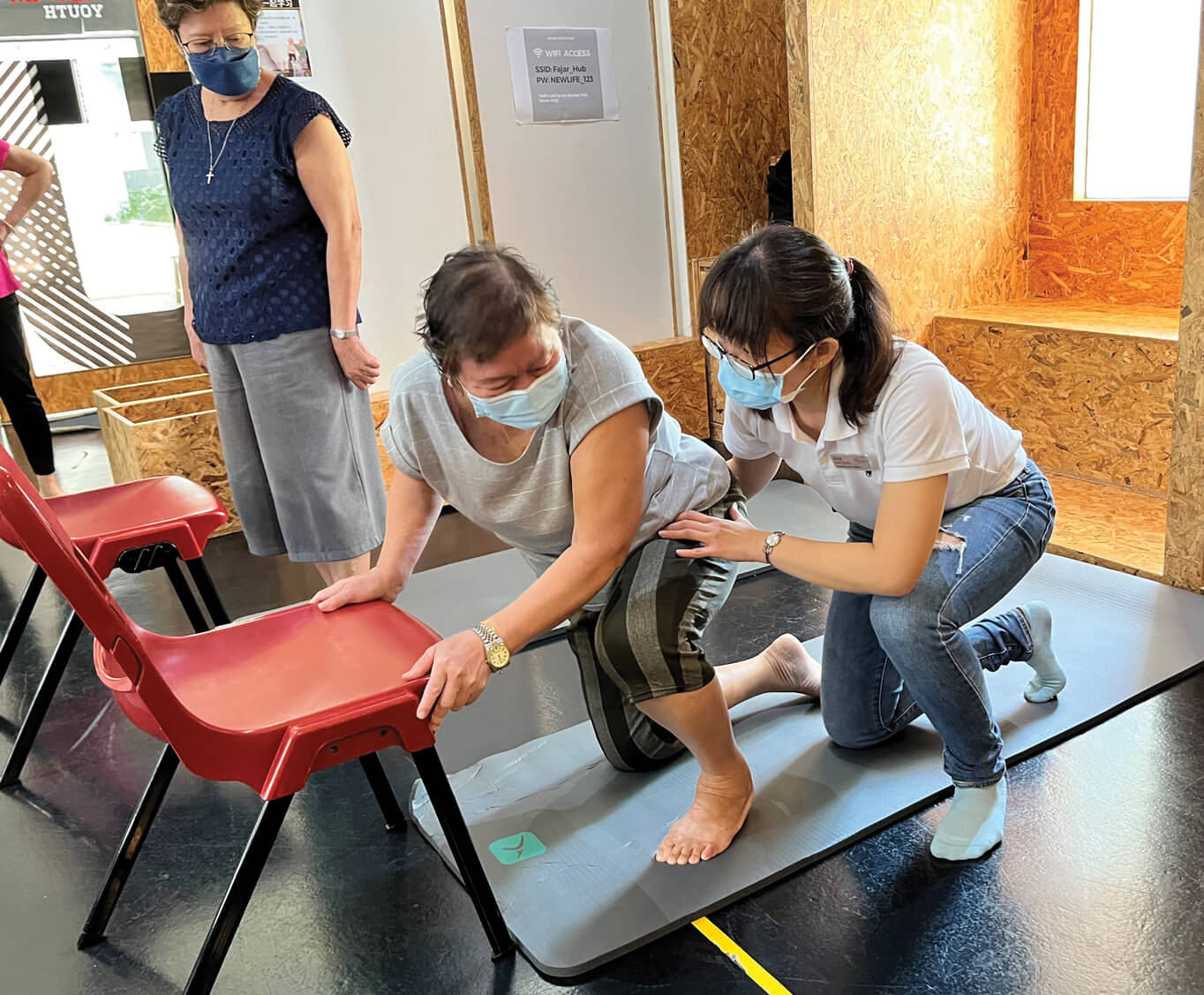
As part of the intervention, participants learnt to integrate simple exercises and stretches into their daily activities.
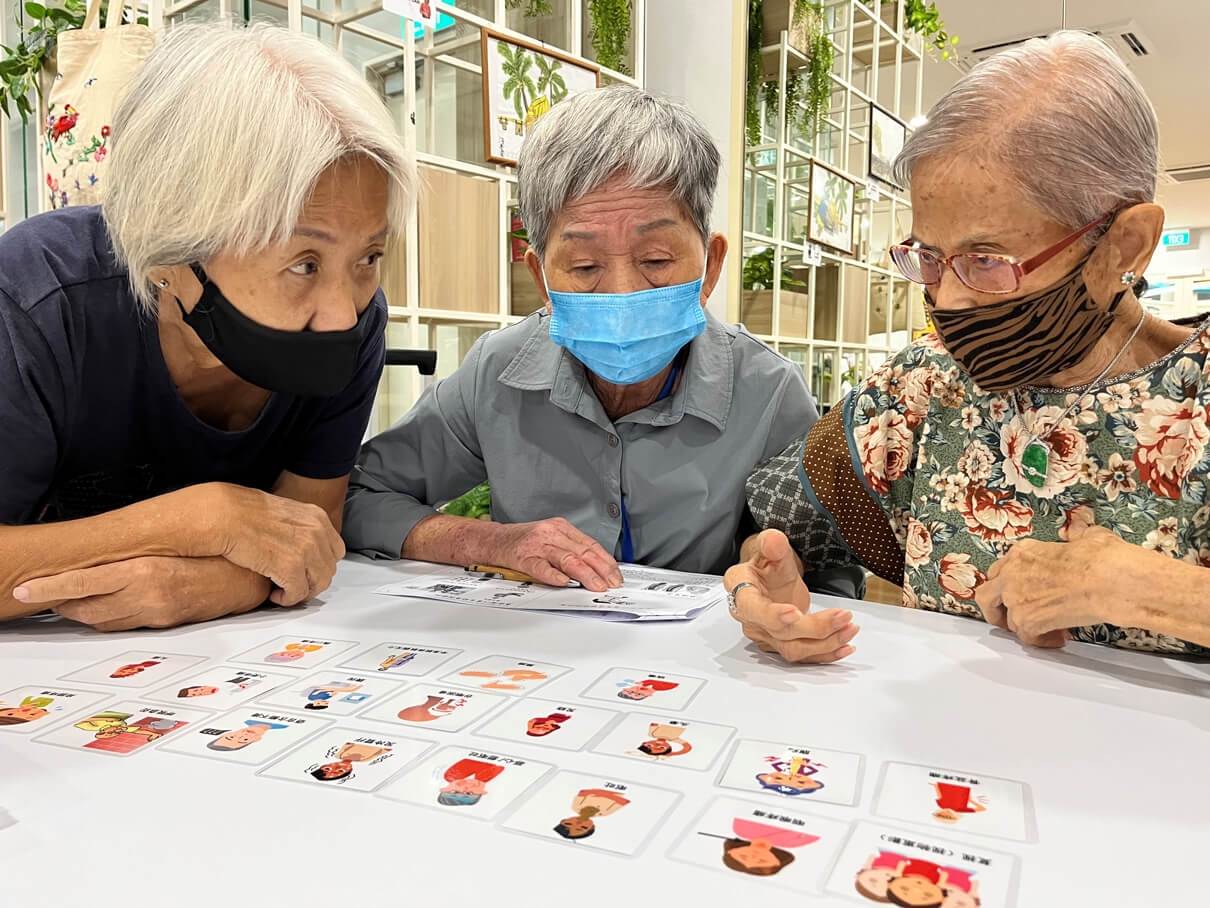
Small group discussions offer participants an opportunity to share their experiences and learn from one another.
Scan to read the SHAPE intervention research paper.
https://bmcgeriatr.biomedcentral.com/articles/10.1186/s12877-022-03605-3
Scan to find out more about the charity, HealthierSG.
https://healthconcepts.org.sg/
1Lin KH, Lim YW, Wu YJ, Lam KS. Mortality after proximal hip fracture in the Singapore population. HIP International. 2005;15(3):166-170.
2Morri, M., Ambrosi, E., Chiari, P. et al. One-year mortality after hip fracture surgery and prognostic factors: a prospective cohort study. Sci Rep 9, 18718 (2019).
* Names changed to protect confidentiality.
