In April 2020, National University of Singapore (NUS) nursing and medical students had their clinical placements suspended and their classes moved online. Home-based learning took centre stage as Singapore implemented heightened stay-home circuit breaker measures in light of escalating Covid-19 infections. Here’s why virtual reality simulations in healthcare education is a welcome development.
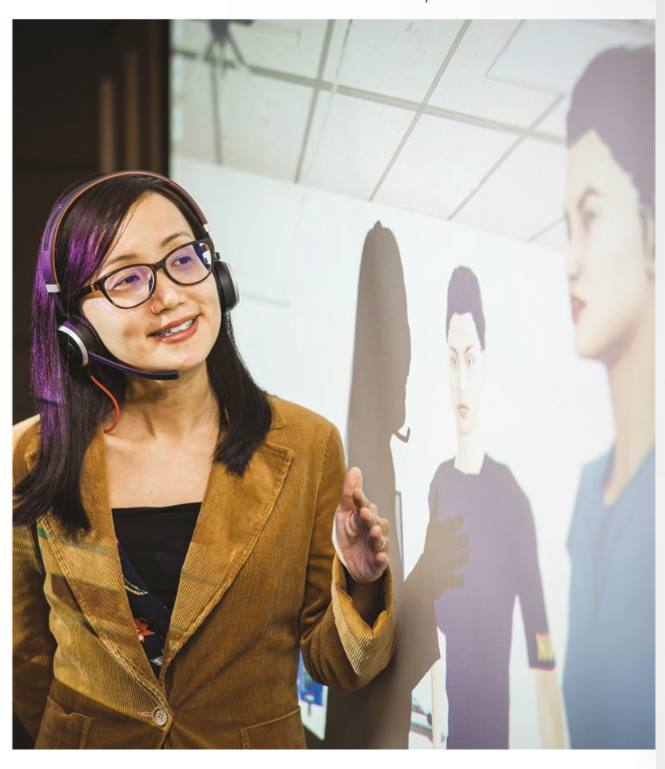
And for about 160 Year 4 nursing and medical undergraduates, they could still immerse in real-life scenarios of patient care discussions through realistic simulations of hospital ward settings and real-time interactions with patients and other healthcare professionals through moving and speaking avatars. This is possible through virtual reality simulations in healthcare education.
The nursing students paired up with their medical peers and would log in to a desktop virtual reality simulation program known as Create Real-time Experience and Teamwork in Virtual Environment (CREATIVE). Their avatars would get a 3D view of the in-ward setting on their respective computer screens.
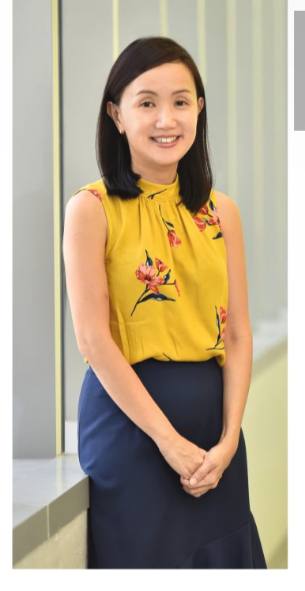
“We started exploring interprofessional education and simulation training a decade ago but the COVID-19 pandemic escalated the need for virtual learning technology within our healthcare curriculums,” says Associate Professor Liaw Sok Ying, director of education, PET, at the NUS Alice Lee Centre for Nursing Studies (NW Nursing). She developed CREATIVE with NUS IT and an interdisciplinary team from the University.
During the immersive training, the students could role-play and interact with one another as well as with simulated patients, discussing how best to treat the patients for their medical conditions. Multidisciplinary bedside rounds and other doctor-nurse communication scenarios were also included.
A trained facilitator was on hand to observe how the students collaborated and interacted to address issues and solve problems. Every simulated training was followed by a debriefing session during which the students could have a discussion with alumni facilitators who are themselves practising nurses, in a university-workforce partnership that prepares students to be collaborative healthcare workers.

EXPERIENTIAL LEARNING
A/Prof Liaw, who has been in the nursing profession for more than 20 years, is an advocate of virtual reality simulations in healthcare education to replicate real-world clinical environments in training, so that the students’ learning reflects the authenticity of practice. Simulation also allows for experiential learning through role-playing and debriefing, allowing the students to shape their own knowledge through real-time experiences and social interaction.
In the past, nursing and medical students in face-to-face simulation training would use programmed manikins or trained individuals hired to act out the health condition of a patient. But this logistical arrangement could be time-consuming and costly, and could not be easily replicated for different batches of students.
In contrast, a virtual reality simulation in healthcare education is highly replicable and facilitates the integration of different groups of students and healthcare professionals as clinical discussions surrounding patient care evolve to become increasingly interdisciplinary.
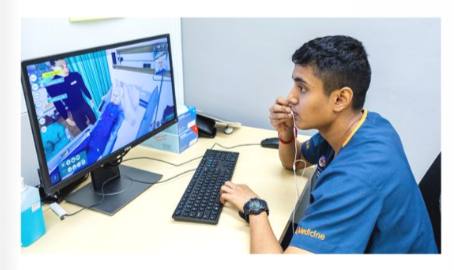
Virtual reality simulation in healthcare education also allows students to explore clinical and ethical scenarios, and have their responses gauged by the trainer or facilitator without the risk of committing medical errors or causing harm to a real-Iife patient.
CREATIVE has since been integrated into the Year 4 medical curriculum and Year 3 nursing curriculum at NUS. From August to December 2020, about 600 medical and nursing students participated in 153 virtual reality simulated training sessions under an interprofessional education (IPE) programme.
In a study conducted to gauge the efficacy of the doctor-nurse communication program, the 415 participating students gave a positive response to all the implementation outcomes including perceived level of acceptability, appropriateness, feasibility and adoption.
More than 80 per cent of the students were satisfied with the program and agreed it was useful for learning, especially in helping them understand the roles and perspectives of other health professionals, and improving their working relationships and communications.
Other studies have also been completed and their findings published in six peer-reviewed international journals, including one which demonstrated its impact in promoting the understanding of healthcare roles towards patient-centred care in practice settings.
With these positive outcomes, the IPE programme will continue to be implemented in training 600 NUS medical and nursing students in the academic year of 2021.

SCALING UP CREATIVE
After successfully translating the evidence-based, doctor-nurse communication program into medicine and nursing curriculums, A/Prof Liaw and her team are now exploring how they can use CREATIVE to incorporate the evidence-based, multidisciplinary bedside rounds into healthcare curriculums across faculties in NU5 and other schools in Singapore.
The short-term plan is to scale up such simulation programs to train and hone the expertise of more nursing students and practitioners.
In the long run, the plan is to deepen the technological features of the program by integrating artificial intelligence (Al) agents into CREATIVE. The Al-enabled CREATIVE will have greater potential to be harnessed into commercially-viable and scalable, deep-tech startups or projects, reveals A/Prof Liaw.
Led by research assistant and alumna Maybelline Ooi, a team of nursing alumna has participated in the Lean Launch Pad, an entrepreneurial programme by NUS Enterprise to evaluate its commercialisation value. Under the NUS Industry Liaison Office’s Graduate Research Innovation Program (GRIP), Ms Ooi has co-founded and incorporated an NUS spin-off VIRTUAI, which recently clinched investment funding of S$100,000 from an NUS investment panel.
A/Prof Liaw says: “We are proud that our team has brought CREATIVE from insight to impact, from research to curriculum, from curriculum to practice, and from research to commercialisation.”