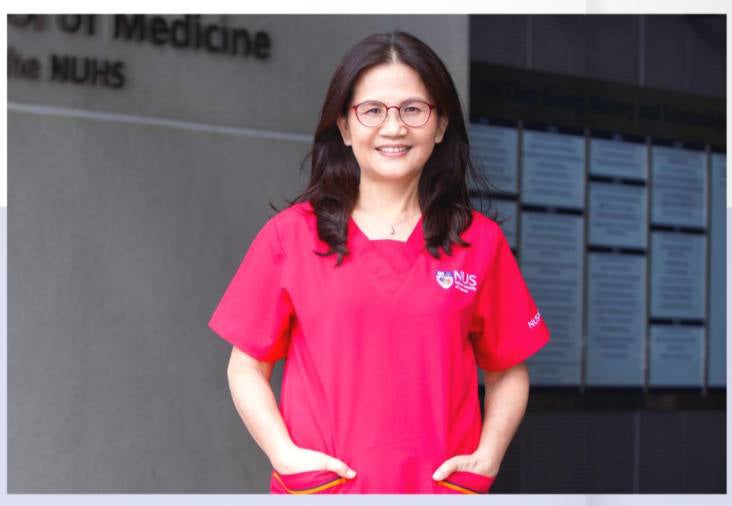
Studies have revealed a high risk of burnout in the nursing workforce. A peer mentoring for students programme implemented by senior lecturer Dr Siriwan Lim for students taking her classes on pathophysiology and pharmacology has shown promise in cushioning this blow.
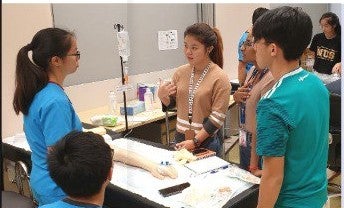
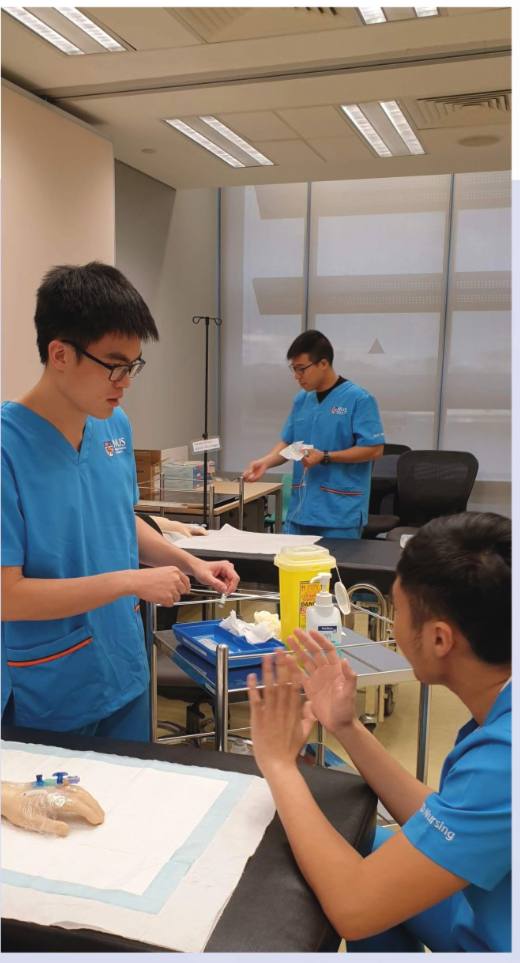
In the academic year of 2017, when the core medical-surgical nursing module NUR1119 was switched from a second-year course to a first-year one, Dr Lim invited senior nursing students to volunteer as peer mentors to guide their juniors in the latter’s self-practice sessions in the nursing laboratory.
These hands-on sessions are offered under the module to allow the first-year students to gain more practice in applying their knowledge of pathophysiology and pharmacology in nursing management of patients with specific conditions, as well as to master the relevant critical skills.
“Peer mentoring for students has been found to enhance nursing students’ learning experiences, and I thought such a programme was apt as it would allow mentees to learn in a non-threatening environment and empower mentors who already have the experience from their clinical postings to support them,” explains Dr Lim.
FORMING TRANSFORMATIVE RELATIONSHIPS
The programme does not just create an opportunity for the second to fourth-year nursing students to help their juniors master critical skills such as medication administration. The cohorts also come together to form “meaningful, interactive and potentially transformative relationships through shared experiences”, says Dr Lim.
“The programme is founded on Wagner’s model of caring mentorship for nurses, which theorises that nurses who transcend task-oriented caring levels to discover themselves at deeper transformative levels in caring
With support from assistant professor Dr Catherine Dong who is a cognitive neuropsychologist, a three-hour workshop was provided for the student volunteers to equip them to take on the role of peer mentors.
During the workshop, they learn the keys to forming transformative relationships, such as understanding one another’s roles and expectations, earning mutual respect and trust, and open communication, says Dr Lim. Mentors are also encouraged to practise reflective journalling throughout the programme to engage in more responsive caring, she adds.
MIXED METHOD STUDY
Dr Lim went on to implement the peer mentoring for students programme through the academic years in 2018 and 2019. She has also studied the effects of her programme on student mentors and their clinical practice, conducting a mixed method study involving 50 peer mentors from her pool of 83 students who volunteered in the programme.
The participants had to fill in a set of questionnaires at the end of the semester —the Mentor’s Teaching Experience Questionnaire, the Psychological Empowerment Scale and the Groningen Reflective Ability Scale — and also submit written reflections of their experiences with their mentees. At the end of their clinical placements, they were given the same set of questionnaires and also attended a focus group interview.
The study’s findings yielded preliminary evidence of caring mentor-mentee relationships being fostered through the structured programme, which could have an impact on the mentors’ future clinical practice, says Dr Lim. “Student mentors saw an improvement in their teaching and interpersonal communication skills and could see how their mentoring experiences would value-add to their future career as registered nurses,” she observes.
A Year 2 Peer Mentor, writing in her reflection journal, said, “This programme has been a fruitful journey. I enjoyed mentoring and helping my mentees with their problems. It has benefitted me greatly, allowing me to consistently practise my skills and strengthen my communication and critical thinking.”
Other reflections showed that peer mentors developed empathy and recognised the importance of being more open-minded and flexible to accommodate their mentees’ learning styles. A Year 2 Peer Mentor wrote, “As seniors, we should listen to our juniors’ opinions and not impose our own rules on them. The mentoring sessions allowed me to better understand their feelings towards their educational journey and nursing.”
Another theme from the qualitative surveys was awareness of one’s own biases, level of competency and knowledge. “Although peer mentoring made me feel inadequate at times, it allowed rne to learn more and change my learning attitude from just understanding what I was taught to also question what I learnt,” a Year 2 Peer Mentor reflected.
Dr Lim adds that the mentors’ ability to self-reflect showed depth in their communication and relationship with their mentees.
“The study found that the mentors’ relationships with their mentees boosted their confidence in their mentoring capabilities. This is important as preceptorship and mentorship of juniors is part of the professional and leadership development of a graduate nurse.
“Nursing is a very demanding job and if we inculcate this kind of camaraderie, team spirit and looking out for and supporting one another, right from the very beginning, more nurses would not be burnt out easily,” Dr Lim says.
Her team has received the National University of Singapore’s Teaching Enhancement Grant to conduct a follow-up study where Master of Nursing students are recruited to serve as mentors for mid-career nursing students.
“We plan to take into consideration feedback from the first study on the challenges encountered by the peer mentors, such as a lack of continuity in following up with their mentees due to conflicts in timetables. Mentors also requested support from the faculty in addressing their mentees’ emotions and attitudes, as these were outside their range of skills.”