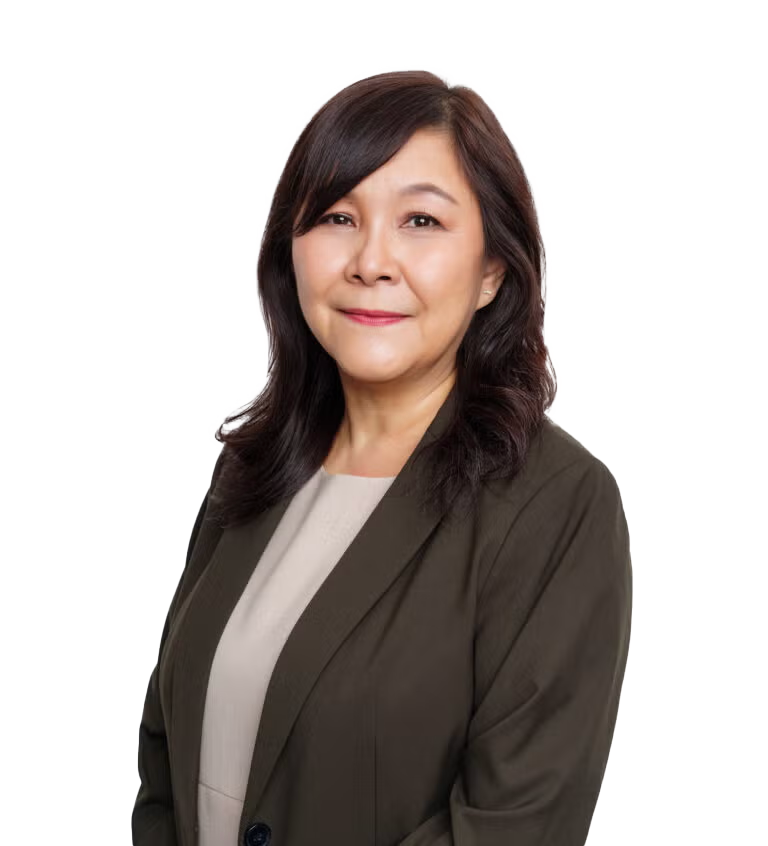

If it were up to Deputy Head (Undergraduate Programmes), Associate Professor Lydia Lau, every patient would receive consistent, compassionate, and patient-centred Nursing care across all care settings. And the most powerful place to begin this transformation? In schools—where future nurses receive their clinical education and begin their journey in the profession.
Dr Lau, who had been an educator even before joining Alice Lee Centre for Nursing Studies (NUS Nursing), National University of Singapore Yong Loo Lin School of Medicine in 2011, is a firm believer that quality Nursing care goes beyond bedside skills and competencies—it must also encompass patient outcomes and holistic care. “Clinical education has always been close to my heart,” she shared, “because it forms the essential foundation for our students to grow into confident, clinically competent nurses.”
Nursing – More than a Series of Tasks
Then, Head of Department Professor Emily Ang recognised Dr Lau’s passion and supported corresponding initiatives, leading to the conception of the Nursing Entrustable Professional Activities (EPA) framework in 2016 and its official implementation in 2018. NUS Nursing was among the first few Nursing schools in the world to adopt EPA in training undergraduate nurses.
“Many people think of Nursing as the tasks nurses perform at the bedside. Even nurses themselves can become so focused on completing those tasks that they lose sight of the deeper purpose behind their work, and the profound impact it has on a patient’s overall well-being,” Dr Lau explained. “With the EPA framework, we aim to shift that mindset. We want future nurses to approach patient care more holistically and be entrusted with professional Nursing activities that truly reflect the full scope and responsibilities of Nursing roles.”
The EPA framework consists of Nursing tasks or responsibilities found in real-world Nursing practice—which students are entrusted to perform with increasing independence as they demonstrate competence. As early as 2010, Yong Loo Lin School of Medicine, National University of Singapore (NUS Medicine) had already adopted a similar EPA framework for postgraduate students.
Dr Lau said, “EPA was new to NUS Nursing, but not to NUS Medicine. The NUS Medicine team, particularly Dr Dujeepa—was generous in sharing insights about the medical EPA and guided us. That provided a strong head start to adapt what they have to fit the Nursing context and workforce.”
She added, “We were not journeying alone.” Since 2020, all NUS Nursing undergraduates have been assessed using this new EPA framework. Encouraged by its positive impact on clinical Nursing practice, the Ministry of Health (MOH) launched the development of a national Registered Nurse EPA (RN-EPA) framework in 2023, taking a significant step towards transforming Nursing education and practice across Singapore.
Work to align the EPA framework across educational institutions and healthcare clusters was recently completed. “With the national RN-EPA, we now have, for the first time, a shared standard clinical teaching and assessment across all institutions and clusters,” Dr Lau said with a smile.
But her work with the EPA framework is far from over. “We may have completed the work for registered nurses, but there are still the specialty areas—oncology, renal, community, critical care…,” she noted. “It is essential to extend EPA across all Nursing settings to build a shared vision that truly advances the Nursing profession.”

The EPA workgroup celebrating Dr Lau’s (centre) birthday with her after a meeting.
Longitudinal Patient Experience – Not just an Academic Exercise
Another successful initiative led by Dr Lau in collaboration with NUS Medicine is the Longitudinal Patient Experience (LPE) programme. Started in 2014, the interprofessional LPE programme began as a year-long home visit initiative, offering medical and Nursing students the opportunity to learn and work together in an interprofessional setting, applying classroom knowledge to real-life care in the community.
Dr Lau shared, “Dr Keith Lim and I started the interprofessional LPE programme because we believe it is meaningful for students to encounter patients in their homes and the community. It helps them to better understand how patients cope with daily life in the community, and why sometimes interventions which are seemingly common sense are so challenging for patients to follow.”
For many years, Nursing students joined the LPE programme on a voluntary basis—until August 2023 when it was incorporated into the Common Curriculum for Healthcare Professional Education. “With the common curriculum, LPE became formalised and structured, making it compulsory for students from four healthcare disciplines—Nursing, Medicine, Dentistry and Pharmacy, to work together in multidisciplinary teams of eight persons to complete it,” Dr Lau said.
The LPE programme complements the other five courses (pillars) under the common curriculum. She added, “Students first learn about social determinants of health in class, then they experience these concepts first-hand during their visits to patients in the community. Part of the experience also fosters interprofessional communication, as students collaboratively navigate topics such as ethical decision-making and conflict resolution.”
In January 2024, the LPE programme was further integrated into the Professional Practice course (Pillar 3) within the common curriculum, where students were required to deliver a presentation reflecting on their LPE experience.
Future plans are taking shape. Dr Lau outlined, “We have seen how the programme enriched our students’ learning, even within a one-year timeframe. So we are exploring the feasibility of extending it further. Ultimately, the more ambitious vision is to create a shared space where students, patients, and the community can engage meaningfully and have a mutually beneficial experience for all involved.”

Prof Liaw (front row, right), Dr Lau (front row, second from right), Dr Siah (front row, second from left), and their team celebrating the winning of a teaching award for immersive VR.
Improving Pedagogy – An Ongoing Endeavour
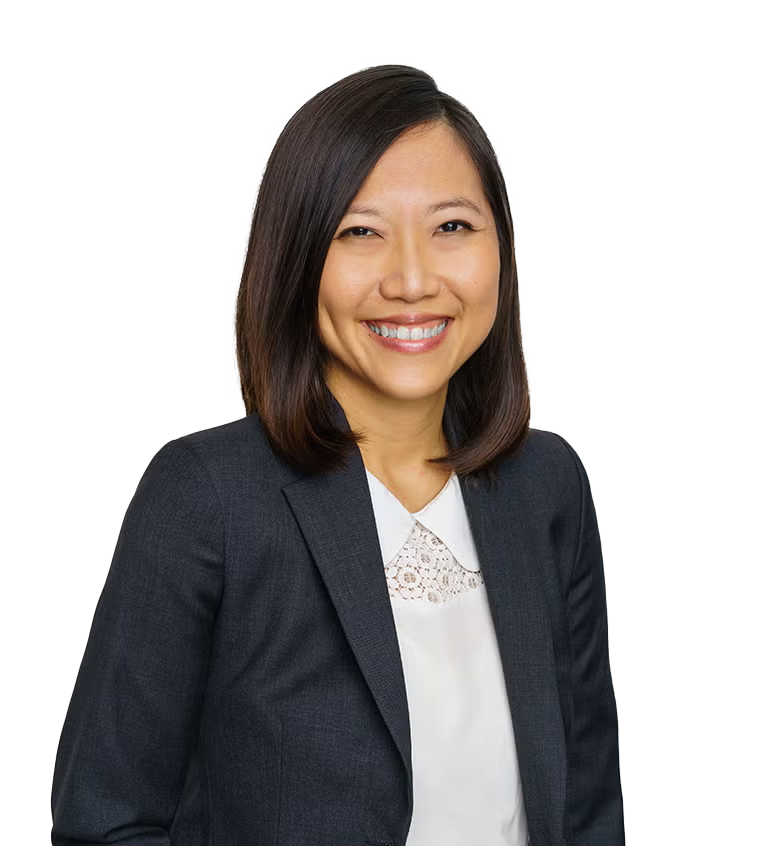
This desire to push boundaries and challenge the status quo is also evident in the way Dr Lau conducts her classes and mentors her younger teaching colleagues. Dr Rosalind Siah, who has been working closely with Dr Lau since joining NUS Nursing as a lecturer in 2014, can attest to that: “I remember the first time I sounded Lydia out about possibly injecting team-based learning into our pedagogy. She replied immediately, ‘Can’.”
That one word was enough to give Dr Siah the courage and motivation to put forward her ideas in a proposal for submission to the Institutional Review Board (IRB). Today, team-based learning has gone digital and is widely used across various classes at NUS Nursing. “Lydia’s positive response was more than just approval, it was a stamp of confidence and trust in my ability. It also subtly shaped me as an educator—to go beyond teaching, giving assignments, and conducting class discussions; and instead be creative and brave in trying out new teaching methodologies.”
Their combined creativity also saved the day during the pandemic. “Students were not allowed to enter clinical settings, including the operating theatre (OT), for training. That prompted me to ask Lydia whether she thought my research on virtual reality (VR) OT—which covered safety measures, roles and responsibility, and infection control—could serve as a substitute for students to experience the OT,” Dr Siah said.
Dr Lau was supportive. That marked the beginning of immersive VR training for Nursing students. Since that time, immersive VR has remained an integral part of the course module. The pair is currently exploring ways to further enhance the experience with artificial intelligence (AI) and gamification.
More recently, Dr Siah piloted the use of podcasts in her course ‘Healthy Ageing and Well-being’, “The feedback from students who completed the course was positive,” she said. “I am very thankful for Lydia’s unwavering support. Without her, I may not have gotten around to actualising these ideas, successfully publishing papers and sharing them with a broader audience. These ideas might have remained just that—ideas.”

Students engaged in an immersive VR simulation practice.
From Putting On to Taking Off the Training Wheels

Dr Siah (left) and Dr Lau (right).
When Dr Lau was first approached by then Head of Department Dr Sally Chan to take on the role of Programme Coordinator for Clinical Education in 2012, she had only been with NUS Nursing for less than a year.
She agreed, thinking that she would only be helming the portfolio for a short while before handing it over to someone else. Little did she expect it would take over a decade to finally find a successor—Dr Siah. “Typically, such appointments last for around three years. But despite actively looking out for potential candidates, we had little success until Rosalind came along,” she recalled.
“I got to know Rosalind well when I was assigned as her mentor. From the start, she impressed me with her can-do attitude and strong work ethos. I know I can always count on her to deliver quality work,” she added.
Officially appointed Undergraduate Programmes Director for Clinical Education in 2024, Dr Siah brought with her prior experience as a clinical facilitator supporting clinical education. “As a clinical facilitator, I had to manage students assigned to the hospital, including supporting them when they were in distress. Through this experience and various consultations with Lydia, I gained a rough sense of what it is like to work with industry partners.”
She continued, “But I was just one clinical facilitator. At any one time, Lydia had to work with no less than 20—on top of overseeing more than 1,000 students. That was the reality of Lydia’s responsibilities—heavy.”
Preparing for the Handover
Dr Siah confessed that she had known for years that Dr Lau wanted to relinquish the portfolio—and she had always been interested in the work Dr Lau was doing. However, she held back from putting herself forward for the role as she felt that she wasn’t ready. “For years, I had the desire, but not the confidence.”
In 2023, all the pieces fell into place for the pair. Dr Lau was asked to step up as Deputy Head for Undergraduate Programmes. Dr Siah finally felt ready—and could see herself taking on the role of Undergraduate Programmes Director for Clinical Education. So when Dr Lau popped the question, Dr Siah said “yes”. She shared, “Interestingly, it was as if Lydia knew I was ready. She had never broached the subject of me taking over before. But when she asked—that moment felt right.”
For Dr Lau, relinquishing a role she had helmed for more than a decade was bittersweet. “It is a massive and complex portfolio, often involving sensitive issues with potential legal ramifications. That’s why, while I was heartened to find such a strong fit in Rosalind, I was also committed to easing her transition. I wanted to ensure she wouldn’t have to navigate the same steep learning curve or encounter the setbacks I once did.”
Supporting the Takeover
Dr Lau’s motivation to guide and support Dr Siah was deeply rooted in her own experience. “I understand the challenges because I’ve lived through them. Even though I was already familiar with our industry partners, it still took time, effort, and consistency to earn their trust and respect.”
That shared understanding led her to commit to shadowing Dr Siah for a year, offering guidance through complex and challenging situations—something Dr Siah is grateful for. “Even though Lydia had officially handed over the role to me, she continued to support me—advising and reminding me of details I might not be aware of or otherwise overlooked. She’s also there to help navigate sensitive situations. Knowing that I have her trust, and can count on her support, has given me confidence in my decision-making.”
Supportive as Dr Lau is, she made it clear that Dr Siah would always have the final say in matters related to clinical education. “The day I handed over the reins to Rosalind was the day I stepped back.” She shared, “I may offer the occasional gentle reminder, but decisions are hers to make.”

Ready to Bring Clinical Education Forward
Undoubtedly, the dynamics between the two have emboldened Dr Siah for the work that needs to be done. Now over a year into the role, Dr Siah has not only grown more confident in her decision-making, but also wiser about when to escalate issues for Dr Lau’s attention. She smiled, “For straightforward cases, I have no problems tackling them. For the slightly trickier ones, I always try to ask myself what Lydia would do. But if there’s still no clarity, then I reach out for help.”
While Dr Lau continues to have oversight over Dr Siah in her capacity as Deputy Head for Undergraduate Programmes, she shared that the shadowing period has ended, and Dr Siah has been independently leading the clinical education team for the past year. “Of course, we still work closely together. But she’s now fully in charge of clinical education. In fact, I am proud of her. In the short span of time, she has not only empowered the clinical administrative team to take on operational responsibilities, freeing her to focus on more strategic priorities, but also reorganised the course lead and course facilitator roles. These are accomplishments that go beyond what I achieved.”
She concluded, “It is no secret that this is a challenging role. But Rosalind embraced it for the same reason I held onto it for so long—our deep commitment and love for the students and our willingness to go the extra mile for them. With this shared value at the core of her leadership, I have full confidence that Rosalind will continue to excel and advance our standards in clinical education.”