

Each year, more than 10,000 people in Singapore are expected to need care from palliative care nurses, according to the Ministry of Health (MOH). The increasing demand for palliative care is attributed to longer life spans, which can carry the baggage of poor health.
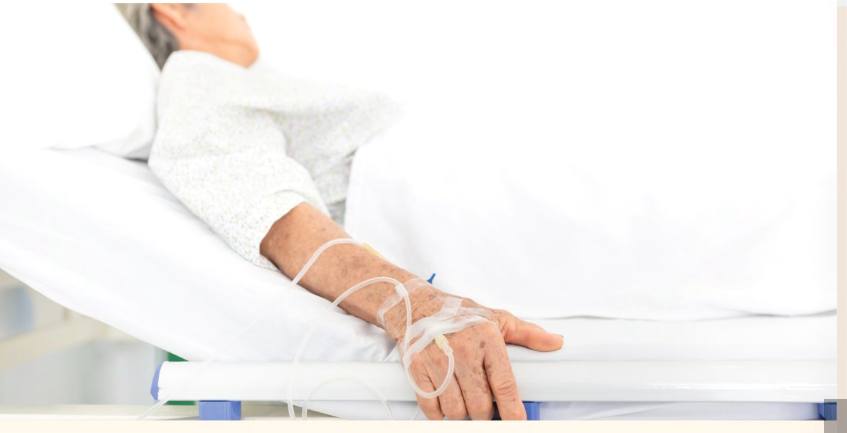
The Burden of Disease in Singapore 1990-2017 report, produced by the Institute of Health Metrics and Evaluation (US) in collaboration with MOH, found that “Singaporeans born in 2017 can expect to live for 84.8 years, but 10.6 of those years would be spent in poor health”. The biggest culprits for disability and early deaths are cardiovascular diseases, cancer, musculoskeletal disorders and mental illness.
MOH, in its bid to address Singapore’s growing palliative care needs, has stepped up the development of palliative care in Singapore, such as by increasing capacity, raising the quality of care, and improving training pathways and education opportunities in palliative care.
To equip nursing students with basic knowledge to meet the increase in demand for palliative care, the Alice Lee Centre for Nursing Studies (NUS Nursing) recently launched a Palliative and End-of-Life Care module in its undergraduate curriculum.
MORE INCLUSIVE CARE
Senior lecturer Laura Tham said: “The acquisition of knowledge and skills in this module equips future palliative care nurses to manage patients requiring palliative and end-of-life care across the life span. Typically, palliative care is offered to cancer patients to reduce their suffering from pain and other disease symptoms. Due to the nation’s changing demographics trending towards an ageing population and a rise in those living longer despite facing chronic health problems, many palliative care patients now include non-cancer sufferers.”
The module introduces nursing students to the basic principles of palliative and end-of-life care for adults and children, covering pain management, control of symptoms for holistic well-being, and empathetic communication with patients, family members and caregivers. The curriculum also covers essential topics such as Advance Care Planning, spiritual and bereavement support, healthcare decision-making and ethics to help students better understand the needs of terminally ill patients and make vital decisions on their care.
Adjunct tutor Ms Kelly Lai, a palliative care nurse, said a key focus was teaching her students how to initiate conversations on death and dying with their future patients and family members. In an Asian society, these topics are still taboo. Many family members do not disclose the disease diagnosis and patient prognosis to their loved ones. This can make nursing care very challenging, and also prevents advance care planning from taking place.”
Ms Lai said that another central aspect of palliative care is titration of medication and management of suffering at the end of life. These are addressed in the course together with patient education on the use of controlled drugs.
Ms Tham added that non-pharmacological interventions commonly used overseas — such as aromatherapy and massage therapy — are also introduced to the students. “We want to take care of the patients’ biopsychosocial needs and these are options that can be applied at home as palliative care can be administered for years,” said Ms Tham, who was a community nurse before joining the School as an educator.
A 2014 study by Singapore-based philanthropic organisation Lien Foundation found that almost eight in 10 Singaporeans wished to die at home but official data showed that only three in 10 managed to do so.
“Many patients wish to die at home but their caregivers are not equipped or confident enough to care for them, resulting in the caregivers repeatedly taking the patients to the hospital. Adequate palliative care training of palliative care nurses and caregivers would help address this disconnection,” said Ms Tham.
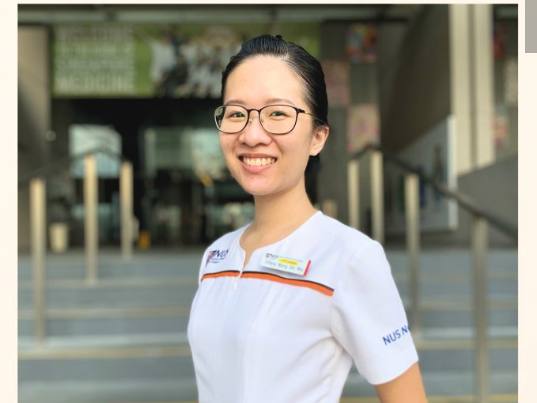
In the next academic year beginning August, 230 third-year students will enrol in the Palliative and End-of-Life Care module. They join 70 from the pioneer batch.
Final-year student Juliet Choo, a 49-year-old making a mid-career switch to nursing, found the real-life cases shared by the experienced tutors to be insightful and beneficial.
The module introduced us to the management of various palliative nursing emergencies and changes in the body during the dying process. These situations were difficult to understand and visualise, but the tutor shared with us her personal experience, such as how she picked dark-coloured towels in managing catastrophic bleeding to soften the visual blow for onlooking family members.”
Ms Choo also recalled a tutorial where the students had to role-play as palliative care nurses interacting with patients and their family members. “I learnt to decipher non-verbal cues. For example, a wife voicing her worry about her husband not eating and that he could die from hunger was actually expressing her desire to do something for him. We learnt how to address the psychological needs of family members — what to say, how to say it tactfully and how to build trust.”
Ms Tham said more role-playing simulations in a home or hospital setting will be introduced to expose students to situations where soft-skills and ethical decision-making are crucial in easing the anxiety and tension felt by patients and their family members.
“Be it identifying signs of a patient dying or managing the emotions in a conflict between a caregiver and family members, we hope the simulations can prepare the students for dynamic situations,” she added.
Palliative care knowledge is useful for nurses not only in caring for terminally ill patients, but also those who want to live their remaining years with quality and dignity.
“Palliative and end-of-life care can benefit patients who are in the early stages of chronic diseases,” said 22-year-old Tiffany Wong, a third-year student who took the module last year.
“Cicely Saunders, founder of the modern hospice movement, said: ‘You matter to the last moment of your life, and we will do all we can, not only to help you die peacefully, but to live until you die.’ It resonates with me.”
