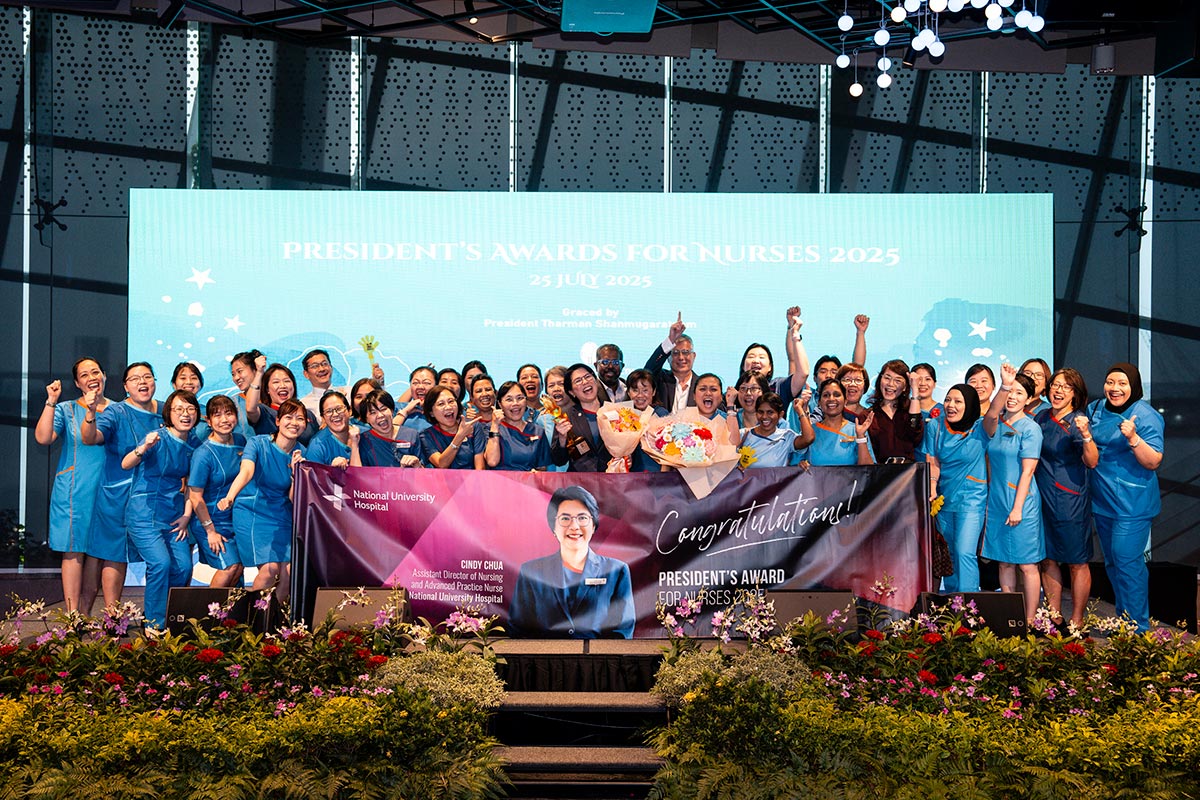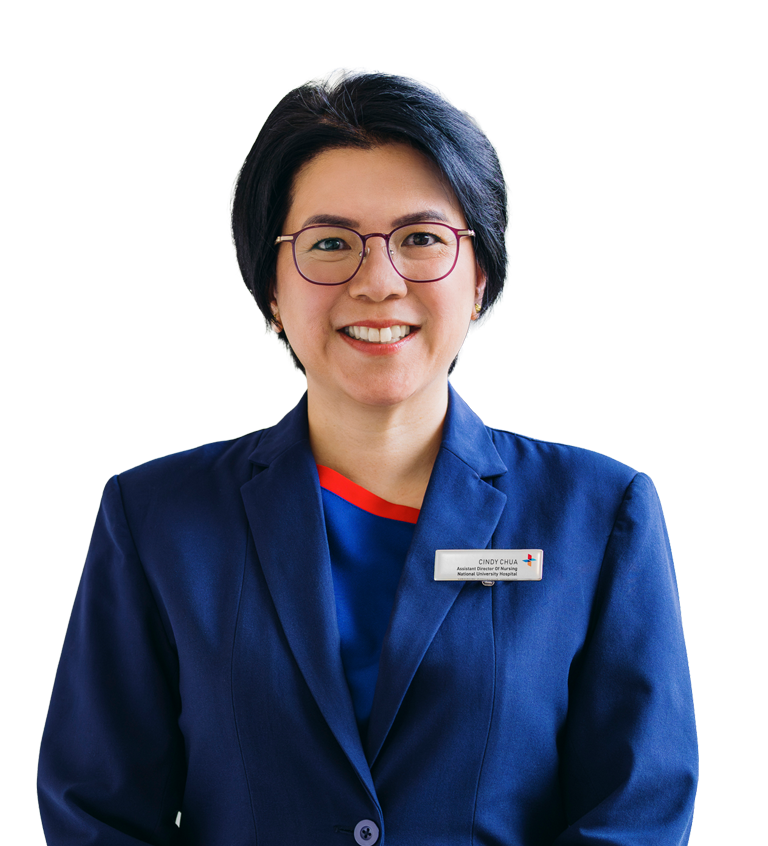
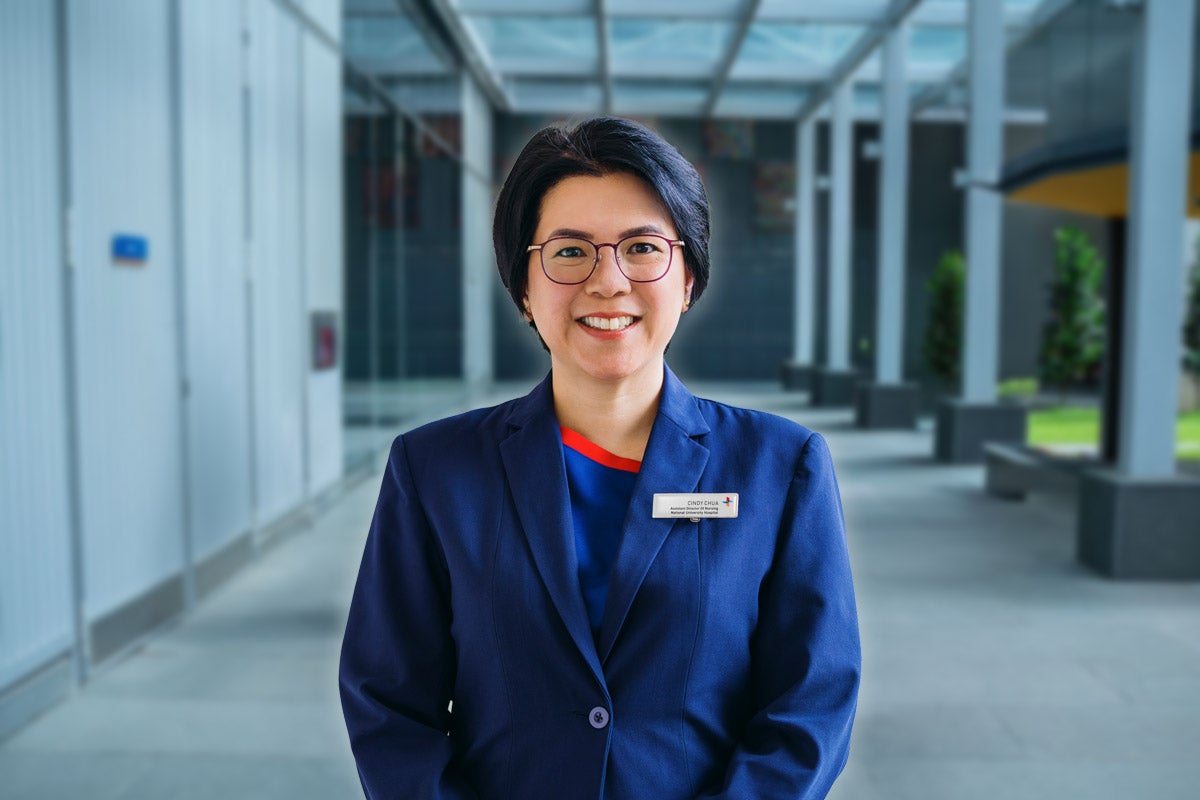
What makes a President’s Award for Nurses recipient? For 2025 awardee Cindy Chua, Assistant Director of Nursing and Advanced Practice Nurse at National University Hospital (NUH), she has been—amongst others—a clinician, innovator, mentor, humanitarian and even ‘Miss Universe’ in her 26-year career so far. NUrSing dives into each of them.
The Novice
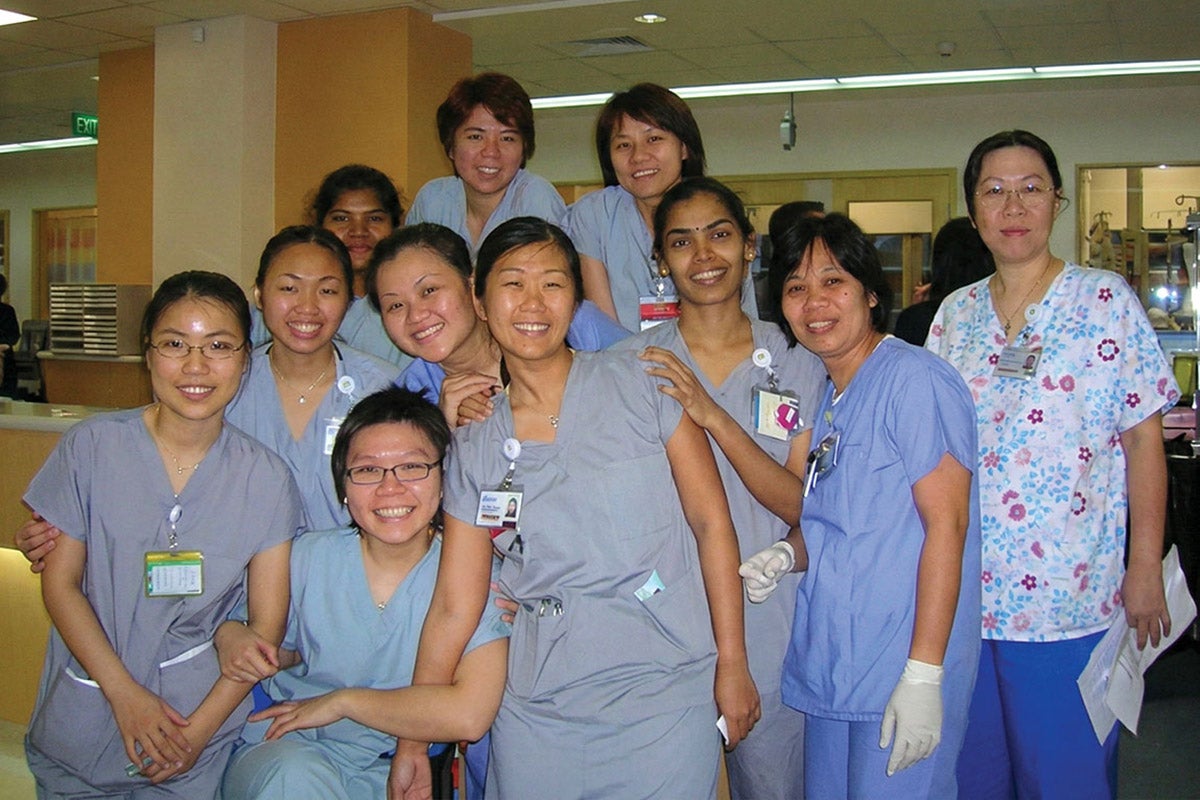
For Cindy, her love for Nursing only bloomed three years into her Nursing career and one Advanced Diploma later. She spent her first three years as a novice nurse in the surgical general wards, before being posted to the intensive care unit (ICU) after completing her Advanced Diploma in Nursing (Medical-Surgical). That’s when she was hooked.
She said, “In the ICU, I enjoyed the adrenaline rush that comes with caring for critically-ill patients—they have such complex conditions, and we often race against time to resuscitate them or get them into recovery. At the same time, there’s the camaraderie of working together as a team. So even though it was daunting at first—things were very different from the general wards—it was also very exciting, especially when I saw the impact my work had on patients.”
The Learner
Ten years in, Cindy started feeling restless as a newly promoted nurse clinician. By then, she was not just looking after patients, but also the junior nurses—ensuring that they were familiar with the ICU environment and mentoring them. “But I also felt like there was more I could do—whether it’s improving patient care or empowering other nurses to do more.”
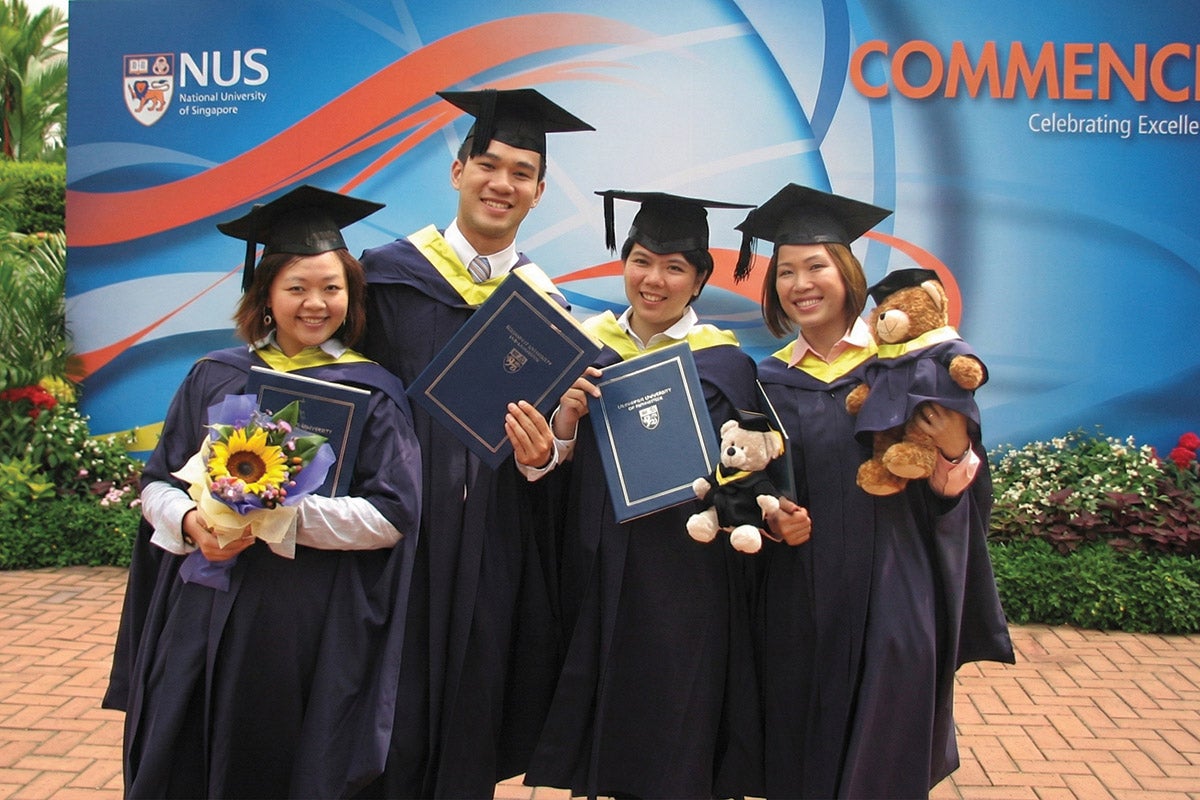
That was when she took up the Master of Nursing (MN) at Alice Lee Centre for Nursing Studies (NUS Nursing), National University of Singapore Yong Loo Lin School of Medicine—which trains students for Advanced Practice Nurse (APN) accreditation. Being the inaugural batch of MN students specialising in acute care, Cindy recalled that the cohort was small and close-knit.
“Being part of the pioneering batch meant that we experienced some trial and error—which made the journey even more exciting. I had a fun two years at NUS and made a lot of good friends. I also appreciated how our lecturers (Profs Piyanee, Jeanette) were very receptive—they adapted their teaching to what we wanted to learn beyond the curriculum,” she said.
|
|
The Innovator
After her graduation as a full-fledged APN in 2010, one of the nurse-led services that Cindy went on to implement was dysphagia screening for recently extubated patients. She said, “Patients typically wait for doctors to assess whether it’s safe for them to eat or drink, as they might have difficulties swallowing depending on their length of intubation. But some patients have expressed frustration and discomfort when they couldn’t even have a sip of water while waiting.”
To shorten patients’ waiting time, Cindy worked with speech therapists to come up with a protocol for a nurse-led assessment. Patients could start eating and drinking immediately once nurses carried out a simple screening to determine that it was safe for them to do so. Thus far, rates of complication like aspiration have been low or even non-existent.
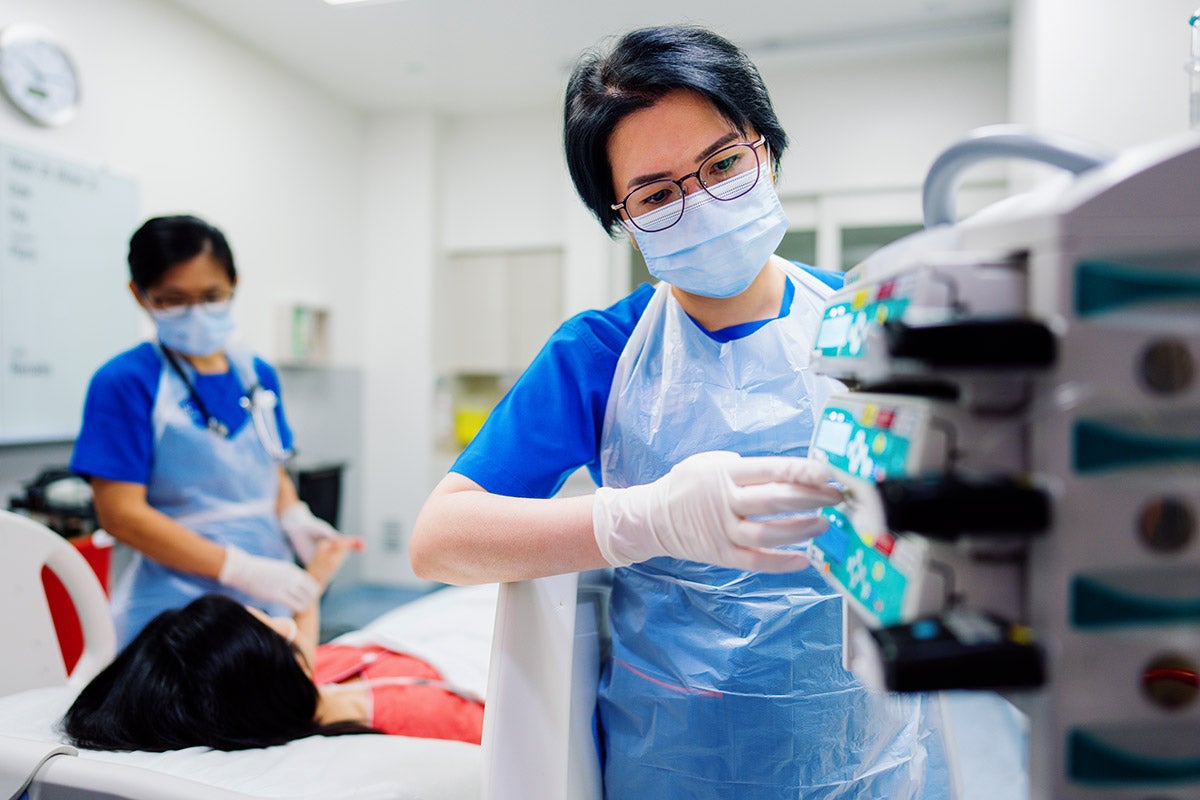
“Patients have expressed that they feel happier and more satisfied,” Cindy shared. “It’s also very rewarding when some of the other Nursing divisions found it useful and adapted the protocol for their patients.” Other innovations that Cindy has advocated for at NUH include a speech-to-text artificial intelligence (AI) tool, and bi-directional smart pumps in the ICU.
However, it is not always smooth sailing—despite potential benefits like time savings and reduced medication errors. Cindy said, “Not just our nurses and Nursing leaders, but stakeholders may be apprehensive about these new technologies and protocols.” To overcome this, change management is key for Cindy. “Innovation is not something we can brush aside. What I do is to make sure we communicate clearly with all stakeholders; and start with a small pilot to prove feasibility before scaling it.”
The Clinician
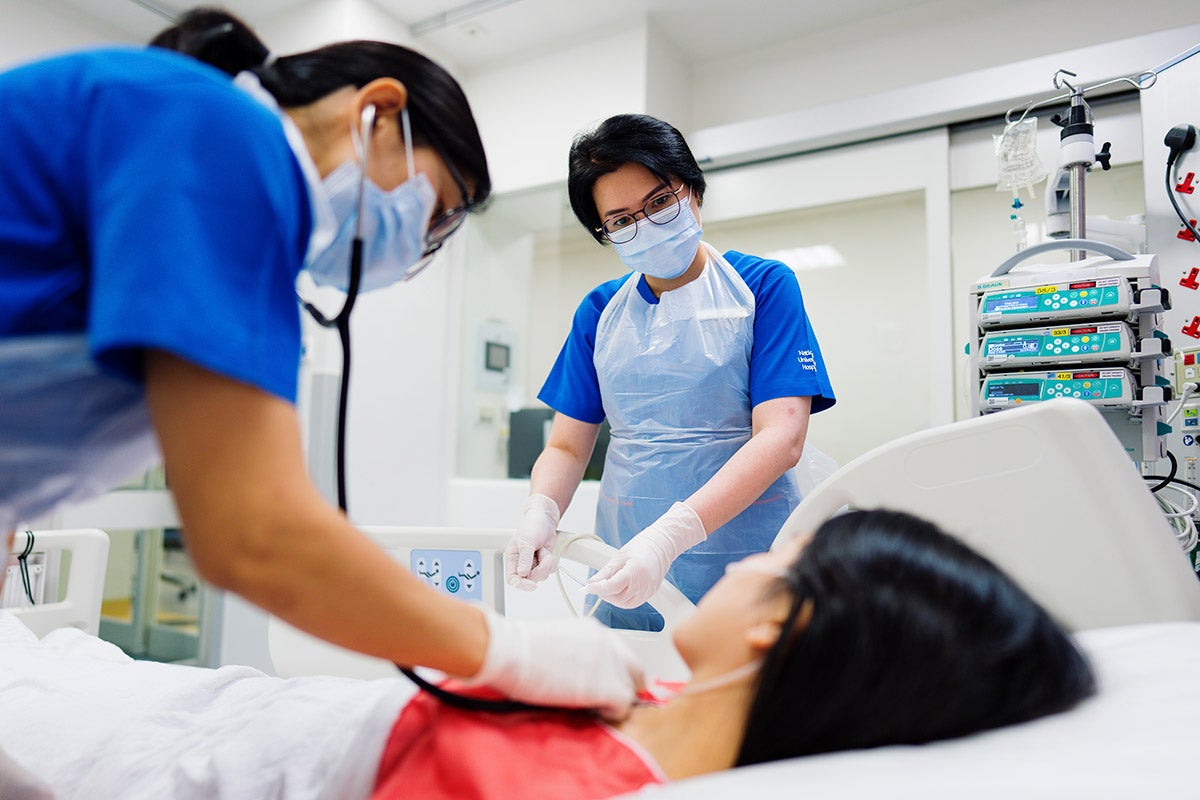
Despite her innovation advocacy, Cindy remains a clinician at heart. “Nurses can choose from many career tracks nowadays. But clinical work has always been my passion—because I think that’s the most direct way to deliver the best care to our patients and enhance their quality of life.”
On how she balances this with the increasing shift to technology and innovations, she said, “Technology can enhance what we do, like how the speech-to-text AI tool cuts down documentation time for more bedside care and the bi-directional smart pumps auto-calculate medication amounts. But it cannot totally take over the humanity of what we do as nurses—the care and empathy. So, while trying to implement all these smart solutions, it’s still important to maintain this Nursing core.”
|
|
The Mentor
Today, Cindy is an Assistant Director of Nursing. While operational and administrative duties occupy most of her workweek, she sets aside one day each week for clinical work. As an acute care APN, Cindy takes on complex cases in the medical ICU—reviewing patients’ case histories, assessing them and proposing care plans for discussion with consultants during medical rounds.
“What’s really important for me on these rounds is sharing my rationale for carrying out certain treatments or actions to help nurses understand why we do what we do,” she shared. Notably, the nurses have dubbed the Fridays when Cindy comes into the wards—“TGIC” (Thank God It’s Cindy). “They like that I explain the care plans to them; but I think they also enjoy seeing how nurses can practise at the top of our license. I hope to inspire them to start thinking how they can do the same one day.”
The Humanitarian
Despite a busy schedule, Cindy makes time for volunteering. “My first mission was with A/Prof Joseph Thambiah [an orthopaedic surgeon at NUH] who knew my work as an APN,” she recalled. Over the years, Cindy has gone on to volunteer in missions to Batam and Chiang Mai.
Her latest trip was to a rural village in Cambodia, where she and the team of doctors and nurses provided healthcare screenings and consultations for the villagers. She said, “Even though it was only for a short time, we felt very loved and welcome—the villagers showed their appreciation with hospitality and home-cooked meals. It was also satisfying coming together as a team to provide healthcare services to the villagers who often lack access to medical treatment and supplies.”
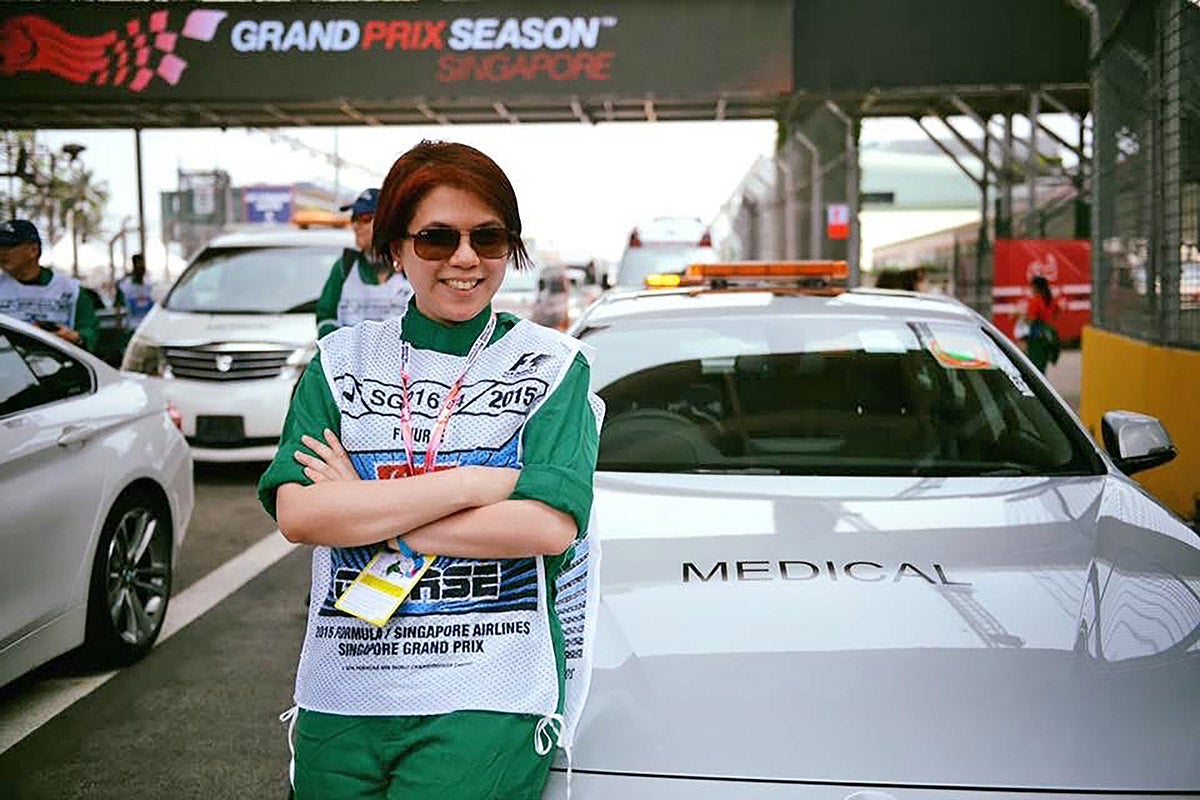
Cindy’s adventurous side had a field day when she joined the medical team providing first aid and emergency medical services for the Formula 1 Singapore Grand Prix on at least three occasions. “I wanted a more exciting experience and thought that I could put my critical care expertise to good use,” she shared. Thankfully, Cindy hasn’t had to tend to any serious mishaps so far. “Contrary to popular belief, we don’t get to enjoy the race—we are busy keeping eyes on the drivers in our area. But what’s most memorable is the friendships—especially the familiar faces that show up year after year.”
|
|
The ‘Miss Universe’ (of Nursing)
Asked what’s next after receiving the President’s Award for Nurses, Cindy mused, “Most people would think that’s it, receiving the top accolade for Singapore Nursing. But for me, it’s just the beginning.” Intriguingly, in her interview with The Straits Times, she had likened receiving the President’s Award to “getting the Miss Universe title”.
“That’s because with this award, I want to use it as a platform to engage with more nurses to advocate for meaningful change—whether it’s influencing healthcare policy or building collaborations with other healthcare professionals,” she explained. “But different from Miss Universe [where the winner only keeps the crown for one year], I see the President’s Award as a lifelong responsibility to do my best and be a role model for younger colleagues.”
She continued, “When the day comes that I hang up my scrubs, I hope my nurses can remember me not for the awards I’ve won—but for the impact I had on them. The moments when I try to draw out their unique strengths, encourage them to find their identity and purpose as nurses—that’s what I want them to remember.”