
News
Pioneering Nurses Graduate from NUS Work-Study Programmes
13 October 2025
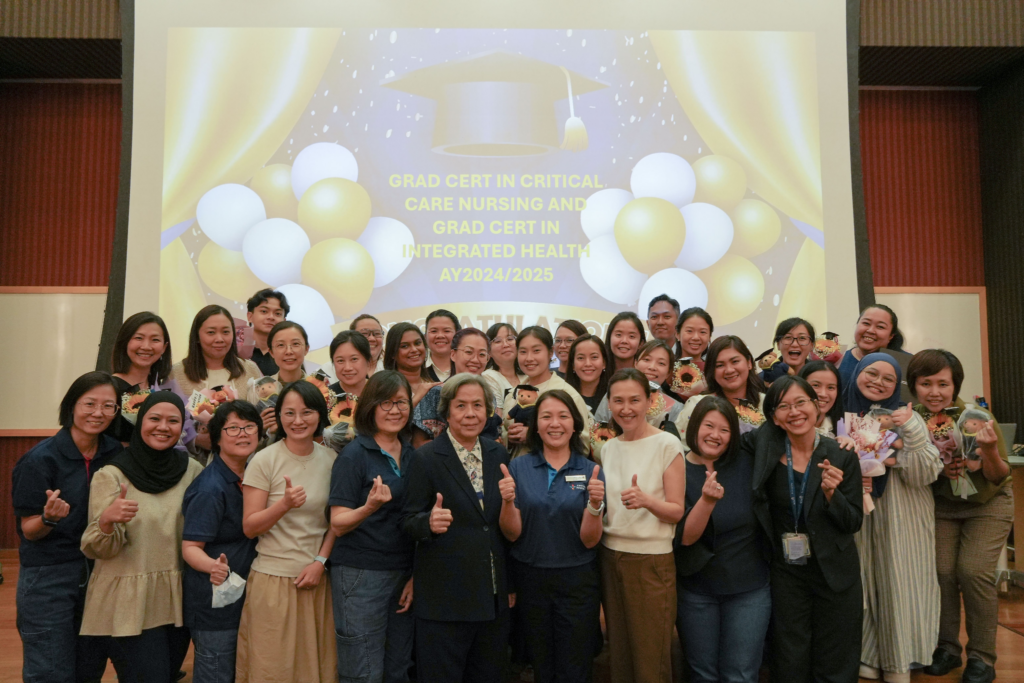
On 1 October 2025, the inaugural cohorts of NUS Nursing’s work-study programmes — in Critical Care and Integrated Health — received their certificates, marking a major step in bringing classroom learning into the heart of clinical practice.
When Wong Yi Yan, a Registered Nurse from the National University Hospital (NUH), enrolled in the inaugural Graduate Certificate in Critical Care Nursing, she expected to simply deepen her clinical knowledge.
What surprised her most, however, was how the programme reshaped her confidence. Through case studies, simulations and hands-on practice, she learned to bridge theory and bedside care, returning to her ward more assured in her decision-making and teamwork.
It was a sentiment that resonated with the pioneering cohort of 42 graduates from the Graduate Certificate in Critical Care Nursing (GCCCN) and Graduate Certificate in Integrated Health (GCIH), who graduated from the programmes on 1 October 2025.
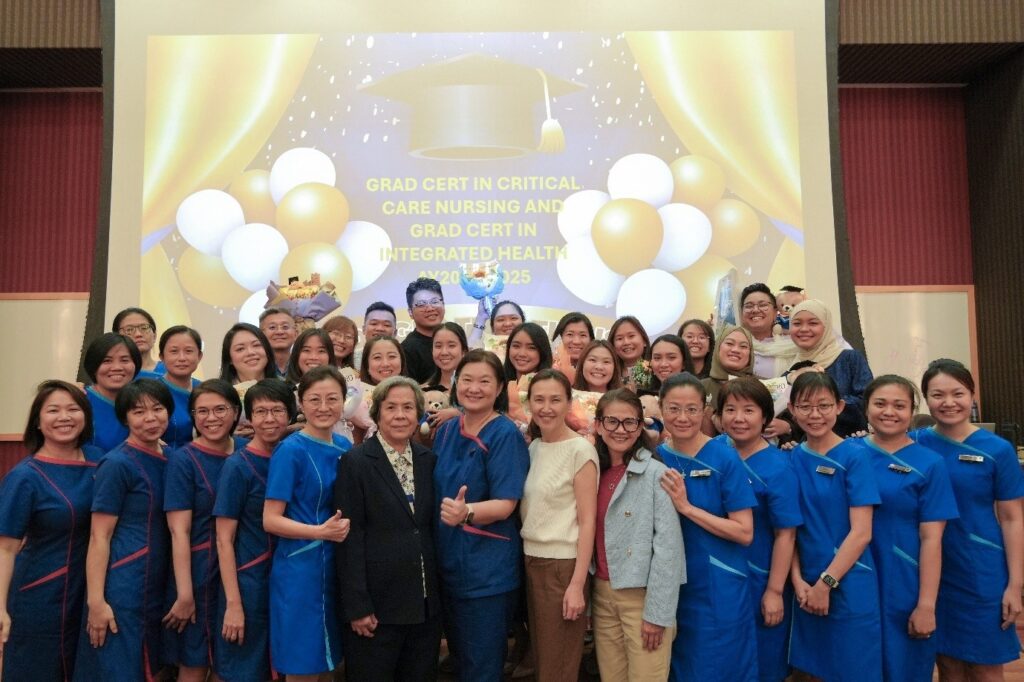
Launched a year ago by NUS Nursing in collaboration with the National University Hospital and Alexandra Hospital (AH), the two courses are the first postgraduate nursing programmes in Singapore to pilot a work-study model. This model bridges the gap between study and practice, enabling nurses to pursue professional development while continuing to work in clinical settings.
“Today’s graduates are not only the first of their programmes, but also the pioneers of a new model of learning — one that redefines the relationship between universities and healthcare institutions. Rather than viewing education and work as separate spheres, this model allows learning and service to advance hand in hand,” said Associate Professor Zhou Wentao, Deputy Head (Postgraduate Programmes) at NUS Nursing.
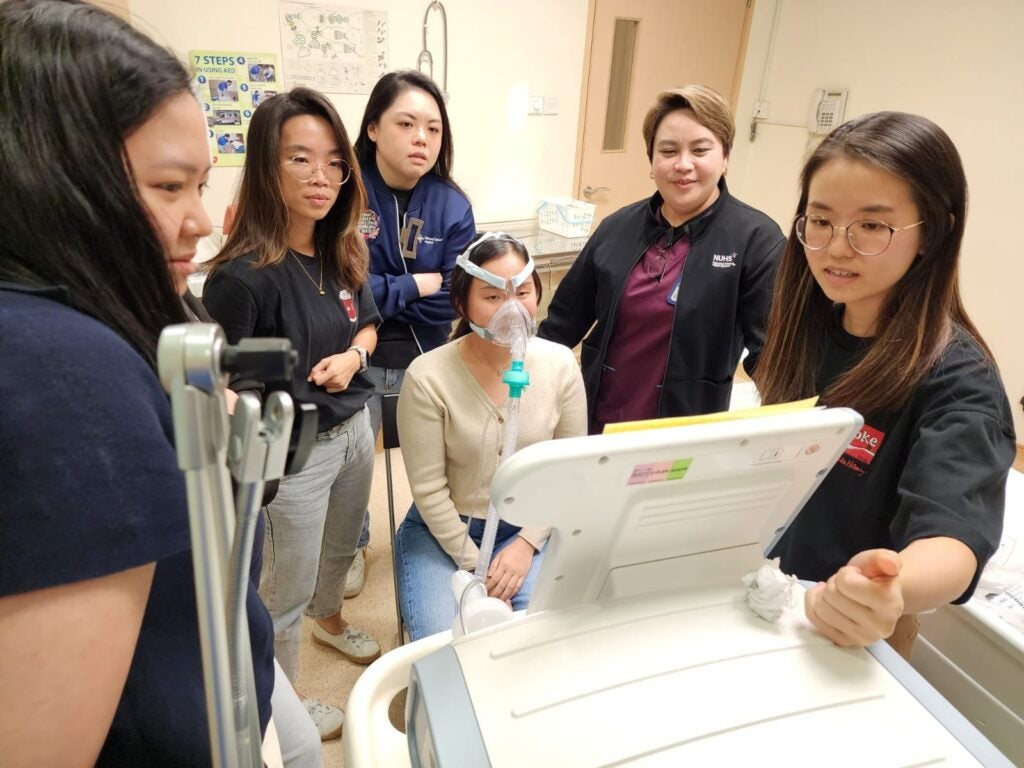
The graduate certificates were developed to deepen nurses and healthcare professionals’ competencies in the critical care and community health specialties. The Graduate Certificate in Critical Care Nursing, developed with NUH, equips healthcare professionals with the competencies to care for critically ill patients and advances their understanding of the latest developments in critical care medicine and nursing.
In her congratulatory speech, Programme Director Dr Siriwan Lim highlighted the partnership between NUS Nursing and NUH clinical partners in shaping and building the students’ knowledge, clinical competencies and professional confidence through multi-dimensional assessments.
She also praised the graduates for proving it is possible to balance the demand of full-time work in the Intensive Care Unit with the rigour of postgraduate study. “You have walked this path first, and you have lit the way for others who will follow,” she said.
The Graduate Certificate in Integrated Health trains healthcare professionals with the relevant knowledge and skills to provide integrated, holistic, and patient-centred care across various healthcare settings.
Programme Director Dr Rosalind Siah shared her thoughts on the programme and the new model of study. “This is more than a milestone for our graduates — it is also a milestone for NUS Nursing in collaborating with the healthcare industry to co-design programmes. Workplace learning bridges study and practice by placing students in authentic clinical settings, where learning is focused, deliberate, and directly relevant to their work — ultimately enhancing the quality of care and management. For the GCIH programme, it also fosters interprofessional collaboration and strengthens professional development and identity among healthcare providers serving the community.”
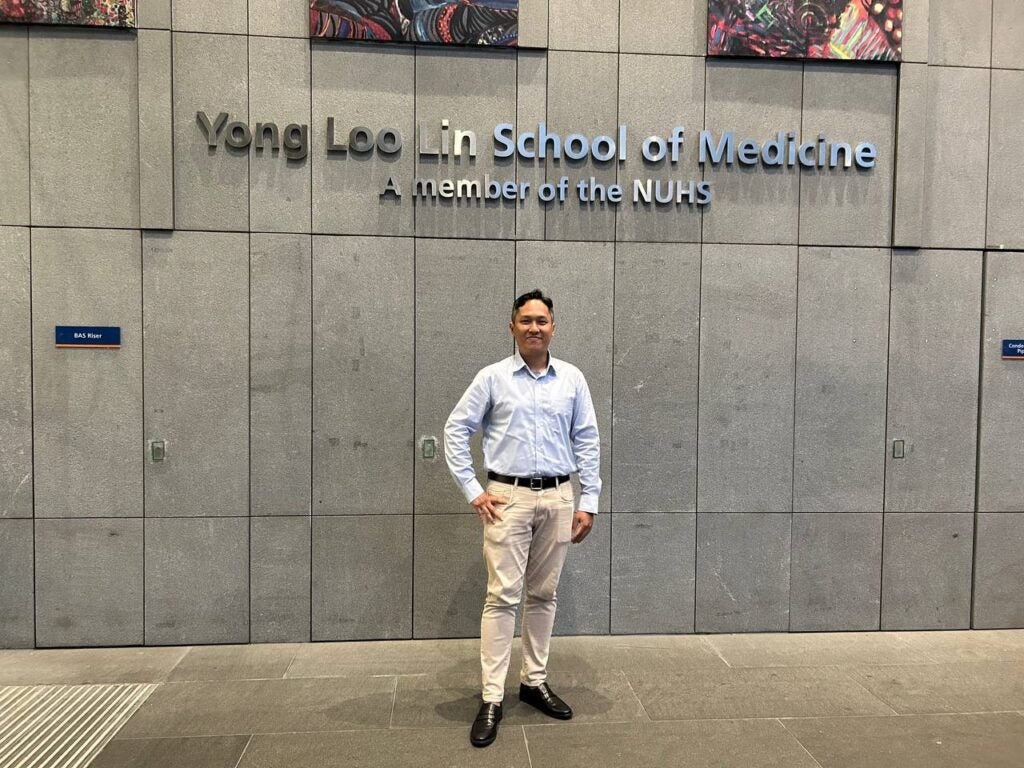
The graduation ceremony concluded with a reflection by Senior Staff Nurse Mohamed Khairizan Bin Mohamed Khair from Alexandra Hospital, who shared insights from his one-year journey in the work-study programme. “I entered the GCIH expecting conventional learning, but the workplace learning model completely changed my perspective,” he said. “What struck me was how it made learning alive and relevant — our hospital became the classroom, our patients and colleagues were our best teachers, and our facilitators helped us connect theory to practice. It pushed me to unlearn old habits, think more broadly, and embrace micro-learning — picking up ideas in small, meaningful doses and applying them immediately in real care.”
As the day concluded, the first ever graduating class parted ways, holding the memories and knowledge that they had accumulated over the past year.
Congratulations to all graduates!
