

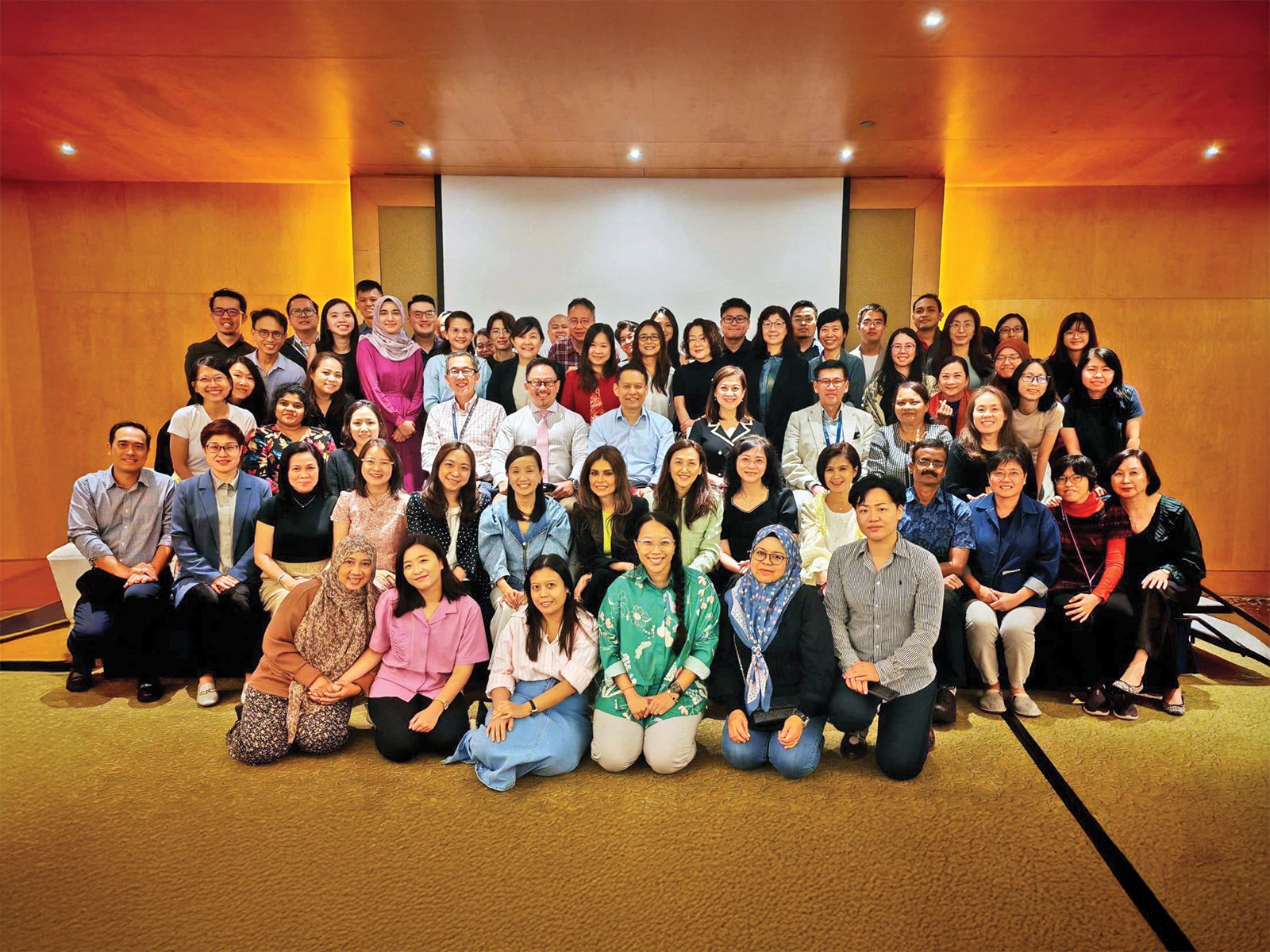
Before 2005, any nurse with a Nursing degree would have received their education from an overseas university. That explains why only 13% of nurses had degrees1 at the time. This number belied nurses’ appetite for learning and their desire to deliver quality Nursing care.
Guided by a Vision for Better Healthcare
Luckily, Professor John Wong Euli, then Dean of the Yong Loo Lin School of Medicine, National University of Singapore (NUS Medicine), recognised the importance of critically-thinking baccalaureate-prepared nurses to Singapore’s future. His fierce advocacy for setting up a Nursing degree programme at NUS led to a generous gift from the Lee Foundation—and the establishment of Alice Lee Centre for Nursing Studies (NUS Nursing), National University of Singapore Yong Loo Lin School of Medicine in 2005.
In August 2006, NUS Nursing officially opened our doors—with 49 students enrolled in the Bachelor of Science (Nursing) programme, and five faculty staff. I was one of them, then serving as a lecturer.
Empowered by Strong Leadership
Over the years, NUS Nursing has had the fortune of being led by visionary and capable leaders who lead by example, and are passionate about advancing Nursing. I still remember how our founding Head of Department, Professor David Arthur, offered me the chance to travel to the US for my first conference on simulation. That sparked my passion for the field. Then there was Professor Sally Chan (Head of Department from 2011 to 2013) who encouraged me to join the tenure track.
Such stories are not unique to me. Wentao, Lydia and Siriwan completed their PhDs while teaching full-time with NUS Nursing—and each of them has a moving story of how they were supported by the leadership despite the challenges of having to juggle different responsibilities.
As far as our programmes are concerned, Wentao and Lydia recall working closely with Professor Emily Ang (Head of Department from 2014 to 2023) to develop our education pedagogies for both the undergraduate and postgraduate curriculums. Hong-Gu, Wenru and Piyanee can also attest to the support they received, whether in terms of funding or resources, from the wider NUS Medicine leadership for their research.
This unwavering support has had a profound impact on the growth of NUS Nursing. We have not only trained over 2,000 nurses and 450 Advanced Practice Nurses (APNs) to date, the number of programmes under the department has also grown manifold.
However, these numbers hardly capture the richness of our journey. We were on a mission from the very start—to equip our nurses with the clinical competencies to deliver patient-centred care effectively and independently in a tech-driven and multidisciplinary hospital environment. Our graduates are expected to take on leadership and supervisory responsibilities from primary to community care settings.
Committed to Shaping a Future-ready Nursing Workforce
This ambitious undertaking calls for a robust undergraduate curriculum—one that emphasises not just clinical skills, but also critical thinking capabilities and soft skills such as teamwork, communication and leadership. To support this, we proactively seek out innovative teaching methodologies to strengthen in-class learning and engagement through team-based learning, immersive virtual reality simulations, case-based discussions and interprofessional collaborations.
We also work closely with NUS Medicine to train our final year students. By simulating real-world case scenarios in state-of-the-art labs and virtual environments, we enhance their ability to communicate and collaborate effectively with their peers from the medical school to resolve problems and deliver patient-centred care.
The rollout of the Common Curriculum for Healthcare Professional Education across Nursing, Medicine, Dentistry and Pharmacy in 2023 further provided our Year 1 and 2 students with learning opportunities to communicate and collaborate interprofessionally.
Another unique feature of our undergraduate programme is the clinical postings. Each student goes through various postings over the course of study. However, coordinating and ensuring these postings balance the interests of clinical partners and facilitators with students’ learning milestones is not always easy. Lydia, who had coordinated Clinical Education for over a decade, would be the first to confirm that. Nonetheless, recognising the value of these postings in preparing students for their future professional roles, our partners and facilitators have continued to offer their support. For that, we are thankful.
As important as formal, structured learning is, it is increasingly evident that it is not always enough. Through encouraging our students to participate in carefully curated local and overseas Community Involvement Projects, we hope to broaden their perspectives and networks while deepening their understanding of the impact their work can have on Singapore and the broader region.
Set to Further Patient-centred Care through Lifelong Learning
As we focus our efforts on training our largest student population at NUS Nursing—the undergraduates—we are cognisant that a degree is by no means the end of learning. Healthcare continues to evolve with changing population demographics, the widespread adoption of digital technologies, and a growing emphasis on preventive health and community care.
When the Master of Nursing programme was launched in 2003 under NUS Medicine, it provided a pathway for nurses to perform at an advanced level. Twenty-two years and 450 APNs later, we are proud to note that 15 of the 17 APNs who received the President’s Award for Nurses—Singapore’s highest national recognition for exceptional contributions to patient care, education, research, and administration—were trained at NUS Nursing. This achievement is a testament to the quality of our programme.
Building on this, we recently launched the Doctorate in Nursing Practice (DNP) programme to equip experienced nurses, including APNs, with skills to translate evidence-based research into clinical and community settings. Practice-focused, it offers graduates of our Master of Community Health, Critical Care Nursing and Infection Prevention and Control programmes an avenue to advance their qualifications and apply research to improve patient outcomes and strengthen the healthcare system.
Importantly, the DNP complements our PhD programme, which focuses on nurturing researchers to challenge conventional Nursing practices and develop innovative solutions to today’s most pressing healthcare issues. By continuously expanding the range of graduate programmes offered at NUS Nursing, we hope to journey alongside our graduates—enabling them to advance their skills and knowhow in care delivery as well as leverage emerging opportunities to transform and impact the Nursing landscape.
Driven to Advance Evidence-based Research
Research is often the first step in advancing evidence-based Nursing practices—and being part of an established medical school with a strong research focus has opened doors for interdisciplinary collaboration with fellow medical researchers. More significantly, it has shaped our research culture and strengthened our position as a thought leader in Nursing.
Over the years, we have published research at a respectable rate. As our research efforts mature, we are increasingly seeing our work featured in high impact factor journals. Nine of our researchers were also ranked among the world’s top 2% most-cited researchers for 2024, in a study led by Stanford University. Our QS World University Rankings for Nursing has similarly seen a significant jump—from 20th in 2024 to 8th in 2025—highlighting our growing global reputation in Nursing research.
These achievements would not have been possible without our dedicated tenured professors—Wilson, Hong-Gu, Wenru, Shefaly and Piyanee. They have been instrumental in laying a strong foundation for our research education and guiding our undergraduate and PhD students towards careers as nurse researchers and academics in universities and institutions. Thanks to them, we have graduated 33 PhD students to date.
Wei Ling is an example. She is the first graduate from our undergraduate programme to be groomed into an Assistant Professor. Joining her are Jiang Ying, Jocelyn, Brigitte, Ronel, Rosalind, and Betsy, among others who have gone on to join healthcare institutions as researchers, or become faculty members at the Singapore Institute of Technology.
Inspired to Build a Lasting Legacy
We have made remarkable progress in the last 20 years. When I took over as Head in 2023, Professor Chong Yap Seng, Dean of NUS Medicine, encouraged me to bring NUS Nursing into the ranks of top 10 in the world. Through our collective efforts and teamwork, we achieved that goal when we were ranked 8th in the QS World University Rankings for 2024—surpassing many other Nursing schools globally.
But our achievements go beyond rankings. We take pride in how many of our graduates have excelled as compassionate and competent nurses, and advanced various Nursing fields such as education, clinical practice, management, research, and informatics. Many others have taken on senior roles, leading patient care alongside doctors and the rest of healthcare team, and advocating for their patients.
It is my honour and privilege to serve as the Head for NUS Nursing as we celebrate our 20th anniversary this August. Reflecting on my own journey—from my first day as a lecturer to where I am today—I am deeply grateful for the many opportunities I have been given. I am also thankful for the friendship and support of my colleagues, many of whom have grown alongside me.
Together, we have built NUS Nursing into a reputable and respected centre, known for its quality programmes and for generating evidence-based research insights. We have also fostered a strong culture that prioritises teamwork and excellence.
As we look to the future, we hope this legacy of building one another up will continue to grow as the next generation of research and education leaders take over. And they will carry on our shared commitment to developing nurse leaders who inspire and advance the health and well-being of Singaporeans.

Prof Liaw Sok Ying
Head (NUS Alice Lee Centre for Nursing Studies)
