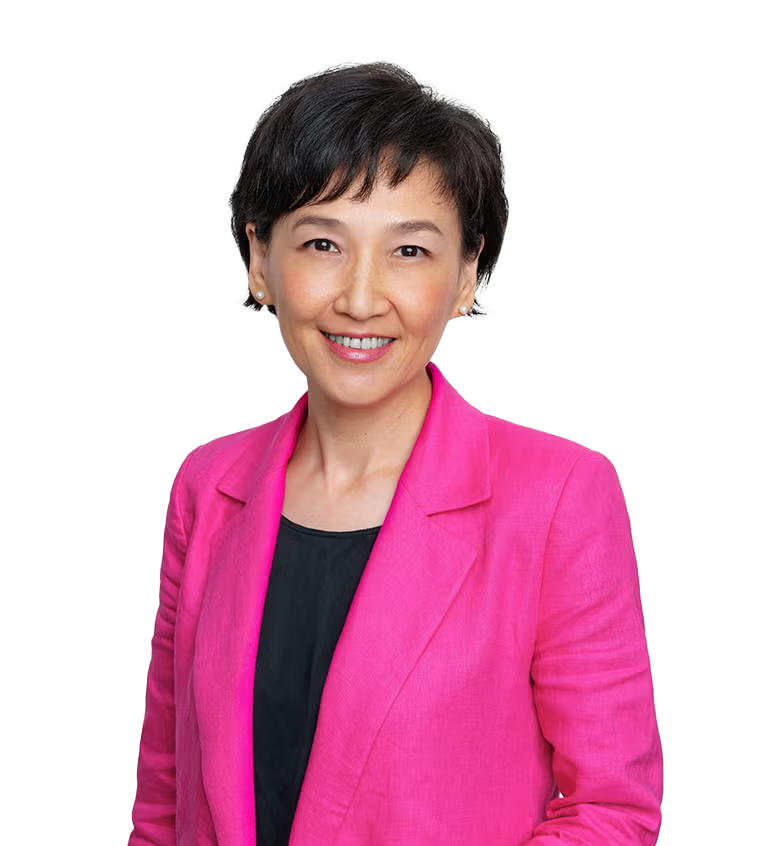

No stranger to lifelong learning herself, Associate Professor Zhou Wentao from the Alice Lee Centre of Nursing Studies (NUS Nursing), National University of Singapore Yong Loo Lin School of Medicine, is on a mission to build a pipeline of postgraduate programmes—so that nurses have ready access to training resources to elevate Nursing standards.
Dr Zhou’s own lifelong learning journey began while she was working as a clinical nurse educator in the neurology general ward. Having worked in the neurology intensive care unit (ICU) for seven years, she had a foundational understanding of neuroscience Nursing but felt that her knowledge in caring for neuro-patients was lacking. “I felt that I needed to enhance my knowledge to provide better care to patients—so I came to NUS for my Advanced Practice Nurse (APN) training.”
After completing her APN training, Dr Zhou returned to clinical practice and put her skills to good use in the neuro-ICU—until a recurring issue piqued her curiosity. “I was concerned about the phenomenon where ICU patients, who were deemed well enough to be sent to the general ward, were sent back to ICU after a few days. I wanted to understand what was causing that, and how we could prevent it from happening.”
To find answers, Dr Zhou chose this as the topic for her PhD research.
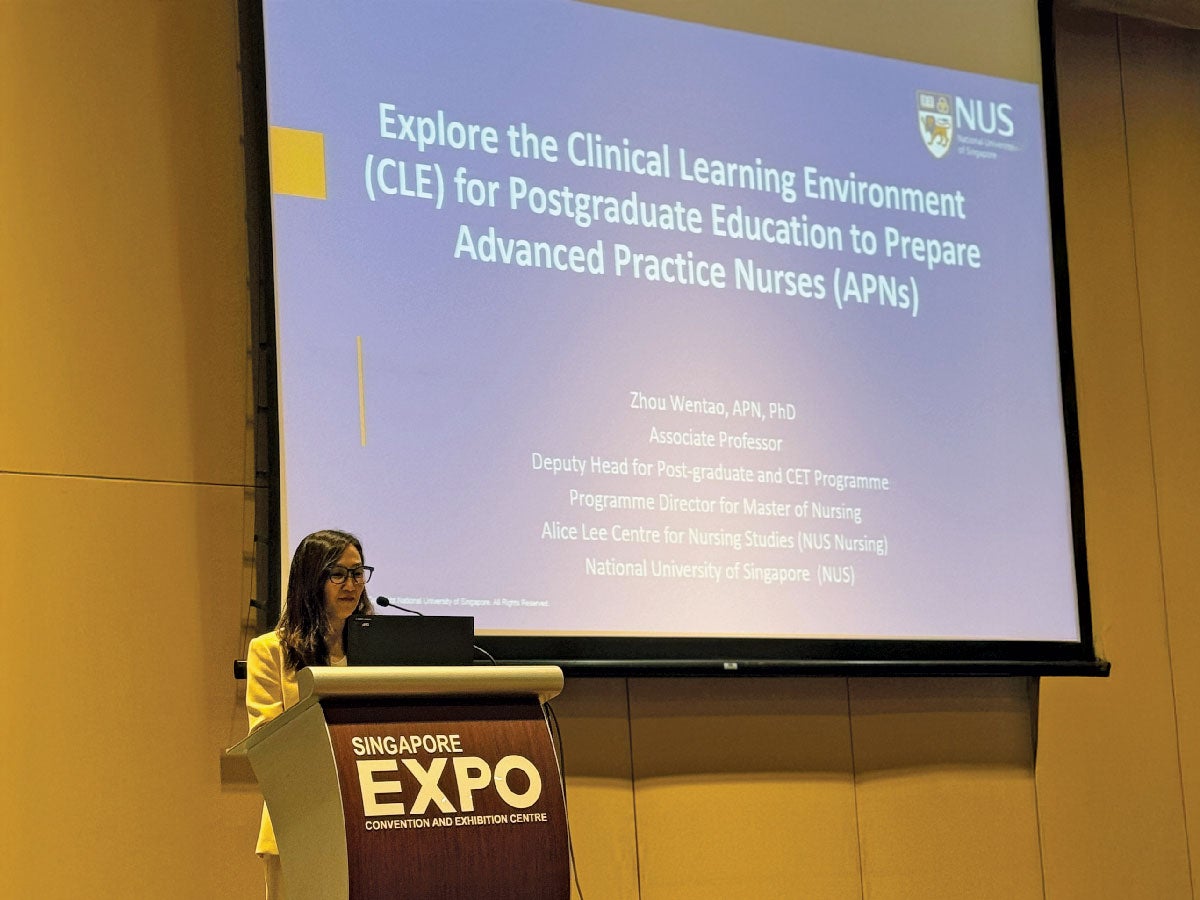
Dr Zhou speaking at the International Nurse Education Conference 2024 held in Singapore.
Developing Future Clinical Leaders
During that time, Dr Zhou was concurrently teaching in the Master of Nursing programme. It was 2011—the programme was six years old, and Professor Chow Yeow Leng was the Programme Director.
Dr Zhou recalled, “The request from the Singapore Nursing Board in 2015 to revise our curriculum to ensure its alignment with industry requirements gave me a chance to work closely with Prof Chow and learn how to manage the programme.” Shortly after, Dr Zhou took over the role of Programme Director.
Between her part-time PhD and her full-time teaching at NUS Nursing, Dr Zhou also continued her clinical practice at the Singapore Neuroscience Institute (NNI) through a joint appointment. According to her, she was simply doing what her APN training had prepared her for. “APN training equips nurses with the skills and knowledge to be clinical leaders. But even as we hone our skills in the clinical settings—we should also look at enabling others to care for a larger group of patients, whether through education or by exploring ways to enhance the existing system,” she explained.
This mindset not only helped Dr Zhou persevere when her PhD research took an unexpected turn, but also motivated her to maintain her clinical role at NNI despite a demanding schedule. She successfully completed her PhD in 2019 and became an associate professor—with the support of the then Head of Department, Professor Emily Ang.
“Prof Emily was a stabilising force for NUS Nursing during those formative years. She gave me room to grow as a Programme Director—always fully supportive of my decisions, as long as they were beneficial for the programme. It was also with her support that I joined the Ministry of Health’s APN development workgroup, and subsequently, the International Council of Nurses NP/APN network,” Dr Zhou recalled. “These were valuable opportunities that were instrumental to my development. Significantly, they had also helped shape the programme’s growth over the years.”
The Master of Nursing programme celebrated its 20th anniversary in 2023.
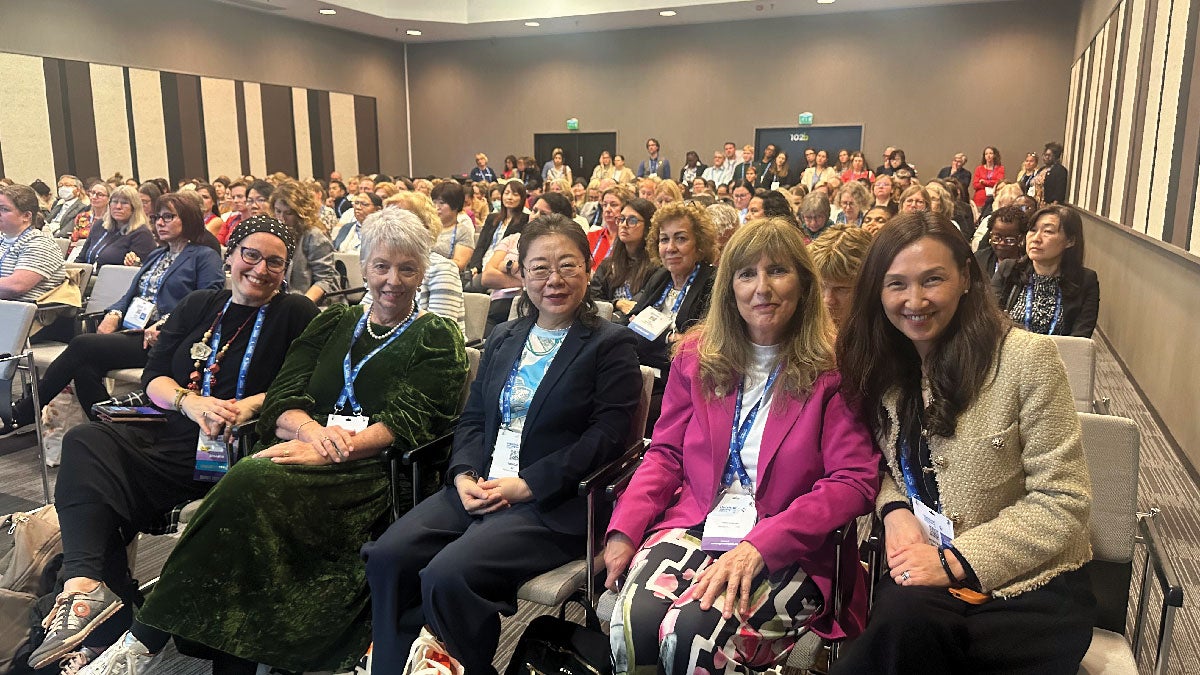
Dr Zhou at the ICN NP/APN network sessions.
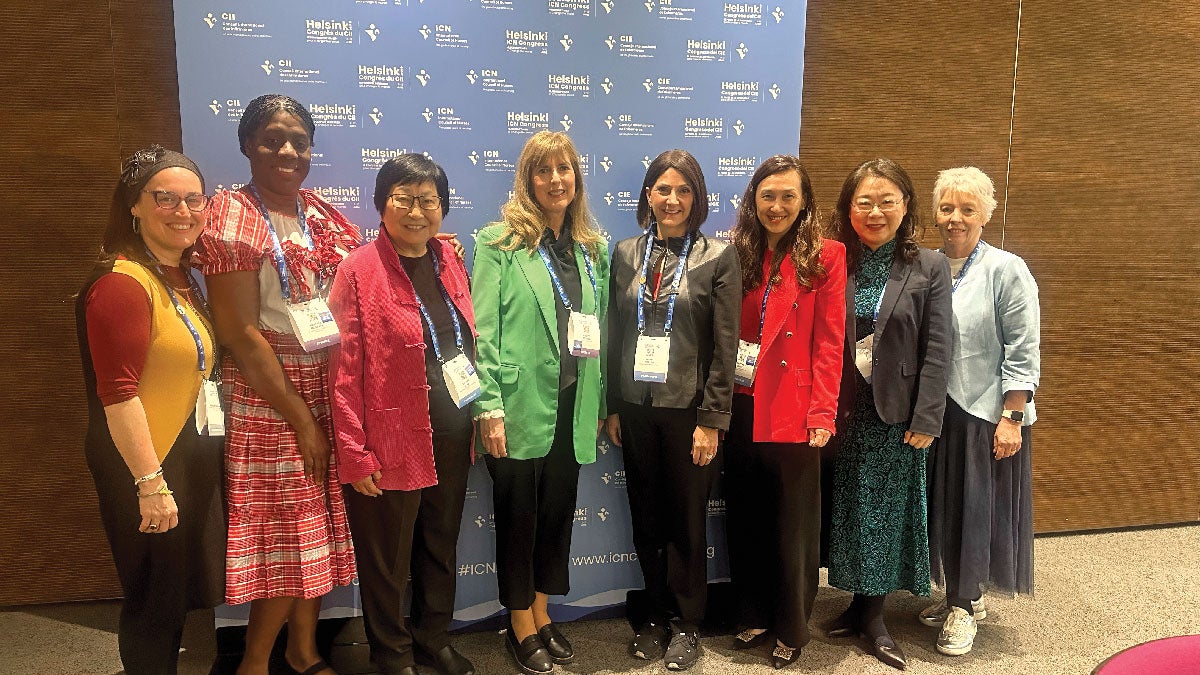
Keeping Pace with an Evolving Healthcare Landscape
Today, Dr Zhou continues to serve as Programme Director of the Master of Nursing programme even after taking on a bigger portfolio as Deputy Head (Postgraduate Programmes) in 2023. In this role, she oversees five Master’s and two doctoral programmes.
Reflecting on the growth of NUS Nursing’s postgraduate offerings over the years, she said, “While our flagship APN programme offers a means of development for nurses looking to sharpen their clinical skills, we recognise that nurses have diverse aspirations and are equally keen to grow in other areas. On top of that, our changing healthcare landscape increasingly demands nurses with deep expertise in domains such as critical care, community care, and infection prevention and control. That prompted us to develop a series of work-study graduate certificate programmes that can be stacked into full Master’s qualifications.”
She added, “As for our doctoral programmes, the PhD is a mature programme that has been under Prof Hong-Gu’s care for years—it is well-established. But we also saw that some Nursing leaders are more interested in translating evidence-based research into better clinical practices and patient outcomes, which is just as critical for transforming healthcare systems. That led us to develop the Doctor of Nursing Practice programme.”
Dr Zhou recognises that her current role requires a more holistic and strategic view to postgraduate programmes—which can be challenging with her close association to the Master of Nursing and Doctor of Nursing Practice programmes. That is why she is actively seeking new Programme Directors to drive their continued growth.
“I am deeply involved in the development of many of these programmes—so they are all like my babies. But the time has come to hand them over to capable and passionate faculty who can nurture and grow these programmes. Only then can we look forward to growing these programmes more quickly while I step back to focus on the bigger picture—plan how we can progress as a school, and at the same time, elevate the Nursing profession,” she said.
Sustained Commitment to Uplift the Nursing Profession
Efforts to elevate the Nursing profession are well underway, even as Dr Zhou searches for a successor to helm the Master of Nursing programme. “Our goal is to groom talented and passionate nurses and support their growth through continuing education and training, so we can advance Nursing practices with evidence-based approaches. But everything has to begin with awareness—prospective nurses, Nursing leaders, healthcare institutions, and funding agencies such as SkillsFuture Singapore (SSG) need to know about our programmes and the opportunities they offer,” she said.
“That is why our short-term goal is to build awareness of our postgraduate programmes so that more people know about them. At the same time, we are working closely with SSG to secure funding to help defray part of the course fees—so those joining our programmes will be supported.”
For Dr Zhou, these efforts are important stepping stones to encourage more nurses to pursue graduate education—and to make lifelong learning part of the wider Nursing culture. “The ambition to advance the Nursing profession is an ongoing endeavour. Besides instilling the importance of lifelong learning among nurses, we need to have a clear view of healthcare trends and needs,” she elaborated.
“For example, in recent times, we received requests from industry partners for training support in oncology Nursing. We are also seeing an increasing need for nurses to be competent and confident in handling informatics and innovation—so we are developing relevant programmes to address these emerging needs. Looking ahead, we also need to revisit nurses’ role as care moves upstream, with greater emphasis on prevention rather than disease treatment.”
She continued, “Additionally, we need to review our pedagogy to ensure that the nurses we train are tech-enabled—able to use, navigate, and even develop new tech. It is so true that it is the nurses who do not know how to use technology who will be phased out by technology.”
Optimistic that quality education and continuing education hold the key to better health both in Singapore and globally, Dr Zhou has high hopes for her successor to the Master of Nursing programme, with whom she has already begun collaborating closely to prepare for the transition.
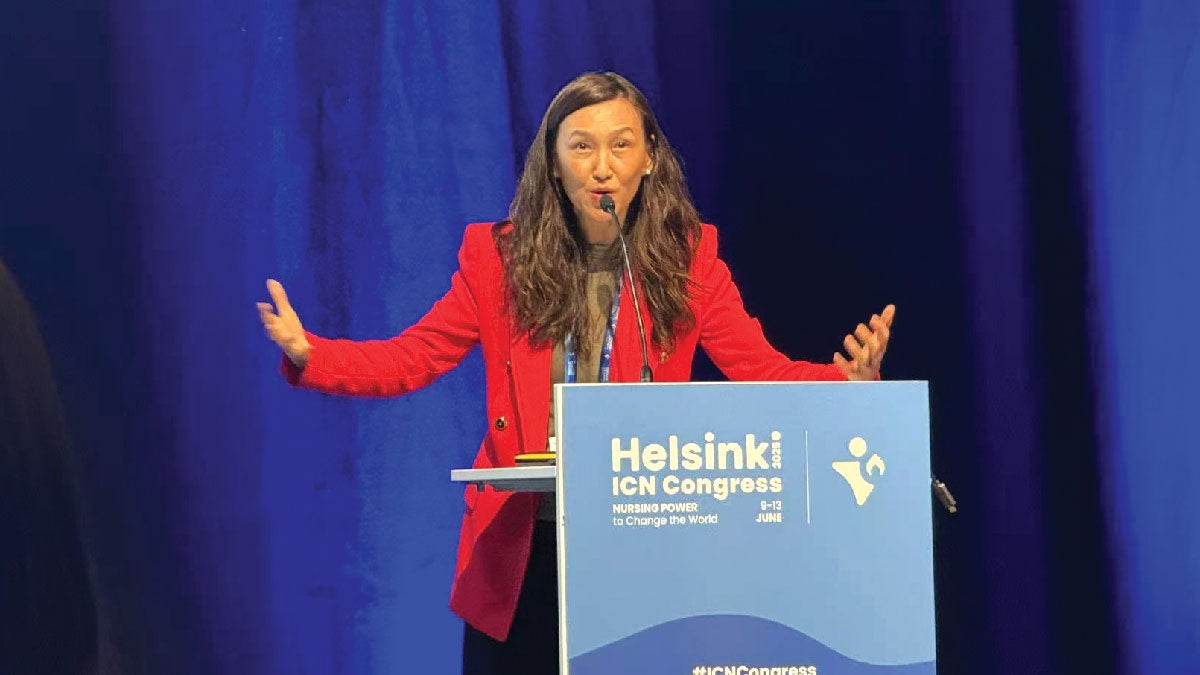
Dr Zhou speaking at the ICN Congress 2025 Helsinki. |
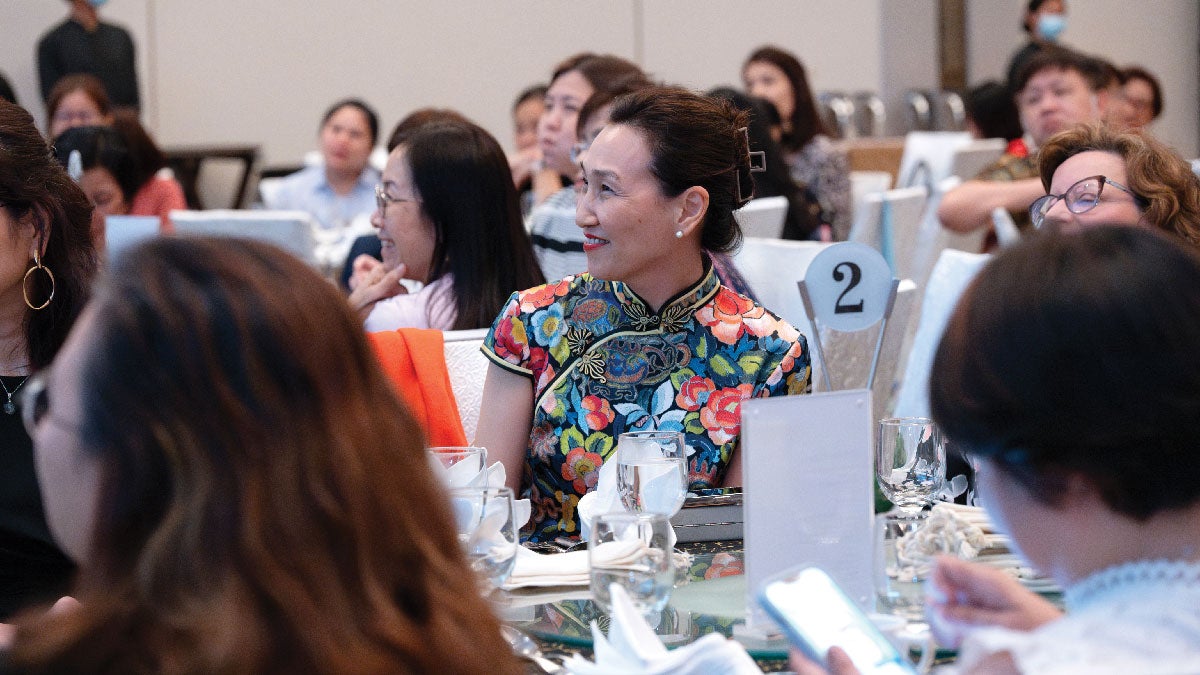
Dr Zhou attending the Master of Nursing programme 20th anniversary celebrations. |
Learning by Guiding, Learning by Following
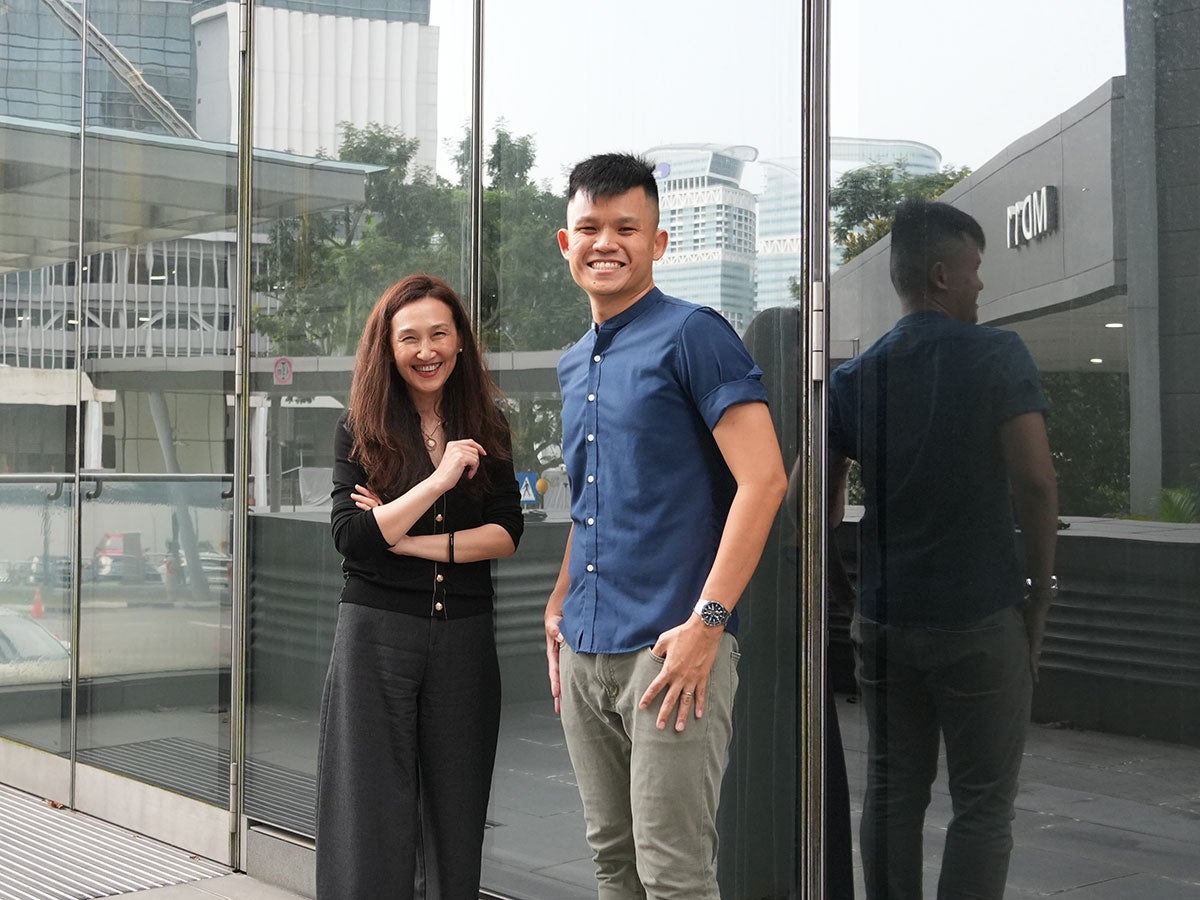
Dr Zhou (left) and Vincent (right).
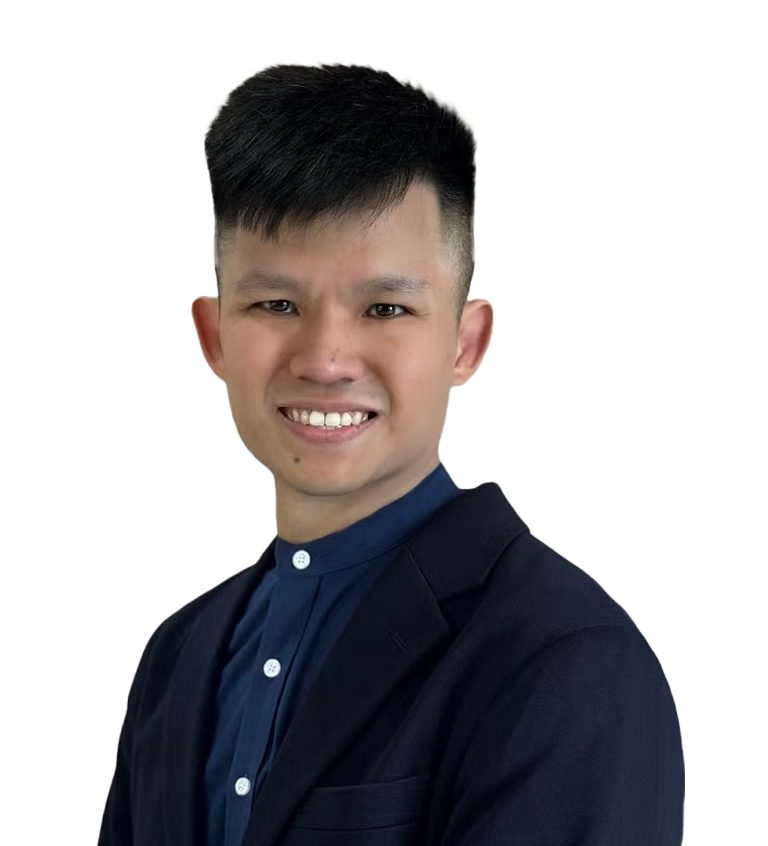
The two had never crossed paths—at least not officially—until Vincent Lim returned to NUS Nursing as the course lead for Global and Community Health with Dr Zhou as his co-lead.
Although Vincent was never taught by Dr Zhou during his undergraduate days, he distinctly remembered being inspired by her journey. “Through my exploration of different professional pathways as a Nursing student, I came to know that Prof Wentao is an APN—and I found myself looking at her journey and feeling excited about the many opportunities available to the Nursing workforce.”
He smiled, “But it was only when I came back to NUS Nursing that I had an opportunity to work with Prof Wentao—and I really enjoyed working with her.”
The positive sentiment was mutual even though the pair had only worked together for one semester. Dr Zhou said, “Vincent is proactive and a fast learner. He may be new to NUS Nursing and teaching, but he took the initiative to do a lot of preparation to familiarise himself with the pedagogy. Having done his Master’s in Public Health, he brings a fresh perspective to the course, adding value to its rigour.”
Valuable Lessons from the Respected Mentor
Attributing his enthusiasm for going the extra mile to Dr Zhou’s empowerment and trust, Vincent explained, “Prof Wentao is very encouraging and willing to share. Even as she showed me the ropes, she always urged me to explore changing the design of the course—if we can improve it—and no matter how busy she is, she always sets aside time when I need to engage her.”
Dr Zhou confessed, “Yes, we don’t always get to meet for a long time, but whenever we do, we make the most of the short time we have to cover our agenda, including the times when I come across Vincent along the office walkways. We keep our communication lines open and have this tacit understanding to share ideas for making the course better. Even if we don’t always align in our thinking, we always make a conscious effort to listen to each other and find ways to move forward together. This allows Vincent to understand that it’s perfectly okay to express differing opinions when working as a team.”
Just like that, their open communication made Vincent’s transition into education—and his many firsts—smooth and enjoyable. This included the first time he had to design a test paper. “I was a little uncertain about how to get started, but Prof Wentao patiently and meticulously guided me through the whole process. She even offered me a blueprint she had earlier developed to guide her own test paper design, which clearly outlined the categorisation of questions used to assess learners’ ability to meet the learning outcomes.”
Vincent had an opportunity to put what he learnt to good use when preparing the recent exam questions. The pair was supposed to work on them together. However, due to last minute urgent matters, Vincent had to drive the effort independently—and he did not disappoint. Dr Zhou said, “He proactively engaged and consulted with the administrative staff, doing most of the work.”
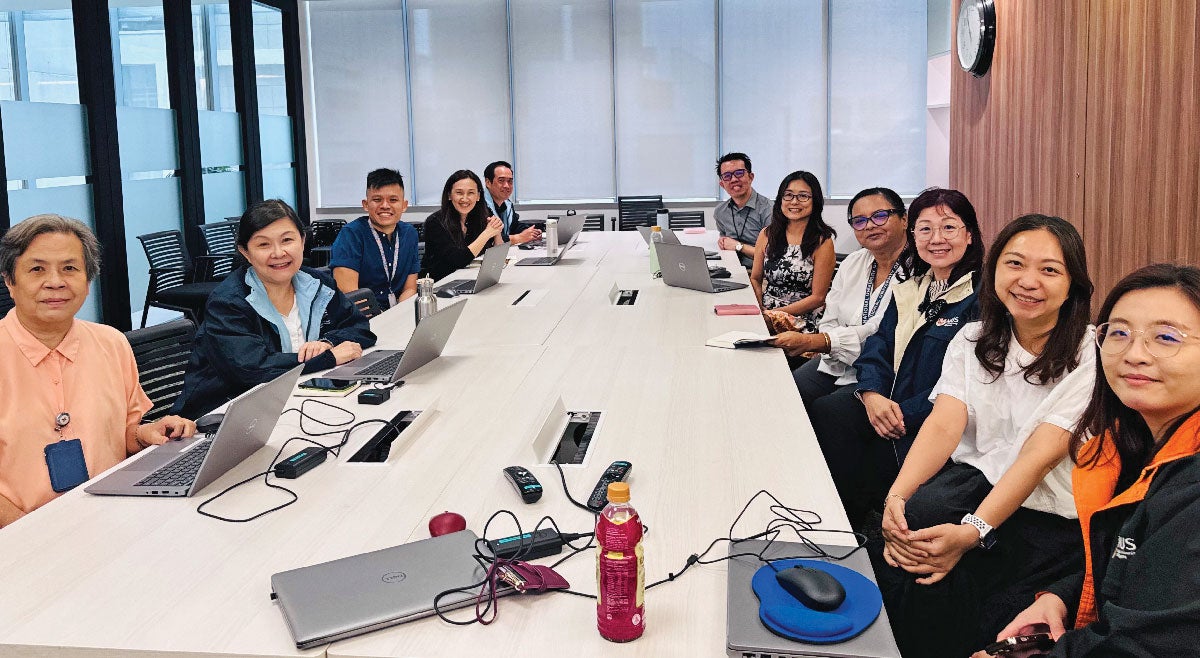
Vincent (third from left) and Dr Zhou (fourth from left) at the successful conclusion of the Pre-Board of Examiner Briefing.
Inspirations Drawn from the Mentee’s Journey
For the duo, learning goes both ways. Dr Zhou said, “Even though I am the mentor, I am also a learner—and I have definitely learnt a lot from Vincent. While I may be leading the Global and Community Health course, I am no subject matter expert compared to Vincent who did his Master’s in this area.”
She continued, “When I took over the course lead role previously, I only introduced minor modifications. I recognise that there is room for further improvement and appreciate the perspectives Vincent brings. This is how education should be—always evolving.”
Dr Zhou particularly remembered sitting in on one of the night classes when Vincent invited a professor from public health as a guest speaker. “The professor shared so many insights that you could tell the students were inspired by the end of the evening—and understandably so, because we sat in the class and were also very impressed by the speaker,” she shared.
“We, along with many students, stayed behind after the class to engage the speaker in discussion. At that moment, it was clear that although we were teachers, we were also learners—and the most privileged kind.”
The first successful collaboration between the two was marked by the completion of the exams in May. “We’ve only worked together for a short three to four months, but I can see Vincent’s growth. He has a lot of potential. For example, at the final exam recently, Vincent worked independently with our admin to arrange the students’ seating and paper. When I stepped into the hall, everything was already set up and ready. The moment he confidently announced the start of the exam, I felt so touched and proud of him—and I can’t help but think: he’s ready.”
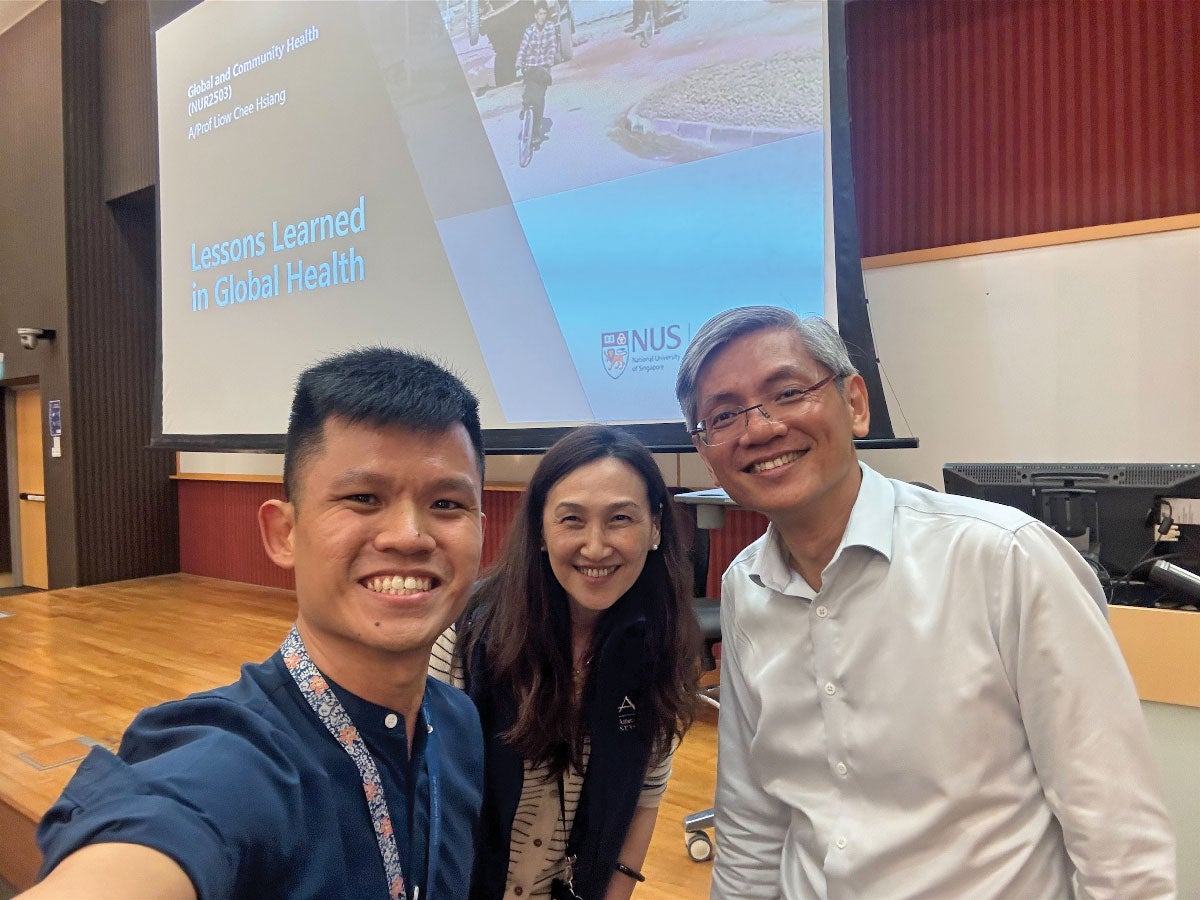
(From left) Vincent and Dr Zhou with guest speaker A/Prof Liow Chee Hsiang, Vice Dean (Education) from the NUS Saw Swee Hock School of Public Health.