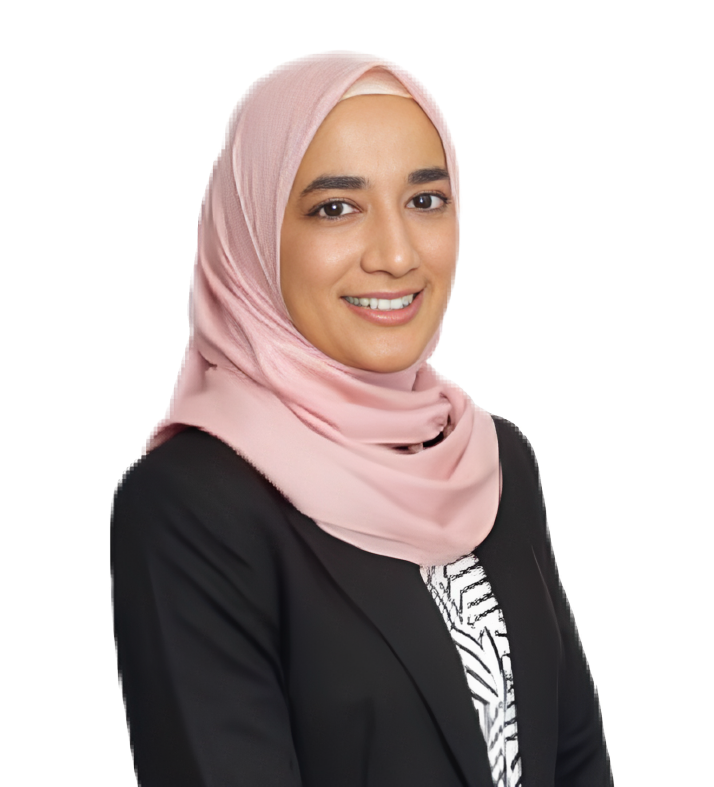

A firm believer in mindfulness and its benefits, Associate Professor Piyanee Yobas from the Alice Lee Centre for Nursing Studies (NUS Nursing), National University of Singapore Yong Loo Lin School of Medicine, not only immerses herself in mindfulness research but also proactively advocates for its positive impact on mental well-being.
Case in point: she has a YouTube channel, “Digital Mind and Well-being”, where she shares videos on different mindfulness techniques and practices—for free. One such video featured Dr Yobas sharing a meditation technique for tackling fear and anxiety, during the COVID-19 pandemic.
She said, “Paid mindfulness interventions can be costly. People struggling with mental health (including those with chronic illnesses) already have enough to deal with; why not make resources free and easily accessible to help them?” Thus, the YouTube videos where anyone can use anytime and anywhere to practise mindfulness without cost.
The Researcher: Happiness First
To her, sharing the fruits of her research is simply an extension of her research and Nursing philosophy to help those in need. She said, “It stems from my overall research question, which is: ‘What can I do to help people achieve happiness and psychological well-being?’”
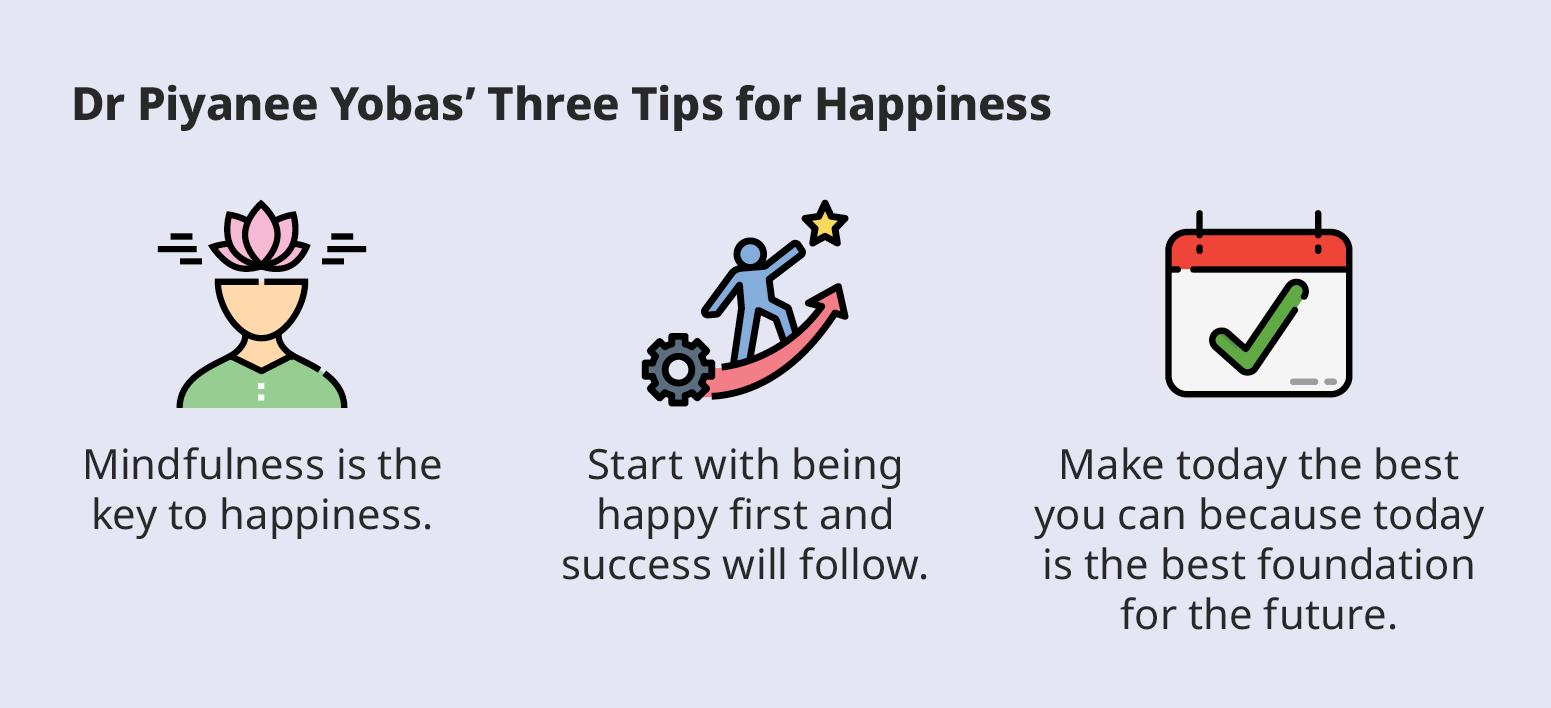
This, in turn, is rooted in her philosophy that happy people are successful—and not the other way round. Dr Yobas explained, “Many people think becoming successful would make them happy. But I think that, conversely, happiness is the key to success.”
With her training and experience in mental health, Dr Yobas specialises in mindfulness and psychosocial interventions. One of her longest running and proudest research projects is MindCAN, a mindfulness-based psychoeducation programme for cancer survivors. Noting that cancer survivors often experienced symptoms such as pain, depression and anxiety despite advancements in cancer treatment, Dr Yobas set out to alleviate these symptoms and enhance their mental well-being.
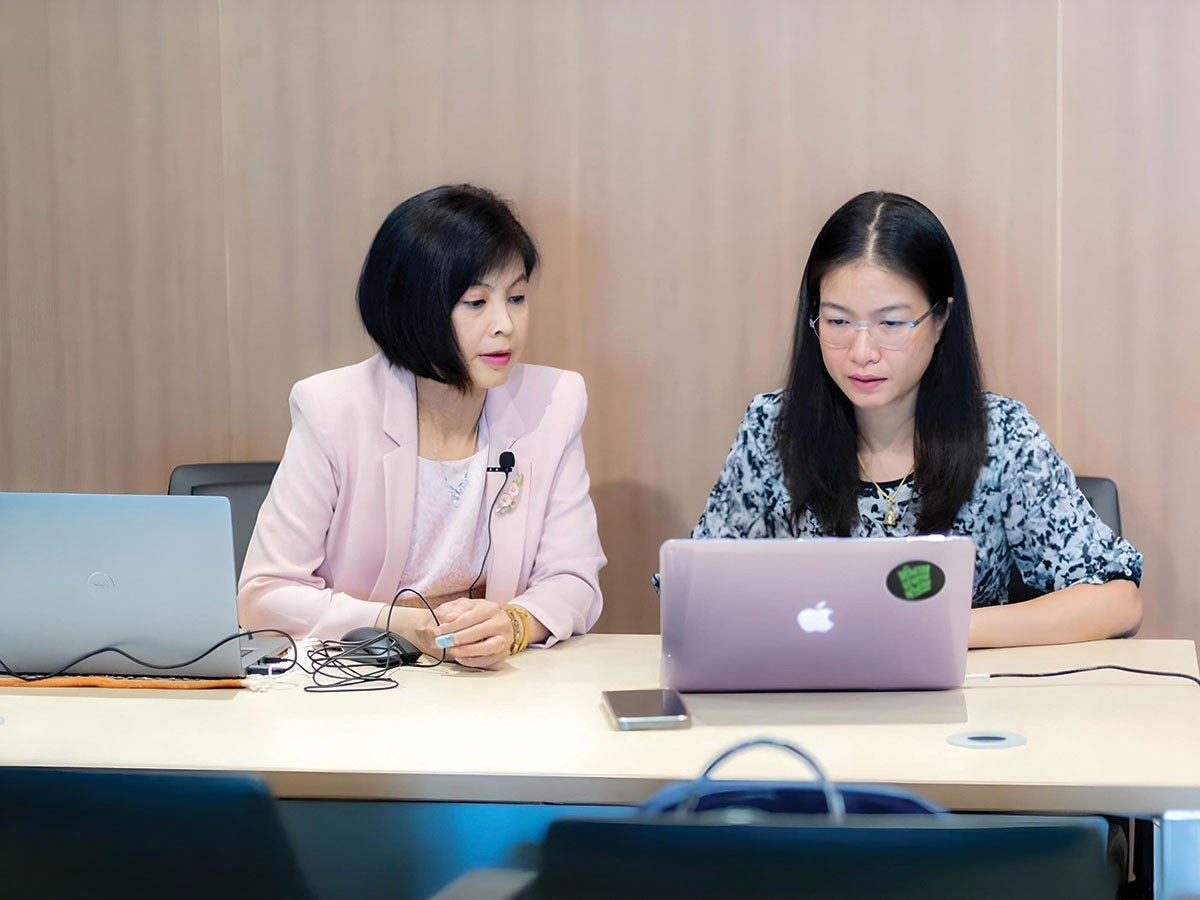
Dr Yobas (left) at a workshop.
First started in 2017 with Professor Emily Ang (NUS Nursing’s previous Head), MindCAN currently involves eight weeks of mindfulness interventions tailored for physical and psychological symptoms associated with cancer. After successful initial runs in collaboration with the National University Cancer Institute, Singapore (NCIS), Dr Yobas is now recruiting for a randomised control trial with a target of 210 participants.
Dr Yobas’ other projects include the MindNURSE programme, a mindfulness-based programme for Nursing students in Singapore, and international collaborations such as the MU Bully Guard app targeted at educating adolescents in Thailand on the harms of bullying.
The Academic: From the Land of Smiles
After completing her Bachelor’s in Nursing at Mahidol University in Thailand, Dr Yobas worked as an operating theatre nurse for four years. Subsequently, she was awarded a Thai Royal Government Scholarship to pursue her Master’s and eventually her PhD at Frances Payne Bolton School of Nursing, Case Western Reserve University, USA.
It was also around after her Master’s—when she worked as a nurse with a specialisation in mental health—when Dr Yobas saw first-hand how mental health could be integrated into any healthcare domain. She said, “I realised then that there’s no health without mental health.”
How then did she end up at NUS Nursing? “I worked as a faculty member at Mahidol University, Thailand, after my PhD. Afterward, I had the chance to meet Professor David Arthur (NUS Nursing’s first Head) at a conference in Thailand. After going through a couple of interviews and visiting NUS and the school, I felt it was a good place to build my academic career—and help build NUS Nursing.”
Dr Yobas joined NUS Nursing in 2007 as a tenure-track faculty member. She recalled, “We were a small department of only five—a stark contrast to today, when we are ranked 8th in the world1. It’s an achievement all of us worked for.” But what Dr Yobas deeply cherishes was the shared experience of working towards the same goal. “All of us had the same dream of making NUS Nursing an excellent Nursing school. Witnessing how our school grew from offering one Bachelor’s programme to a slate of undergraduate and postgraduate programmes today—is an amazing feeling.”
As tenure-track faculty, Dr Yobas balances research, teaching and professional services—an experience she relishes. “I enjoy all; they are equally important. While I create new knowledge as a researcher, I share knowledge in my role as an educator. Not to mention, it’s fun interacting with our Nursing students—and fulfilling to know that I’m helping to shape future generations of nurses,” she said with a smile. “At the same time, offering professional services, including conducting mindfulness interventions for patients in clinical settings, is very meaningful to me as well.”
The Mentor: A Very Happy Person
Unsurprisingly, Dr Yobas is delighted to be colleagues with her former—and according to Dr Yobas, always favourite—student, NUS Nursing Lecturer Lubna Shah. Recounting her first encounter with Dr Yobas as a second-year undergraduate, Lubna said, “Dr Piyanee taught a course in mental health, and I remember thinking—‘She’s a very happy person for someone lecturing on conditions like anxiety and depression!’”
But it was not until Lubna’s fourth year as an Honours student that the two formed a more meaningful student-teacher relationship. She said, “At that time, we could choose our own Honours advisors. I scanned the list of faculty members working on mental health (my area of interest)—and there was Dr Piyanee. Based on the positive impression I had of her, I decided to approach her and ask if she would accept me as an Honours student.”
Dr Yobas added, “I was very happy to take Lubna on as my student—and she proved that my decision was right with her hardworking and responsible attitude. I never had to chase her over missed deadlines.” Lubna said, “That’s because Dr Piyanee was genuinely interested in my project—her enthusiasm spurred me on. I would often get my drafts back in just a few days, with very detailed and constructive feedback.”
Lubna’s Honours project was an ambitious one, involving a virtual reality-based stress management programme for persons with mental disorders. However, Dr Yobas had no doubt Lubna could do it—and was vindicated when Lubna went on to publish her work and even presented at an international conference, where she won the prize for best presentation. The pair kept in touch after Lubna graduated to work as a mental health nurse, making it a point to meet up yearly and catch up over meals.
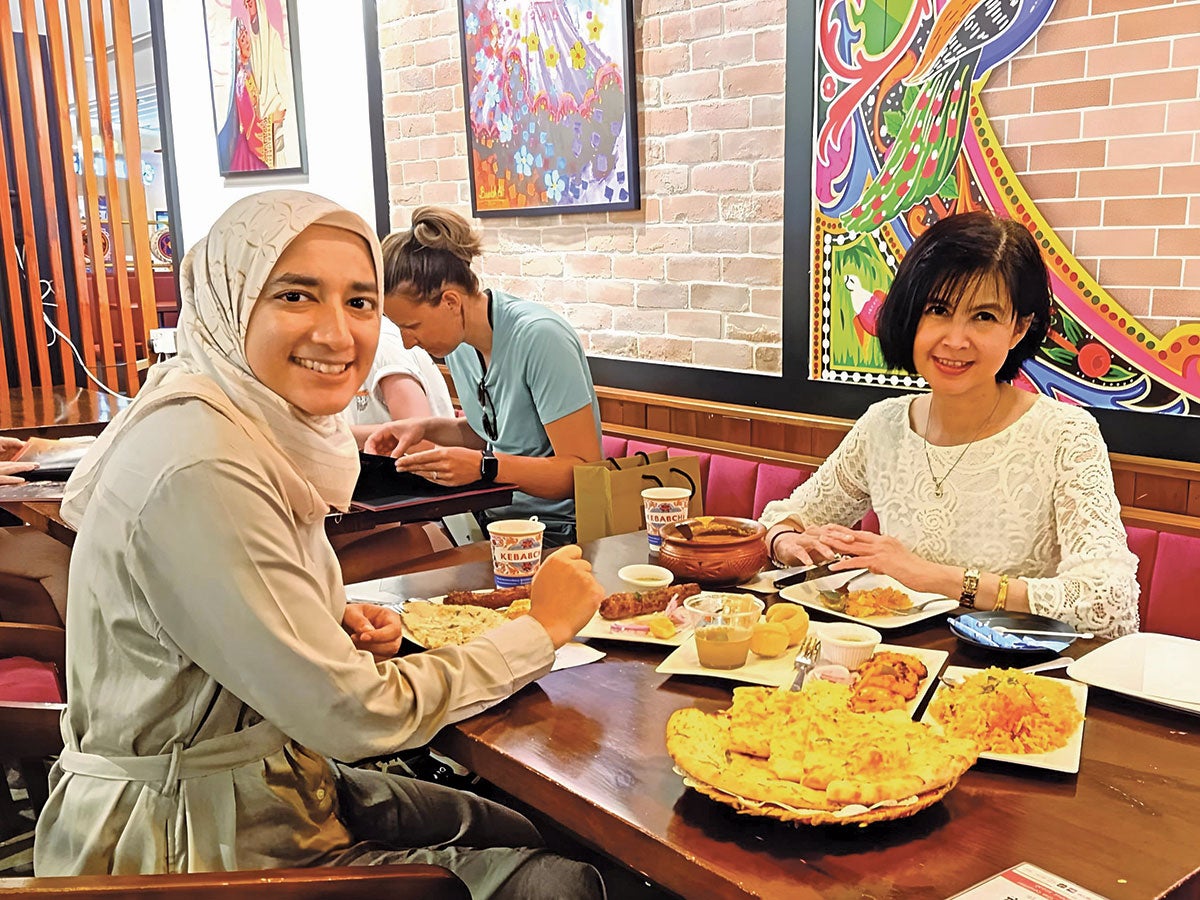
Recalling how Lubna was determined to buy her a meal upon receiving her first salary, Dr Yobas beamed. She said, “I didn’t expect her to do that—it was such a wonderful gesture—and that one incident kept me happy for at least a week.” Lubna explained, “It was just my way of showing gratitude to Dr Piyanee for guiding me through Honours year.”
The Colleague: Infectiously Mindful
Now that the pair are colleagues, Dr Yobas and Lubna have upped the frequency of their meet-ups—often destressing together over lunch. Lubna said, “Mindfulness is Dr Piyanee’s ethos; it just rubs off you. No matter how troubled I’m feeling, her accepting and positive energy always make me feel better.”
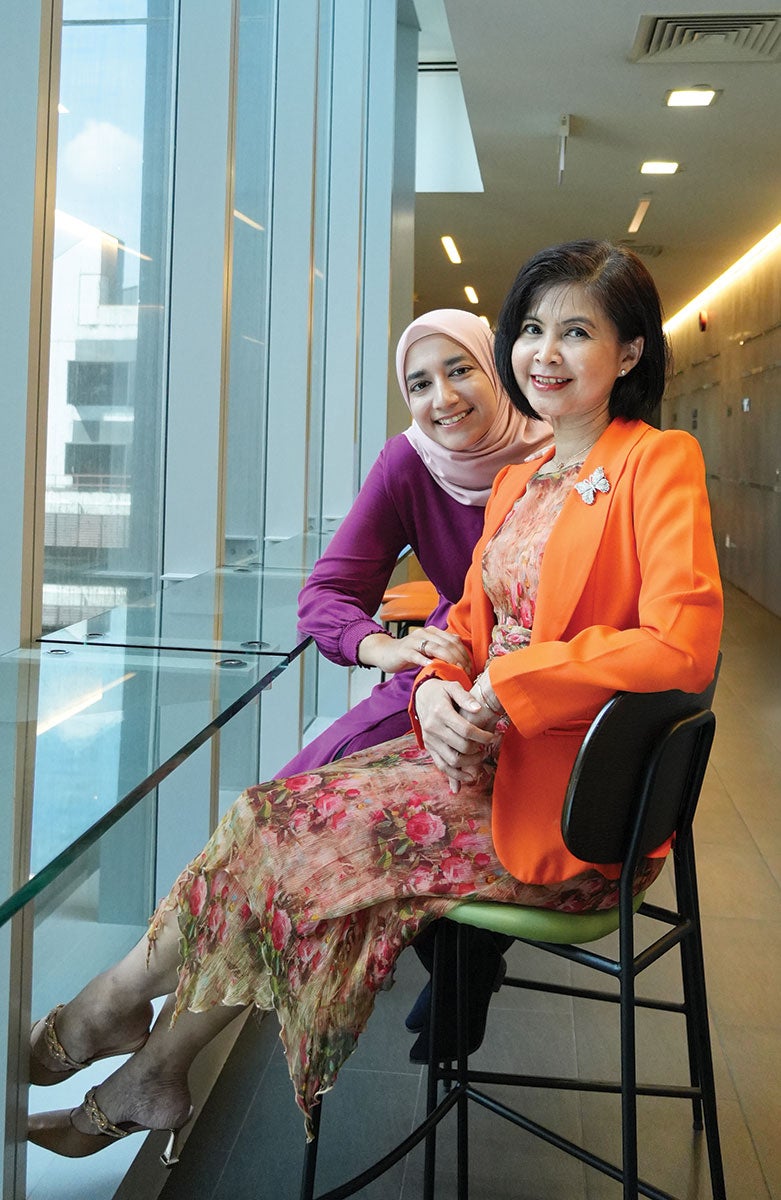
Lubna (left) and Dr Yobas (right). |
This is not the only way that Dr Yobas has influenced Lubna. “One thing that has always struck me is how Dr Piyanee puts the patient’s interest first,” Lubna reflected. “Now, it has become something I make a point of imparting to my own students—given how easy it is to lose sight of the patient amid daily stressors like burnout and manpower issues. But at the end of the day, our Nursing care still needs to be patient-centric.” Currently doing her part-time PhD with a focus on women’s mental health, Lubna’s Honours experience with Dr Yobas has likewise shaped her attitude towards research—and her fearlessness in juggling teaching with her PhD studies. “I enjoyed my Honours experience with Dr Piyanee—it allowed me to approach my PhD with optimism.” |
On her part, Dr Yobas is not just supportive, but looking forward to working together with Lubna after the latter gets her PhD. “We could co-supervise Honours students, or collaborate again on mental health projects,” she enthused.
In the meantime, Dr Yobas will focus on her multifaceted work in education, research and service—integrating technologies to make learning more fun for her students, partnering with international researchers on mental health projects, as well as serving as Section Editor-in-Chief of Nursing Education & Leadership in the journal, Nursing Reports. After all, as Dr Yobas often says—”Make today the best you can because today is the best foundation for the future.”
1 Quacquarelli Symonds (QS) World University Rankings 2025