

From Practice to Leadership: Developing the Next Generation of Infection Prevention Leaders
18 November 2026
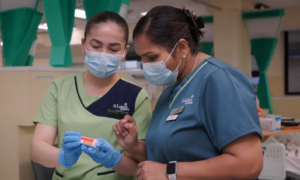
Malathi Maruthasalmoorthy (right), an infection prevention and control nurse at St Luke’s Hospital, enrolled in the programme to strengthen her ability to make evidence-based decisions and influence practice at an organisational level.
Since joining the programme in August 2025, Malathi has gained greater confidence in applying data and evidence to inform IPC decisions. She is now better equipped to interpret surveillance trends, assess infection risks and identify where interventions can make the greatest impact. These capabilities have also strengthened her ability to engage senior management and lead improvements in IPC practice.
Why IPC needs a different level of expertise
Infection prevention has long been fundamental to healthcare. Nearly 200 years ago, Florence Nightingale observed during the Crimean War that more soldiers were dying from wound infections than from battlefield injuries. Her pioneering work helped lay the foundations for modern infection prevention.
While its importance has endured, the challenges facing IPC professionals have grown increasingly complex, as Malathi’s experience illustrates. The COVID-19 pandemic brought infection prevention into sharper public focus, while antimicrobial resistance and emerging infectious threats continue to pose significant challenges to healthcare systems. At the same time, advances in medicine are creating new possibilities for patients and new considerations for keeping care safe.

Infectious diseases expert Professor Paul Tambyah (left) conceived the MSc (IPC) programme to equip nurses with the scientific knowledge and evidence-based skills to keep patients safe.
For Professor Paul Tambyah, an infectious diseases expert and the driving force behind the MSc (IPC) programme, today’s infectious threats underscore the need for highly skilled IPC professionals. The Senior Consultant at the Division of Infectious Diseases, Department of Medicine, National University Hospital, noted that while scientists and policymakers shape responses to pandemics and antimicrobial resistance, infection control nurses play a critical role in translating them into practice and keeping patients safe.
“The MSc (IPC) was conceived to equip nurses with the scientific knowledge and evidence-based skills needed to take on this increasingly important role,” he said.
Filling a gap in Singapore and Southeast Asia
Over three decades of working with infection control nurses, Prof Tambyah saw many experienced practitioners developing innovative solutions and pursuing research ideas, but with limited opportunities locally to deepen their expertise. While advanced programmes were available overseas, they did not necessarily address the infection prevention challenges specific to Singapore and Southeast Asia, including different disease patterns, diverse patient populations and varied healthcare settings.
Regional certification programmes had helped raise infection control standards, but experienced practitioners increasingly needed opportunities to build on this foundation through advanced training in research, specialised IPC practice and leadership.
To address this gap, Southeast Asia’s first Master’s in Infection Prevention and Control was established at NUS. Designed to meet the region’s specific needs, the programme combines advanced IPC knowledge with training in healthcare leadership and global public health, equipping experienced practitioners to take on greater responsibilities in research, practice and leadership.
From scientific foundations to systems leadership

Programme Director Dr Siriwan Lim from NUS Nursing (second from left) and an advisory committee shaped the curriculum to combine academic rigour with practical relevance for future IPC professionals.
The aim of developing IPC professionals with advanced expertise and leadership capabilities shaped the programme’s curriculum. According to Programme Director Dr Siriwan Lim from NUS Nursing, the MSc (IPC) was designed to combine academic rigour with practical relevance. “From the outset, the aim was to create a programme that was academically rigorous, globally aligned and firmly grounded in real-world IPC practice,” she said.
Benchmarked against the World Health Organization’s IPC core competencies and international standards, the curriculum builds strong scientific and analytical foundations in infectious diseases, microbiology, epidemiology, surveillance and antimicrobial resistance. It also equips students with capabilities in systems and programme leadership, outbreak investigation, quality improvement, governance and preparedness for emerging infectious threats.
Crucially, students are encouraged to apply this knowledge directly to their workplaces. “Students are not learning in abstraction. They analyse real surveillance datasets, evaluate IPC policies and design interventions relevant to their own institutions,” Dr Lim explained, adding, “The capstone component takes this further by requiring them to apply their learning to solve a real-world IPC problem.”
By integrating scientific knowledge, leadership development and workplace application, the programme bridges the gap between academic learning and everyday IPC practice.
Learning from across the healthcare system
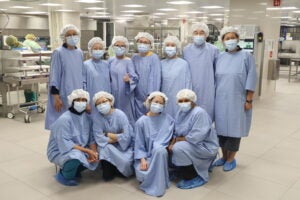
The curriculum committee comprises leading Infectious diseases and IPC experts from across Singapore’s healthcare institutions, including A/Prof Ling Moi Ling (second row, second from left).
That connection is strengthened by the diversity of the curriculum committee and students themselves. The curriculum committee comprises leading Infectious diseases and IPC experts from across Singapore’s healthcare institutions, including: A/Prof Ling Moi Ling, Director, Infection Prevention, SingHealth; Dr Margaret Soon, ex-Director of Nursing & Head, Infection Prevention & Control, National Centre for Infectious Diseases; Ms Lee Lai Chee, Infection Prevention Lead, Singapore General Hospital; Ms Foo Meow Ling, Infection Preventionist Vice-chair, Khoo Teck Puat Hospital; and Mr Razali Mahdi, Infection Prevention and Control Nursing Lead, National University Hospital.

MSc (IPC) students in the programme’s first and second cohorts include professionals from acute hospitals, intermediate and long-term care facilities, community care and specialised outpatient services.
The first and second cohorts include professionals from acute and community care settings. They bring different infection prevention challenges into the classroom — and, importantly, learn from one another.
Developing the next generation of IPC leaders
Prof Tambyah hopes the programme will have an impact well beyond the classroom.
“I hope that the graduates of this programme will be able to have a positive influence on IPC practices in Singapore and the region,” he said. “They will be able to design tailored programmes for their own institutions and rigorously examine the impact of those programmes in a scientific way.”
Above all, he hopes the MSc (IPC) will produce professionals who continually look for ways to improve care. “I am quite confident that every graduate will be a better infection control professional, thinking more about their work, how it can be done better and how they can enable their colleagues to provide safer care.”
For more information and to apply for the programme, please visit: https://medicine.nus.edu.sg/nursing/education-programmes/postgraduate/masters/master-of-science-infection-prevention-and-control/
