

News
New Book Explores Why Chronic Illness Care Must Go Beyond Treating the Disease
7 July 2026
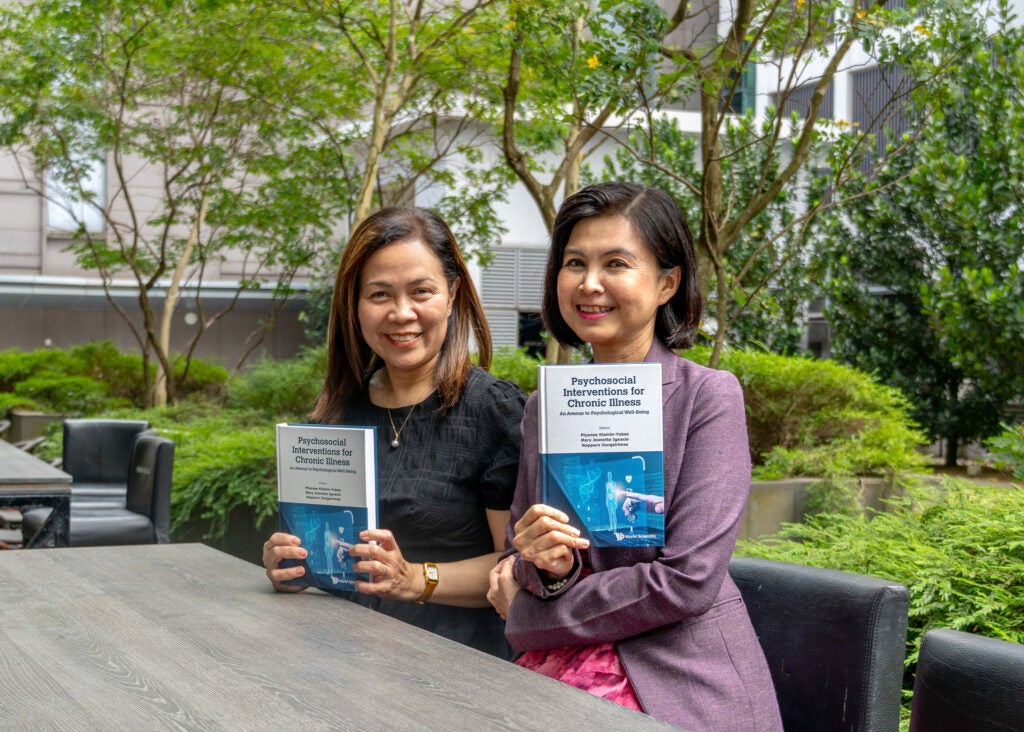
Associate Professor Jeanette Ignacio (left) and Associate Professor Piyanee Yobas (right) with their new book, Psychosocial Interventions for Chronic Illness: An Avenue to Psychological Well-Being.
A diagnosis of chronic illness changes more than a person’s physical health—it can bring uncertainty, anxiety and emotional distress that affect not only recovery but also quality of life. Yet these psychological and social dimensions of care are often overshadowed by the focus on treating the disease itself.
To help address this, Associate Professor Piyanee Yobas and Associate Professor Jeannette Ignacio from the NUS Alice Lee Centre for Nursing Studies have published Psychosocial Interventions for Chronic Illness: An Avenue to Psychological Well-Being, a new book that highlights the critical role of psychosocial care in improving health outcomes.
The book was officially launched at the 4th Global Summit for Mental Health Advocates and 2nd Global Summit for Youths organised by Silver Ribbon (Singapore) on 4 July, where some 400 mental health advocates, educators and healthcare professionals gathered to discuss advancing mental well-being across healthcare and communities.
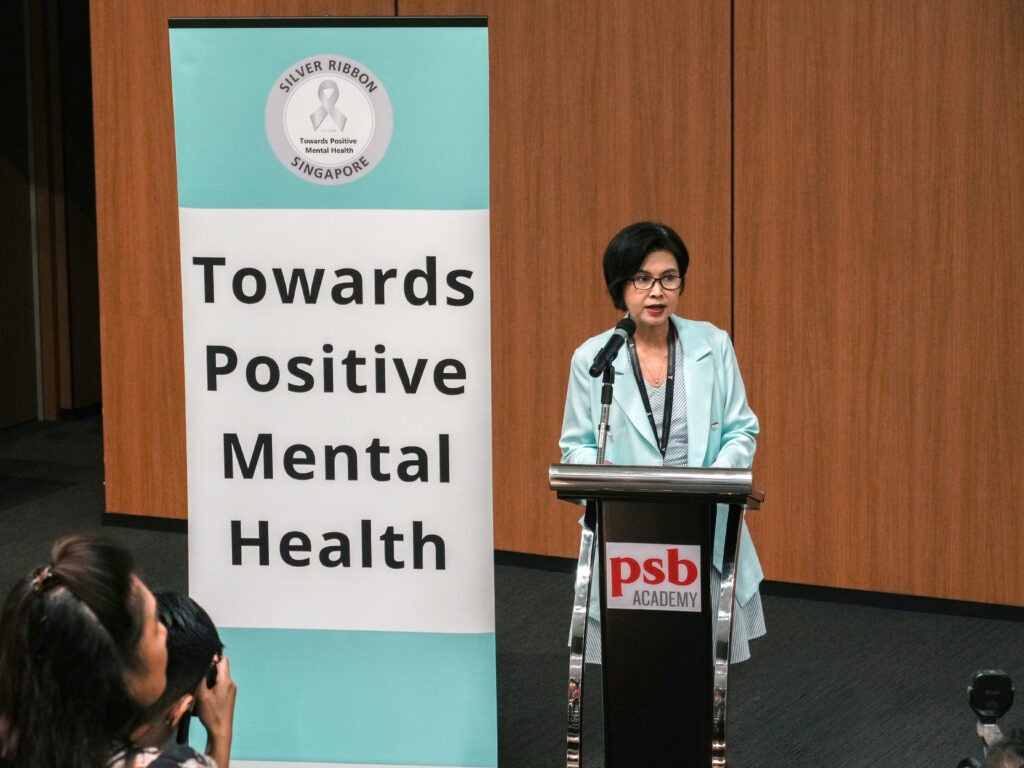
Associate Professor Piyanee Yobas at the book’s launch during the 4th Global Summit for Mental Health Advocates and 2nd Global Summit for Youths.
The idea for the book emerged after the editors recognised a gap in the existing literature: while resources on psychosocial care existed, many were dated or focused on individual conditions, with few providing a comprehensive, evidence-based framework spanning multiple chronic illnesses.
Introducing the book at the Summit, A/Prof Yobas said: “Healthcare has made tremendous advances in diagnosing and treating chronic illnesses. However, when someone receives a diagnosis of cancer, heart disease, kidney disease or another long-term condition, the journey is rarely only physical.
“We felt there was a need for a resource that brings together the growing body of evidence on psychosocial interventions—not as an optional extra, but as an essential component of holistic healthcare.”
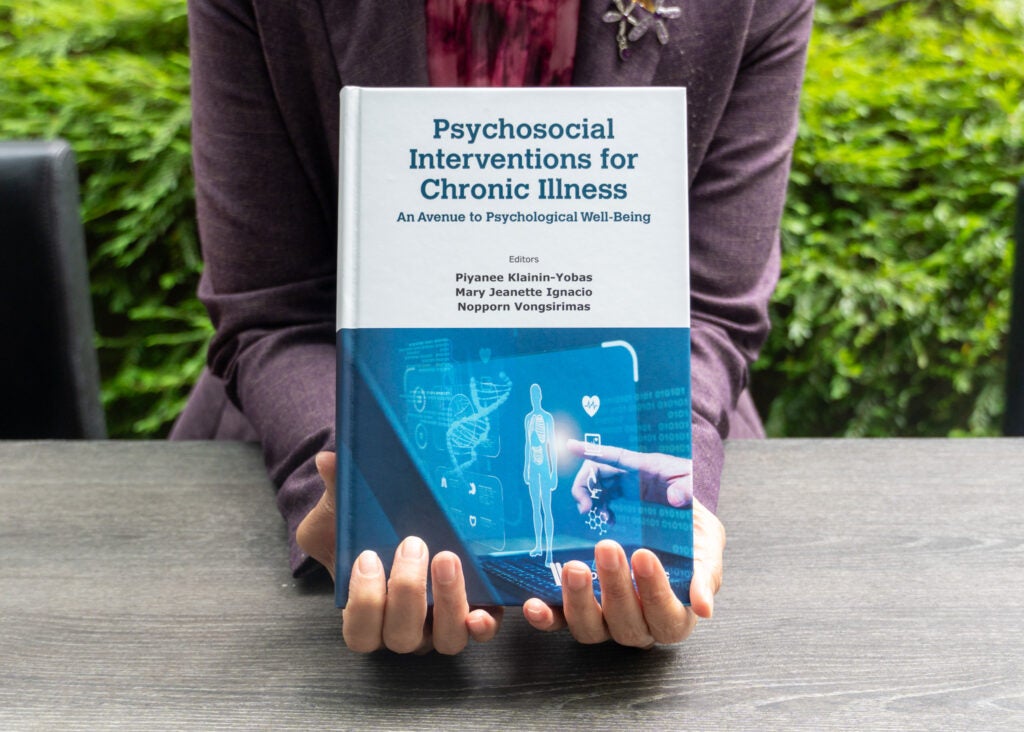
Intended for clinicians, educators, researchers and postgraduate students, the book serves as a practical resource for integrating psychosocial care into healthcare practice.
Published by World Scientific, the book brings together the latest evidence, theoretical frameworks and practical strategies on psychosocial interventions for people living with chronic illnesses. Covering approaches such as mindfulness, stress management, resilience-building, social support and digital health technologies, it demonstrates how psychosocial care can complement medical treatment to improve overall health outcomes.
Structured in three sections, the book combines original research, systematic reviews and contributions from Singapore and international collaborators. It also introduces the Psychosocial Well-being Promotion Model, developed by A/Prof Yobas and her research team, offering healthcare professionals, educators and researchers an evidence-based resource for integrating psychosocial care into chronic illness management.
Intended for clinicians, educators, researchers and postgraduate students, Psychosocial Interventions for Chronic Illness: An Avenue to Psychological Well-Being serves as a practical resource for integrating psychosocial care into healthcare practice.
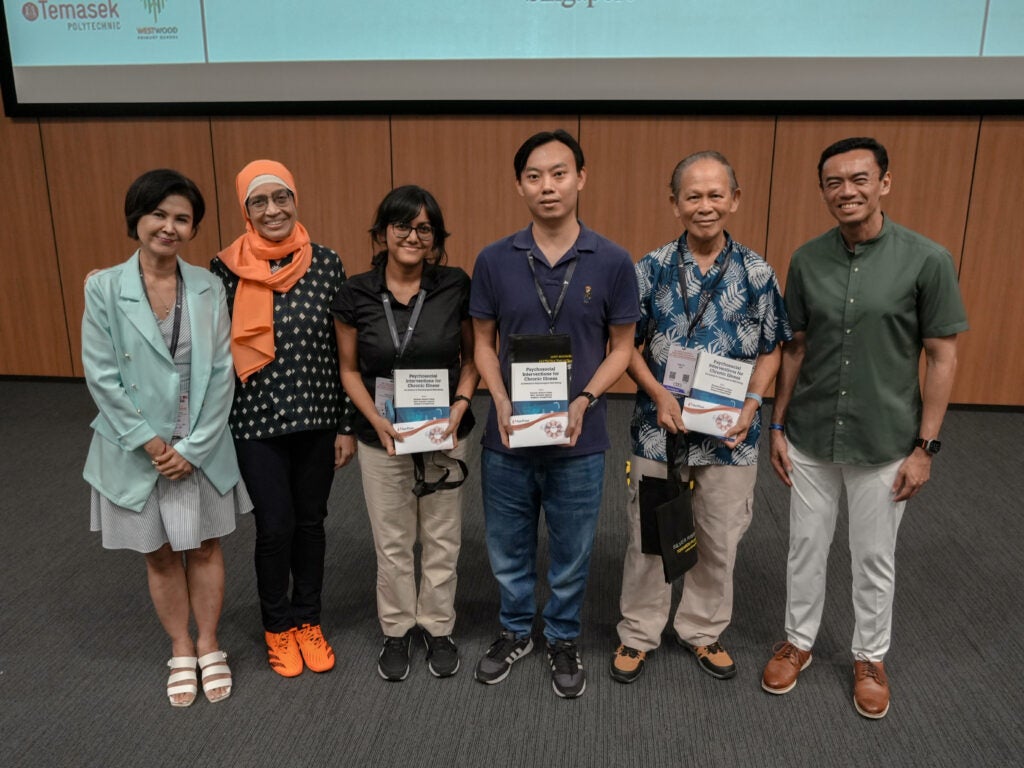
A/Prof Yobas with the organisers and participants of the 4th Global Summit for Mental Health Advocates and 2nd Global Summit for Youths.
The editors also hope the publication will broaden understanding of what psychosocial interventions are. “When people hear the term ‘psychosocial intervention’, they often think it is only for depression or anxiety,” said A/Prof Yobas. “In reality, these interventions can benefit anyone, including healthy individuals and people adjusting to major life events such as a chronic illness diagnosis. They help people build resilience and improve psychological well-being.”
Ultimately, the authors hope the evidence presented in the book will encourage healthcare systems to make psychological support a routine part of chronic illness care. “Our hope is that when someone is diagnosed with a chronic illness, supporting their mental well-being becomes an automatic part of care,” said A/Prof Jeanette Ignacio, the book’s co-author. “Physical treatment and psychological support should go hand-in-hand.”
Psychosocial Interventions for Chronic Illness: An Avenue to Psychological Well-Being is available in hardcover and digital formats through the publisher’s website and selected online retailers.
