
News
NUS Nursing and Lions Befrienders launch Singapore’s first large-scale intergenerational community dance programme to help seniors age well
30 September 2025 | News
Supported by research from the National University of Singapore (NUS) and a strong community partnership with Lions Befrienders, Singapore’s first large-scale dance programme for pre-frail and mildly frail seniors—to be rolled out at 10 Active Ageing Centres—advances Healthier SG and Age Well SG priorities for preventive, community-based care.
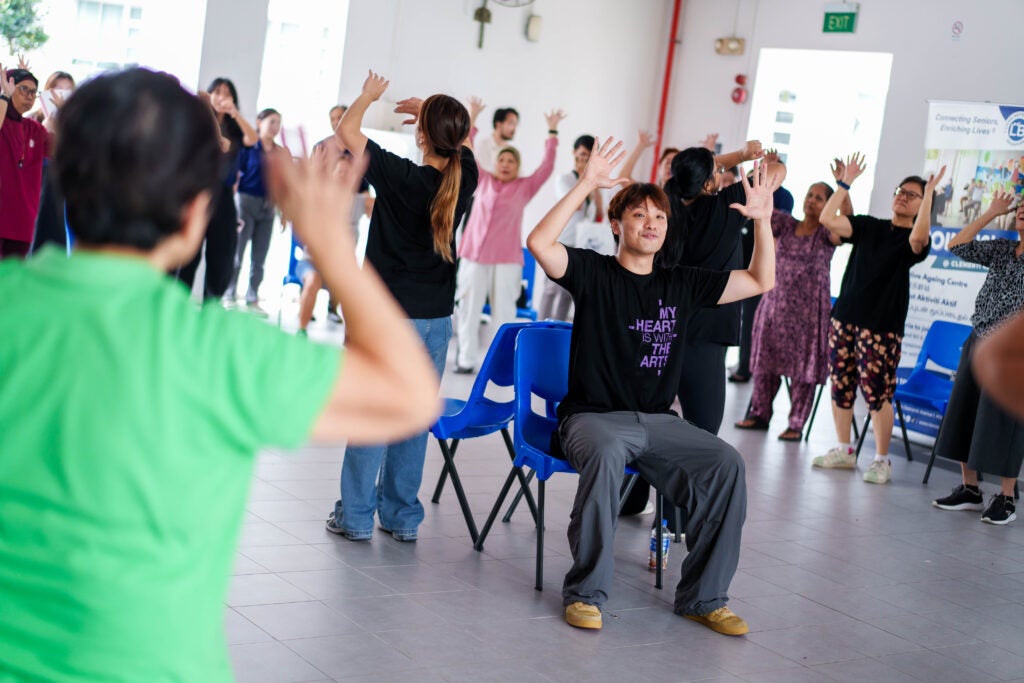
Singapore, 30 September 2025 — An intergenerational community dance programme co-developed by researchers from the National University of Singapore (NUS) and Lions Befrienders (LB) will be rolled out across 10 Active Ageing Centres (AACs) from 2025 to 2027. The large-scale implementation is expected to benefit more than 280 seniors, marking Singapore’s first nationwide use of dance as a health intervention for pre-frail and mildly frail older adults.
Jointly run by the Alice Lee Centre for Nursing Studies at the NUS Yong Loo Lin School of Medicine (NUS Nursing), and LB, and co-designed with geriatric and exercise experts, dance professionals, student instructors, seniors and AAC staff, the programme takes a distinctive intergenerational approach. NUS students, trained as dance instructors through the “Dancing Communities” module, lead sessions that bring youthful energy to seniors, turning each class into a space where generations learn, move, and connect together.
About the Intergenerational Community Dance Programme
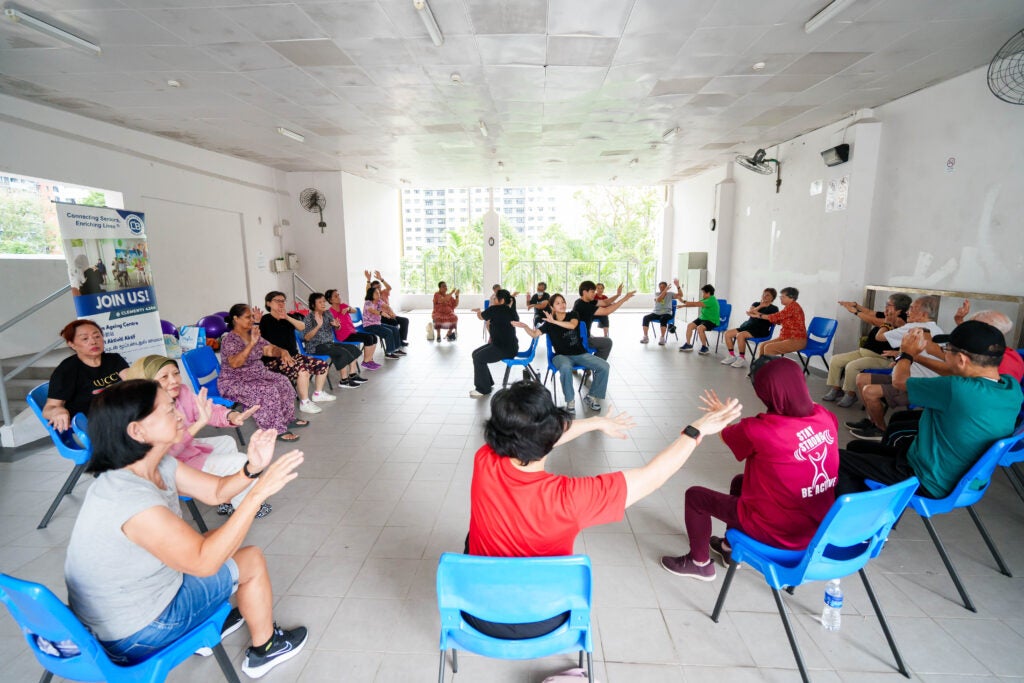
The Intergenerational Community Dance Programme is a structured 12-week initiative for pre- frail and mildly frail older adults that combines movement, rhythm, and storytelling to improve physical health, stimulate cognition, and foster emotional well-being—while also strengthening bonds between generations.
Each weekly session lasts about 60 to 75 minutes, and typically includes:
- Warm-up exercises to improve mobility and balance.
- Choreographed dance routines based on simple, repetitive steps that are safe yet stimulating. Themes such as nature, travel, or daily life make the sessions engaging and relatable.
- Cool-down stretches to aid recovery and relaxation.
Sessions are held at Lions Befrienders’ AACs in neighbourhoods islandwide, making them accessible to seniors where they live. Classes are led by NUS student instructors, supported by AAC staff and guided by professional dance instructors. Students enrolled into the “Dancing Communities” course are also members of various student dance groups on campus managed by the Centre for the Arts. The groups include IIsa Tari, NUS Dance Blast, NUS Dance Synergy and BreakiNUS.
The programme not only supports physical and cognitive health, but also integrates social and emotional dimensions. Music, group participation, and storytelling through movement are key features that help seniors feel connected, joyful, and confident. Dance themes such as travel and nature give seniors opportunities to reminisce and celebrate life experiences, while student instructors bring energy and encouragement, co-creating meaningful bonds across generations.
Research-Backed Benefits
The scale-up builds on more than four years of research by NUS Nursing and its partners, including a 2021 systematic review published in the International Journal of Nursing Studies and a 2023 qualitative study in Nursing & Health Sciences, both of which demonstrated the benefits of dance for cognition, mobility, and well-being among older adults. These findings were reinforced by a pilot trial conducted in 2022 at four neighbourhood Senior Activity Centres operated by LB, where an eight-week programme improved seniors’ physical health, sharpened their memory, lifted their moods, and reduced loneliness (see research findings in Annex A).
The programme’s Principal Investigator, Assistant Professor Vivien Wu from NUS Nursing, said, “Mild cognitive impairment, or MCI, affects up to 20% of older adults worldwide. Nearly 40% of those with MCI will progress to dementia, if left untreated. Currently, there are no approved pharmacological treatments for MCI. Dance offers a holistic, enjoyable, and culturally adaptable intervention that engages the body, mind, and social connection simultaneously. With Singapore placing strong emphasis on Healthier SG and Age Well SG, our findings show that dance is a low-cost, scalable way to help seniors not only live longer— but also live better.”
Dr Chew Suyin, Senior Lecturer from NUS College and Yong Siew Toh Conservatory of Music, added, “Movement is a universal language—it transcends boundaries and breaks down the barriers in communication. Dance provides physical well-being and allows for meaningful social connection and the development of aesthetic sensibilities. Community dance is all inclusive, collaborative, accessible, empowering and transformational. The programme that the students are conducting is focused on engagement and process, emphasising the fact that all arts have healing properties. Dance has positive impact on the moods of everyone involved—whether they are facilitators, instructors, participants or the audience.”
“At Lions Befrienders, we know that social connection and engagement are just as vital as physical activity for the well-being of our seniors. The Intergenerational Community Dance Programme perfectly embodies this belief, addressing the crucial psycho-social health of our elderly residents. This programme is more than just dance; it’s also about reducing isolation, building friendships, and creating a sense of joy and community. We are deeply grateful for our valued partners, like NUS and their dedicated student volunteers, whose collaboration has made this programme a resounding success. Together, we are not only delivering a beneficial service but also building a stronger, more inclusive community that supports our seniors in their journey of healthy ageing,” said Karen Wee, Executive Director of Lions Befrienders.
Looking Ahead
The NUS Medicine and Nursing team plans to extend the programme islandwide as well as develop digital training modules to complement in-person sessions and enable wider adoption by community partners. Future phases will continue to build on its distinctive intergenerational teaching and learning model, ensuring that the benefits of dance extend beyond health to strengthen community ties across age groups. “The long-term vision is to integrate community dance into Singapore’s fall-prevention and ageing strategies, making dance-based interventions accessible to seniors nationwide. By embedding evidence-based programmes like the Intergenerational Community Dance Programme into Active Ageing Centres, we can reimagine ageing in Singapore—not as decline, but as a stage of life filled with movement, joy, memory and meaning,” added Dr Wu.
Annex A:
NUS Nursing research findings on the benefits of Intergenerational Community Dance Programme
NUS Nursing research has shown that community dance delivers measurable physical, cognitive, and social benefits for seniors, while fostering intergenerational connection.
The Intergenerational Community Dance Programme, developed with LB, has been studied in multiple phases:
· 2021: Global evidence
A systematic review published in the International Journal of Nursing Studies analysed eight randomised controlled trials across five countries involving 680 older adults (aged 65–81). Results showed that dance improved cognition, neuroplasticity, mobility, and quality of life in older adults with mild cognitive impairment (MCI). As MCI affects up to 20% of older adults worldwide and nearly 40% progress to dementia if untreated — with no approved pharmacological treatment available — dance offers a safe, low-cost, and culturally adaptable intervention.
· 2022: Singapore pilot
An eight-week trial at four LB’s Senior Activity Centres found that seniors experienced better flexibility, improved mood and memory, and stronger social connections.
· 2023: Qualitative insights
A study published in Nursing & Health Sciences explored the lived experiences of 20 seniors and 10 student instructors. It highlighted creativity, reminiscence, and intergenerational learning as distinctive outcomes of the programme.
Key Findings
- Physical health: Improved flexibility, reduced back pain, better stamina, and reports of weight loss and lower blood pressure/glucose.
- Cognition: Improved memory, attention, and alertness from learning dance choreography.
- Emotional well-being: Seniors reported feeling happier, more relaxed, and less tense.
- Social connection: Group dance reduced isolation and built friendships, supported by student instructors’ presence.
- Reminiscence & creativity: Themed routines (e.g., travel, nature) evoked positive memories and gave seniors a sense of achievement.
- Intergenerational exchange: Students developed empathy and communication skills, while seniors valued their energy and encouragement.
