NUS Medicine researchers showcase novel approaches to fighting infectious diseases
Published: 12 Sep 2025
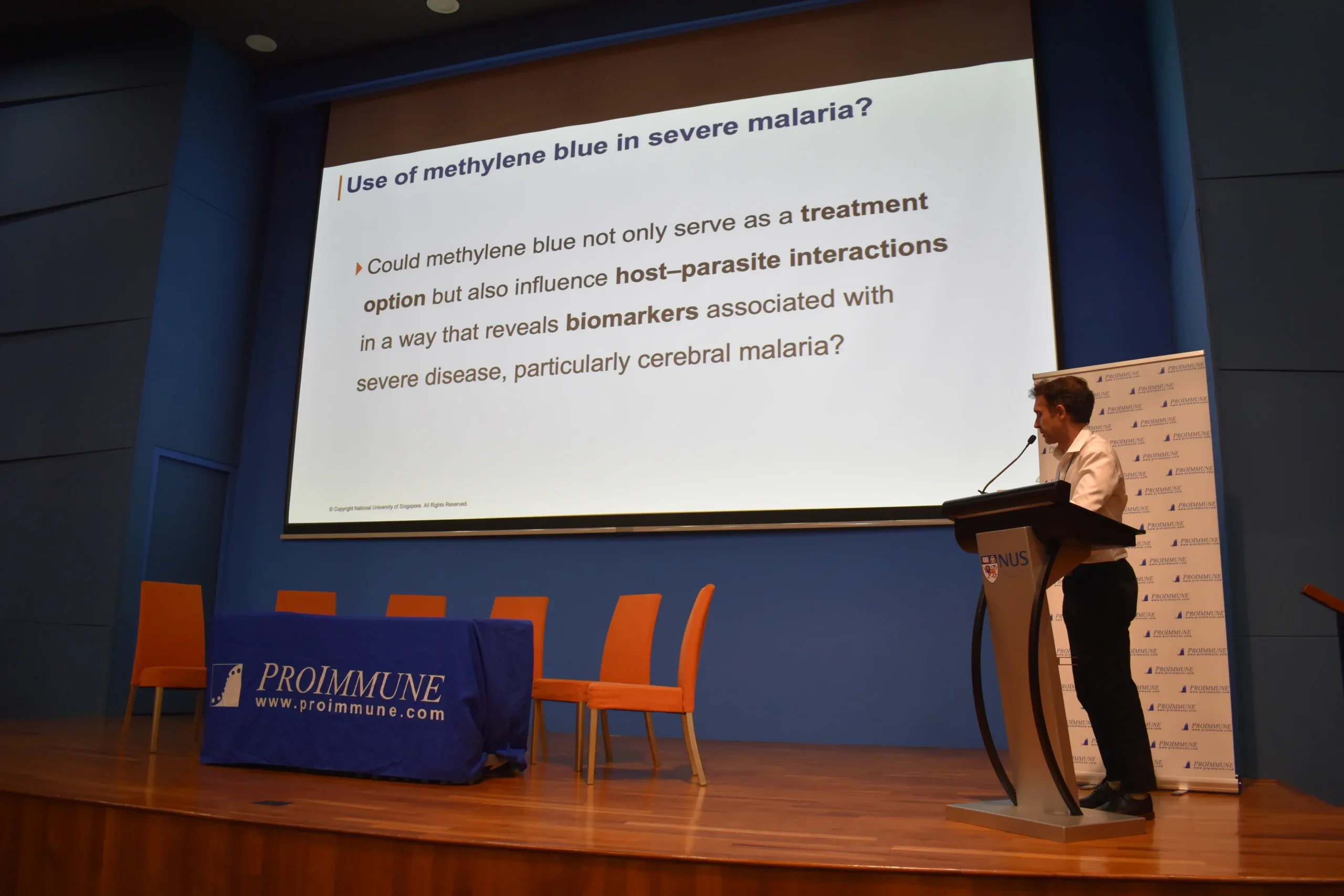
Asst Prof Benoit Malleret from the Department of Microbiology and Immunology, NUS Medicine, discussing his research on malaria.
Researchers from the Yong Loo Lin School of Medicine, National University of Singapore (NUS Medicine) showcased recent advances in combating infectious diseases at the Mastering Immunity 2025 – Singapore Global Summit, held from 1 to 2 September 2025 and organised by ProImmune. The summit brought together global experts to share insights on emerging, tropical, and pandemic infectious diseases, highlighting strategies to strengthen pandemic preparedness.
Asst Prof Benoit Malleret from the Department of Microbiology and Immunology, NUS Medicine, presented his team’s work on a macaque model of cerebral malaria using Plasmodium coatneyi, offering new insights into the mechanisms driving severe malaria. By identifying nine key blood biomarkers distinguishing severe from mild cases, and validating these findings across multiple datasets, his research underscores the central role of neutrophils in disease pathology. The study further explored the use of Methylene Blue both as a therapeutic and a research tool, demonstrating its ability to reverse cerebral pathology and providing a low-cost, low-toxicity intervention particularly relevant in regions experiencing increasing drug resistance. Asst Prof Malleret emphasized that this model serves as a robust platform for drug screening and mechanistic studies, with potential applications in developing effective anti-malarial strategies.
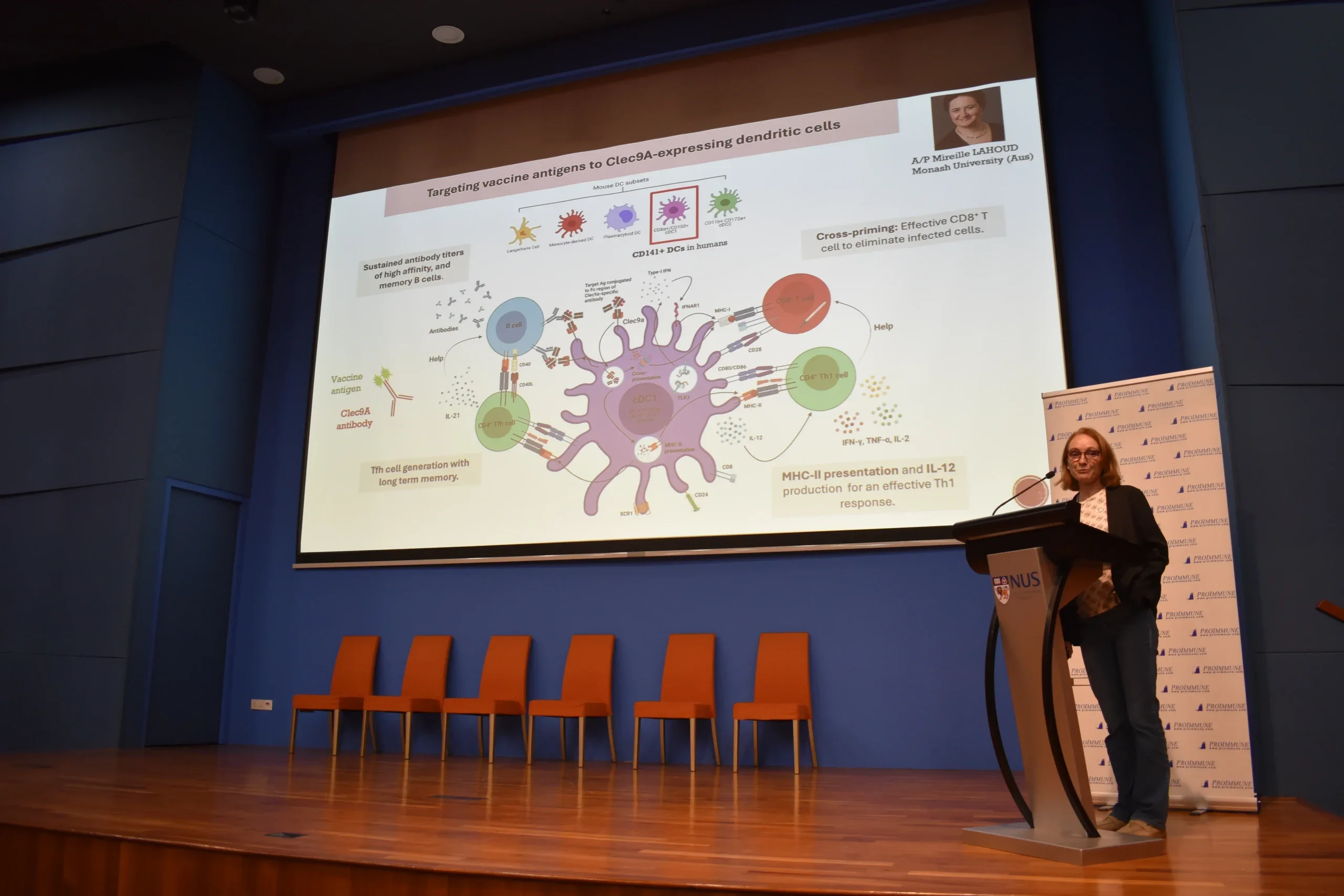
Assoc Prof Sylvie Alonso from the Department of Microbiology and Immunology, NUS Medicine, presenting her research findings on innovations in vaccine delivery.
Assoc Prof Sylvie Alonso from the Department of Microbiology and Immunology, NUS Medicine, highlighted innovations in vaccine delivery, introducing a platform targeting cDC1 cells via the Clec9A receptor, which elicits potent CD8, CD4, and B cell responses. Her team has leveraged this approach to create an RBD-based COVID-19 booster, demonstrating broader and more durable neutralizing antibody responses compared with existing bivalent mRNA vaccines. The reformulated “Clec9A Omni” construct, particularly when administered intranasally, induced robust systemic and mucosal immunity, including cross-reactive B and T cells. Prof Alonso noted that this plug-and-go antibody-based platform offers significant promise for pandemic preparedness, with forthcoming trials in non-human primates to further validate its efficacy.
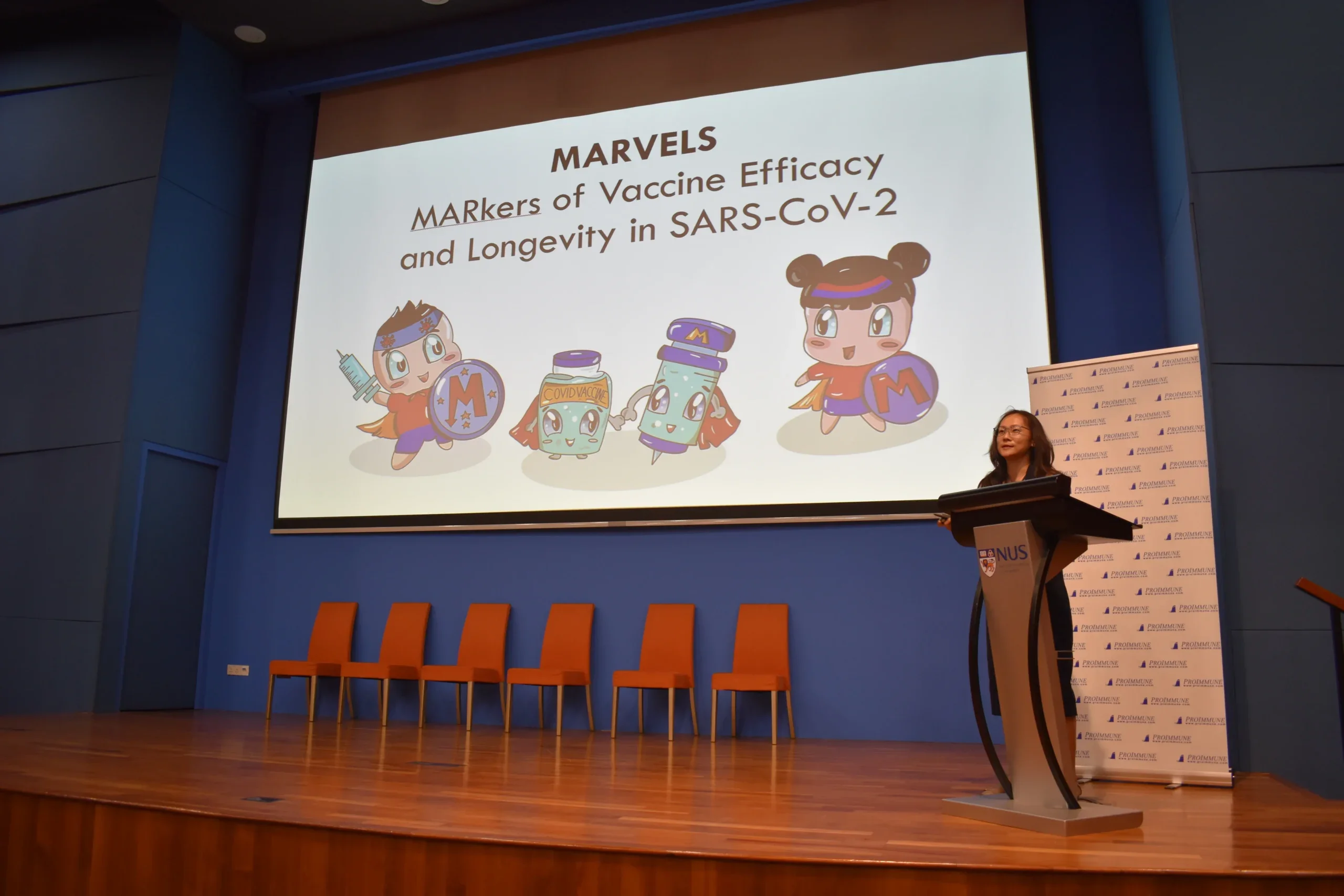
Asst Prof Zhong Youjia from the Infectious Diseases Translational Research Programme at NUS Medicine, sharing insights on the efficacy of vaccines for children.
Asst Prof Zhong Youjia from the Infectious Diseases Translational Research Programme at NUS Medicine, shared findings from a longitudinal study of children aged 5 to 12 during the COVID-19 pandemic, exploring how T cell responses determine vaccine protection. By identifying biomarkers and innate immune signatures that correlate with strong or weak T cell responses, the study reveals how T cells provide core protection when antibody levels are insufficient—a concept Asst Prof Zhong describes as the “onion model” of immunity. These insights have important implications for optimizing vaccine-induced immunity in paediatric populations, guiding strategies to enhance both individual and community-level protection.
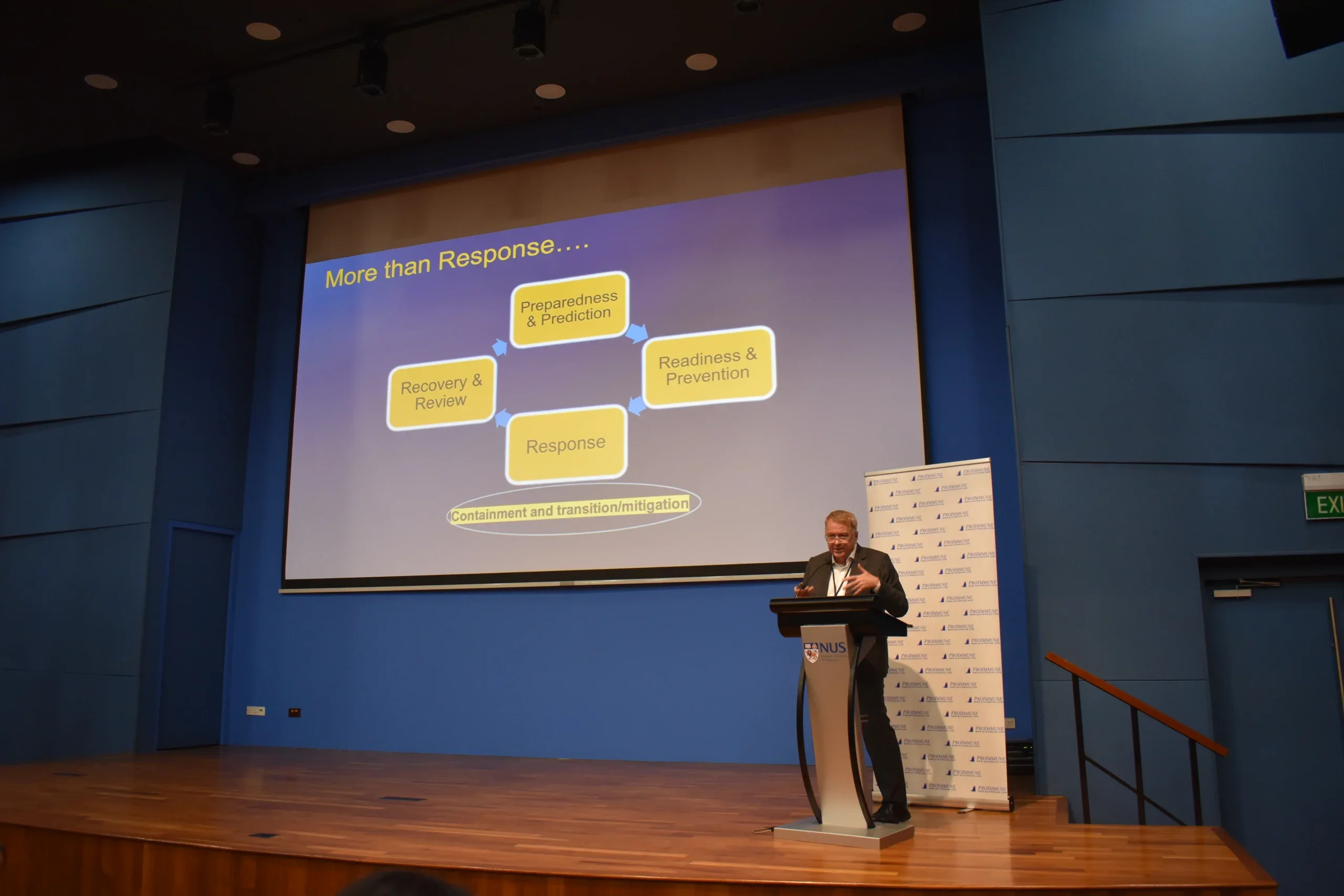
Prof Dale Fisher, Director of NUS Centre for Infectious Disease Emergency Response, presenting his slides on outbreak responses.
Prof Dale Fisher, Director of NUS Centre for Infectious Disease Emergency Response, provided a comprehensive overview of outbreak response, drawing lessons from COVID-19 and previous infectious disease emergencies. Emphasizing the four pillars of pandemic management—preparedness, readiness, response, and recovery—Prof Fisher highlighted the increasing complexity of coordinating vaccination, diagnostics, mental health support, and risk communication during outbreaks. He stressed that effective response requires whole-of-government leadership, rapid translation of research, and global collaboration, particularly in the context of fluctuating international resources. To formalize outbreak preparedness as a discipline, Prof Fisher also discussed the development of a master’s course and comprehensive textbook, ensuring future professionals are equipped with evidence-based strategies to respond to global health emergencies.
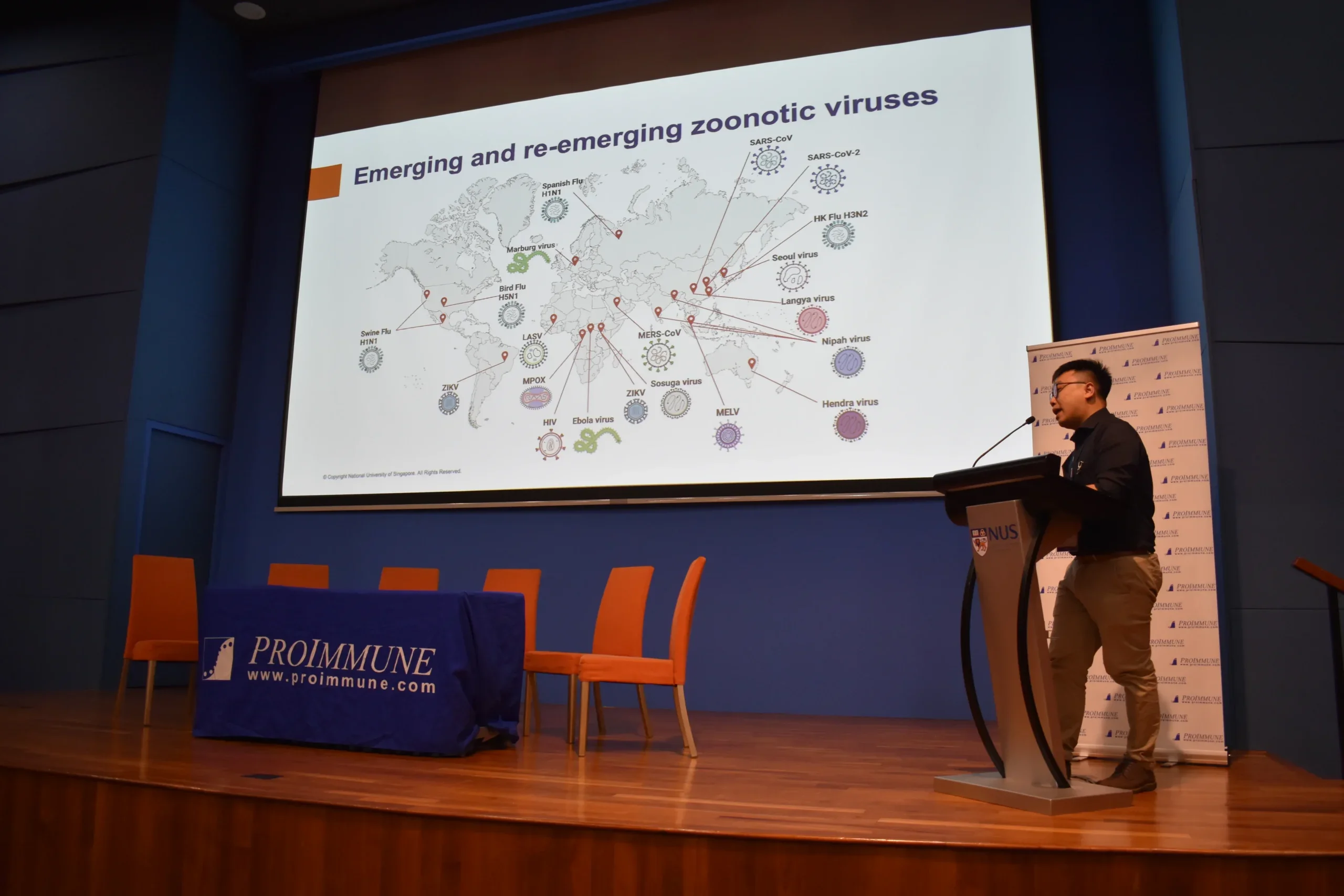
Research Asst Prof Tan Chee Wah from the Infectious Diseases Translational Research Programme, NUS Medicine, discussing his research.
Research Asst Prof Tan Chee Wah from the Infectious Diseases Translational Research Programme, NUS Medicine, discussed the far-reaching impact of pandemics on global health, society, and economies, with COVID-19 underscoring the limitations of current outbreak response strategies. Research Asst Prof presented a multi-family serological platform capable of rapidly assessing functional neutralizing antibodies across high-risk zoonotic viruses, including SARS-like, MERS-like, and Nipah-like viruses. Results revealed minimal pre-existing immunity within the population and limited cross-neutralization from prior infection or vaccination, emphasizing ongoing vulnerability to spillover events. Research Asst Prof Tan concluded that the development of broad-spectrum vaccines and robust surveillance platforms is critical to enhancing pandemic preparedness and guiding public health policy.
In addition, poster presenters from the Department of Microbiology and Immunology and Infectious Diseases Translational Research Programme highlighted recent ongoing work in these areas.
All efforts and presentations highlighted NUS Medicine’s leadership in translational research, innovative vaccine development, and evidence-based pandemic preparedness, reinforcing its commitment to advancing global health resilience.