NUS Medicine and CUHK Medicine deepen partnership to advance precision eye health
Published: 02 Mar 2026
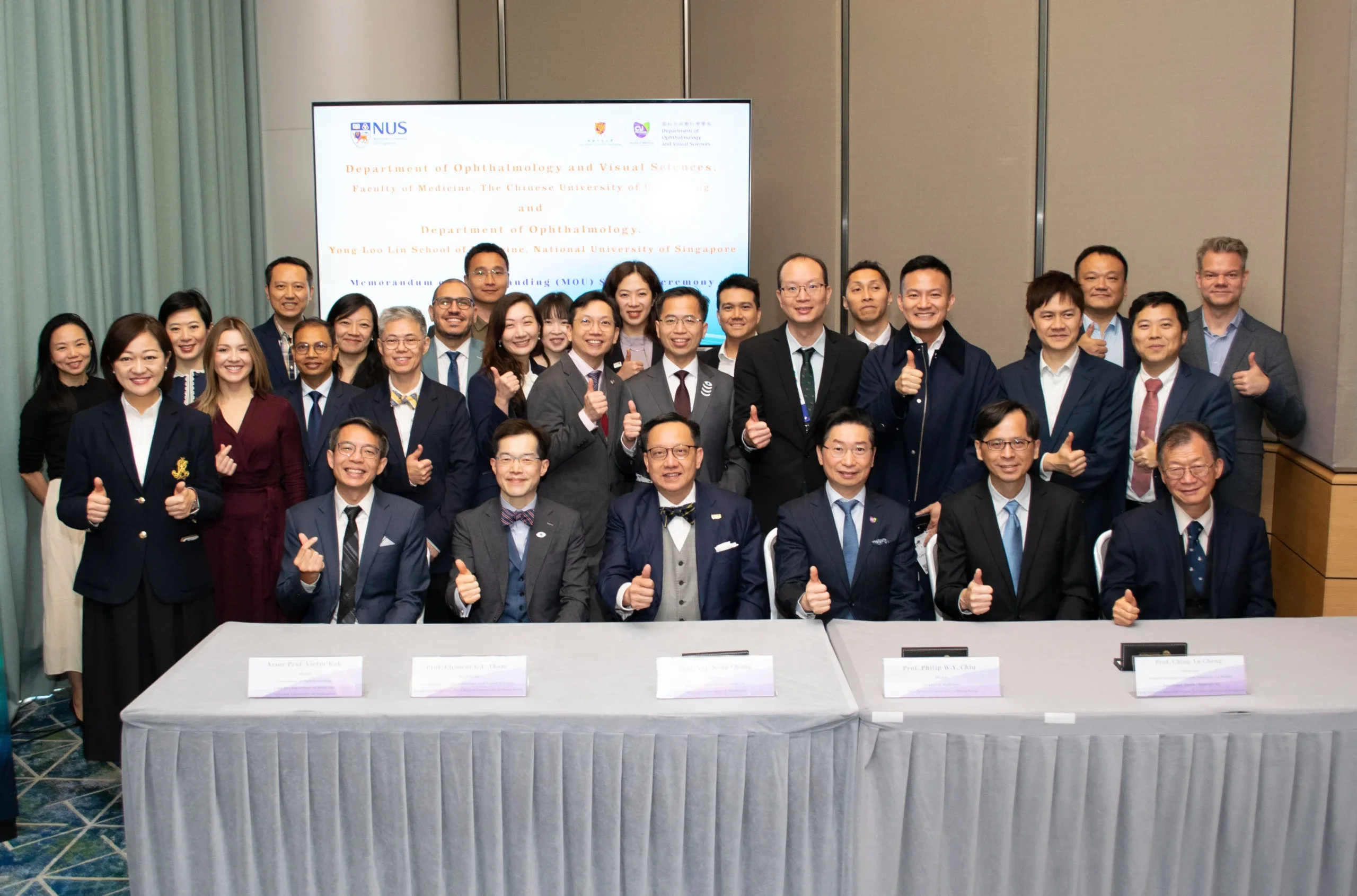
Group photo of participants after the MOU signing ceremony
The Department of Ophthalmology, Yong Loo Lin School of Medicine, National University of Singapore (NUS Medicine), and the Department of Ophthalmology and Visual Sciences, Faculty of Medicine, The Chinese University of Hong Kong (CUHK) signed a Memorandum of Understanding (MOU) on 8 February 2026 at the Hong Kong Convention and Exhibition Centre. This ceremony marks an important milestone in strengthening academic ties and expanding collaboration in research, education, and innovation in ophthalmology and visual sciences.
The MOU formalises a framework for collaboration across several key areas, including the exchange of scientific and academic information, joint research and development initiatives, staff visits and academic exchanges, as well as the organisation of joint seminars, conferences, and other scholarly activities. The agreement builds on a long-standing relationship between NUS and CUHK, shaped by years of shared work and common ambition to improve eye health outcomes through research-led innovation.
This partnership gained fresh momentum through ongoing academic conversations, including a networking dinner at ARVO 2025 in Salt Lake City, where Prof Ching-Yu Cheng, Director, Assistant Dean, Research and Director, Centre for Innovation and Precision Eye Health, NUS Medicine and Professor Calvin Pang, Director, Joint Shantou International Eye Center (JSIEC), Shantou University and CUHK, identified new opportunities to strengthen joint efforts in eye research and innovation. The MOU provides the structure to deepen this collaboration, enabling both institutions to accelerate impactful projects and broaden the exchange of expertise.
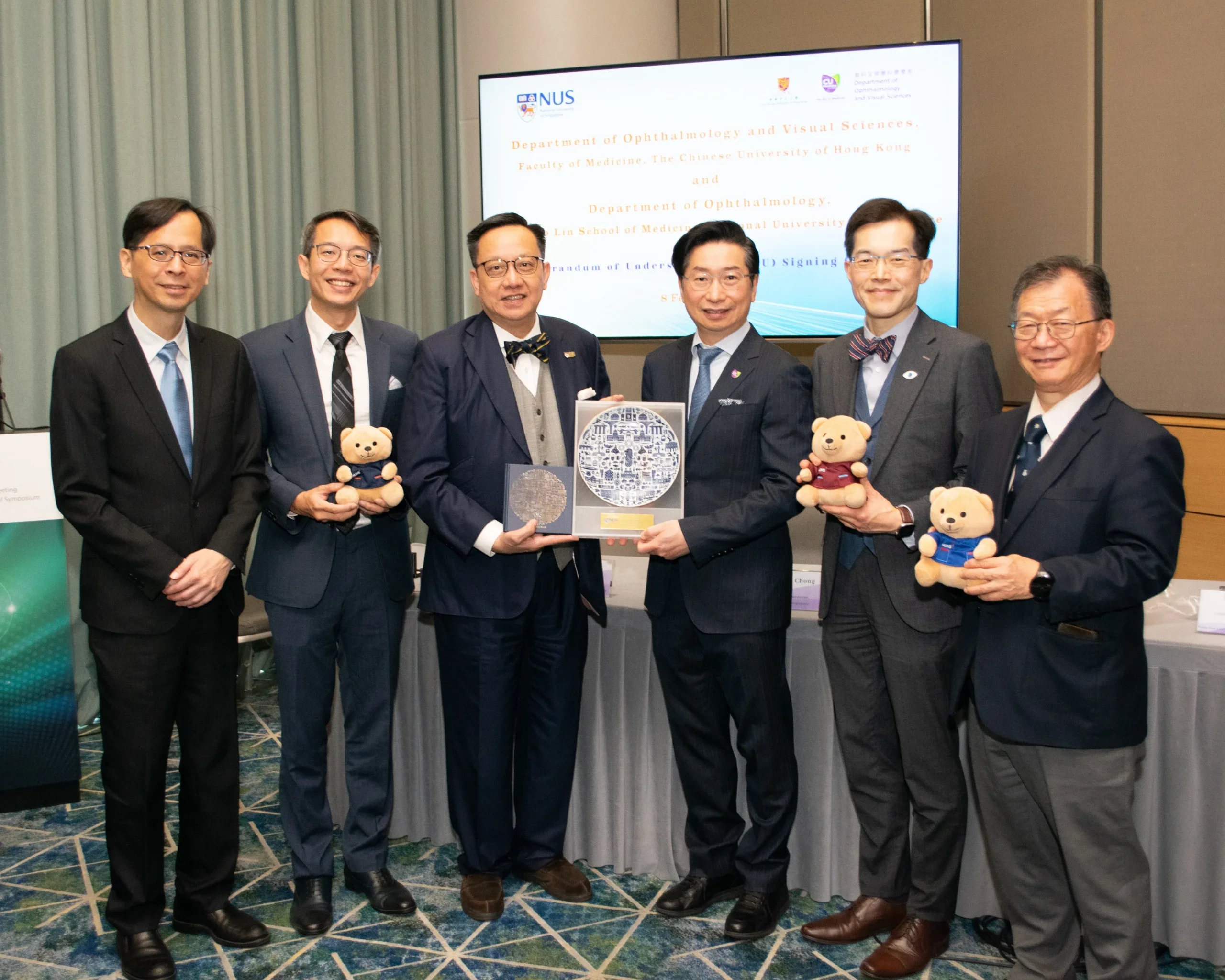
Exchange of corporate gifts during the MOU signing ceremony
Both Hong Kong and Singapore face similar, pressing eye health challenges, including rising rates of myopia and age-related eye diseases. The collaboration is positioned to tackle these issues by pairing CUHK’s strengths in ophthalmic genetics and imaging with NUS Medicine’s leadership in translational clinical research and epidemiology.
The partnership also aligns with Singapore’s healthcare transformation under HealthierSG, which emphasises preventive and community-based care. As chronic eye conditions become more prevalent, the need for scalable and accessible tools for early detection and long-term disease management is increasingly urgent. One key challenge highlighted is the development of improved glaucoma screening technologies suitable for community settings, underscoring the importance of cross-institutional innovation to translate research into real-world impact.
The MOU strengthens and expands ongoing joint efforts across multiple areas, reflecting both the breadth of current work and the potential for future breakthroughs. These include collaborations in:
- AI in glaucoma
- Global RETFound initiative
- Oculomics
- Myopia genetics
- Inherited eye disease research
- Stem cell therapy for age-related macular degeneration (AMD)
- AMD genetics
Together, these initiatives aim to transform population-level eye care through advanced diagnostics, predictive modelling, novel therapeutics, regenerative medicine, and personalised treatment strategies.
The ceremony was attended by senior academic leaders from both institutions.
From CUHK:
- Prof Philip Chiu, Dean, Faculty of Medicine, CUHK
- Prof Clement Tham, Chairman, Department of Ophthalmology and Visual Sciences, CUHK
- Prof Calvin Pang, Director, Joint Shantou International Eye Center (JSIEC), Shantou University and CUHK
From NUS Medicine:
- Prof Chong Yap Seng, Dean, NUS Medicine
- Prof Ching-Yu Cheng, Assistant Dean, Research and Director, Centre for Innovation and Precision Eye Health, NUS Medicine
- Assoc Prof Victor Koh, Head, Department of Ophthalmology, NUS Medicine
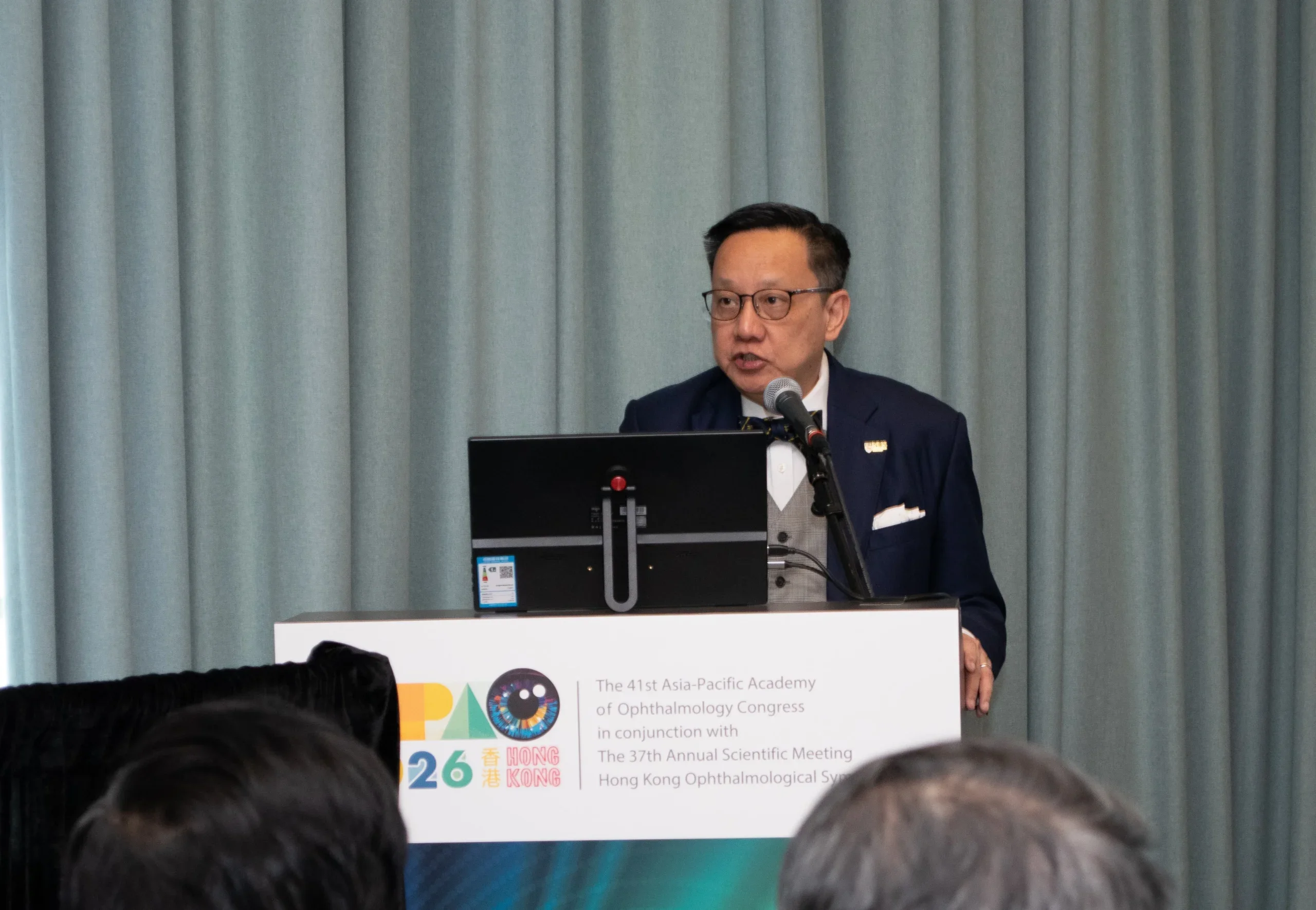
Speech by Prof Chong Yap Seng, Dean, NUS Medicine
Speaking at the ceremony, Prof Chong Yap Seng, Dean of NUS Medicine, underscored the power of combining complementary strengths to advance the field:
“By combining the complementary strengths of our Schools, we are creating a powerful platform for innovation and discovery in ophthalmology and visual sciences. This partnership enables capabilities that neither institution could achieve alone and establishes a model of regional cooperation showing how Asia can lead in the global conversation on precision eye health.”
With this MOU as a foundation, NUS Medicine and CUHK aim to accelerate joint research, deepen academic exchange, and initiate new high-impact projects to improve eye health outcomes across the region and globally. As eye diseases and visual impairment rise alongside ageing populations and increasing myopia, the partnership signals a shared commitment to shape the future of ophthalmic science, innovation, and patient-centred care.