AI-powered rehabilitation and accessibility solutions take top prizes at Medical Grand Challenge 2026
Published: 17 Aug 2026
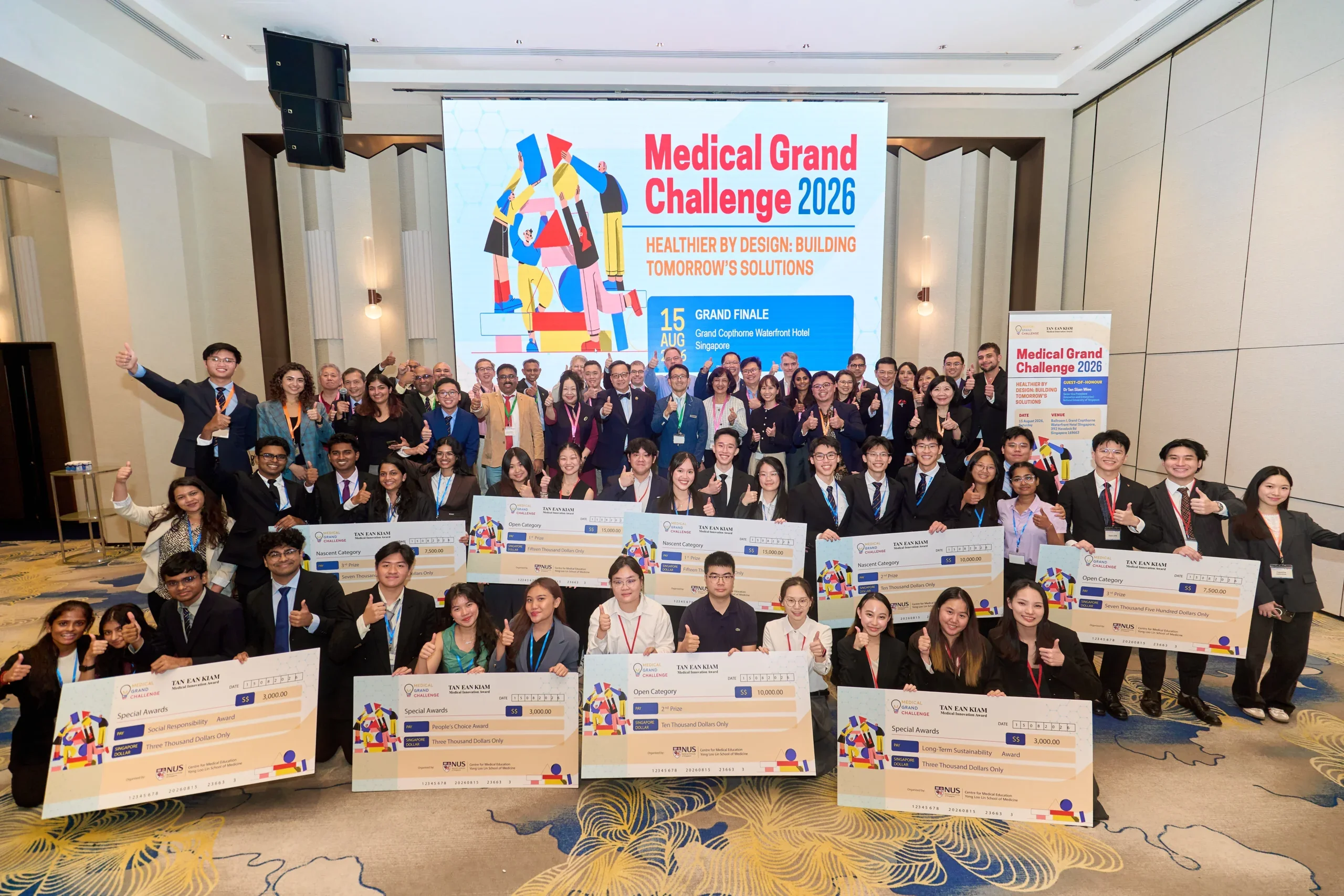
All the winners of the Medical Grand Challenge 2026, along with the judges, in a candid group shot.
This year’s winning teams at the Medical Grand Challenge (MGC) 2026 tackled a wide range of healthcare challenges, from rehabilitation and accessibility to maternal health, cancer pain management, fall prevention and patient triage. Their solutions combined digital tools, artificial intelligence, and practical design approaches to improve care, support patients and caregivers, and address gaps across different stages of the healthcare journey.
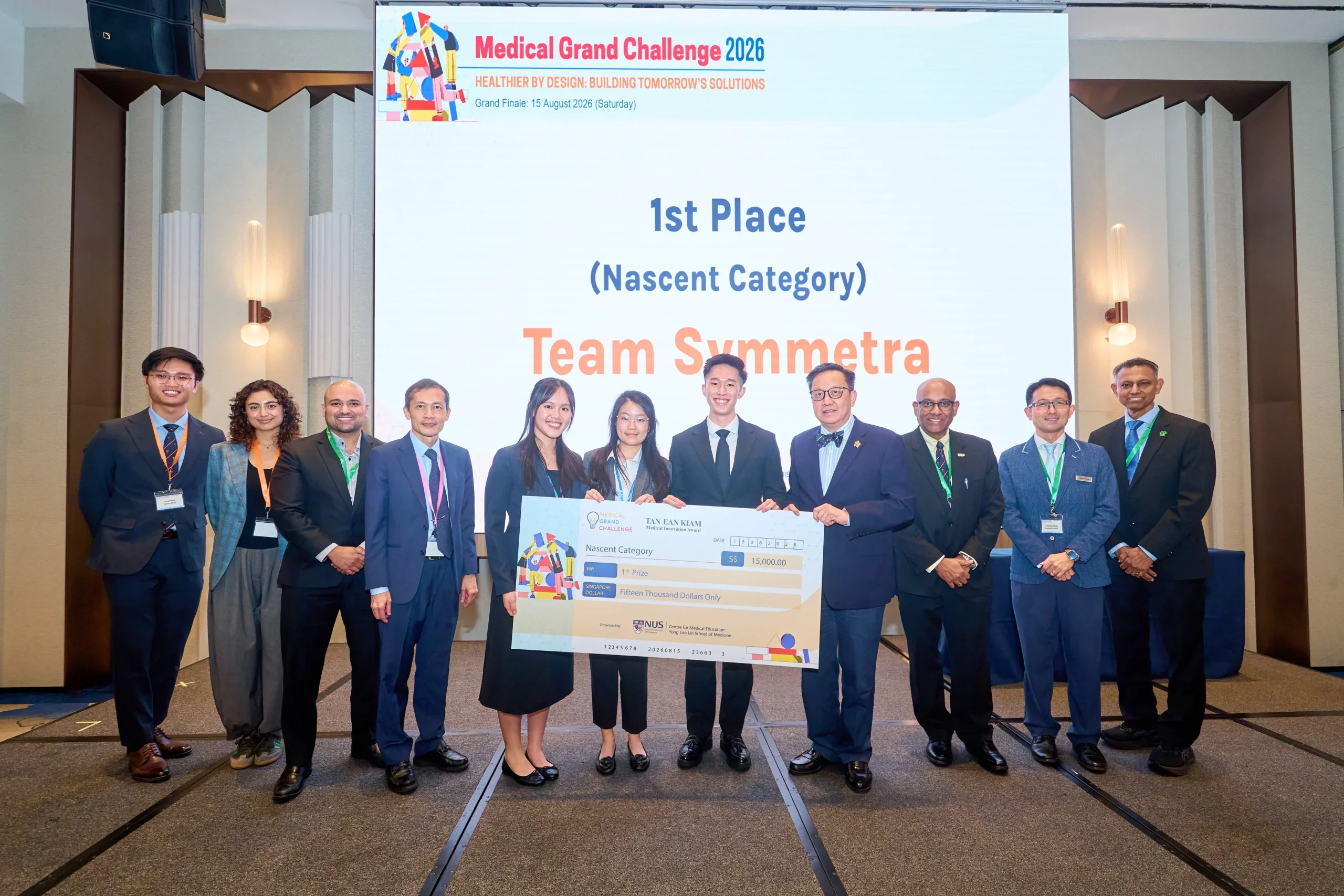
Team Symmetra, first place winner in the Nascent Category.
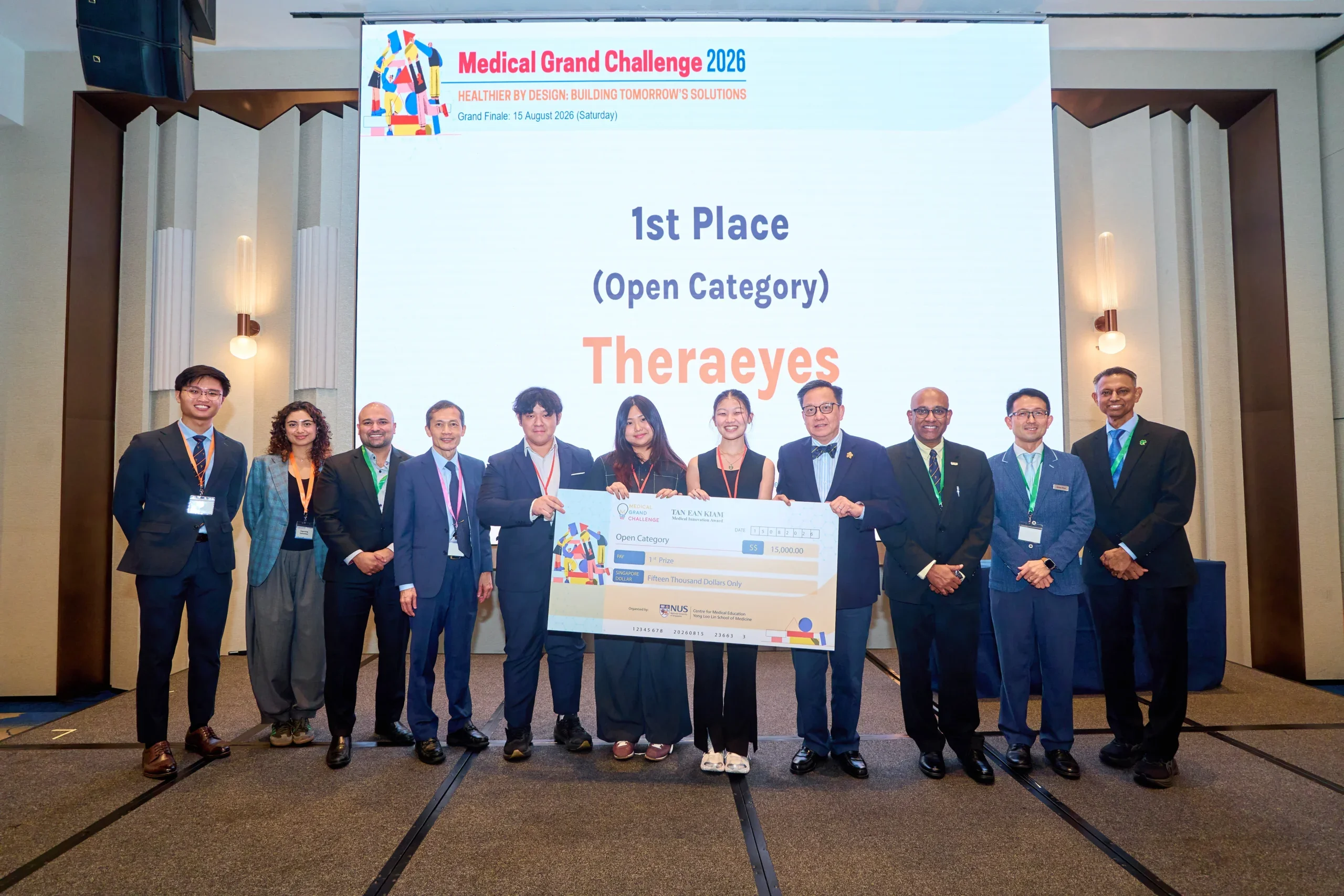
Team Theraeyes, first place winner in the Open Category.
Symmetra, which developed an AI-powered digital platform providing personalised rehabilitation for people with facial palsy, and Theraeyes, whose accessibility application enables people with physical and communication disabilities to control desktop applications through alternative input methods, won first place in the Nascent and Open categories respectively at the MGC Finale 2026, held on 15 August 2026. Both teams received $15,000.
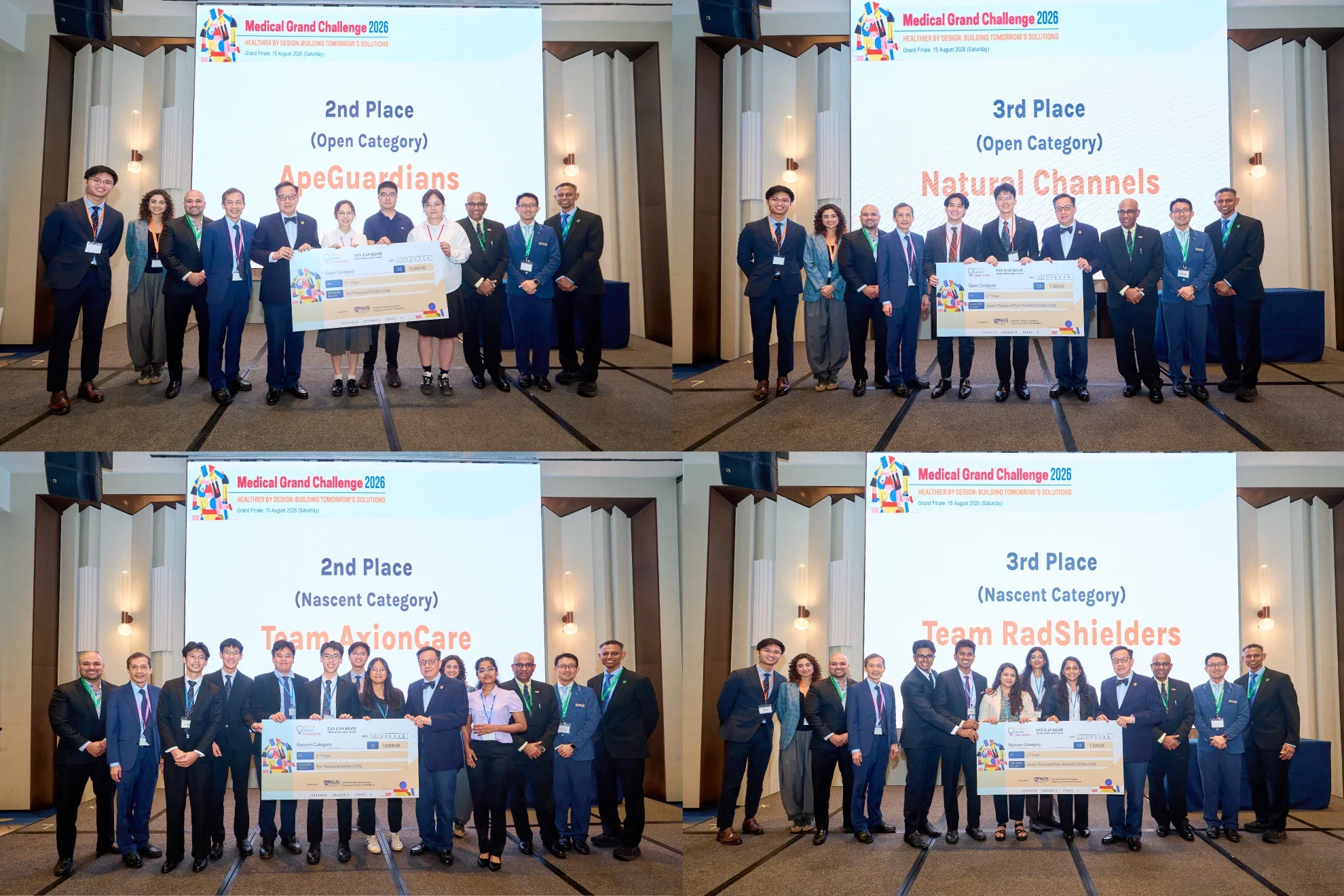
The second and third place winners for the Open and Nascent Categories respectively: ApeGuardians, Natural Channels, AxionCare, and Radshielders.
In the Nascent Category, AxionCare took second place and $10,000 for its modular transfer-assist wheelchair designed to make transfers safer and reduce caregiver strain, while RadShielders received third place and $7,500 for a ready-to-use intraoral device designed to protect healthy oral tissues during head and neck radiotherapy. In the Open Category, ApeGuardians received second place and $10,000 for its home-based screening system for late-onset pre-eclampsia, which combines a rapid test with an AI-enabled mobile application. Natural Channels took third place and $7,500 for a voice-based AI triage system that assesses ophthalmology patients according to urgency and supports appointment scheduling.
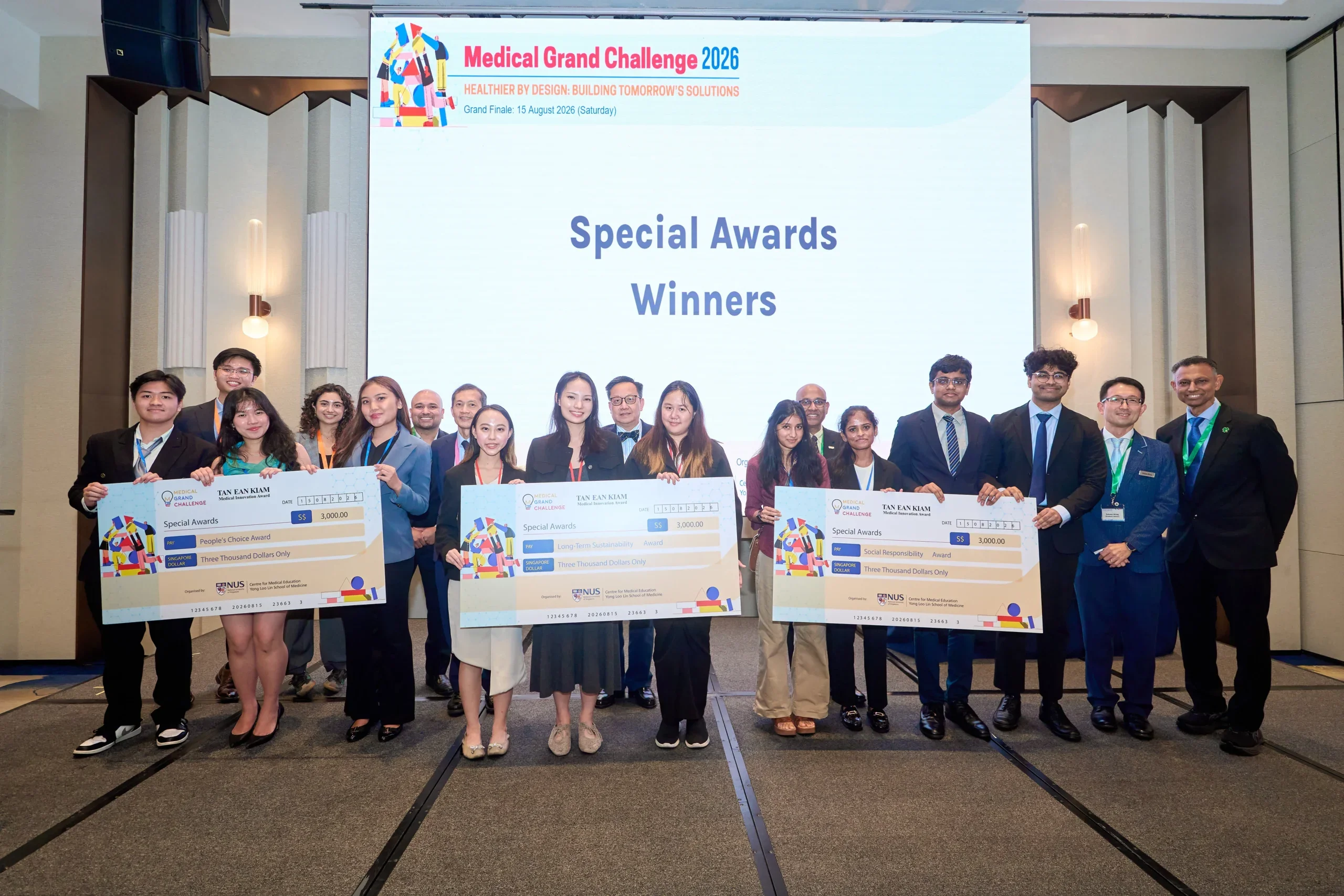
Winners of the Special Awards, from left to right: OVACARE, OnCope, and SteadyStep.
OVACARE received the People’s Choice Award for its wearable, gamified rehabilitation system designed to support fine motor recovery in stroke patients. SteadyStep received the Social Responsibility Award for its smartphone-based platform that monitors walking patterns and assesses fall risk among older adults and people with neurological conditions. The Long-Term Sustainability Award went to Team OnCope for its digital platform that continuously monitors cancer pain and supports more personalised pain management at home. The three winners for the Special Awards each took back $3,000.
Organised by the Yong Loo Lin School of Medicine, National University of Singapore (NUS Medicine), MGC marks its 9th edition since its inception and is its largest to date, with 59 teams progressing to the Final Submission stage. The participants came from 13 countries, including Singapore, Australia, China, Canada, Hong Kong, India, Indonesia, Malaysia, Sri Lanka, Thailand, Turkey, the United Kingdom and Vietnam. The competition comprised 43 teams in the Nascent Category and 16 in the Open Category. Artificial intelligence (AI) emerged as a key theme in this year’s submissions, with teams applying it to disease detection, clinical decision-making, patient communication, drug discovery, and healthcare workflow improvement.
Among the Nascent Category projects were AI-enabled tools to support antibiotic selection and antimicrobial stewardship, identify early signs of neonatal sepsis using existing electrocardiogram data, and analyse cough patterns to support earlier tuberculosis detection. Other projects explored more accessible dementia screening through familiar, gamified activities, as well as rapid, non-invasive chronic kidney disease detection paired with AI-supported personalised management and remote monitoring.
Projects in the Open Category included a voice-based AI triage system for ophthalmology clinics, and an AI-powered surgical planning platform that converts routine computed tomography and magnetic resonance imaging scans into three-dimensional models to support more precise surgery. Other solutions focused on areas such as personalised cancer pain management at home and AI-assisted drug discovery aimed at developing treatments that may slow the progression of Parkinson’s disease.
The projects also reflect the growing role of AI and digital technologies across healthcare, from diagnosis and clinical decision support to patient monitoring, drug discovery and workflow management. As these technologies become more widely used, there is also increasing emphasis on ensuring that they are developed and deployed safely, ethically and with appropriate human oversight.
The MGC is one of NUS Medicine’s flagship student-led healthcare innovation programmes. It brings together students from different disciplines and institutions to develop practical solutions to real-world healthcare challenges. Throughout the year, participants undergo a structured innovation journey comprising a bootcamp, mentorship, business model development, proposal refinement, and pitch presentations. They also receive guidance from clinicians, researchers, industry professionals, entrepreneurs, and investors, helping them assess their projects from clinical, technical, commercial, and implementation perspectives.
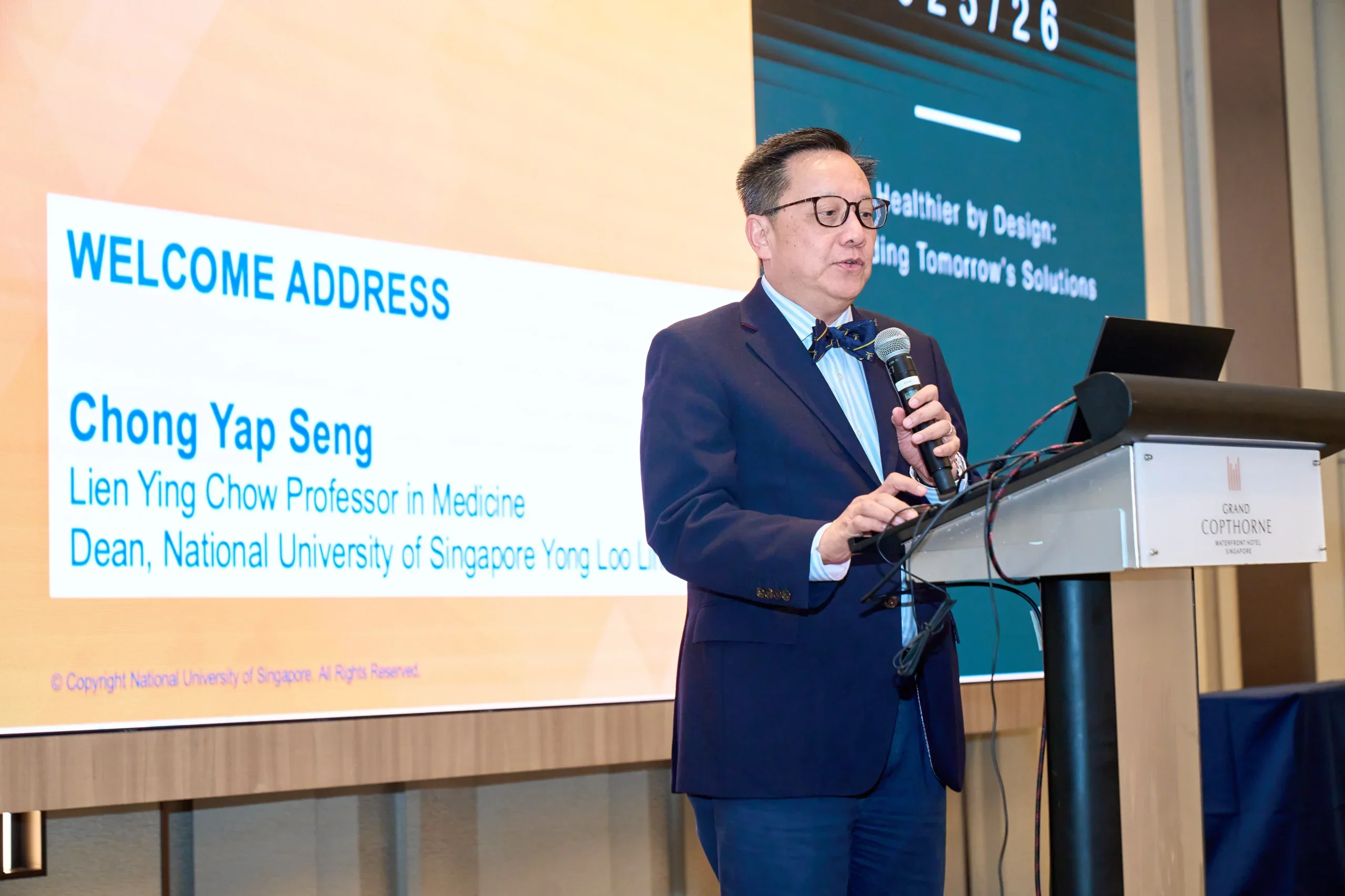
Prof Chong Yap Seng giving his welcome speech for MGC 2026.
Professor Chong Yap Seng, Lien Ying Chow Professor in Medicine and Dean of NUS Medicine, said, “Improving health outcomes requires us to keep asking how things can be done differently, and to bring together people with diverse expertise and perspectives to turn new ideas into meaningful solutions. It is encouraging to see this spirit reflected in the record participation and international collaboration at this year’s Medical Grand Challenge. As technologies such as AI play a growing role in healthcare, innovation must remain purposeful and responsible. The value we bring as healthcare professionals lies not only in using these tools well, but in applying the judgement, context and empathy needed to ensure they ultimately serve patients and communities.”
View the full press release here.