Beyond Borders: NUS Medicine Students Connect and Learn at Asian Medical Deans Summit 2026
Published: 24 Aug 2026
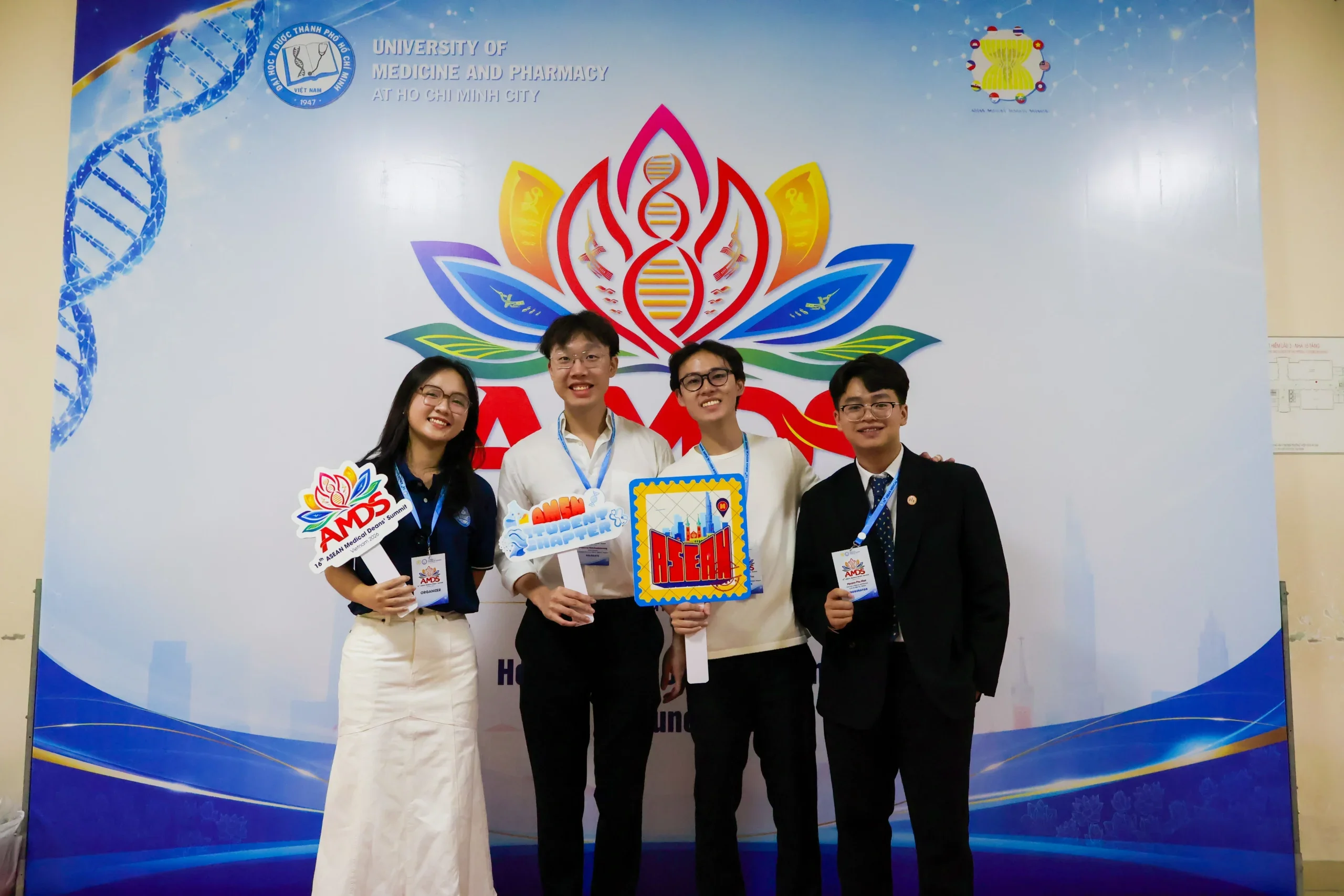
Year 3 NUS Medicine students Preeraruj Kittichaidamrong (second from left) and Isaac Matthias Teo (third from left) at the Asian Medical Deans Summit 2026, held in Ho Chi Minh City, Vietnam.
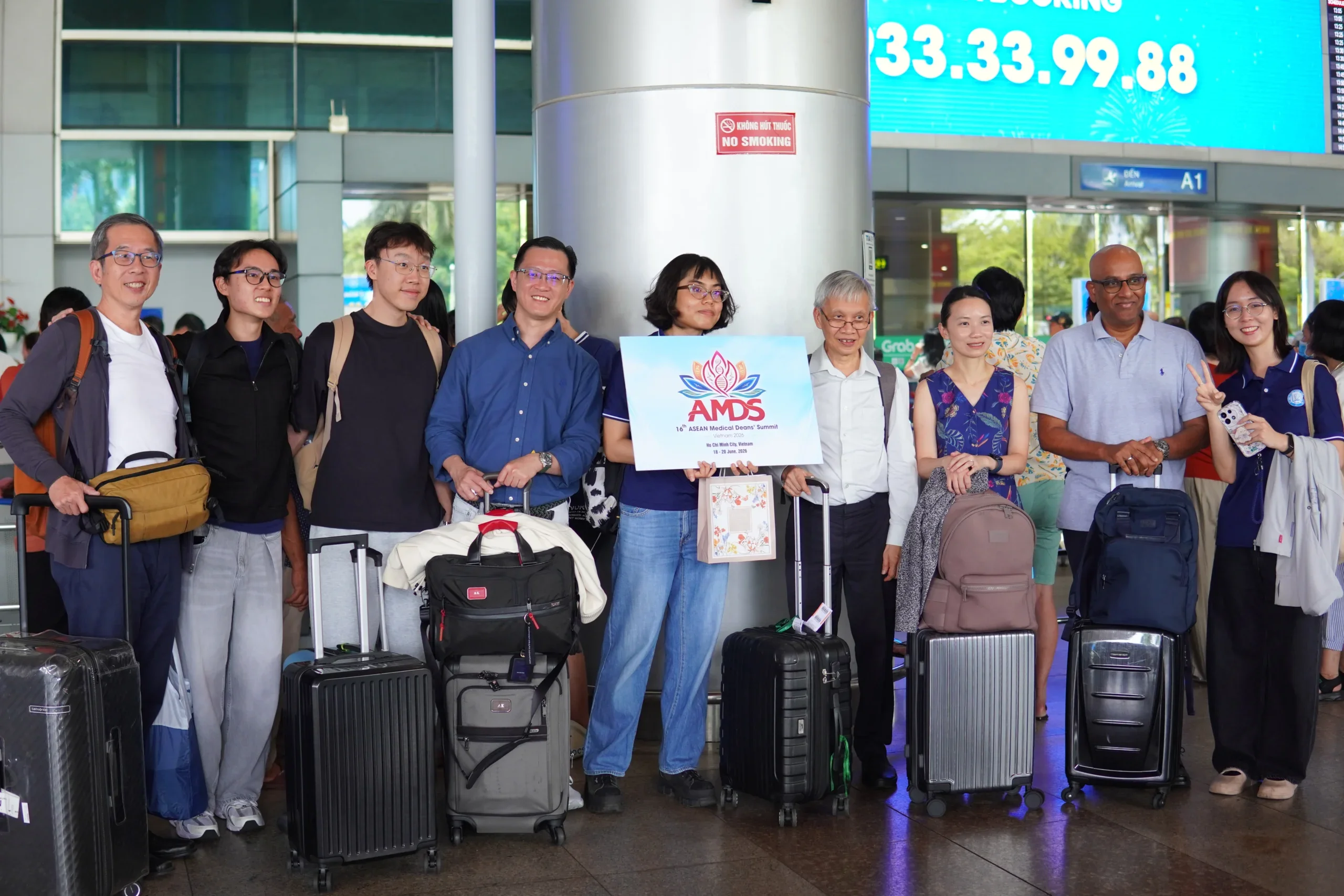
The NUS Medicine Delegation which consisted of faculty professors and students at the Ho Chi Minh City Airport.
The 16th Asian Medical Deans Summit (AMDS), held from 18 to 20 June 2026 in Ho Chi Minh City, Vietnam, brought together medical school leaders, faculty members and students from across Southeast Asia under the theme “Innovating Together: Driving Transformation in Medical Education and Healthcare.” For Year 3 NUS Yong Loo Lin School of Medicine (NUS Medicine) students Preeraruj Kittichaidamrong and Isaac Matthias Teo, the summit was an opportunity to step beyond the local curriculum and gain a broader perspective on how medical education is evolving across the region.
The experience began with a warm welcome from their Vietnamese hosts. From the thoughtfully organised activities to the farewell gifts exchanged between delegates, it was evident how much care and effort had gone into strengthening bonds between students of different countries. What struck Preeraruj and Isaac was that some of their most memorable conversations took place outside the formal programme. Over shared meals of bánh xèo (crispy stuffed pancakes) and ốc hương (sweet snails), they found themselves discussing medical education, technological advances and the future of healthcare with fellow students from Vietnam, the Philippines and Malaysia, among many others. These informal conversations made the summit feel less like a conference and of like an opportunity to build genuine connections with peers who, despite studying in different systems and cultures, shared many of the same aspirations and challenges.
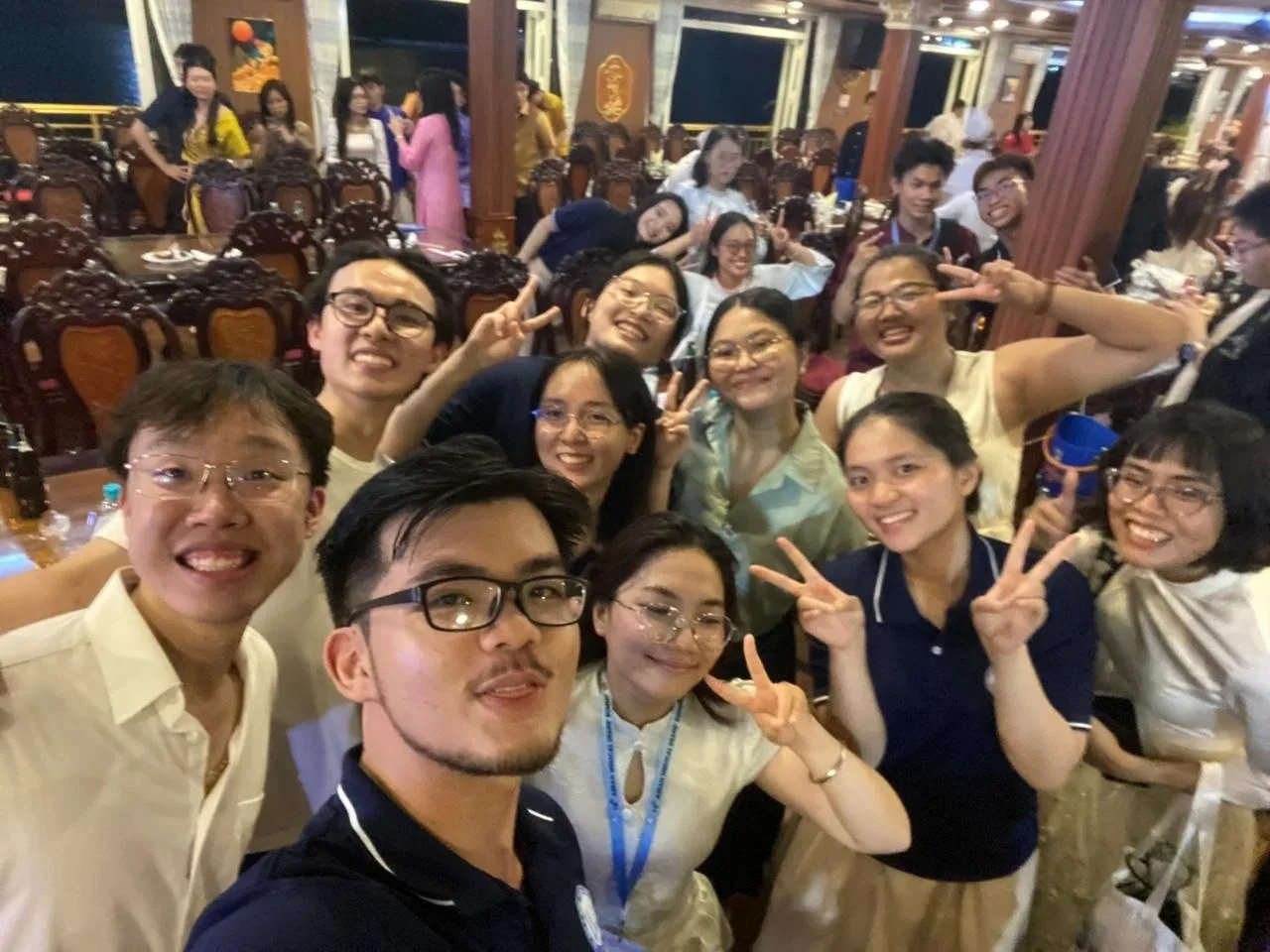
Group Photo of the NUS Delegates, Preeraruj (left most) and Isaac (second left most) with the host students from Ho Chi Minh City University of Medicine and Pharmacy.
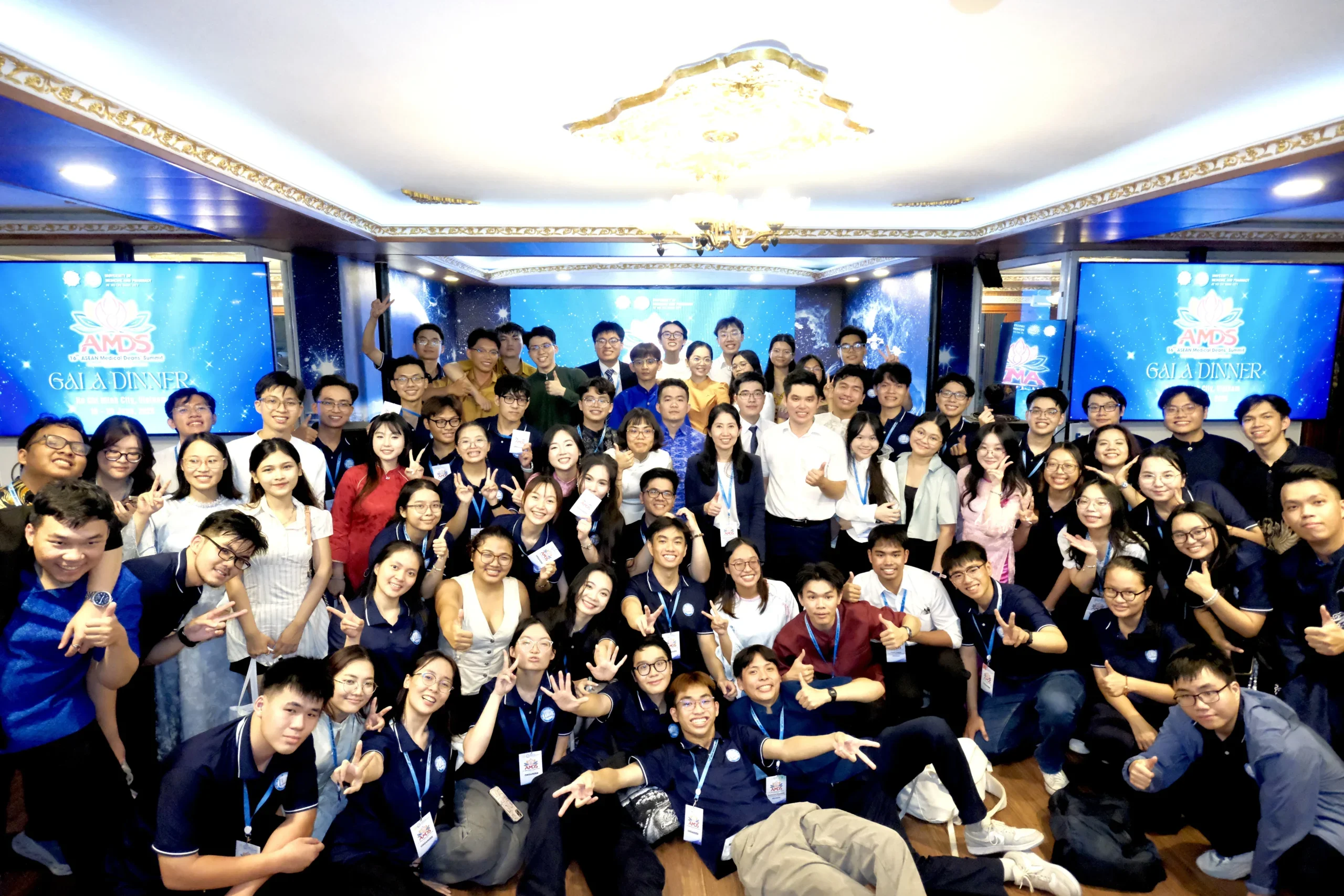
Group Photo of the Delegates after the Gala Performances which comprised performers from Vietnam, Malaysia, Laos and Cambodia, among other representatives.
This sense of shared purpose continued throughout the academic sessions. One of the most interesting aspects of the summit was seeing the different ways medical schools are adapting to technological change. Sessions explored topics ranging from artificial intelligence in healthcare to student mental health, while focused group discussions examined how AI could be incorporated into medical education without creating an over-reliance on technology. They were particularly interested to see how other schools, much like NUS Medicine, have incorporated virtual reality into teaching, including its use in anatomy education. At the same time, they encountered approaches that were very different from their own, such as the use of real-life cadavers in anatomy assessments. These differences reminded them that there is no single model of medical education, and that different approaches can offer valuable lessons depending on their context.
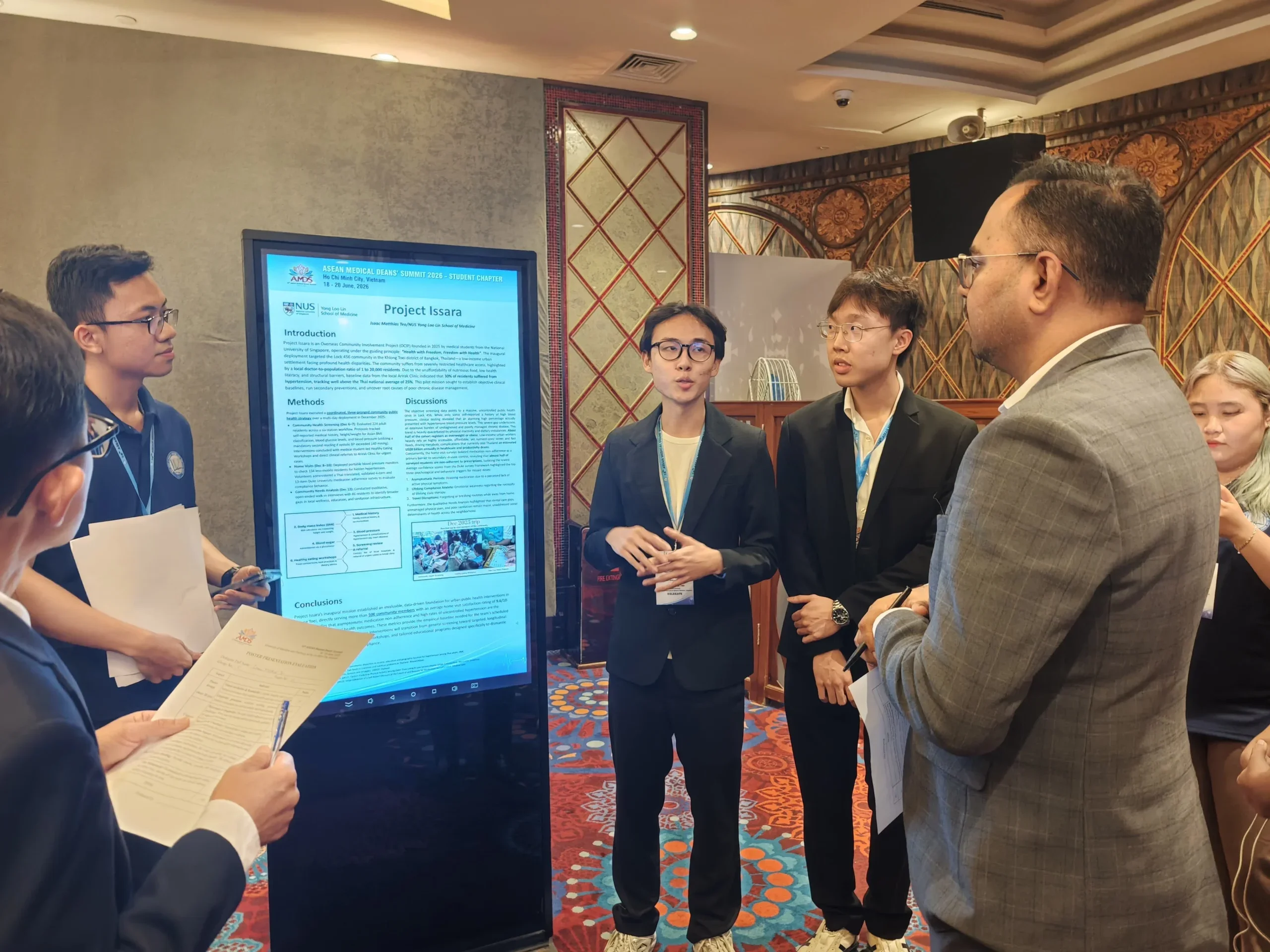
Isaac (left) and Preeraruj (right) presenting a poster about student life to a panel of judges during the Poster Presentation Portion of the Summit.
The discussions surrounding AI were particularly relevant to them as students entering a rapidly changing healthcare landscape. Hearing educators and students openly consider both the possibilities and limitations of AI made Preeraruj and Isaac reflect on the kind of doctors they are preparing to become. Technology will undoubtedly play an increasingly important role in medicine, but the summit reinforced that innovation should complement, rather than replace, clinical judgement, human connection and responsibility.
Beyond the academic sessions, the summit also gave them an appreciation of the importance of relationships in advancing medicine. The warmth of their hosts and the friendships formed with delegates from across the region showed us that collaboration is not built solely through formal partnerships or academic discussions. It is also built through conversations over a meal, an exchange of stories, and the willingness to learn from one another. These seemingly small interactions created a sense of camaraderie that extended beyond the summit itself.
As medical students, Preeraruj and Isaac left Ho Chi Minh City with a broader perspective of what medical education can look like, but also with a renewed appreciation of what should remain constant regardless of how medicine evolves: the patient at the heart of it. While technology may change how they learn, diagnose and treat, the human purpose of medicine remains unchanged — to cure when we can, to relieve when we cannot, and to comfort always. For them, AMDS 2026 was a reminder that becoming better doctors is not simply about keeping pace with innovation, but about ensuring that every innovation ultimately helps to care for patients with greater competency, empathy and humility.