Where Purpose Meets Responsibility: Jayanth's NUS Medicine Journey
Published: 20 Jul 2026
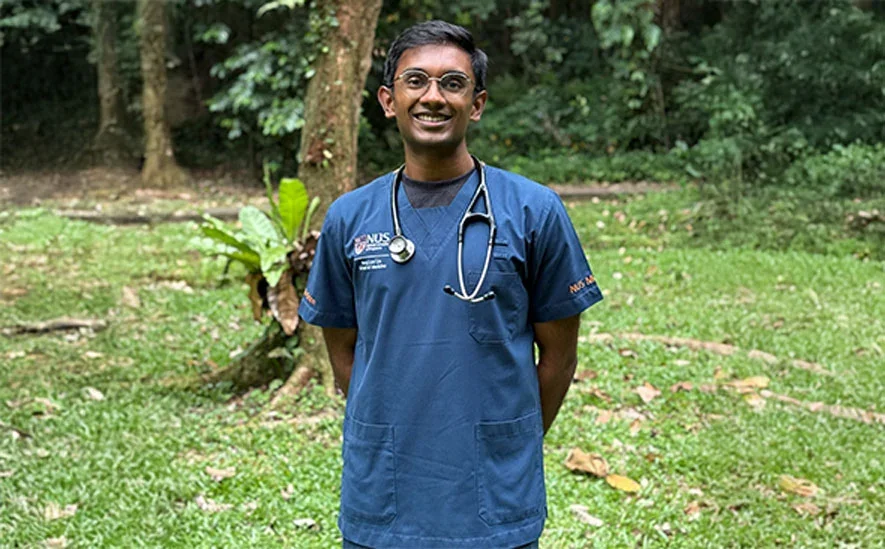
Jayabaskaran Jayanth, Valedictorian for the Class of 2026
When people think about future doctors, they often imagine someone who always knew medicine was their calling. That was not quite the case for Jayabaskaran Jayanth, the Valedictorian for the Class of 2026 at the Yong Loo Lin School of Medicine, National University of Singapore (NUS Medicine). His journey into medicine began with a love for science and a desire to make a meaningful impact on people’s lives.
Growing up, there were no doctors in his family and he admits that he was a little afraid of doctor visits. What he did know, however, was that he enjoyed science and wanted to find a career where he could use it to make a real difference.
One experience that stayed with him happened during a research internship. A researcher casually remarked that “Researchers get to make mistakes so that doctors don’t.” While the statement felt intimidating at first, it got him thinking about the responsibility that doctors carry and the trust patients place in them.
“The more I reflected on it, the more I realised that responsibility wasn’t something that pushed me away from medicine. It was something that drew me towards it.” he says.
It was this blend of science, human connection and purpose that eventually led him down the path to medicine.
A medical school journey that was “challenging but transformative”
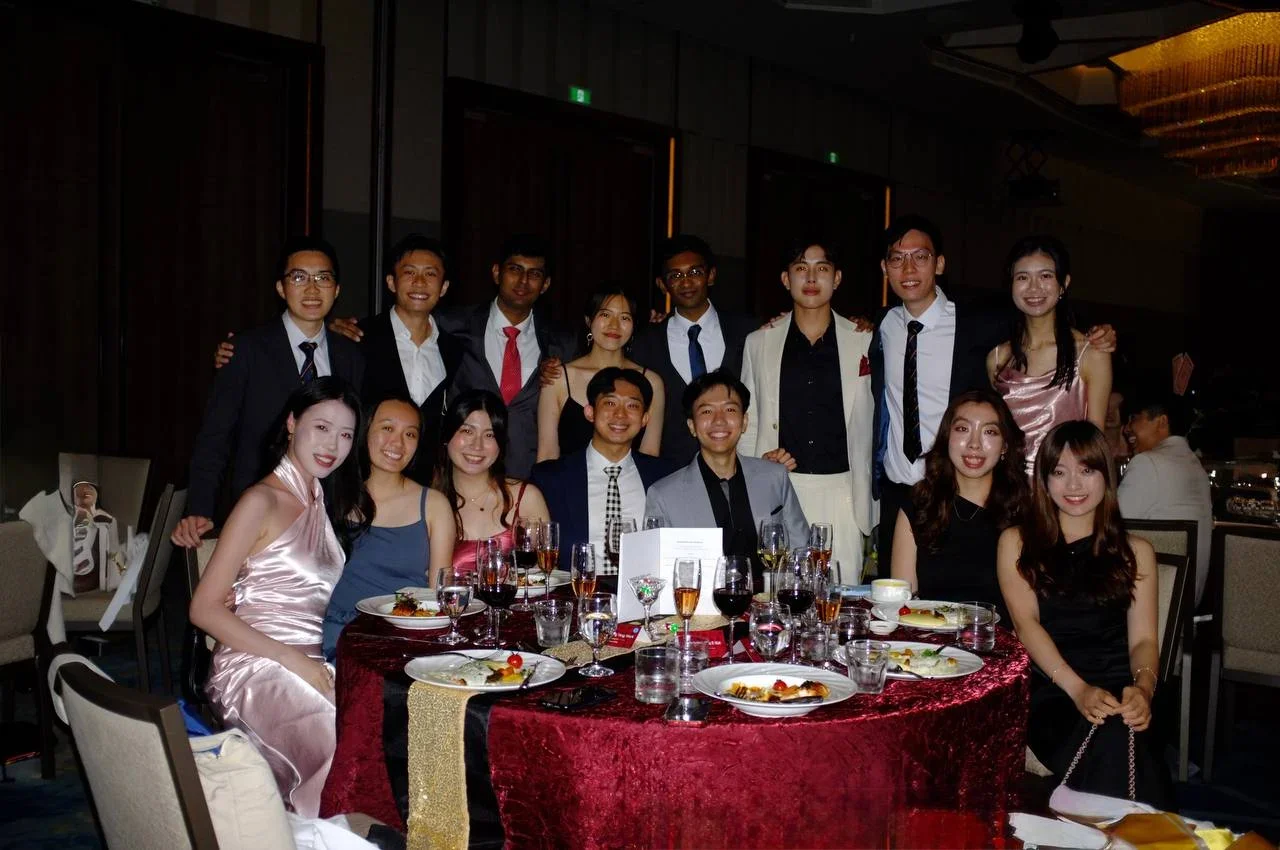
Celebrating the completion of his MBBS studies with fellow Anatomy Dissection Elective students at Seniors’ Night
Jayanth described his NUS Medicine experience in three words: “challenging but transformative”.
Over the years, he learned from countless clinicians who each left their mark on him. Some impressed him with their clinical expertise, while others stood out because of their empathy, patience and dedication to patients.
Instead of pointing to a single mentor, Jayanth believes his growth came from learning a little from everyone he met along the way.
“Every clinician I worked with helped shape my understanding of the kind of doctor I hope to become,” he says.
Of course, medical school was not without its challenges. Fortunately, he had a strong support system to lean on. Family and friends were always there with encouragement, and many of his closest friendships were forged through shared experiences such as anatomy dissection sessions, study sessions and overseas electives. Those relationships helped him stay grounded during difficult periods.
At the same time, he learned to focus on the bigger picture.
“The goal was never simply to do well in an exam or reach a particular milestone,” he explains. “It was to become a competent doctor who can care for patients well.” That perspective helped him to keep moving forward whenever setbacks came his way.
A lesson he will never forget
One of the most memorable experiences from his training came during a palliative care elective at the National Cancer Centre. Jayanth was sitting in on a family conference where a consultant explained a patient’s poor prognosis to family members in Chinese. Once the discussion ended, he assumed everyone was ready to move on.
Instead, the consultant turned to the patient’s domestic helper and carefully explained the same situation again in English, making sure she fully understood what was happening. He also reassured her that she had done her best in caring for the patient. Almost immediately, she began to cry.
“It hadn’t even occurred to me that she needed that conversation too,” Jayanth recalls.
The consultant later introduced him to the concept of disenfranchised grief. A type of grief that may go unrecognised or unsupported by others.
More importantly, the encounter taught him that caring for patients often means supporting the people around them as well, including those whose contributions can easily go unnoticed.
Pursuing Research Beyond the Ward
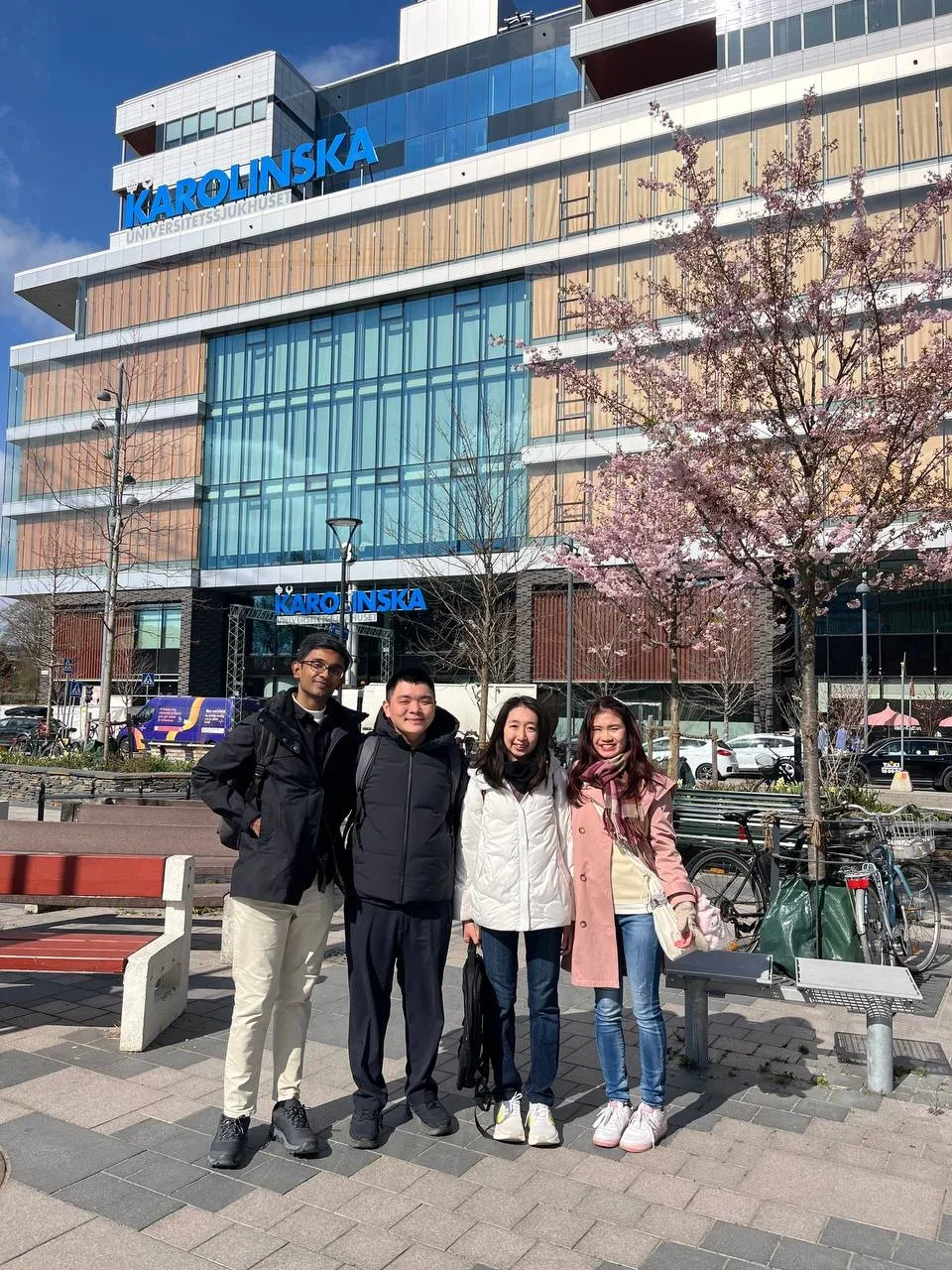
Overseas clinical elective attachment in Sweden, Karolinska Institutet
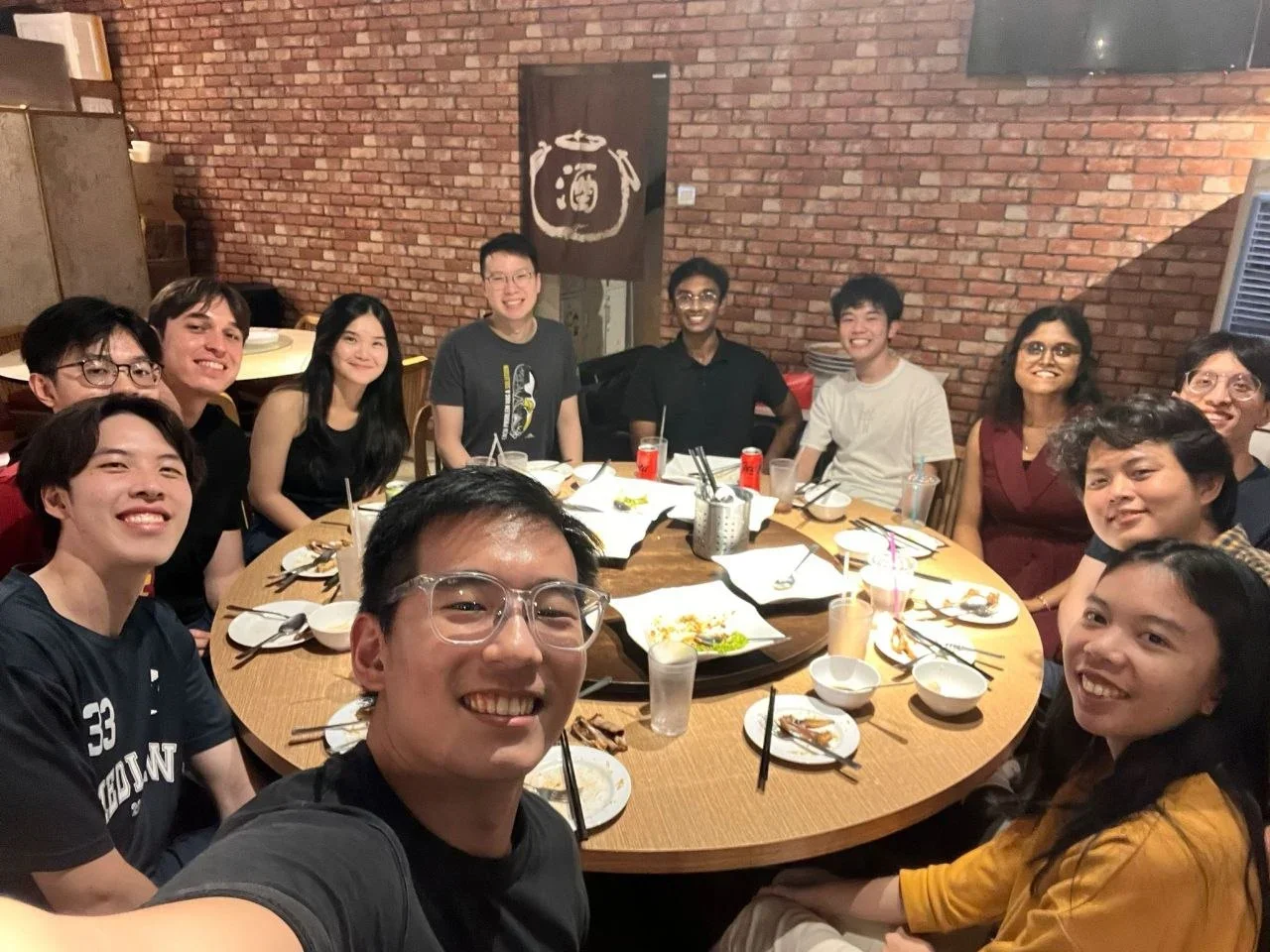
Research group lunch with Dr Nicholas Chew and members of the research team
Jayanth credits Dr Nicholas Chew, Consultant, Department of Cardiology, National University Heart Centre, for introducing him to formal research and guiding him through his early research projects. Through research, he also found a supportive community of mentors, seniors and peers who became friends outside the lab as well.
That passion ultimately led to his participation in the project “The Global Syndemic of Modifiable Cardiovascular Risk Factors Projected from 2025 to 2050,” which won the Distinguished Undergraduate Research Project (DURP) Award in the Group Category, one of the highest honours awarded under the Undergraduate Research Opportunities Programme (UROP) by NUS, recognising the most outstanding undergraduate group research projects
The study examined how major cardiovascular risk factors are expected to change globally over the coming decades. What stood out most to Jayanth was how interconnected many of these health issues are, and how research has the potential to go beyond the individual and improve care for populations.
“It reinforced the idea that many of today’s healthcare challenges can’t be tackled one disease at a time,” he says.
An honour shared with many others
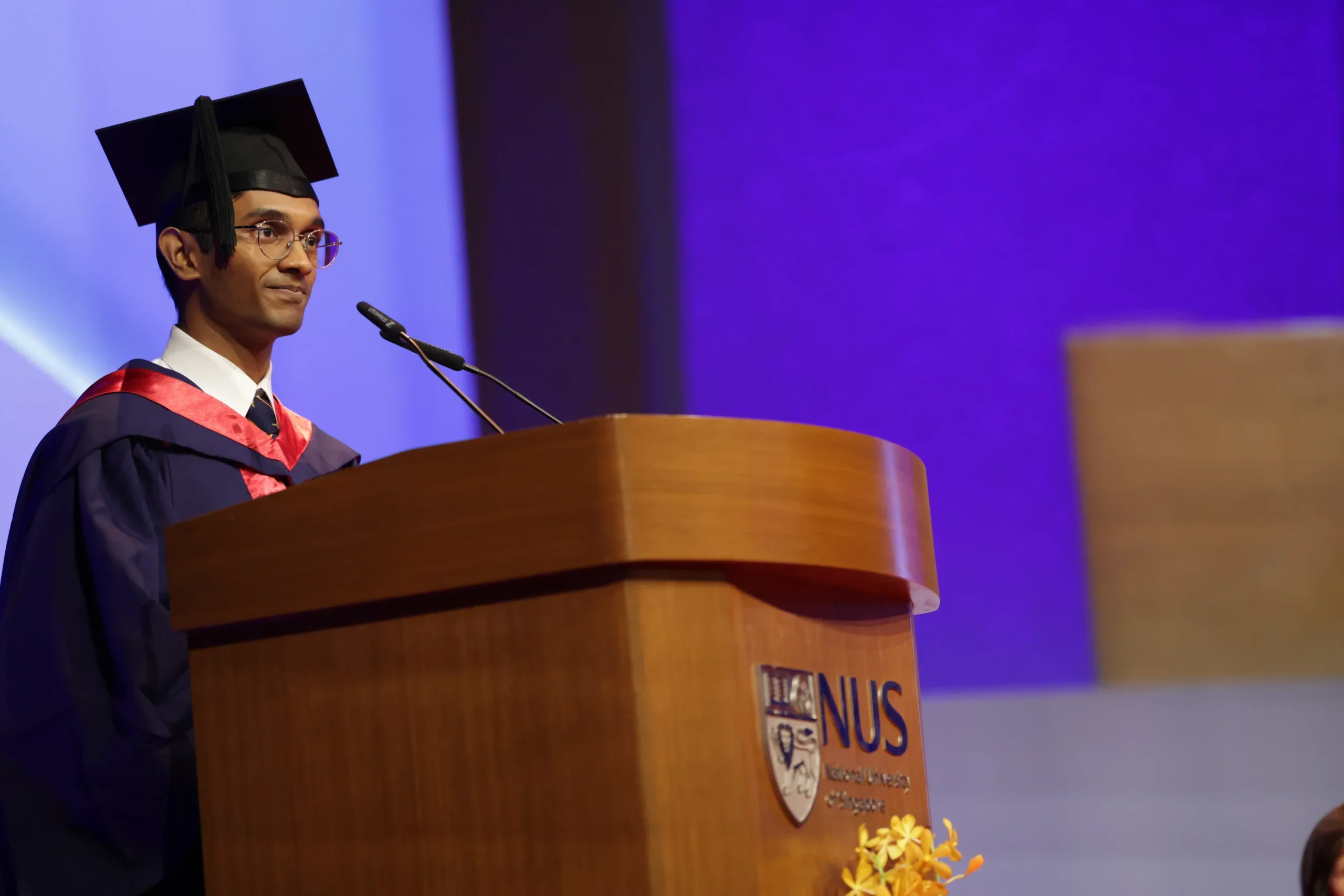
Jayanth delivering his speech to the graduating class as valedictorian during the Commencement ceremony
Being named Valedictorian for the NUS Medicine Commencement Ceremony was a moment of pride, but for Jayanth, it was also a reminder of how many people helped him reach that point. “I felt honoured and grateful. More than anything, it made me think about all the people who made this possible. This wasn’t something I could have done alone.”
In his valedictorian speech, he wanted to leave his classmates with a simple message: remember how fortunate they are to be in a profession where they can make a difference in people’s lives. The road ahead won’t always be easy, but he hopes his cohort will continue to hold on to the reasons they entered medicine in the first place.
“If we remember why we’re here and who we’re here for, I think that’s enough to keep going.”
The Next Chapter
Graduation was a major milestone, but it didn’t feel like the finish line. Soon after commencement, Jayanth and his classmates stepped into their roles as house officers, where the realities of clinical work quickly set in.
“It feels a bit bittersweet,” he says. “Graduation was what we had been working towards for years, but once work started, it became clear how much more there is to learn.”
For him, graduation felt less like the end of a journey and more like a pitstop. “My biggest takeaway is that responsibility is a privilege. As doctors, we are entrusted with something truly profound – the health and lives of our patients, often at their most vulnerable. We study for years, pushing through difficult postings, and keep learning more to prove ourselves worthy of that trust. The responsibility is immense, but so is the privilege of being the one someone turns to when it matters most.”
Looking ahead, Jayanth hopes to contribute to healthcare as a caring doctor, a dependable colleague and, one day, a mentor to future generations of medical students.
