NUS Medicine-Monash study: Intranasal vaccine booster shows stronger immune response and protection against sarbecoviruses
Published: 02 Mar 2026
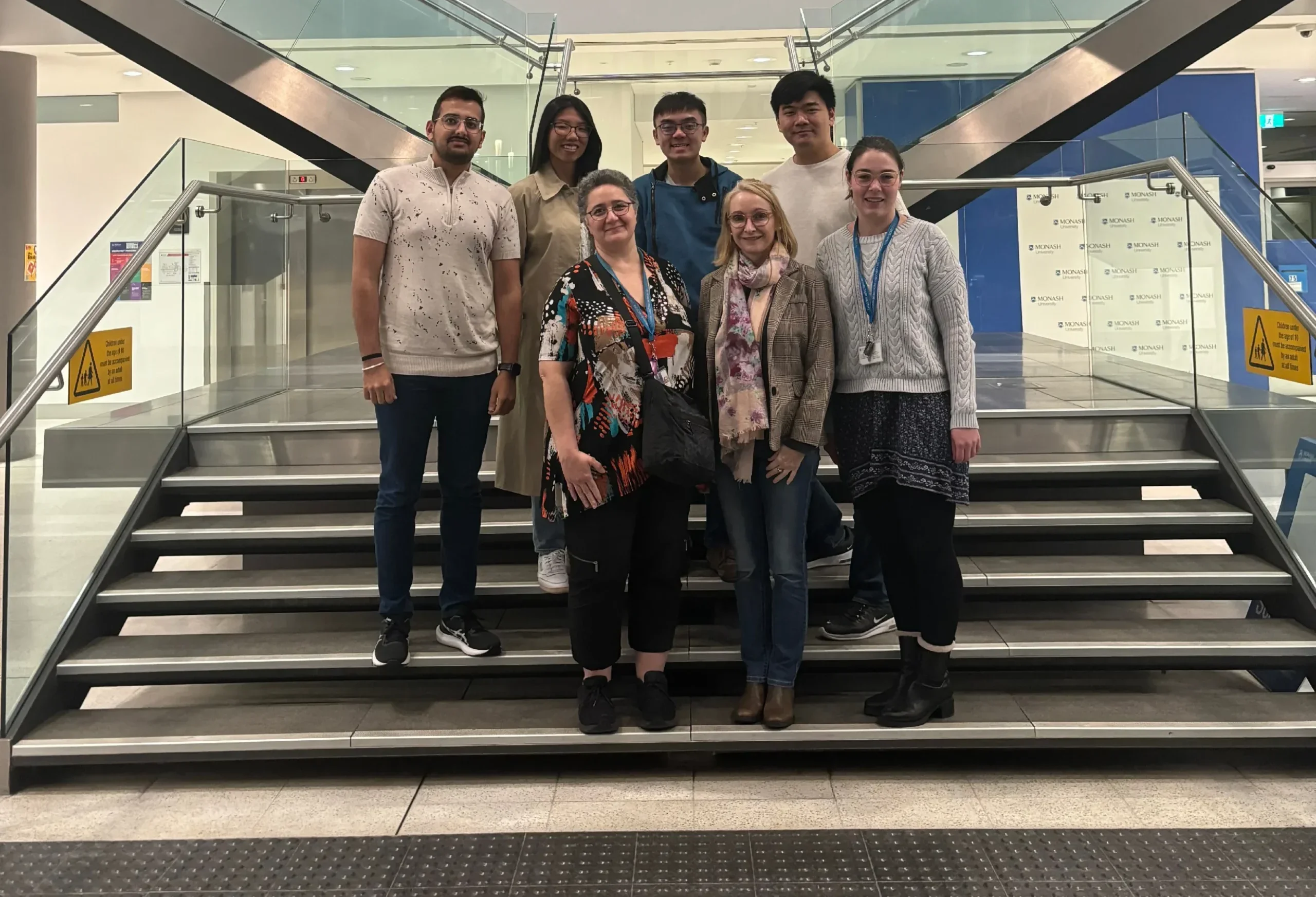
(First row from left) Assoc Prof Mireille Lahoud, Monash Biomedicine Discovery Institute, Monash University; Assoc Prof Sylvie Alonso, Infectious Diseases TRP and Department of Microbiology and Immunology, NUS Medicine; Dr Kirsteen Tullett, Monash Biomedicine Discovery Institute, Monash University, together with Dr Nicholas Cheang (Second row, in blue), Infectious Diseases TRP and Department of Microbiology and Immunology, NUS Medicine and members of the research team.
Researchers at the Yong Loo Lin School of Medicine, National University of Singapore (NUS Medicine) and Monash University in Australia, have demonstrated that an intranasal vaccine booster may confer significantly stronger and broader immune responses, and provide robust neutralising antibody and resident T cell responses in the lung and nasal tissues, outperforming conventional mRNA booster vaccination.
Published in The Journal of Clinical Investigation, the study led by Associate Professor Sylvie Alonso and first author Dr Nicholas Cheang, both from the Department of Microbiology and Immunology, and Infectious Diseases Translational Research Programme at NUS Medicine, examined alternative vaccine booster candidates and administration methods that may improve protective immunity and longevity towards sarbecoviruses. Sarbecoviruses are a category of coronaviruses that can cause respiratory infections, including SARS-CoV-2, the virus responsible for COVID-19, and SARS-CoV-1, responsible for the 2003 SARS outbreak.
Leveraging a dendritic cell (DC)-targeting platform that consists of fusing a DC targeting monoclonal antibody (Clec9A) to a vaccine antigen candidate, the researchers developed Clec9AOMNI, a dendritic cell-targeting booster vaccine that carries the receptor-binding domain (RBD) from SARS-CoV-2 Omicron XBB.1.5 and SARS-CoV-1 viruses. Dendritic cells are innate immune cells that are essential for initiating adaptive immune responses, which include antibody and T-cell responses. In the study, laboratory models vaccinated with mRNA COVID-19 vaccines three months prior received a single intranasal dose of Clec9AOMNI. Immune responses were assessed in the blood and respiratory tract for up to six months, alongside efficacy against SARS-CoV-2 Omicron infection.
Compared with intramuscular mRNA booster vaccination, the study found that nasal boosting with Clec9AOMNI induced significantly stronger neutralising antibody responses, robust T-cell responses in the lungs and nasal tissues, and sustained immunity for at least six months. Stronger protection against SARS-CoV-2 (Omicron) infection was also observed with nasal boosting of Clec9AOMNI, with undetectable virus in the lung and nasal tissues.
The findings also suggest that Clec9AOMNI presents potential in addressing the current shortcomings of the current COVID-19 mRNA vaccines, including waning immunity, inadequate mucosal immunity and limited breadth as they do not provide protective coverage against sarbecoviruses beyond the SARS-CoV-2 family. With Clec9AOMNI’s ability to confer broad and long-lasting protective immunity against SARS-CoV-2 variants when tested in the study, there is greater potential to eliminate the need for repeated booster shots and may likely contribute to maintaining the optimal immunity at a population level.
Assoc Prof Alonso said, “While existing vaccines remain highly effective at preventing severe disease, their protection against infection and transmission decreases within months, partly because they generate little immunity at mucosal surfaces such as the nose and lungs. Our findings suggest that the intranasal Clec9AOMNI vaccine candidate addresses these shortcomings. It may also better protect the elderly and other vulnerable groups who are unable to receive conventional intramuscular vaccine administration.”
Currently, most vaccine formulations are largely not optimised for nasal administration, as the harsh mucosal environment can lead to rapid degradation of the vaccine components before effective immune responses are induced. The Clec9A targeting vaccine platform therefore offers a promising solution by ensuring vaccine efficacy and longevity at the respiratory tract.
“Targeting dendritic cells through the Clec9A platform opens a new avenue for vaccine design. By leveraging the role of dendritic cells in orchestrating immune responses, the study highlights the promise of intranasal booster vaccines in preventing infection at the point of viral entry,” noted collaborator Assoc Prof Mireille Lahoud, from the Monash Biomedicine Discovery Institute at Monash University.
Read more in the press release here.