Appointment(s)
Chair, NUSMED Immunology Translational Research Programme, 2025
Degree(s)
PhD
Biography
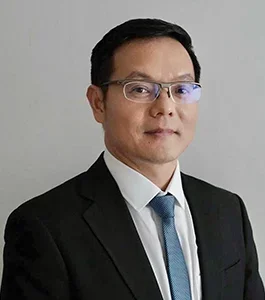
Dr Zhang Yongliang obtained his PhD in 2002 from the National University of Singapore (NUS), Singapore. He performed his postdoctoral research in the Department of Immunology, University of Washington, and the University of Texas MD Anderson Cancer Center, USA. He joined the Department of Microbiology and Immunology, Yong Loo Lin School of Medicine, National University of Singapore, as an Assistant Professor in 2009, and was promoted to Associate Professor with Tenure in 2017.
Research Areas/Research Interest
Dr Zhang’s research focuses on elucidating the regulatory functions of key cellular signaling molecules, including dual-specificity phosphatases (DUSPs) and interferon regulatory factor 3 (IRF3), in immunity and cancer. Targeting these molecules to develop novel therapies that improve patient outcomes is his current and future primary research interests
Regulation of Adipose Tissue Inflammation and Insulin Resistance by MAPK Phosphatase 5, 2015
Yongliang Zhang, Nguyen Thang, Peng Tang, Norman J Kennedy, Huipeng Jiao, Mingliang Zhang, Joseph M Reynolds, Anja Jaeschke, Natalia Martin-Orozco, Yeonseok Chung, Wei-min He, Chen Wang, Weiping Jia, Baoxue Ge, Roger J Davis, Richard A Fiavell, Chen Dong
Targeting Treg-fibroblast interaction to enhance immunotherapy in steatotic liver disease-related hepatocellular carcinoma. Gut. gutjnl-2025-335084. http://doi.org/10.1136/gutjnl-2025-335084.
Prawira A., Xu H., Mei Y. Leow W. Q., Weerasooriya M., Otsuka M., Reolo M. J. Y., Nasir J. M., Abdullah L. B., Wu J., Chen Z., Rahbari M., Hazirah S. N., Wasser M., Chun g A., Goh B. K. P., Chow P. K. H., Albani S., Lee J., Lim T. K. H., Zhai W., Dan Y. Y., Goh G., Tai D., DasGupta R., Zhang Y., Heikenwalder M., Liu H., Chen J. , and Chew V. 2025.
The transcriptional complex p52-ETS1 is essential for germinal center formation. Nat. Immun. 26 (9): 1553-1566. https://doi.org/10.1038/s41590-025-02236-1
Morgan D., Zhang B., Fidan K., Pan W., Vaiyapuri T. S., Raju A., Hei D., See T. Y., Sari I. N., Chan J.W., Majee P., Balachander A., Yu J., Wong A.H., Mok M.M.H., Foo S.H., Tang W.L., Ang N., Tan I., Peng Y. F., Jaynes P., Xu S., Ghosh G., Shahabi S., Jeyasekharan A. D., Ikawa M., Zhang Y., Howland S. W., Lau M. C., Wang V. Y., Lam K. P., and Tergaonkar V. 2025
Interferon regulatory factor 3 beyond innate immunity: regulation of obesity and metabolic disorders. Sem. In Immunology. 78: 101948. (Co-corresponding author)
Li H., Zhang Y.* and H.Y. Peh.* 2025.
DUSP6 regulates Notch1 signaling in colorectal cancer. Nature Communications. 15:10087.
Png C.W., Weerasooriya M., Li H., Hou X., Teo F.Y., Huang S., Zheng S., Weng F.Y.K., Rethnam M., Chia G., Sobota R.M., Chong C.S., Tan K.K., and Zhang Y.2024
DUSP4 modulates RIG-I- and STING-mediated IRF3-type I IFN response. 2024. Cell Death & Differentiation. 31 (3): 280-291
Jiao H., James S.J., Png C.W., Cui C., Heng Li H., Li L., Chia W.N., Min N., Li W., Claser C., Rénia L., Wang H., Chen M. I., Chu J.J.H., Tan K.S.W., Deng Y., and Zhang Y.2024
High temperature and humidity in the environment disrupt bile acid metabolism, the gut microbiome, and GLP-1 secretion in mice. Communications Biology. 7 (1):465. (* Co-corresponding author).
Chen S. Hu Z., Tang J., Zhu H., Zheng Y., Xiao J., Xu Y., Wang Y., Luo Y., Mo X., Wu Y., Guo J., Zhang Y. *, and Luo H. *2024
A tryptophan metabolite made by a microbiome eukaryote induces pro-inflammatory T cells. EMBO J. 42 (21): e112963
Wojciech L., Png C.W., Koh E., Kioh D.Y.Q., Deng L., Wang Z., Wu L., Hamidinia M., Tung D.W.H., Zhang G., Pettersson S., Chan E.C.Y., Zhang Y., Tan K.S.W., and Gascoigne N.R.J.2023
Mucosal microbiome associates with progression to gastric cancer. Theranostics. 12 (1): 48-58.
Png C. W., Lee W. J.J., Chua S. J., Zhu F., Yeoh K. G., and Zhang Y. 2022
DUSP16 promotes cancer resistance to chemotherapy through regulation of mitochondria-mediated cell death. Nature Communications. 12: 2284.
Low H.B., Wong Z. L., Wu B., Kong L. R., Png C. W., Cho Y., Li C., Xiao F., Xin X., Yang H., Low J. M., Lee F. Y. X., Tan I. B. H., Dasgupta R., Shen H., Schwarz H., Gascoigne N. R. J., Goh B. C., Xu X., and Zhang Y. 2021.
PAC1-ing up the epigenetic landscape. Nat Immunol. 21 (3): 247-248.
Chan S.C.L., and Y. Zhang. 2020
TMEM203 is a binding partner and regulator of STING-mediated inflammatory signaling in macrophages. PNAS. 116 (33): 16479-16488. (*Co-corresponding authors).
Li Y., James S.J., Wyllie D.H., Wynne C., Czibula A., Bukhari A., Pye K., Mustafah S.M.B., Fajka-Boja R., Szabo E., Angyal A., Hegedus, Z., Kovacs L., Hill A.V.S., Jefferies C.A., Wilson H.L., Zhang Y.*, and Kiss-Toth E*. 2019