
Singapore Chinese Health Study (SCHS)
The Singapore Chinese Health Study – a stable cohort for long-term study of dietary, genetic and environmental factors of cancer and other chronic diseases that are common in Singapore and globally
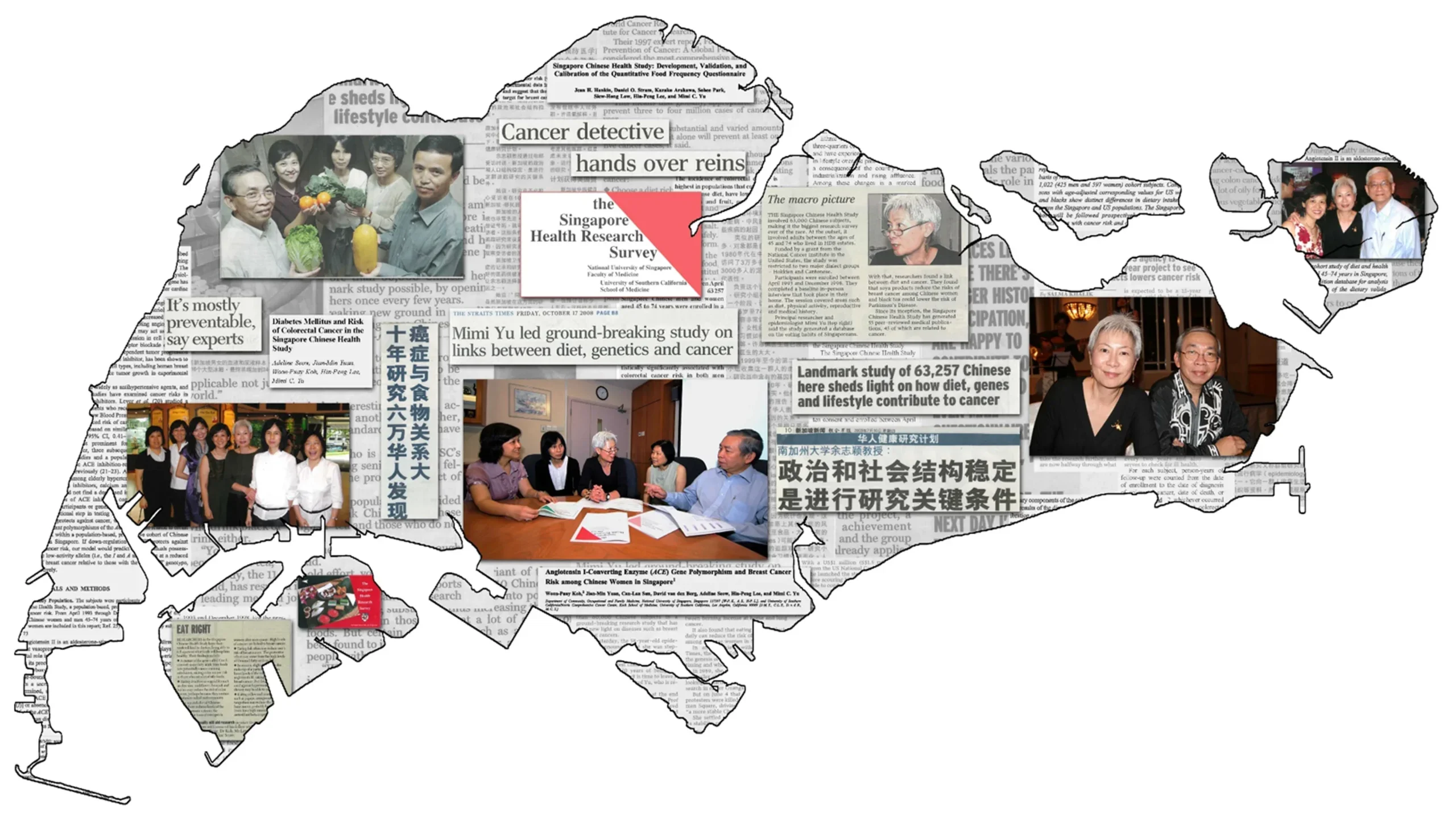
The Singapore Chinese Health Study (SCHS) represents one of the largest population-based Asian cohorts in the world with high quality prospective data on exposure and comprehensive capture of morbidity and mortality. The PI is Koh Woon Puay, professor at the Yong Loo Lin School of Medicine and honorary joint professor at Saw Swee Hock School of Public Health (SSHSPH).
The Singapore Chinese Health Study (SCHS) integrates rigorous prospective study design, comprehensive measurements of lifestyle and genetic factors, and complete capture of disease incidence and mortality for epidemiologic research in the risk of important chronic diseases such as cancer, cardiovascular diseases, diabetes, osteoporosis, osteoarthritis, tuberculosis disease, and gout. This Cohort represents a unique constellation of strengths that includes a well-defined and motivated study population with nearly complete follow-up, high quality data, strong expertise in epidemiologic research, and an Asian setting that importantly complements studies conducted in western countries. Further, the SCHS has completed GWAS of ~26,000 cohort members for more than 800,000 naturally occurring DNA sequence variants across the human genome. We have published the essential validation studies of our dietary and nutritional assessment tools, as well as several methodological studies on correcting measurement errors and residual confounding using statistical modeling. Additionally, we have demonstrated the substantial reliability and validity of using a biomarker-based approach for etiology research by utilizing biospecimens that have been stored for over 20 years. We have also consolidated operations in data management, linkage analysis, data sharing and biorepository.
As of March 2026, we have published more than 520 research articles, and many publications have provided scientific knowledge with important public health implication. We are currently conducting follow-up studies on ageing outcomes with surviving participants.
For more information, please click here.
Table 1 summarizes key features of the SCHS
|
Eligibility criteria: |
Chinese, housing estate residents, ages 45-74 years |
|
Recruitment period: |
April 1993 to December 1998 |
|
Cohort size: |
Total of 63,257, with 35,298 women and 27,959 men |
|
Baseline data: |
In-person interview, focus on current diet using a validated 165-item food frequency |
|
Follow-up: |
Disease Registry, death certificates, address/phone updates via linkage |
|
Follow-up I |
Total of ~55,000 subjects. Telephone and in-person interviews to update smoking, drinking, tea, |
|
Biospecimen Subcohort: |
Blood or buccal cells, and urine collected from consenting subjects between 1999 and 2004. A |
|
Follow-up II |
Total of about 39,000 subjects. Second update on selected lifestyle factors |
|
Follow-up III |
Total of 17,100 subjects re-contacted. Ageing outcomes such as cognition, quality of life and activities of daily living. |


