NUS Medicine and HeyVenus launches Whitepaper on Menopause
Published: 07 May 2025
Researchers at NUS Bia-Echo Asia Centre for Reproductive Longevity and Equality (ACRLE) at the NUS Yong Loo Lin School of Medicine (NUS Medicine), and HeyVenus Integrated Healthscience (HeyVenus) have co-authored a whitepaper, the first ever study that provides real world data on how menopause affects the lives of working women in the region.
Key findings from a new white paper that surveyed 1,741 working women across five major Asia Pacific (APAC) countries—Singapore, Vietnam, Australia, Japan, and Indonesia titled ‘Menopause and the Bottom Line: A Critical Leadership Challenge for APAC Leaders’, published by NUS Bia-Echo Asia Centre for Reproductive Longevity and Equality (ACRLE) at the NUS Yong Loo Lin School of Medicine (NUS Medicine), and HeyVenus Integrated Healthscience (HeyVenus) were presented today at a not-for-profit event attended by business leaders.
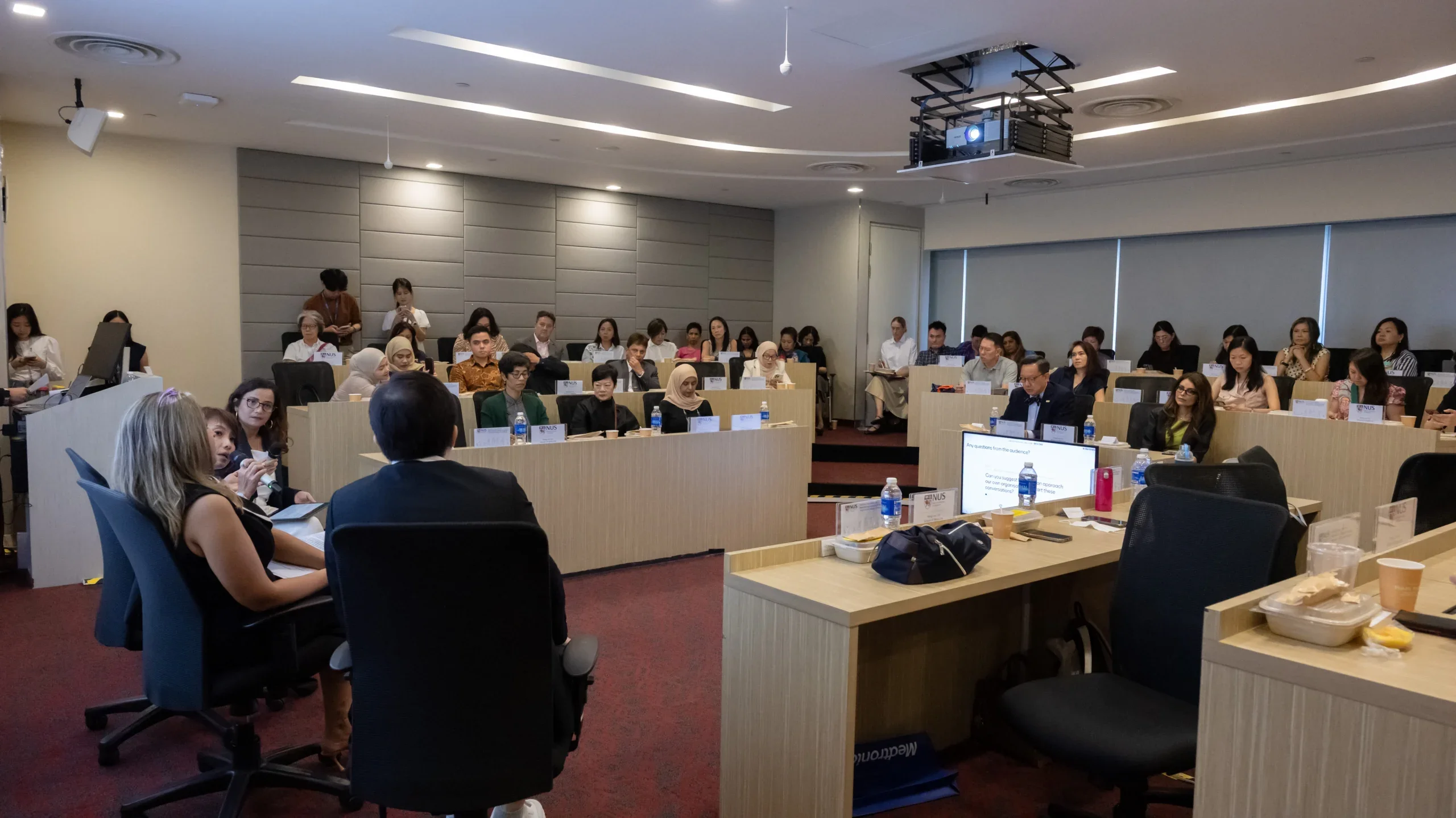
Audience at HeyVenus whitepaper launch event
The study was driven by the goal to address a critical data gap regarding how menopause affects the wellbeing of women living in the Asia Pacific region (APAC) as well as the lack of data on how Asian women experience menopause. The research provides the first real-world data on how menopausal symptoms disrupts the professional and personal lives of female employees in the region.
Compared to Caucasian women, Indigenous, Pacific Islander, and South Asian groups, East Asian and Southeast Asian women report the highest symptom burden which includes menopausal symptoms such as tiredness, hot flashes, vaginal dryness, night sweats, aches and pains in joints and muscles. Nearly half of the women surveyed cited significant disruptions to their work performance and daily activities including fatigue, forgetfulness, and difficulty maintaining prolonged focus affecting productivity. While this finding warrants further research, it supports other research findings[1],[2] that Asian women may be more symptomatic during perimenopause and menopause but fail to get the support they need.
The research findings also suggest that the menopause experience is not adequately addressed by employers, leaving many women without the necessary support systems during this critical phase of life. 61% of women surveyed felt that social stigma prevents them from openly discussing menopause symptoms and seeking support in the workplace. Close to 90% of female employees and most people managers in APAC said that a menopause-friendly policy would benefit the organisation, yet only close to a third of companies in APAC have one in place.
Highlighting the urgent need for businesses to address menopause as a leadership and business challenge, the event also featured a panel discussion that includes authors of the whitepaper, Adjunct Assistant Professor Huang Zhongwei, Deputy Director of ACRLE and Ms Christina Ang, CEO of HeyVenus.
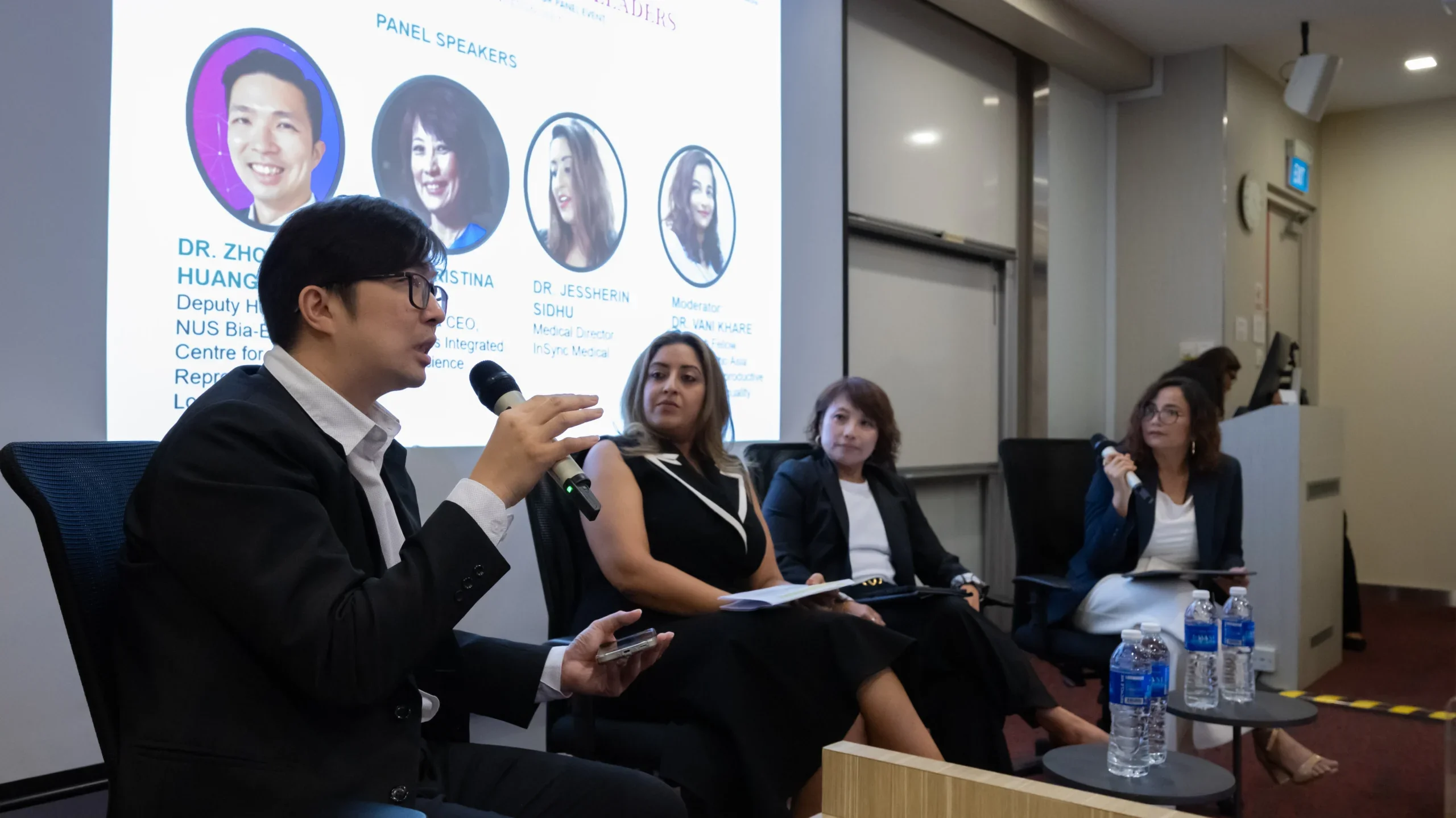
From left: Adj. Asst. Prof Huang Zhongwei, Deputy Director of ACRLE, Ms Christina Ang, CEO of HeyVenus, Dr Jessherin Sidhu, Medical Director of Insync Medical and Dr Vani Khare, Research Fellow at ACRLE
Read more in the press release here.
[1] https://pmc.ncbi.nlm.nih.gov/articles/PMC2878203/
[2] https://pmc.ncbi.nlm.nih.gov/articles/PMC2838208/