‘Making a Difference That Matters’: Professor Chong Yap Seng on Advancing NUS Medicine’s Legacy
Published: 03 Jul 2025
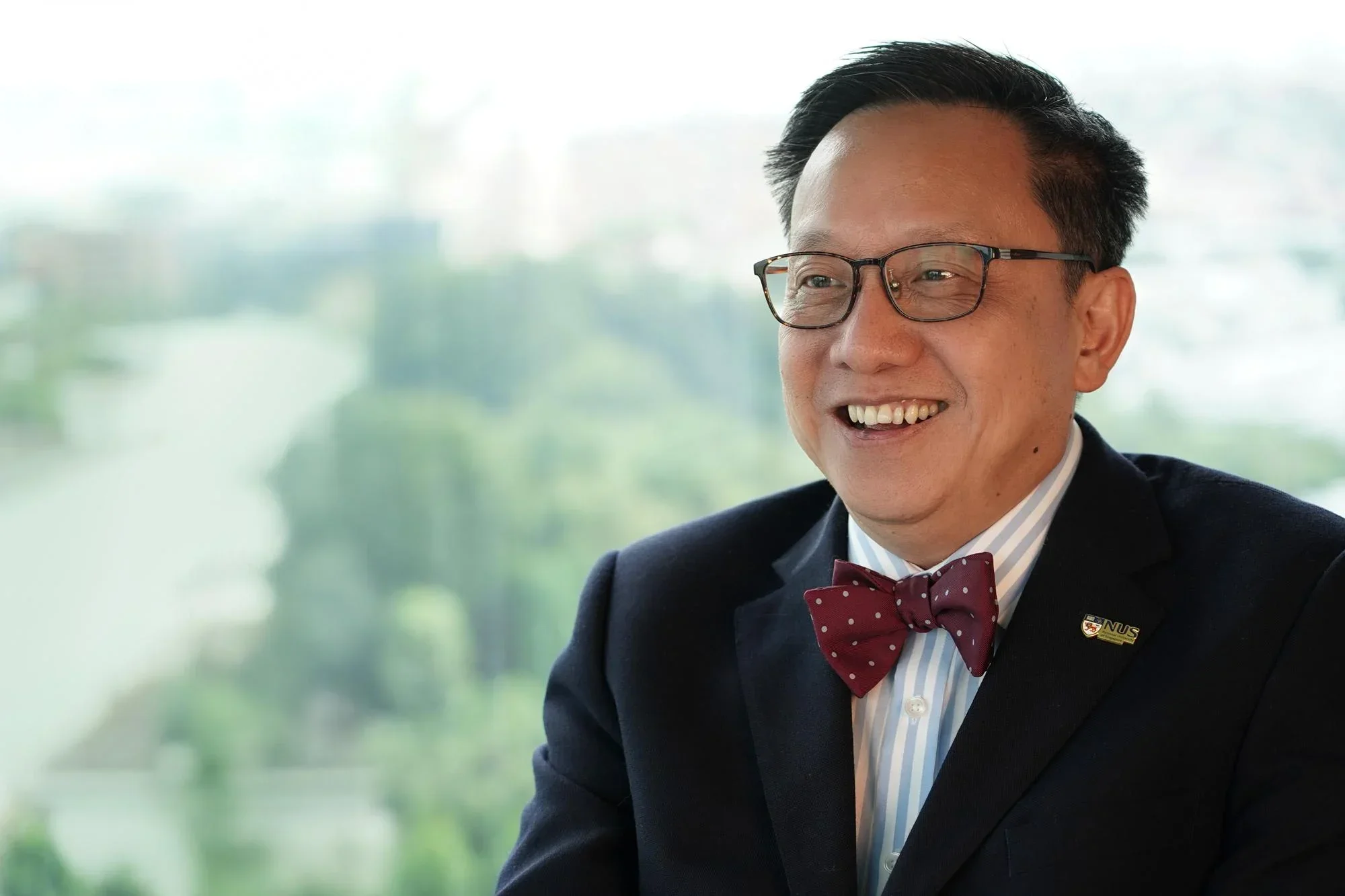
As NUS Medicine marks its 120th anniversary, Professor Chong Yap Seng, Dean of the NUS Yong Loo Lin School of Medicine reflects on the school’s illustrious history and shares his plans for bringing the School’s vision of “Inspiring Health for All” to life during his term. His story and journey exemplify the transformative power of mentorship, collaboration, and purpose.
From Student to Dean
“No, definitely not as Dean,” Prof Chong laughs when asked if he ever imagined leading his alma mater. “I always wanted to be an academic. Well, not always, but I thought it was a good career and it was something I aspired to be.”
Starting medical school in the 1980s, Prof Chong eventually earned three degrees from NUS, including an MD in 2006. His path back to the institution as Dean was unexpected, but it exemplifies his belief in embracing opportunities and challenges with hope, courage and epistemic curiosity.
Mentorship that Matters
As the school celebrates its milestone year under the theme of #Inspire120, Prof Chong reflects on the three mentors who profoundly inspired his journey. Among them was Prof Wong Hock Boon, a legendary paediatrician.
“Every morning you’d see him walking very quickly down the corridor, followed by a whole gang of doctors trying to keep up,” recalls Prof Chong. Beyond his clinical acumen, Prof Wong’s habit of writing two case studies every week left an indelible impression and highlighted the value of continuous learning.
Then there was Prof S.S. Ratnam, described as a “truly visionary academic leader” who transformed the Department of Obstetrics and Gynaecology into a global hub of clinical and research excellence.
“He had this unique ability to create space for groundbreaking work while maintaining a high standard of patient care,” says Prof Chong.
A simple hallway conversation with Prof Sabaratnam Arulkumaran became a career-defining moment for Prof Chong. “When I finished my specialist exam, I told him, ‘Okay, now I can relax.’ And he said, ‘No, now it’s time to do some real work.’” This push inspired Prof Chong’s MD thesis and cemented his path as a clinician-researcher.
Today, Prof Chong leads two of Singapore’s most prominent birth cohort studies — GUSTO (Growing Up in Singapore Towards healthy Outcomes) and S-PRESTO (Singapore PREconception Study of long-Term maternal and child Outcomes). These two landmark studies focus on how pregnancy and early childhood conditions shape long-term health across Singapore’s diverse ethnic groups.
Beyond Traditional Boundaries
Prof Chong’s work highlights a critical need for research tailored to Asian populations. “All the textbooks on medicine and surgery and even biology have been written mainly from the Western perspective,” he notes. This has significant implications for healthcare in Asia, where genetic makeup, environmental factors, and cultural practices create distinct health patterns and challenges.
“This is an aspect of health and disease that has been overlooked for far too long and cannot continue. We have very different patterns of disease that we cannot count on the West to discover and teach us. We have to do it ourselves.” The stakes are high – without Asia-specific research and understanding, treatments and interventions may not be optimally effective for Asian populations.
“One of the School’s aims is to be the best medical school in the world, for Asia.” This ambition reflects both necessity and opportunity. His vision for NUS Medicine challenges conventional medical education. Singapore’s unique multicultural population positions the school well to pioneer research in Asian health and healthcare, exemplified by Singapore’s ambitious national programme to genome sequence100,000 Singaporeans.
His approach also extends beyond treating illness. “One of the big challenges the school is looking at is to go beyond disease to health.”
“Can you optimise it or enhance it? Not so that they can compete in a race, but that they can then be better equipped for the race of life and remain healthy for as long as possible. Health is not the absence of disease.” This approach represents a paradigm shift in thinking about healthcare – moving from a disease-centric model to one that optimises health and wellbeing, particularly within Asian contexts.
A Different Measure of Success
Before stepping into the role of Dean, Prof Chong built a career as a renowned gynaecologist and obstetrician. In the early years of his career, he would deliver around 30 babies a month. Though his clinical practice has scaled down with deanship, he remains committed to medicine’s fundamental purpose of keeping patients and the population at the centre of everything.
As Dean, Prof Chong instils in students the importance of values over grades. “In medical school, half of them will inevitably be in the bottom half of the class. When we hire doctors to work with us in our departments, we’re not looking for the ones with the best scores. We’re looking for the ones with the best attitude and values. These are the people you want beside you.”
This emphasis aligns with his guiding philosophy: “I want this place to be the happiest place on Earth because true happiness comes from making a difference that matters.”
“We are not trying to be like Disneyland. The idea is for people to be driven by the purpose of making a difference that matters. And if you do make a difference that matters, you will be happy.”
His philosophy has yielded tangible progress. Under his leadership, NUS Medicine has maintained the Top 20 ranking for the sixth consecutive year in the 2025 Times Higher Education World University Rankings at 17th place and broke into the Top 20 for the first time in 2024 in the QS Quacquarelli Symonds subject rankings, ranking 18th globally.
“As long as we’re in the neighbourhood of excellence, we are very happy,” he says. “But we have a special role to play in the world.”
This ambition, combined with purpose, defines NUS Medicine’s enduring spirit.
Prof Chong’s story is one that inspires tremendous perseverance, innovation, and a commitment to excellence. His leadership emphasises that the school’s legacy is built on its ability to embrace change and ultimately, to make a difference that truly matters.