“It's Not the Person Who Gets Four ‘A’s”: Associate Professor Marion Aw on What Makes a Great Doctor
Published: 03 Jul 2025
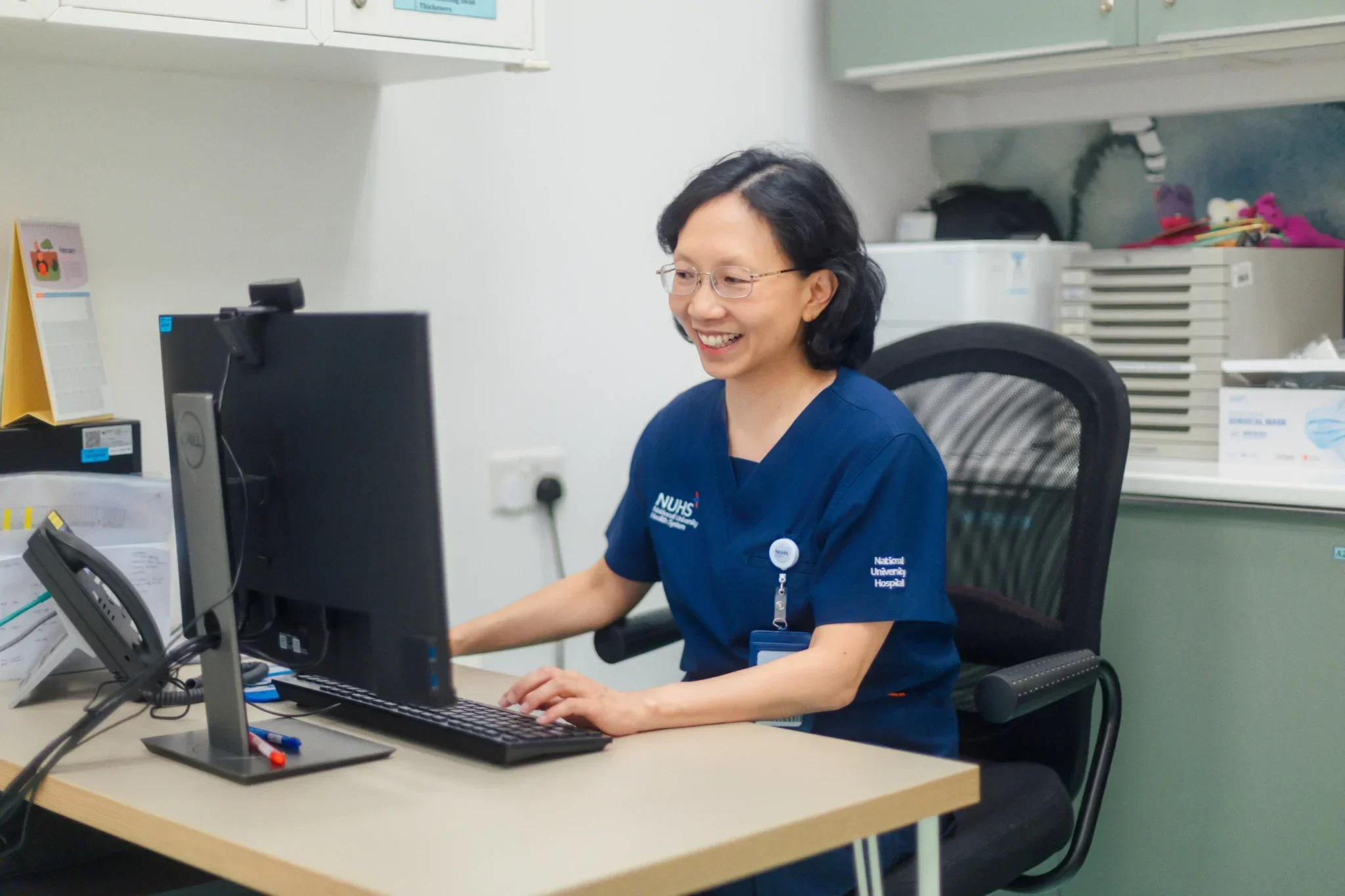
In NUS Medicine’s 120th anniversary year, the institution’s commitment to inspiring health for all takes on a unique dimension through Associate Professor Marion Aw’s vision. As Vice-Dean (Office for Students) of the Yong Loo Lin School of Medicine, National University of Singapore, and a leading paediatric gastroenterologist, she champions an evolution in medical education that goes beyond textbooks and test scores to nurture doctors who can navigate the complexities of modern healthcare with both competence and compassion.
From Clinician to Educational Innovator
“I was really inspired by the way they could actually come to a diagnosis through sheer observation and critical analysis. Like detective work,” A/Prof Aw recalls her early attraction to paediatrics. “That really made me say, ‘Wow, this is really what Medicine is all about’ – to actually figure things out from first principles without having to do many tests or investigations.”
Her own journey has been shaped by mentors who understood the power of opportunity. “I was actually very touched because, you know, a lot of times we have to prove ourselves first,” she reflects on the pivotal moment when senior doctors offered her a chance to explore paediatric gastroenterology and liver transplantation in the UK. This experience of being given space to explore and decide would later influence her own approach to teaching.
The Making of Modern Doctors
Drawing from her extensive experience with both postgraduate and undergraduate education, A/Prof Aw identifies crucial aspects of medical training that extend beyond clinical expertise. “We are very good at teaching them content. Our medical students are probably up there in the world when it comes to medical knowledge,” she notes. “But in these five years, it is important that we also help them prepare for the other components of working, which are actually more important.”
These essential components often determine a doctor’s effectiveness more than academic achievements. “It’s not the person who gets four ‘A’s, or a distinction student that does well as a doctor,” she explains. “It’s really the students with empathy, good EQ, and who can interact well with people from all walks of life, who can multitask.” This insight has shaped significant changes in NUS Medicine’s approach to student development.
A Human-Centred Approach
The School has strengthened its mentorship programmes and integrated workshops on self-awareness, professional communication, and interpersonal skills – competencies that Prof Aw sees as fundamental to effective healthcare delivery.
She sees evidence of this holistic approach making a difference. “I’m always very encouraged when I see students spend time talking to patients because they care for the patient,” she says, “rather than because they have to tick all the boxes… and finish all their assignments on time.” Such moments reinforce her belief that medical education must nurture both clinical competence and human connection.
As medical education evolves to incorporate more technology and virtual learning, maintaining these human connections becomes increasingly crucial. “Medicine, to be honest, is a social interaction. It is a human thing,” she asserts. Her approach advocates using technology thoughtfully, enhancing rather than replacing the personal elements that make Medicine unique.
Leading Regional Healthcare
A/Prof Aw’s influence in pediatric healthcare spans multiple groundbreaking initiatives. In 2013, she established the Interdisciplinary Feeding and Nutrition Clinic at the Khoo Teck Puat – National University Children’s Medical Institute at NUH, pioneering a comprehensive approach to children’s nutritional health. Her vision extends beyond Singapore through her leadership of the Asian Paediatric Inflammatory Bowel Disease Research Network.
This initiative emerged from her observation of shifting disease patterns in Asia. “When I was a medical student, we probably just turned the page and didn’t bother to study it,” she says of inflammatory bowel disease, reflecting on how what was once considered a Western condition has become increasingly prevalent in Asia. Her collaborative effort brings together expertise across Southeast Asia to build collective knowledge and improve patient care.
Through regular masterclasses and educational initiatives, the network raises the standard of care across the region. “How do we teach paediatric gastroenterologists in Southeast Asia how to manage this condition that we all thought was a Western disease ?” she asks, highlighting the importance of developing approaches specifically tailored to Asian populations.
Building Tomorrow’s Legacy
A/Prof Aw’s enthusiasm for Medicine’s future is palpable when she discusses the remarkable advances she has witnessed. Where certain conditions once meant almost certain mortality, today’s treatments offer hope and healing. “Medicine has advanced a lot so there’s a great potential,” she reflects with characteristic optimism.
This progress fuels her optimism and commitment to nurturing future healthcare professionals. “I would say I can’t predict what would happen but I think if we continue doing good work, we’ll make a big difference,” she reflects, echoing NUS Medicine’s enduring spirit of inspiring health for all through education, innovation, and compassionate care.