'Hold On Dearly to Your Passions': Chen Yiming on Bridging Art and Medicine
Published: 03 Jul 2025
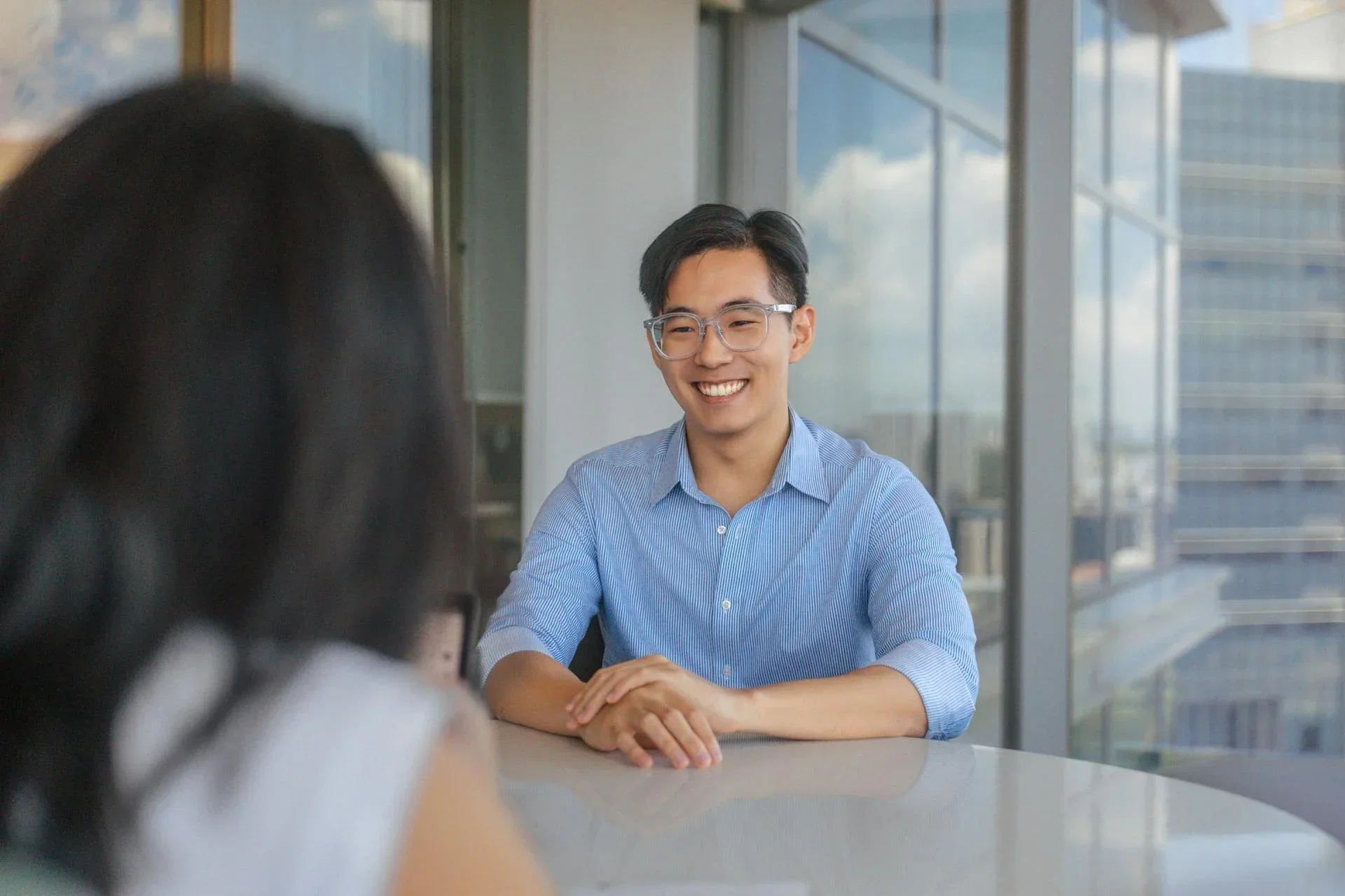
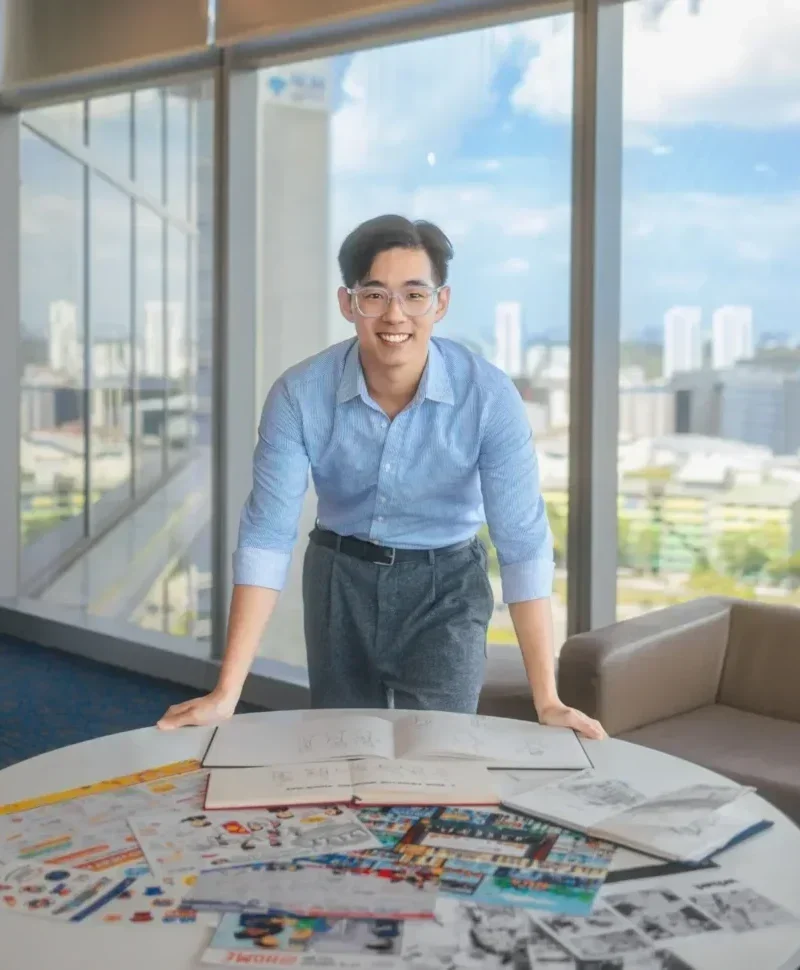
Fourth-year medical student at the NUS Yong Loo Lin School of Medicine (NUS Medicine) Chen Yiming represents a new generation of healthcare pioneers, uniquely combining medical studies with his passion for art and design. As Singapore’s youngest gallery-represented illustrator in 2022 and founder of the country’s only healthcare-focused design startup, Made for Good, Yiming’s journey exemplifies how diverse talents and perspectives can transform healthcare communication and patient experiences.
Two Worlds Colliding
For most medical students, the demanding curriculum leaves little room for outside pursuits. Yiming, however, has managed to cultivate parallel careers – developing as both a clinician and an artist with an established reputation.
Art has been a significant part of Yiming’s life since childhood, long before his medical journey began. “It does feel like I’m living two lives sometimes,” Yiming reflects. “And honestly, I think it’s great. I have the very rare opportunity to be able to experience these two vastly different worlds.”
His path to medicine began unexpectedly when, as a secondary school student at Hwa Chong Institution, he shadowed Dr. Phua Ghee Chee at Singapore General Hospital (SGH). “That was the first time in my life that I’d ever been to a ward,” he recalls. This experience sparked what would become a lifelong passion, especially as it coincided with another pivotal moment in medical history – occurring just before COVID-19 hit Singapore.
What makes Yiming’s story particularly remarkable is how he’s managed to not only maintain both interests but ultimately bring them together in meaningful ways, creating a unique niche that serves both the medical community and patients.
Finding Purpose in Design
Yiming’s artistic journey has evolved significantly over the years. Initially focusing on detailed ink landscapes themed around sustainability, climate change and inequality, he eventually found himself questioning the impact and reach of his work.
“A big part of me felt like my work wasn’t really reaching the average Singaporean,” he explains. This realisation came during his early hospital rotations, where he observed that patients were mostly struggling to understand complex medical information.
After experiencing success as a professional illustrator, including exhibitions and cultivating a substantial social media following, Yiming made the surprising decision to take a six-month break from creative work entirely. “This was not great for my mental health,” he recalls thinking as the pressures of gallery showings, curating work and social media content creation mounted.
This pause proved transformative. In January 2024, he founded Made for Good, channelling his creative talents toward making healthcare information more accessible and engaging for patients and the public. This pivot represented not just a career evolution but a profound alignment of his talents with his values.
Bridging the Healthcare Communication Gap
Through Made for Good, Yiming addresses a critical gap in healthcare communication. “Healthcare is moving incredibly quickly nowadays, especially with the onset of AI and a lot of these new technologies,” he explains. “The gap is becoming wider.”
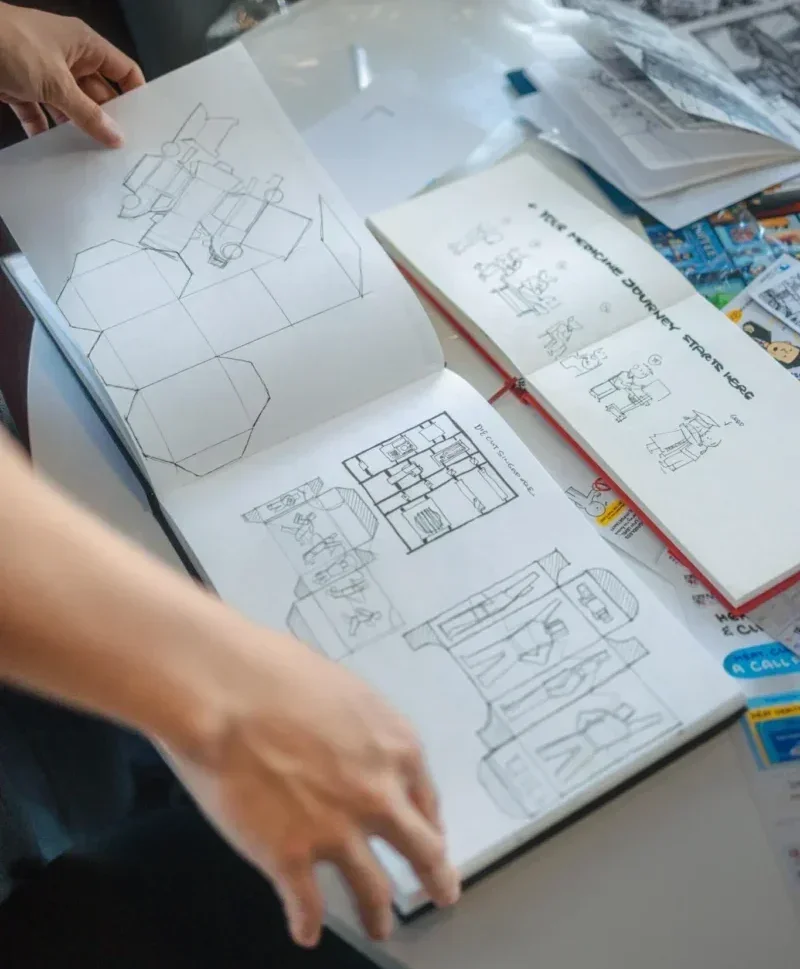
His team’s first major project was the “It’s Great To Be @Home” campaign with NUHS@Home from the National University Health System (NUHS) launched during COVID-19, which perfectly demonstrates his approach. The campaign uses engaging, warm visuals to explain hospital-level care at home, making the concept less intimidating for patients.
“A lot of patients want to go home early. But the main concern is that they think, ‘Oh, it’s unsafe,’” Yiming notes. His designs help alleviate these concerns through thoughtful visual storytelling.
Beyond campaign design, Yiming has pioneered the use of graphic recording in healthcare settings, translating complex medical research and information into digestible visual formats. This innovative approach has been embraced by institutions including Changi General Hospital, the Ministry of Health Office of Healthcare Transformation and NUHS.
His work represents a fundamental shift in healthcare communication – recognising that even the most groundbreaking medical advances require effective communication to reach the people who need them most.
Innovation and Mentorship
Yiming’s innovative spirit extends beyond design. In 2023, he led a team that won the NUS Medical Grand Challenge with TOMY, a remote monitoring software for stoma care that is currently undergoing clinical trials at the National University Hospital’s (NUH) Department of Colorectal Surgery.
Behind Yiming’s accomplishments stands a network of mentors who have guided his journey. Dr. Nicholas Chew from the Department of Cardiology at NUH helped him navigate medical research, while Dr. Stephanie Ko, also from NUH, gave him his first major design project despite his limited portfolio. “Dr. Stephanie has now become a great mentor of mine,” Yiming acknowledges. These relationships have been crucial in bridging his worlds of medicine and design.
Now, as he inspires others, Yiming shares the advice that has guided him: “You should hold on very dearly to the one or few things that you do as a passion, because, as school gets busier, as life gets busier, everything around you will try to yank that away from you.”
This message resonates particularly with medical students, who often struggle to maintain outside interests amid rigorous academic demands. Yiming demonstrates that integrating diverse passions can lead to innovative solutions for healthcare challenges.
His accomplishments, including being named a Philip Yeo Innovation Fellow, reflect his commitment to transforming healthcare through creative approaches that make complex medical information more accessible and approachable.
Where Creativity Meets Healthcare
Students like Yiming represent the future of healthcare – professionals who combine clinical knowledge with diverse perspectives and talents. Through his unique integration of art, design and medicine, he exemplifies how holding on to one’s passions can lead to innovative solutions that make healthcare more accessible for all.