Celebrating 100 Years of Microbiology and Immunology with the Centennial Learning Journey Workshops for Students and Teachers
Published: 27 Jun 2025
As part of its 100th anniversary celebrations, the Department of Microbiology and Immunology at NUS Medicine hosted the Centennial Learning Journey Workshops, welcoming upper secondary and Junior College students, as well as MOE educators, into their teaching laboratory (LS9).
Held over 10 days, this immersive programme introduced over 1,000 participants to the dynamic world of microbiology and immunology through hands-on experiments, real-world applications, and engaging scientific demonstrations.
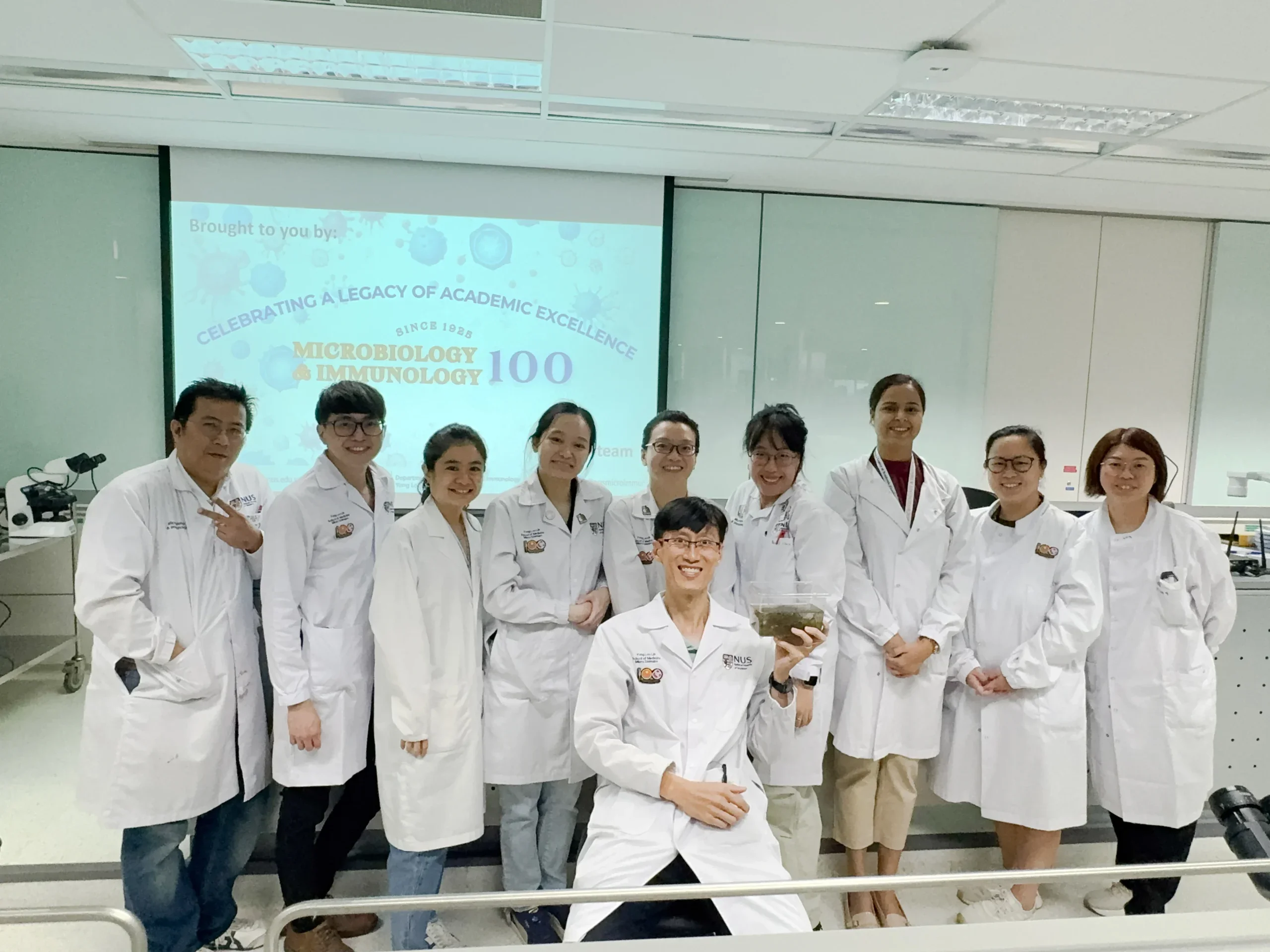
A subset of the Learning Journey organizing team comprising Department educators, laboratory executives, volunteer staff and students (left to right): Michael Thiam, Png Chin Wen, Gladys Ng, Yeo Hui Min, Chan Chuu Ling, Ch’ng Jun Hong, Rachel Chea, Jaishree Tripathi, Nikki Tan, June Koh
Led by Senior Lecturer Dr Ch’ng Jun Hong and his team, the workshop was more than a celebration—it was a call to curiosity, and a push to bridge classroom theory with the fascinating realities of microbes and immune defences.
From Textbook to Test Tube
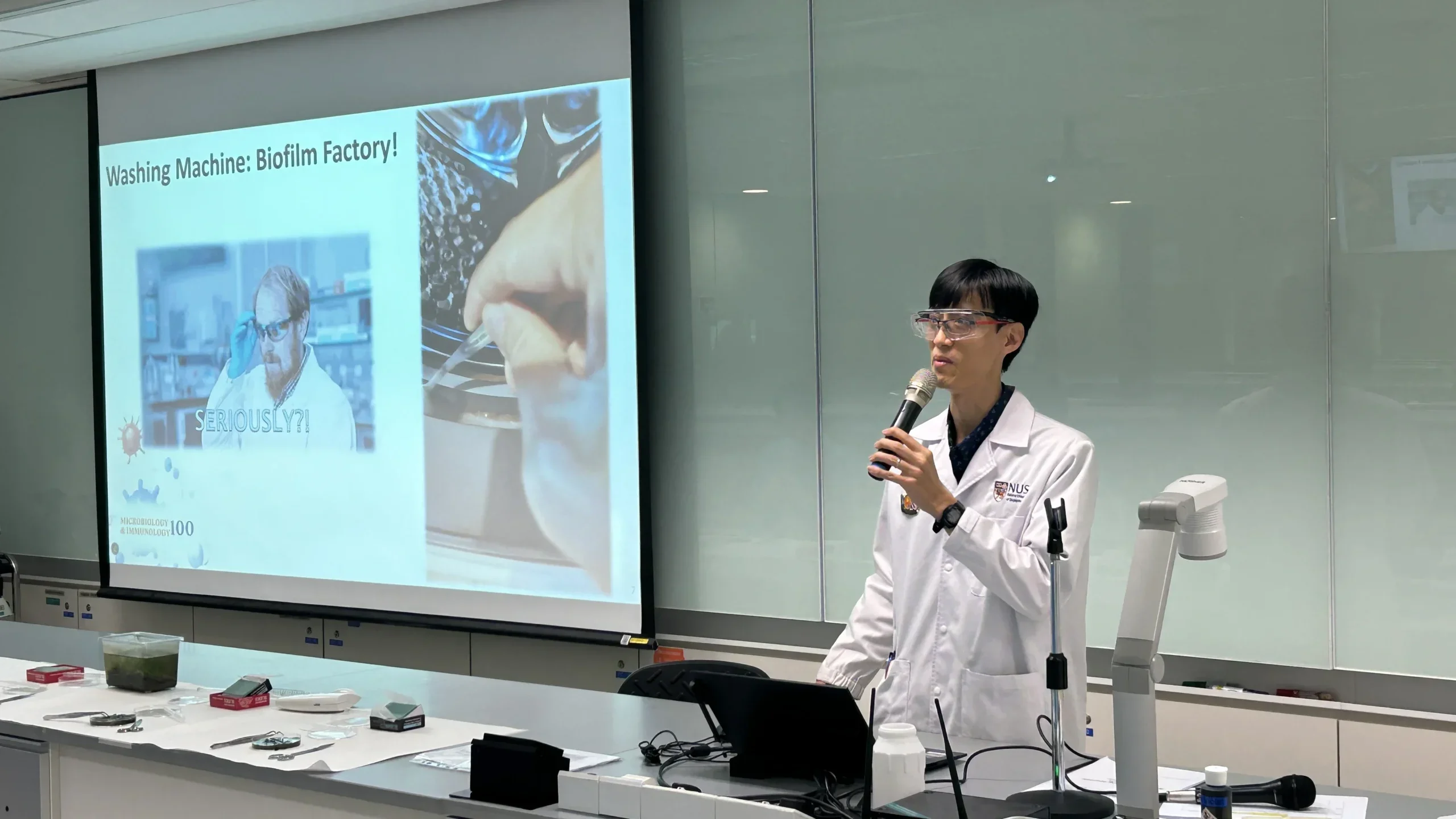
Dr Ch’ng Jun Hong sharing with students
Dr Ch’ng Jun Hong shared that the inspiration behind the event was deeply rooted in a passion for science education and the desire to close the gap between theory and practice.
“Microbiology and immunology affect every part of our lives, yet they often feel inaccessible to students. We wanted to make these topics real, relevant, and exciting—turning abstract textbook content into tangible lab experiences.”
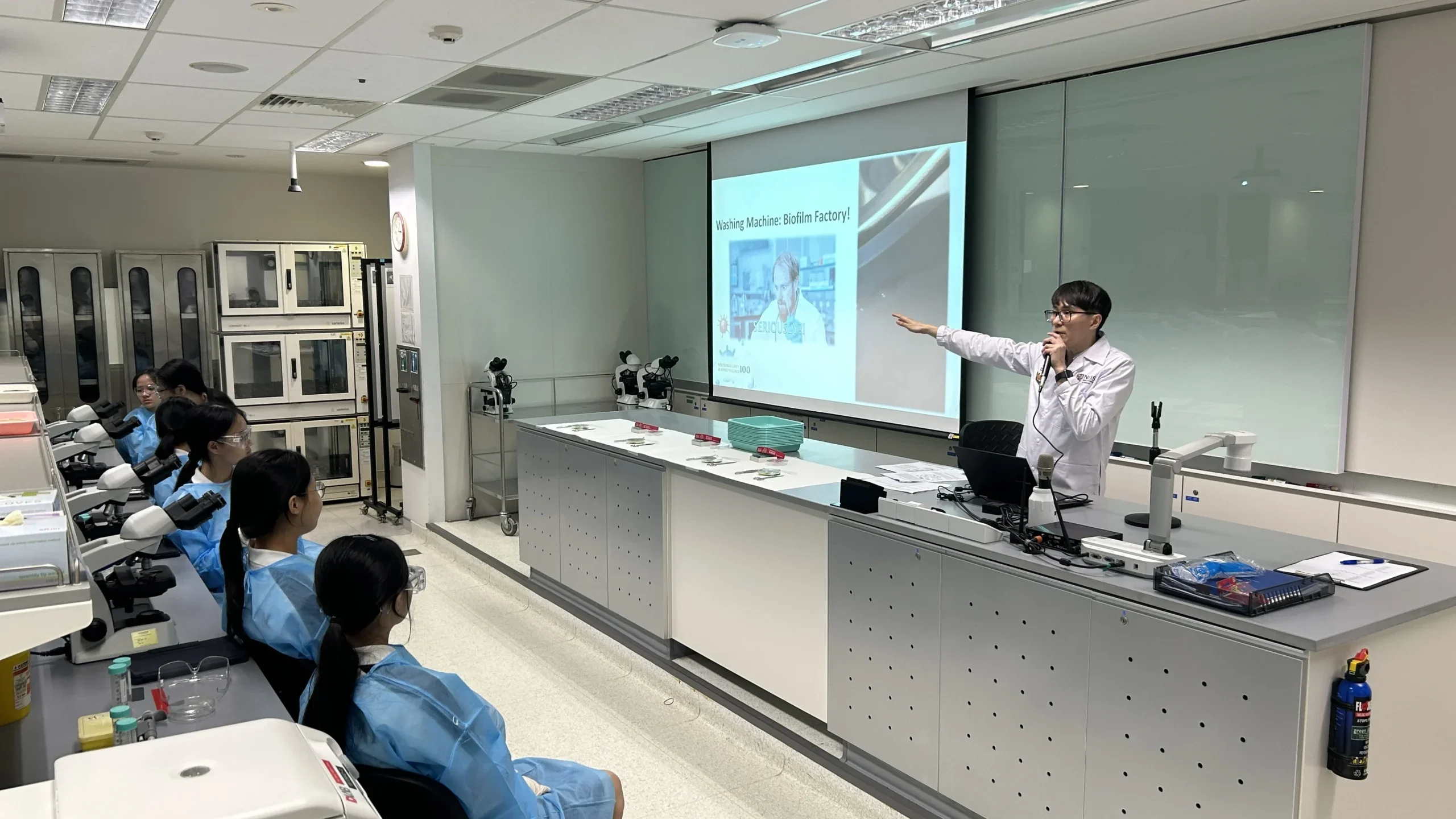
Dr Png Chin Wen sharing with students
Dr Png Chin Wen added that the initiative was part of a broader outreach campaign aligned with NUS Medicine’s 120th and the Department’s 100th anniversaries.
“We wanted to take the celebration to the ‘streets’—engaging MOE students and teachers who are vital to our continued success. From our roadshow in March to a symposium in July, and the Petri Palette public competition to be held later this year, we aim to bring microbiology and immunology out of obscured labs and into public consciousness.”
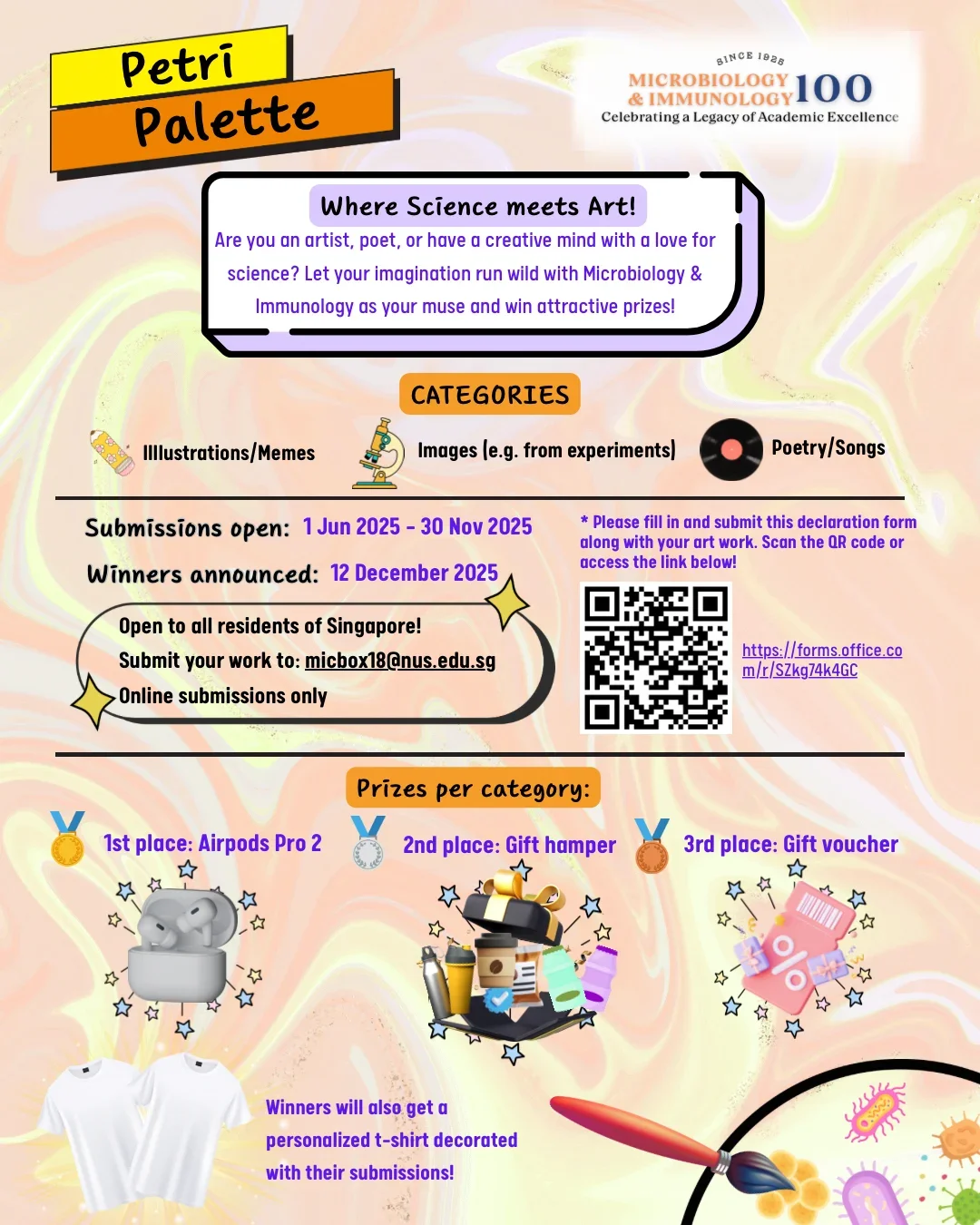
Photo Caption: Petri Palette competition publicity poster
A Lab Coat, A Microscope, and a World of Microbes
Across the 2-hour workshops, students participated in a series of activities that explored three core themes:
- Microbes Are All Around Us – Discovering the beauty, diversity, and essential nature of microorganisms in our environment.
- Our Immune System Defends Us – Observing the inner workings of innate and adaptive immunity in action.
- Microbes as Unexpected Allies – Understanding how microbes contribute to medicine, such as antibiotics, phage therapy, and gut health.
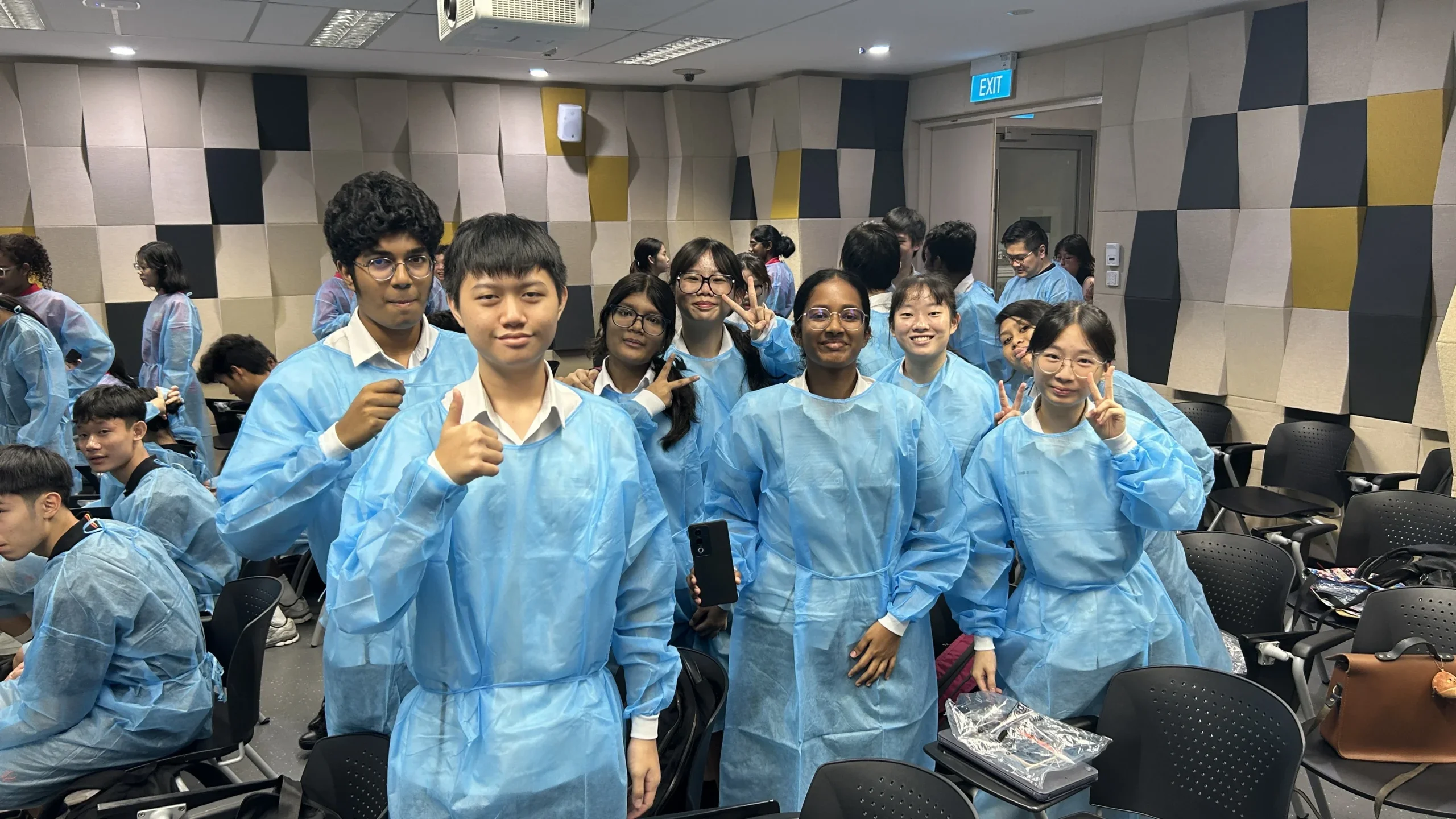
Participants from Manjusri Secondary School gowning up in PPE before beginning their Learning Journey
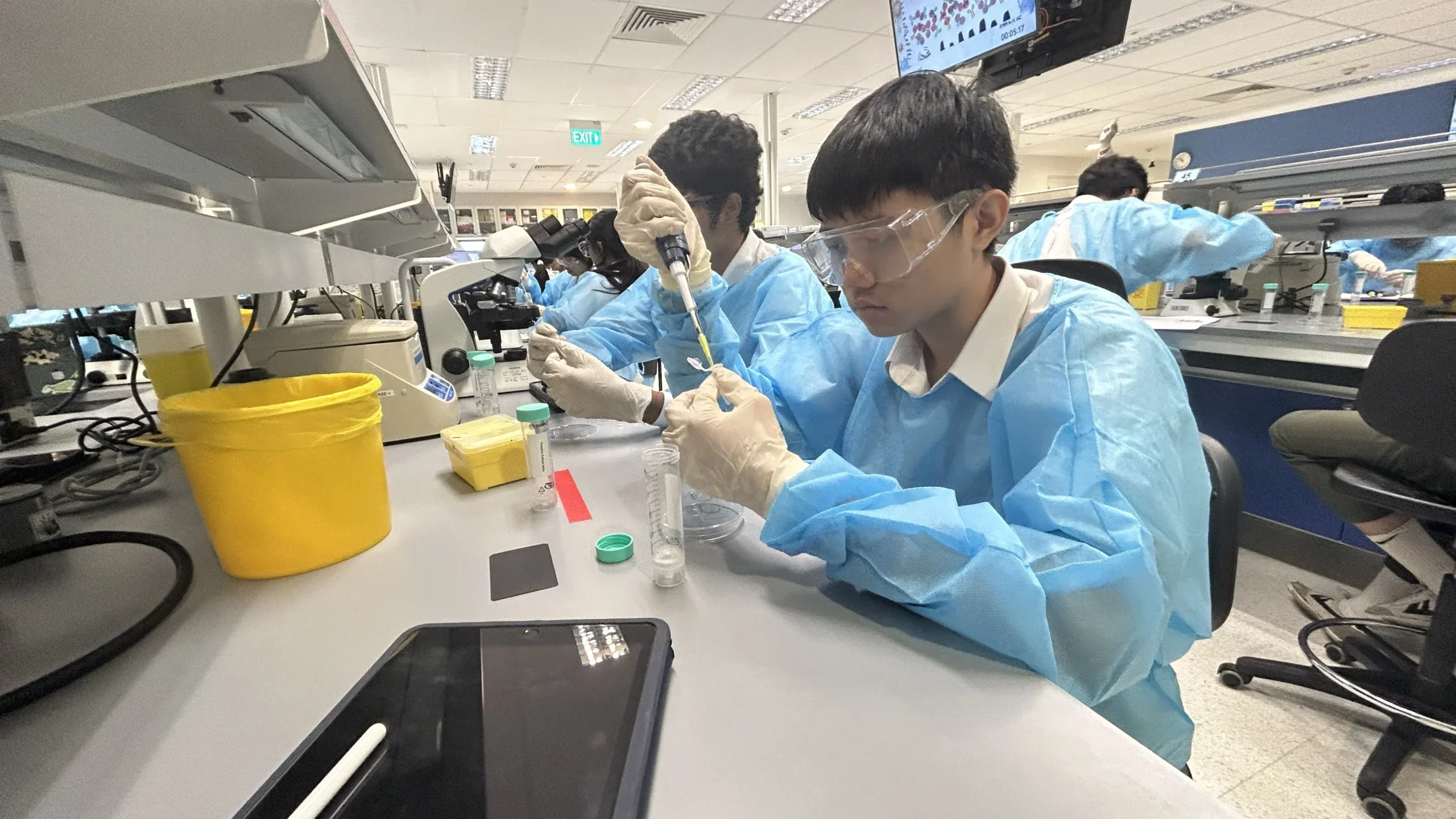
Students from Manjusri Secondary School using micropipettes
Participants donned PPE, prepared microscope slides of pond microorganisms, performed antibody-mediated bacterial agglutination tests, and even analysed commercial products for probiotic claims—merging inquiry with critical evaluation.
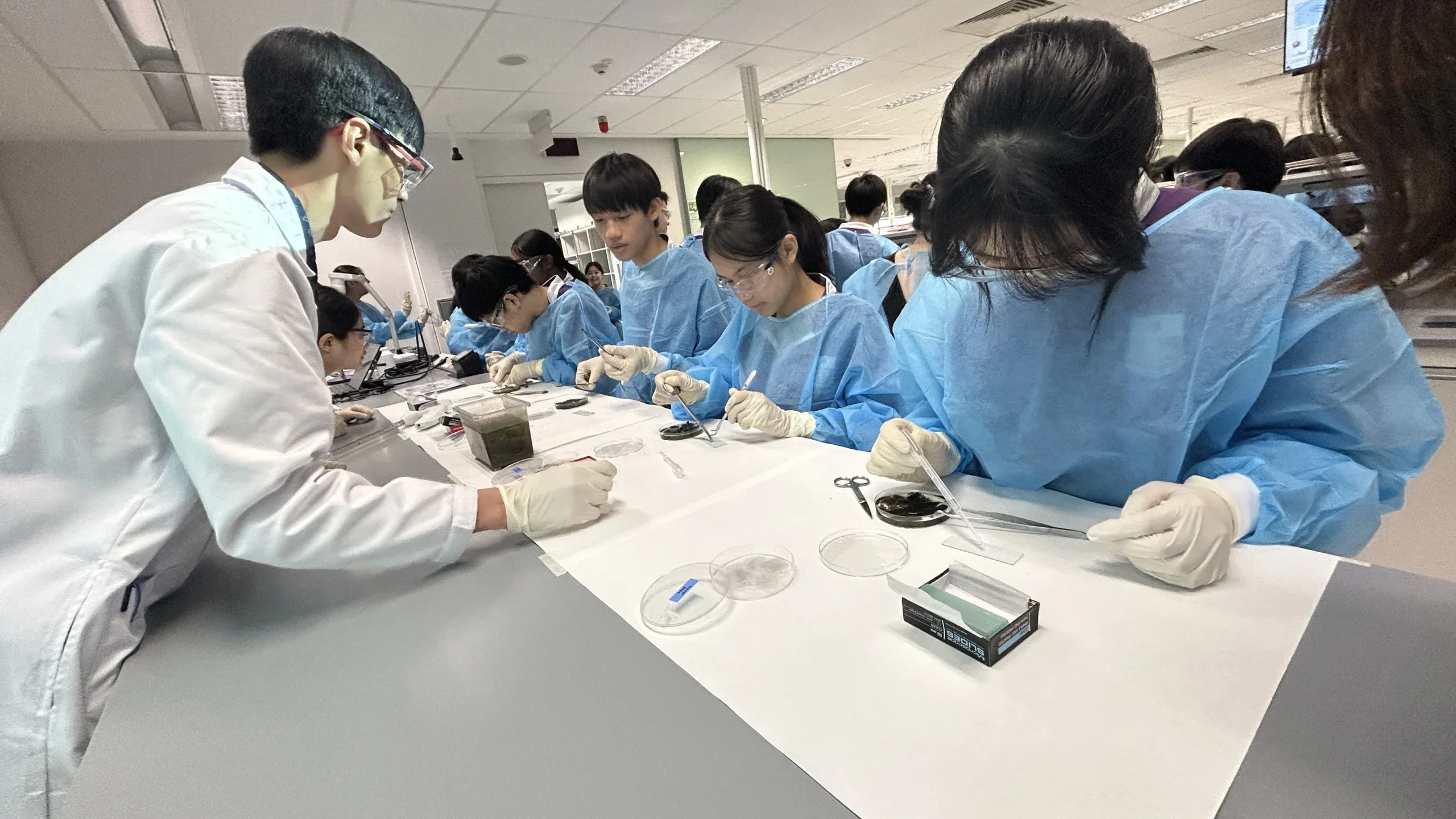
Students sampling pond algae to create their own microscope slide
“We observed students queuing up to make their own slides, excitedly crowding around petri dishes—it was the kind of learning that sticks. As Steve Spangler puts it, you know you’ve won when your lesson makes it to the dinner table conversation and participants share what they experienced through this Learning Journey at NUS with their family” said Dr Ch’ng.
Empowering Students Through Experience
The workshop aimed to build not just knowledge but critical competencies in the following areas:
- Curiosity & Inquiry
Fostering a lifelong enthusiasm for asking thoughtful questions and seeking evidence-based answers, even to everyday observations and phenomena.
- Hands-On Skills
Developing foundational competence in basic laboratory techniques and safe scientific practices through direct, experiential learning.
- Critical Thinking
Enhancing the ability to analyse and interpret scientific data, draw conclusions, and evaluate findings in a structured and logical manner.
- Scientific Literacy
Building an understanding of key concepts in microbiology and immunology, along with their real-world relevance to health, disease, and global public health challenges.
“We hope students leave with a sense of wonder, not fear, about microbes—and begin to see themselves as capable of contributing to science,” said Dr Png.
Student Voices: Awe, Surprise, and New Perspectives
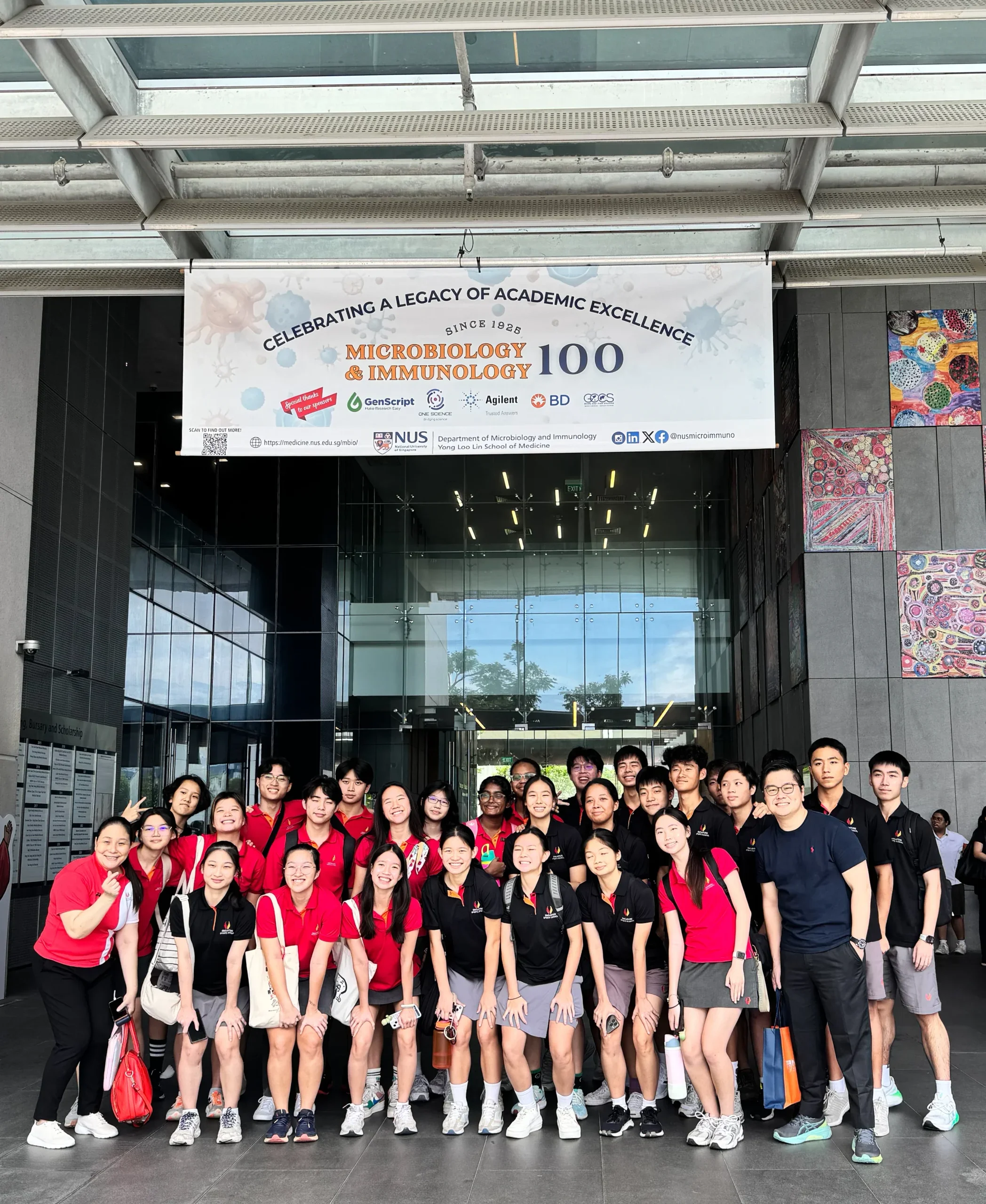
Photo Caption: Learning Journey participants from Singapore Sports School
Meredith Chow Ern Xi (Singapore Sports School, Secondary 4) shared: “It was so fun being in the lab with my friends. The [protozoa] in algae moved so fast we had to chase them with the microscope! The most unexpected part? Spitting into a test tube for an experiment!”
Leong Kin Rong Takaharu (IB Programme) was equally impressed: “Watching my own immune system fight bacteria was mind-blowing. I didn’t know microbes could be so important—even though they’re so small.”
Teacher Reflections: Bridging the Gap Between Schools and Science
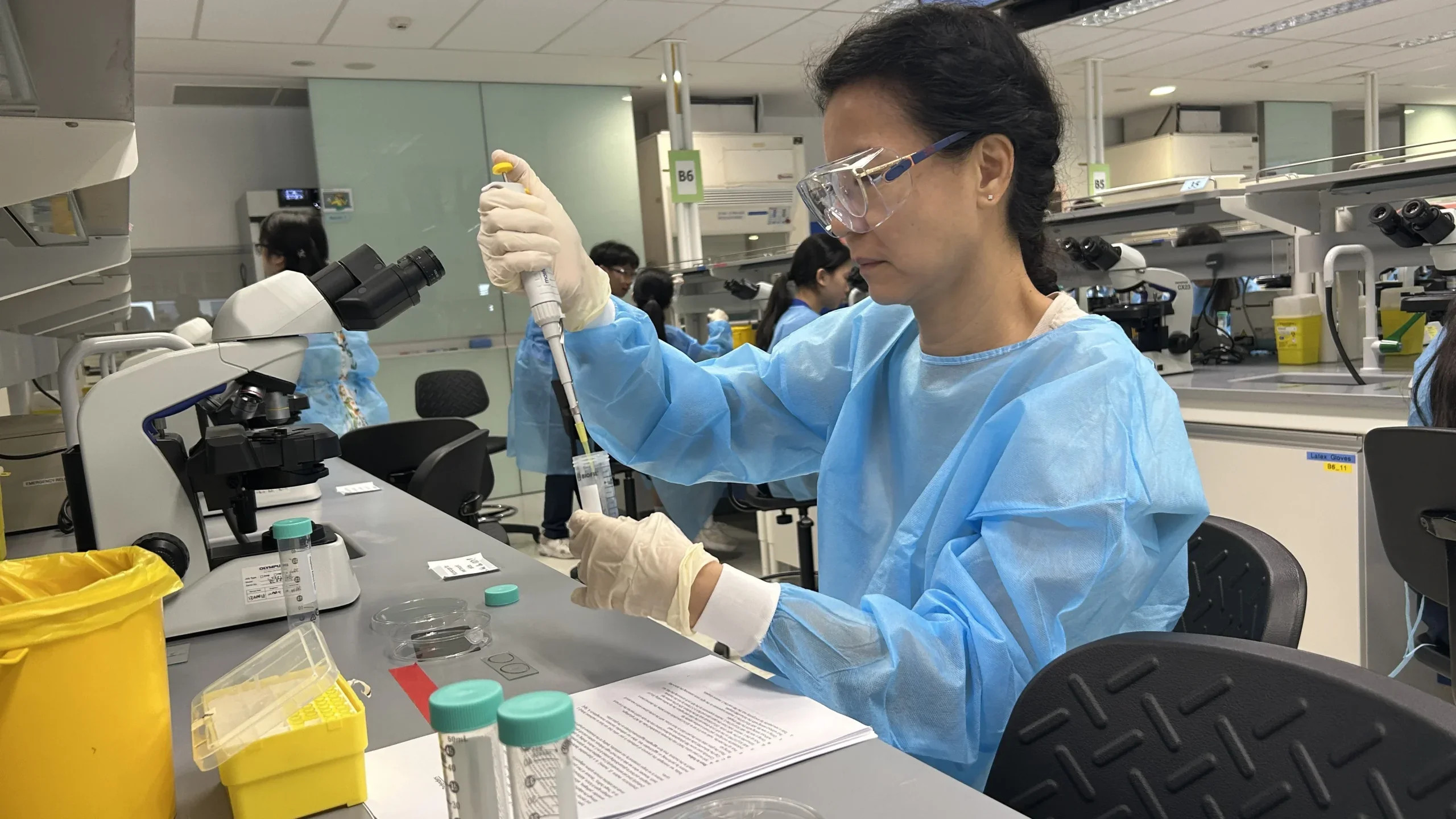
Bt Batok Secondary School biology teacher, Mrs Regina Yip, participating in the Learning Journey activities
Mrs Regina Yip (Bukit Batok Secondary School) emphasized the value of well-equipped teaching laboratories for impactful learning: “We don’t get to use petri dishes or advanced microscopes in class. This was a world of difference. My students were engaged, curious, and inspired—it’s something I’d love to replicate in school.”
Ms. Chim Wai Yee (St. Joseph’s Institution) reflected on the pedagogical approach and scaffolding:
“As teachers, we’re familiar with the content—but watching how it was delivered to students was enlightening. The hands-on testing of probiotic products surprised even me, and the discussions that followed added depth.”
Looking Ahead: A Lasting Impact
While the workshop may have lasted just a few hours, its impact could be long-lasting.
“We hope students walk away inspired to study life sciences, take better care of their health, and pursue their passions with confidence,” said Dr Png.
From pipetting to pond water exploration, and from immune assays to meaningful mentorship, the Centennial Learning Journey Workshops was more than an event—it was a celebration of curiosity, community, and 100 years of scientific discovery.