'Be Confident, Be Yourself': Professor Reshma Taneja on Breaking Barriers in Medical Science
Published: 03 Jul 2025
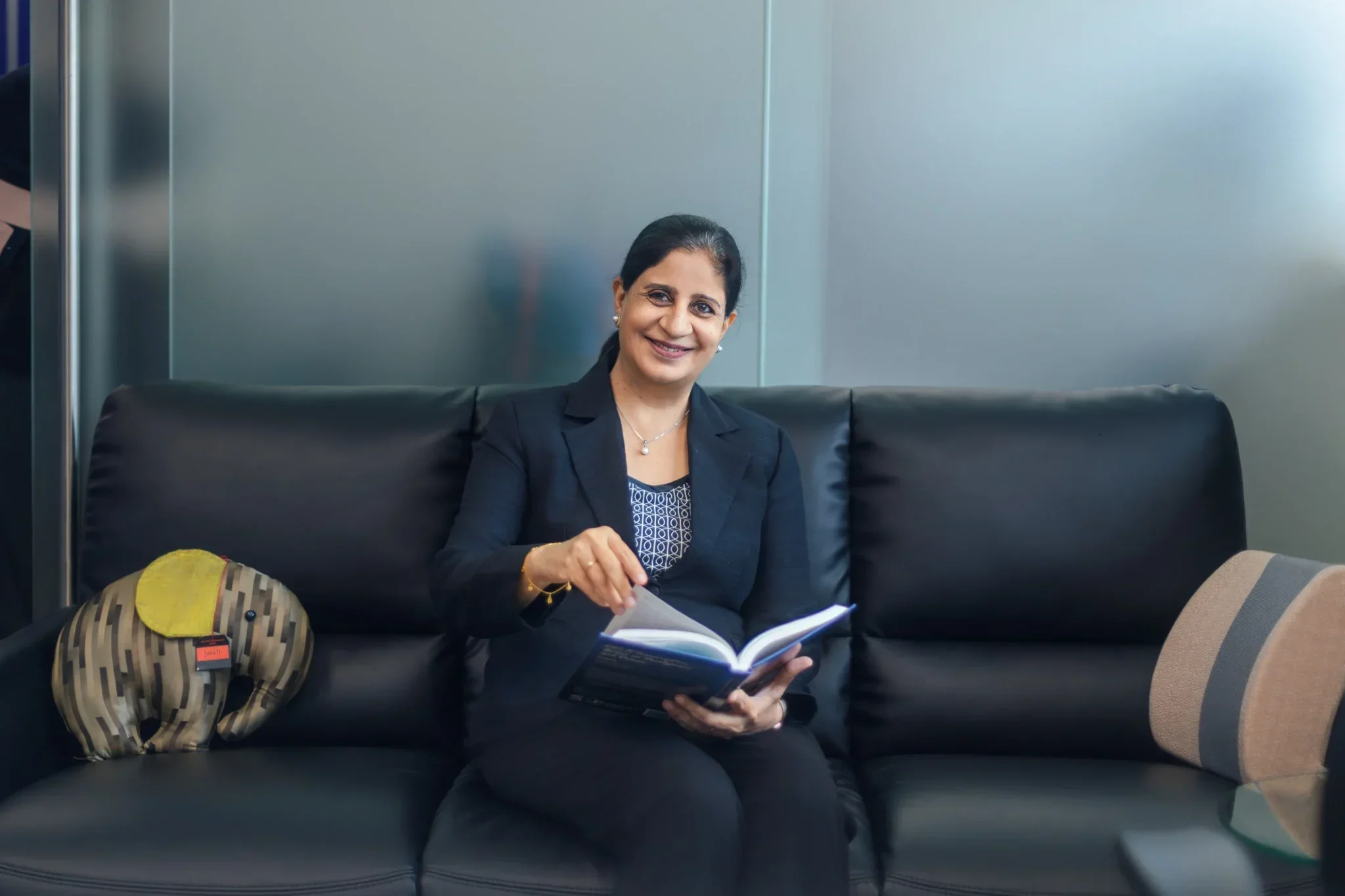
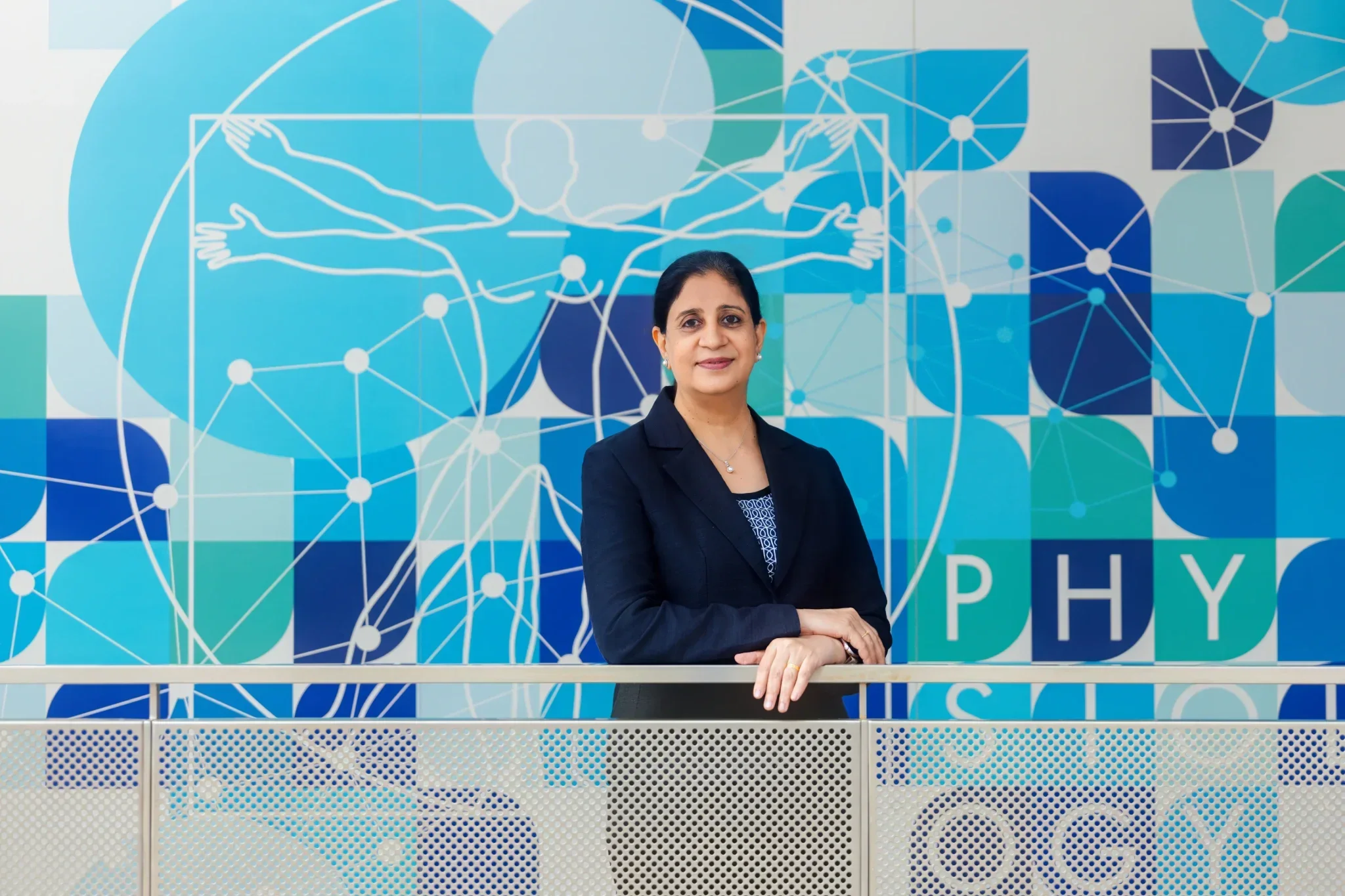
From her groundbreaking research in childhood cancers to her transformative approach to education, Professor Reshma Taneja exemplifies how scientific excellence and human-centred leadership can create lasting impact. Her journey from being the only woman faculty member in her department at the Mount Sinai School of Medicine in New York to becoming a department head at the Yong Loo Lin School of Medicine, National University of Singapore (NUS Medicine), shows how breaking barriers can pave the way for future generations.
A Laboratory Without Boundaries
Step into Prof Taneja’s laboratory at the Department of Physiology, and you might hear anything from Taylor Swift to classical or Indian music drifting through the corridors. “My lab is very international, and the music changes with the composition of the lab,” she says with a warm smile. This vibrant, inclusive environment mirrors her approach to pioneering medical research – one that embraces diversity, nurtures talent and pushes the boundaries of conventional thinking.
Breaking New Ground in Childhood Cancer
Prof Taneja’s groundbreaking studies on rhabdomyosarcoma, a rare childhood cancer, are reshaping our understanding of paediatric cancer treatment. “Fundamentally, childhood cancers are very different from adult cancers,” she explains. “But these children are given the same treatment, which obviously can leave very long-lasting effects. There are no targeted therapies for this cancer.”
This observation has driven her decade-long quest to understand what makes childhood cancers unique. “We’re trying to fundamentally understand what drives these cancers – how do the cells spread, why is it so aggressive, and what are the avenues for better treatment options?” Her team’s pioneering work has led to significant discoveries about the epigenetic changes that drive this cancer, opening new possibilities for targeted treatments with fewer side effects.
Challenging the Status Quo
Early in Prof Taneja’s career at Mount Sinai School of Medicine in New York, she often encountered subtle biases. “When I used to go for conferences and present, everybody used to ask me, ‘Whose lab do you work in?'” she recalls. “It was an oddity for women to have faculty positions, and in fact, in my department, I was the only woman faculty for many years.”
Rather than being deterred, these experiences strengthened her resolve to support other women in science. Today, as part of the executive committee of the Women in Science and Healthcare programme under the Office of Equal Opportunities and Career Development (EOCD) at NUS Medicine, she actively works to create opportunities for women. “The very fact that we openly speak about it and have these conversations shows how progressive NUS Medicine is in appointing women faculty as heads of departments.” These initiatives are steadily reshaping the landscape of academic medicine in Singapore.
The Art of Teaching
Prof Taneja’s impact extends far beyond research and leadership. In the classroom, Prof Taneja has developed a distinctive approach to education. “The way I approach students is to meet them at their level of understanding,” she explains. “I always give them the bigger picture so they know what they don’t know. And once they’re curious about what they don’t know then they’re hooked.”
Instead of encouraging rote learning, she focuses on helping students grasp fundamental concepts. “It’s not just about grades and exam questions, but fundamentally understanding what we’re trying to teach them.” This philosophy has not only earned her numerous teaching awards but also transformed how many students approach their studies.
Shaping Tomorrow’s Medical Leaders
Looking ahead, Prof Taneja is excited about the future of medical education at NUS Medicine. “We have a group of fantastically talented students,” she says. Her vision encompasses not only training but also the development of crucial soft skills. “The idea and goal are, that students not just become trained clinically or with knowledge as scientists, but also have the right values of professionalism, and empathy. Because these are going to be important for their future and keep them going.”
When asked what advice she would give to young scientists, particularly women entering the field, her response is immediate and emphatic: “Be confident, be yourself, and learn to network and build relationships early on.” It’s a philosophy that has served her well in her own journey from a young researcher in India to a globally recognised leader in cancer research.
As NUS Medicine marks its 120th year, Prof Taneja’s story stands as a testament to the power of perseverance, innovation, and mentorship. Through her research, teaching, and leadership, she continues to inspire the next generation of medical and life sciences professionals to push boundaries and make their own mark in the world of Medicine.