Project Happy Apples brings palliative care conversations into the community through ‘Afterglow’
Published: 12 Aug 2026
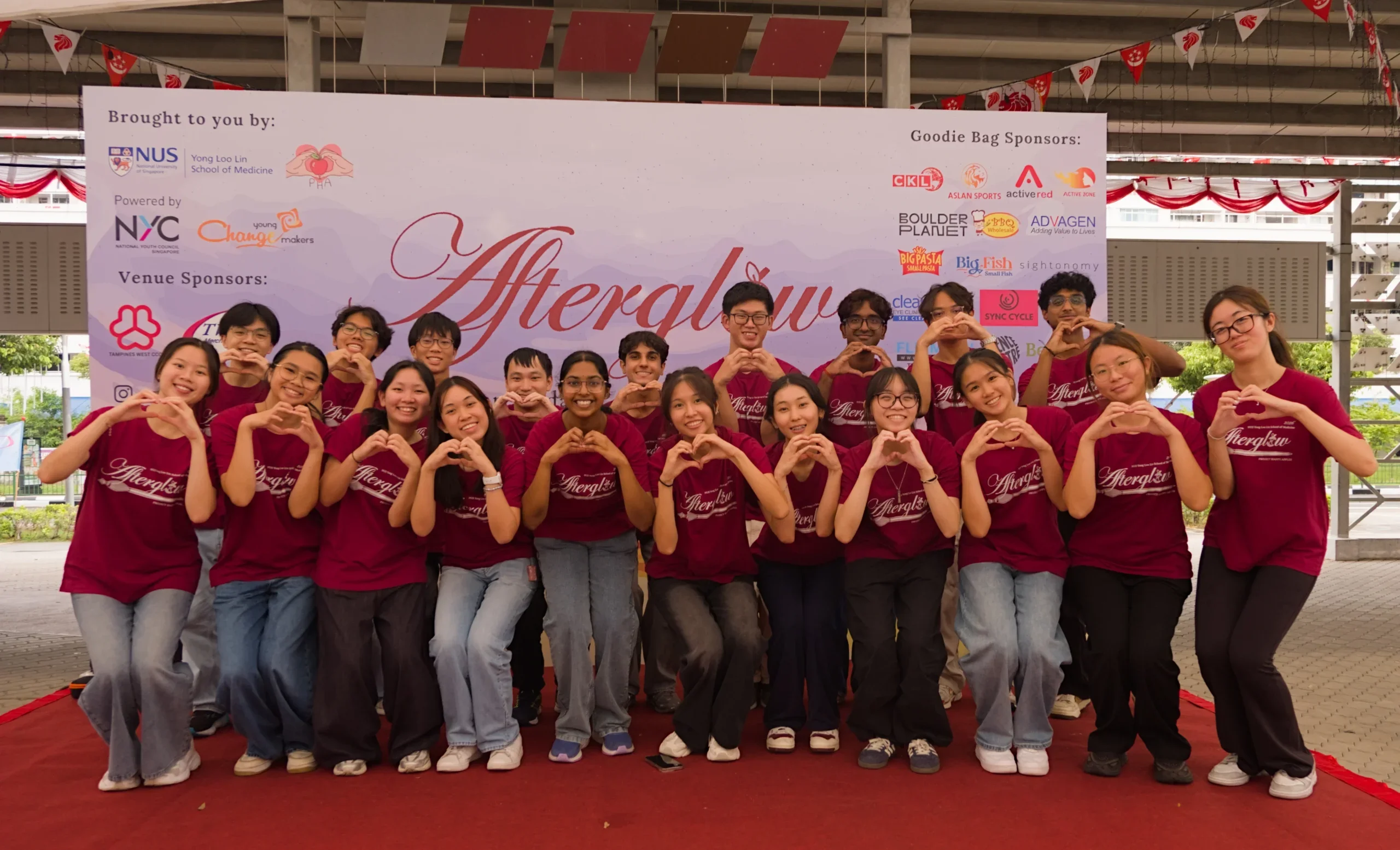
The Afterglow exhibition was organised by Project Happy Apples, an NUS Medicine student-led project.
More than 700 members of the public attended Afterglow, a three-day public exhibition by Project Happy Apples exploring palliative care and end-of-life planning.
Organised by students from the NUS Yong Loo Lin School of Medicine, Afterglow broadened the focus of Project Happy Apples’ annual exhibitions beyond Advance Care Planning (ACP) and Lasting Power of Attorney (LPA) to include caregiver support, quality of life, legacy building, gratitude and funeral pre-planning.
Held from 24 to 26 July 2026 in collaboration with the Tampines West Merchants’ Association (TWMA) and Tampines West Citizens’ Consultative Committee (TWCCC), the exhibition was graced by Guest of Honour Mr Masagos Zulkifli, Minister for Social and Family Development, Advisor to Tampines GRC Grassroots Organisations.
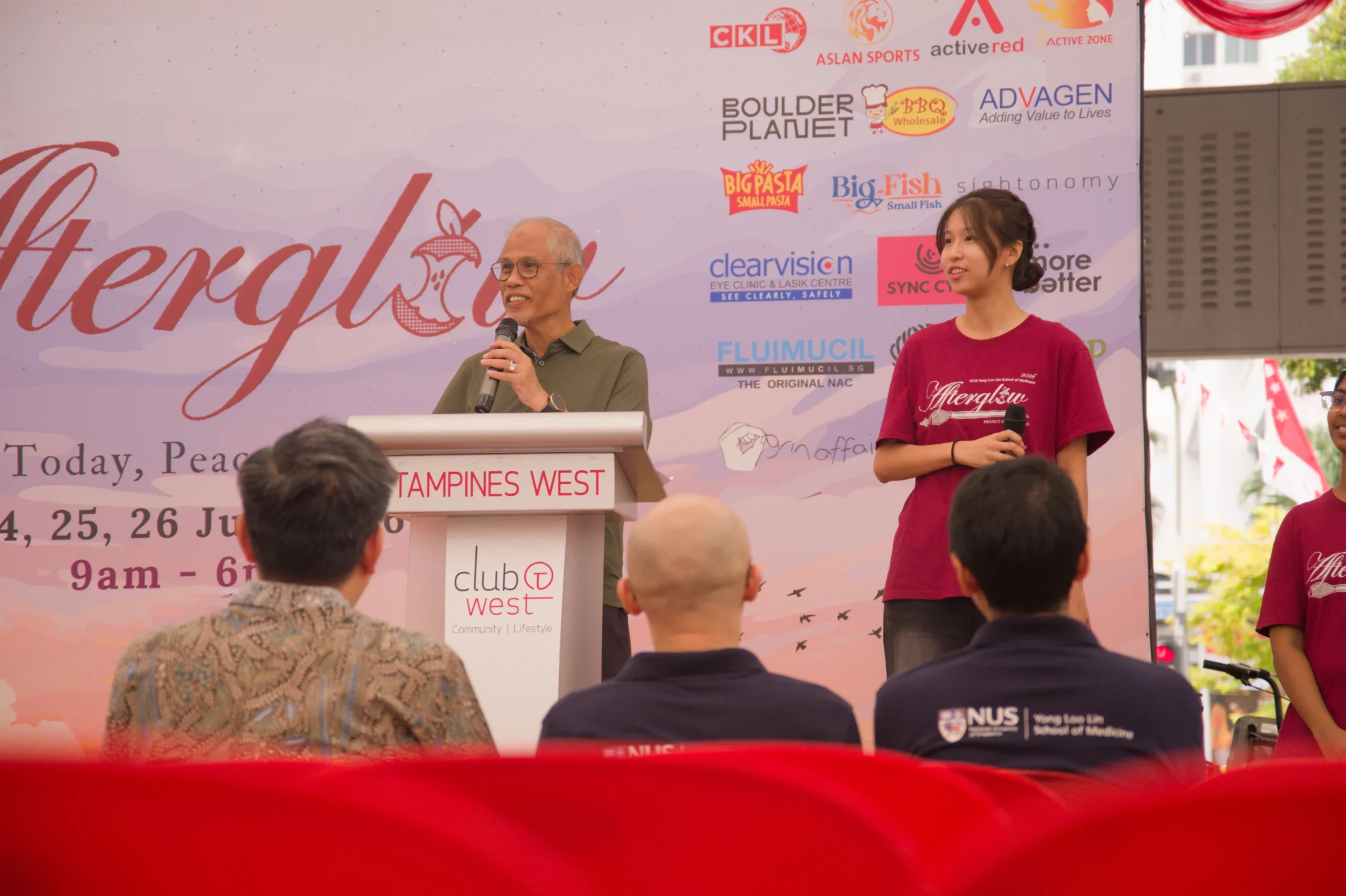
The exhibition was graced by Guest-of-Honour, Mr Masagos Zulkifli, Minister for Social and Family Development, Advisor to Tampines GRC Grassroots Organisations.
The exhibition featured interactive activities, expert booths and public talks exploring topics including advance care planning, quality of life, caregiver support, gratitude, legacy building and funeral pre-planning. Visitors were encouraged to reflect on their values, relationships and wishes for future care, while learning about palliative care and practical steps for planning ahead. These activities and sessions brought the theme of Afterglow to life, highlighting the warmth, meaning and lasting impact of life’s relationships and experiences.
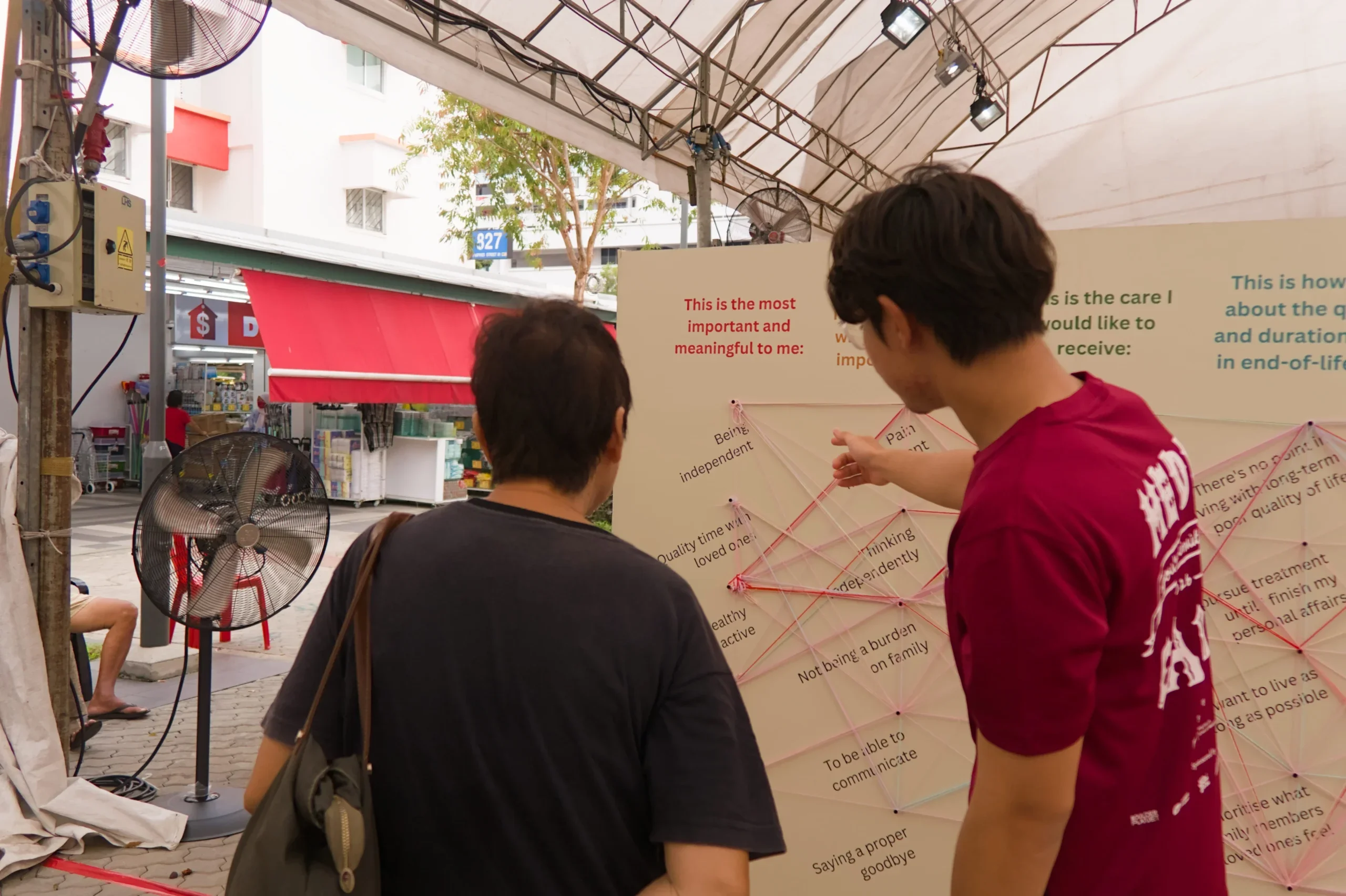
The Lifeline Board invited participants to reflect on what matters most in their lives and consider how they would approach important decisions surrounding serious illness and end-of-life care.

Giant Jenga (Myth vs Fact) participants removed blocks labelled with myths or facts where facilitators guided discussions to clarify misconceptions and provide evidence-based information.
The expert booths also provided a platform for visitors to raise questions about the practical and emotional aspects of palliative care and end-of-life planning. Common queries included the differences between ACP, LPA and wills, when these should be completed, and their implications for future healthcare and financial decisions. Others sought advice on caregiving for ageing parents and loved ones with chronic illnesses, the costs of long-term care, navigating healthcare services and starting conversations about end-of-life wishes with family members.
Student volunteers and community partners provided information and directed visitors to relevant experts and resources where appropriate. These interactions also highlighted the wider role of palliative care in supporting patients and families beyond medical care. Surveys conducted with 134 participants before and after the exhibition showed an increase in knowledge and willingness to undertake advance care planning.
“Through our exhibition, we hoped to transform conversations that are often met with fear or hesitation into ones grounded in understanding, compassion, and hope,” shared Sandhya Suresh, current Project Director of Project Happy Apples. “Witnessing visitors engage so openly with these conversations reminded us that empathy, alongside education, has the power to bring people together and cultivate a more compassionate community.”