New report documents Singapore's journey and multi-stakeholder approach toward urban heat resilience
Published: 15 Jun 2026
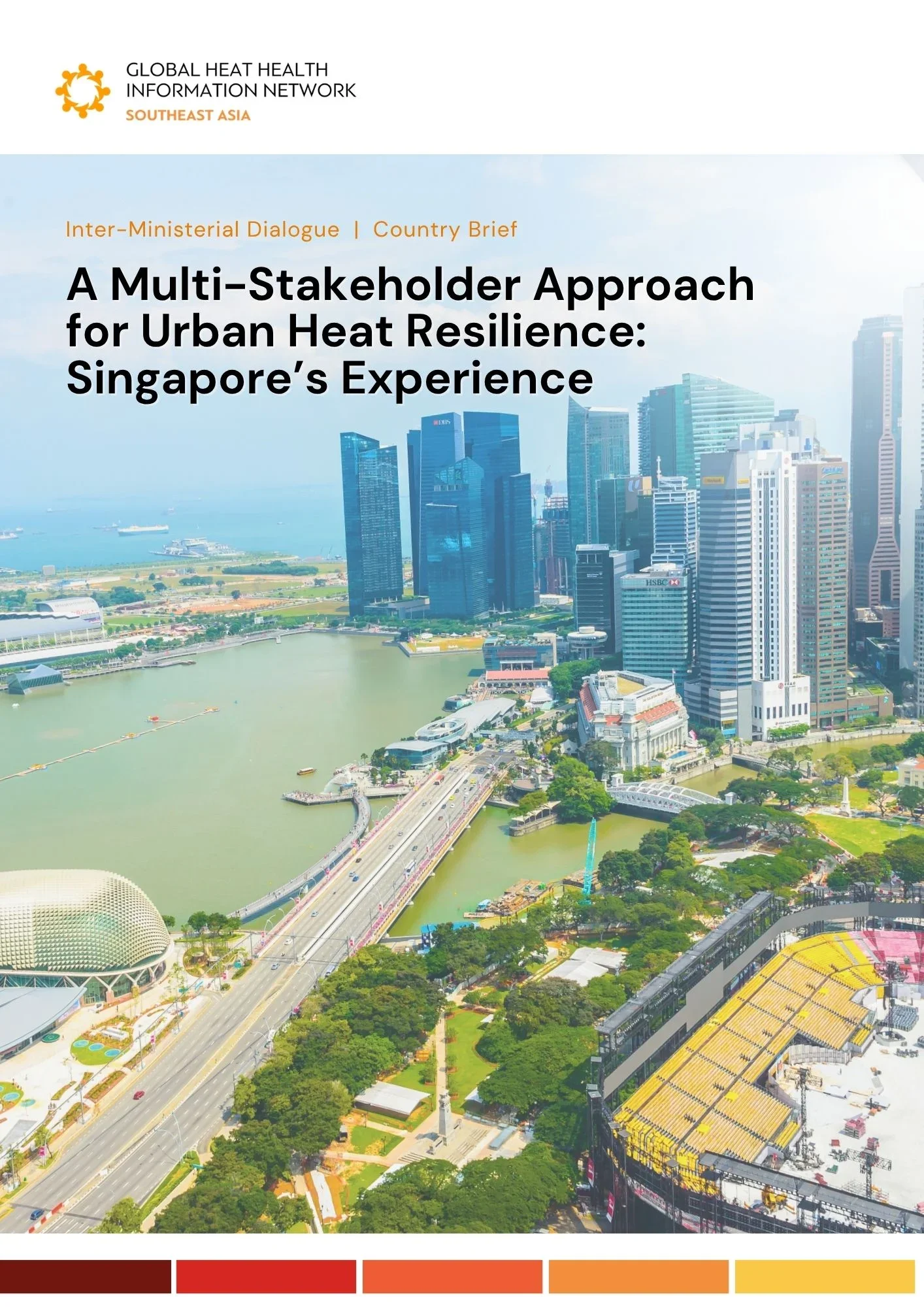
A new report by the Global Heat Health Information Network (GHHIN) Southeast Asia Hub, based at the Heat Resilience & Performance Centre (HRPC) at the Yong Loo Lin School of Medicine, National University of Singapore (NUS Medicine), developed in collaboration with the National Environment Agency (NEA), Ministry of Manpower (MOM), and Ministry of Sustainability and the Environment (MSE), documents how coordinated, multi-stakeholder action can effectively protect urban populations from rising heat in tropical environments.
Launched at the World Cities Summit 2026 CLC-IPCC Senior Leaders Roundtable on the IPCC Special Report on Climate Change and Cities, “A Multi-Stakeholder Approach for Urban Heat Resilience: Singapore’s Experience” examines Singapore’s journey toward heat resilience across six key dimensions: political commitment, whole-of-government coordination, multi-stakeholder engagement, science-policy partnerships, industry collaboration, and community empowerment.
The report draws on Singapore’s experience as a case study in tropical urban heat management, where year-round heat exposure, high humidity, and urban heat island effects create compounding risks for vulnerable populations, including older adults, outdoor workers, and children.
Among its key findings, the report highlights that high-level political commitment provides the foundation for sustained investment in heat-resilience infrastructure and research, while cross-ministerial coordination ensures that heat policies are managed holistically rather than in isolation. It also underscores the role of science-policy partnerships in translating research into practical interventions, as well as the importance of community empowerment in enabling individuals to take informed, protective action.
While recognising that there is no one-size-fits-all pathway to heat resilience, Singapore’s experience offers one approach shaped by its unique context. The report is intended as a contribution to a broader regional conversation, opening space for dialogue, exchange, and collaboration across diverse cities, communities, and contexts in Southeast Asia and beyond.
Read the full report here.
Read the press release here.