NUS Medicine Launches Neuroscience Translational Research Programme
Published: 08 Jun 2026
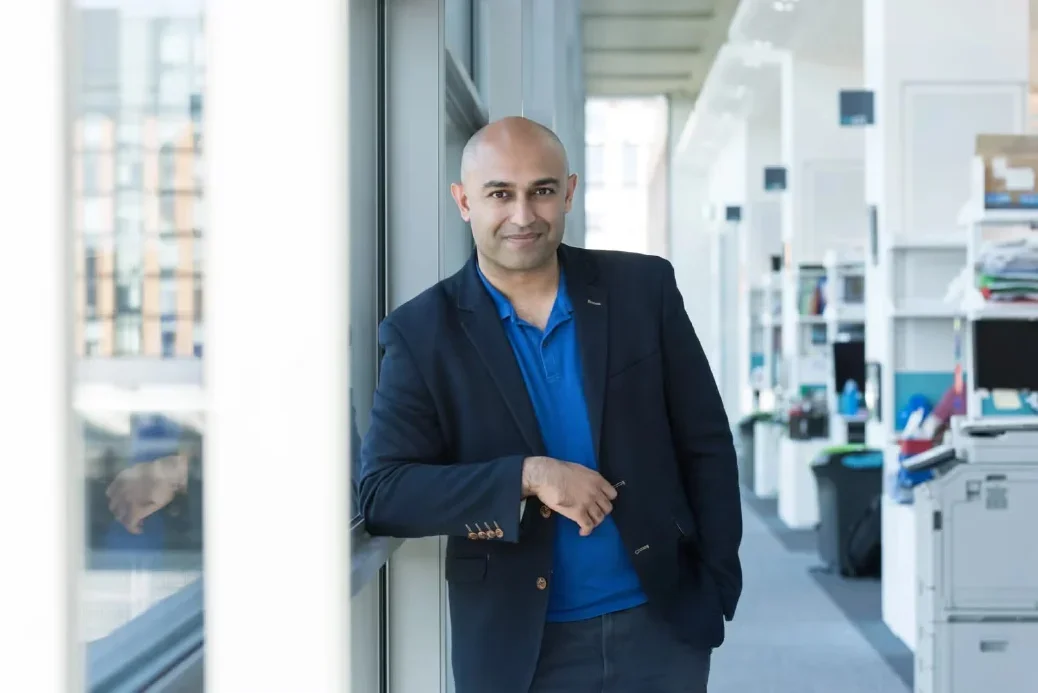
The Yong Loo Lin School of Medicine at the National University of Singapore (NUS Medicine) has established a new Neuroscience Translational Research Programme (TRP), marking a significant step forward in advancing neuroscience research and clinical innovation. Leading the programme is Prof Rickie Patani, who has been appointed as its inaugural Programme Chair.
Prof Patani is a highly regarded physician-scientist with more than two decades of experience in neurodegenerative research. He joined NUS Medicine in August 2025 as the Professor of Neuroscience in the Departments of Medicine and Anatomy. In addition, he serves as Director of the Neurobiology Programme at the Life Sciences Institute.
His research has been instrumental in advancing the understanding of neurological diseases, particularly with human induced pluripotent stem cell (iPSC) models. His work has shed light on RNA metabolism and cellular autonomy in neurodegeneration.
Prof Patani’s contributions have been widely recognised. His accolades include the Paulo Gontijo International Prize in Medicine, the Lister Research Prize, the Graham Bull Prize, and the prestigious Goulstonian Lectureship awarded by the Royal College of Physicians. In 2025, he was elected as a Fellow of the Academy of Medical Sciences, a distinction that honours exceptional contributions to biomedical and health research.
The Neuroscience TRP has been established to address a critical gap in the current research landscape at NUS. Its mission is to drive research aimed at detecting, slowing, stopping, reversing, and preventing neurological diseases, including mental health conditions where treatments remain limited or unavailable.
A key priority of the programme is to bridge the divide between scientific discovery and clinical application, accelerating the development of therapies that can deliver tangible benefits to patients.
The programme will focus on three strategic areas:
- Discovery of Targetable Mechanisms:
Advancing understanding of neurodegenerative diseases, particularly in Asian populations, to identify new therapeutic targets.
- Biomarker Discovery:
Developing tools for early diagnosis and enabling better patient stratification for clinical trials.
- Translational Collaboration:
Leveraging interdisciplinary expertise across TRPs and the broader NUS ecosystem to drive innovation in areas such as neuroimmunology and nerve-cancer biology.
Under Prof Patani’s leadership, the Neuroscience TRP will establish a robust governance framework, including a Scientific Advisory Board, an Executive Committee, and specialised subcommittees aligned with its strategic themes. This structure will ensure rigorous oversight and effective programme delivery.
The initiative is designed to foster collaboration across disciplines, creating opportunities for impactful research spanning neurology, neurosurgery, psychiatry, and geriatrics. A strong emphasis will also be placed on training the next generation of clinician-scientists, ensuring sustained growth and innovation in the field.
Beyond NUS Medicine, the programme will strengthen ties with the National University Health System (NUHS) and partners across NUS, including the Faculty of Science’s Department of Biological Sciences, the College of Design and Engineering, and the School of Computing. This integrated approach will enable the convergence of clinical insight, scientific expertise, and technological innovation.
As a clinician-scientist, Professor Patani brings a unique ability to bridge clinical practice and scientific discovery. His leadership is expected to position NUS Neuroscience at the forefront of Singapore’s research ecosystem and global efforts in neurological disease research.