Biological Data Centre prototype established at NUS Medicine
Published: 11 Mar 2026
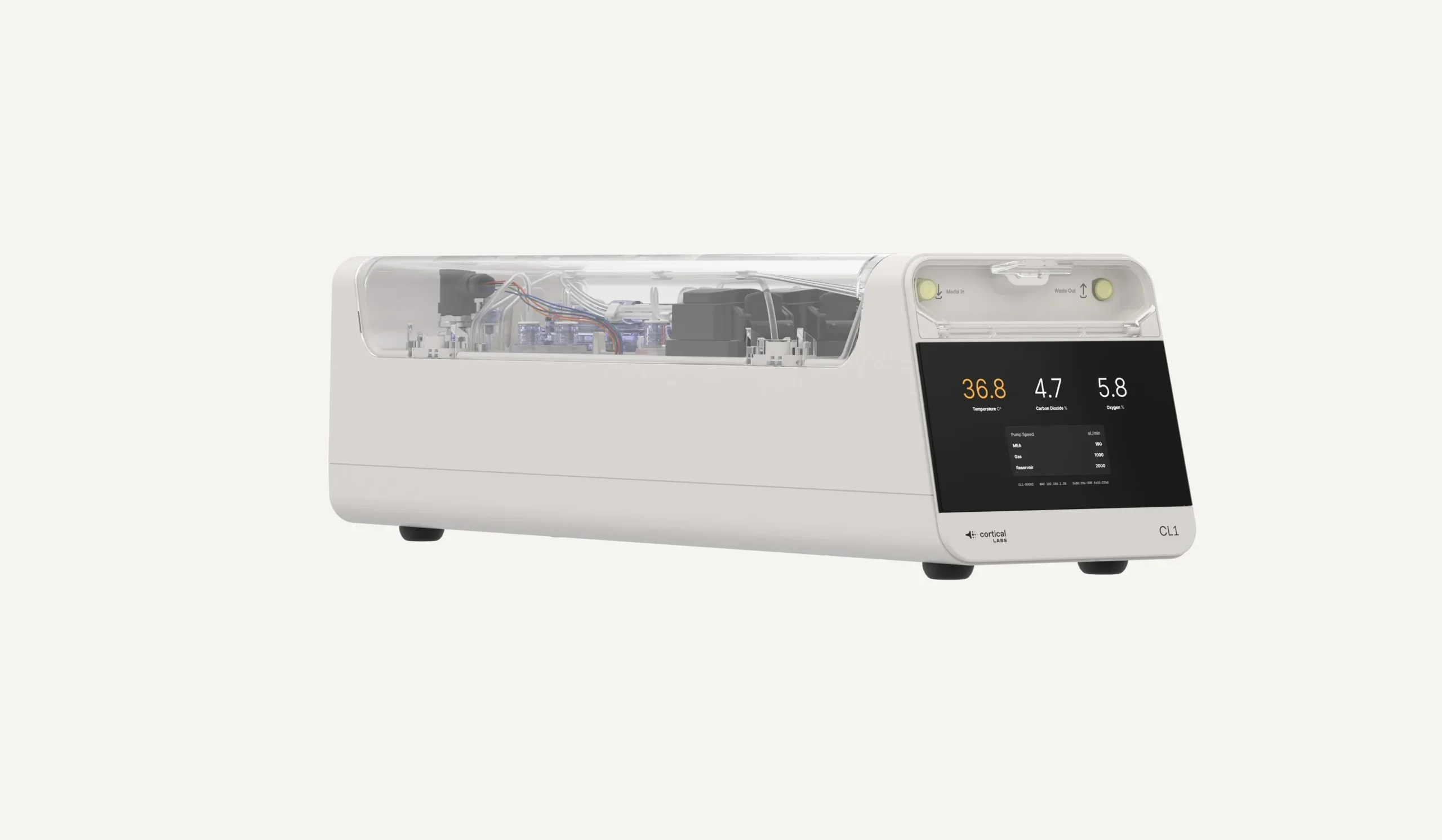
NUS Medicine is collaborating with DayOne, a Singapore-headquartered global data center developer and operator and Cortical Labs, a biological computing startup in Melbourne to establish a Biological Data Center prototype at NUS Life Sciences Institute.
Leveraging NUS Medicine’s deep expertise in neurobiology research, the cells will be cultured and grown under the supervision of Professor Rickie Patani, a Professor of Neuroscience at NUS Medicine and the Director of the Neurobiology Programme at NUS Life Sciences Institute.
The prototype is a key part of efforts by DayOne and Cortical Labs to build Singapore’s first major Biological Data Center, a first of its kind outside Australia.
A bio data center is a next-generation computing facility that utilises “wetware”- living biological neurons grown from stem cells, instead of traditional silicon chips to process information and power AI systems. Unlike standard data centers that rely on energy-intensive servers, a bio data center harnesses the natural efficiency of brain-like organoids, which can function on a fraction of the wattage required by digital computers.
The initial validation phase at NUS Medicine is structured to transition into a live deployment environment within a DayOne commercial data center facility in Singapore. As Singapore expands data center capacity under tighter sustainability guardrails, the Government is making at least 200MW of new capacity in DC-CFA-2 available, while reinforcing higher standards for energy efficiency and greener energy pathways under the Infocomm Media Development Authority’s Green Data Center Roadmap. The initial deployment at NUS will comprise a single rack of 20 Cortical Cloud units.
A key aim of the Singapore Bio Data Center will be to support research and innovation pathways – from drug discovery and biomedical science to energy optimisation and advanced AI application.
Professor Rickie Patani explained that the convergence of neuroscience and technology is key to accelerating a new computing paradigm inspired directly by the brain. He elaborated, “Wetware systems can help researchers explore new approaches to learning, adaptation and biological modelling. Our expertise in neurobiology research, particularly in understanding how to generate specific subtypes of clinically relevant human neurons and glia from stem cells, provides a strong foundation for translating these biological principles into biocomputing platforms. For applications such as drug discovery and neurological disease research, the ability to run experiments on brain-like biological networks alongside conventional computing could accelerate hypothesis testing and shorten cycles from laboratory insight to meaningful real-world impact.”
“Singapore has made it clear that the next chapter of digital infrastructure must be built with sustainability at the core,” said Hon Weng Chong, Founder & CEO, Cortical Labs. “AI is moving from novelty to necessity across every sector, but the region’s energy and water realities are forcing a reckoning. This partnership is about giving policymakers and industry a practical alternative: a sustainable pathway to AI adoption that aims to decouple compute growth from a resource footprint.”