Inaugural NUS-CHA Reproductive Medicine Symposium unveils landmark research and new collaborations to extend reproductive longevity
Published: 24 Nov 2025
With Asia facing rapid demographic transitions with declining fertility rates across the region and more couples deciding to have children later in life, ageing-related reproductive health challenges are increasingly becoming a concern despite advances in assisted reproductive technologies, while diagnostic and therapeutic gaps persist for both sexes.
Attended by Guest-of-Honour, His Excellency Hong Jin-wook, Ambassador of The Republic of Korea to Singapore, the inaugural NUS-CHA Reproductive Medicine Symposium was a landmark gathering of global thought leaders, showcasing the latest assisted reproductive treatments, IVF discoveries and new possibilities for longevity. Panels and presentations addressed breakthrough topics such as microfluidic and AI-driven platforms in assisted reproduction, cellular aging in ovarian biology, 3D embryo imaging, artificial endometrium models, clinical automation in IVF laboratories, and innovative sperm selection technologies.
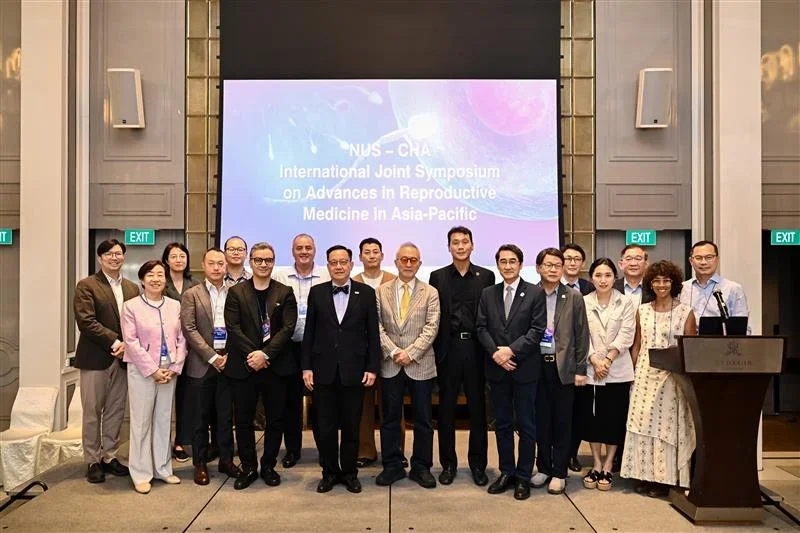
From left to right: Adjunct Assistant Professor Huang Zhongwei, Deputy Director of NUS Bia-Echo Asia Centre for Reproductive Longevity and Equality (ACRLE); Professor Jean Kyung-Ah Lee, Department of Biomedical Science, College of Life Sciences, CHA University, Executive Director of CHA University Global IVF Group; Professor Ok Hee Jeon, Department of Convergence Medicine, Korea University College of Medicine; Dr Teck Liang Beng, Executive Director of Singapore Medical Group; Jonathan Tahir, Deputy Chairman of Mayapada Group; Professor Majid Warkiani, School of Biomedical Engineering at University of Technology Sydney; Dr Adnan Catakovic, Chief Executive Officer of City Fertility; Professor Chong Yap Seng, Dean, NUS Yong Loo Lin School of Medicine; Mr Yoon Kyeong Wook, Chief Executive Officer, CHA Healthcare; Dr Kwang Yul Cha, Chairman of CHA University Global IVF Group; His Excellency Hong Jin-wook, Ambassador of the Republic of Korea to the Republic of Singapore; Professor Yoon Ho Sup, Executive Vice President (Research) & Professor, College of Pharmacy, CHA University; Professor Jung Jae Koo, Vice President, CHA Advanced Research Institute; Mr Chris Chung, CHA Healthcare; Professor Ji Hyang Kim, Director of Department of Obstetrics and Gynecology Center, Fertility Center of CHA Bundang Medical Center, School of Medicine, CHA University, Chairman of Cha Biotech Reproductive Medicine Research Laboratory; Dr Liow Swee Lian, Scientific Director, Virtus Fertility Centre; Dr Melissa Durgahshree Tharmalingam, Principal Embryologist, KKIVF Centre, KK Women’s and Children’s Hospital; Professor Jerry Chan Kok Yen, SingHealth Duke-NUS Medical School, KKIVF Centre, KK Women’s and Children’s Hospital.
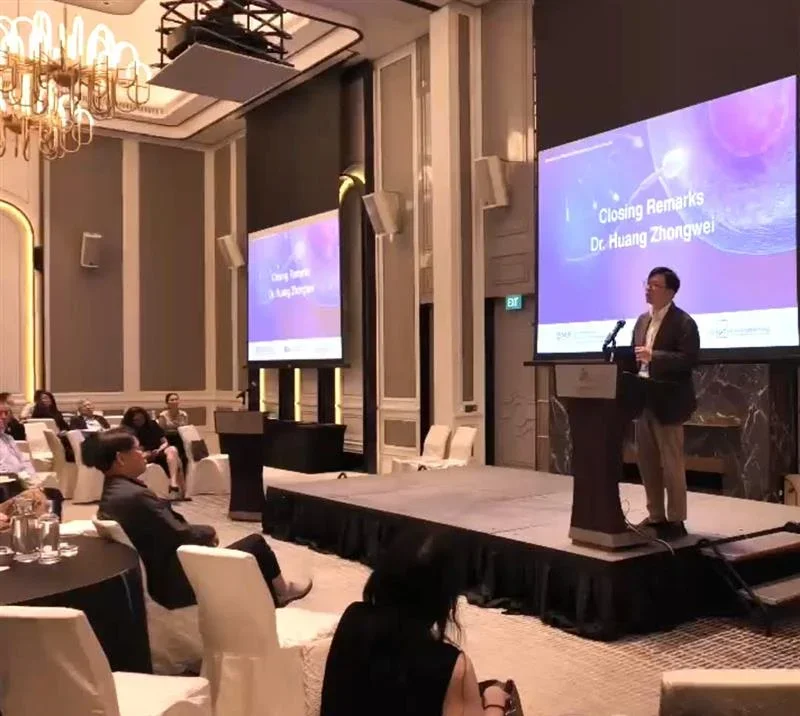
Adjunct Assistant Professor Huang Zhongwei, Deputy Director of ACRLE, delivering closing remarks.
Also announced at the conference were two major advances to extend reproductive longevity.
Leveraging AI and big data for male infertility diagnostics
To tackle male infertility, a significant burden affecting nearly half of the millions of couples struggling to conceive in Asia and globally, researchers from the Yong Loo Lin School of Medicine at the National University of Singapore (NUS Medicine) and CHA University in Korea, led by Adjunct Assistant Professor Huang Zhongwei from the NUS Bia-Echo Asia Centre for Reproductive Longevity and Equality (ACRLE), and Associate Professor Lee Jae Ho from CHA University aim to combine artificial intelligence (AI) with comprehensive clinical datasets to create novel diagnostic and decision-support tools for male infertility.
“Male infertility remains one of the most under-diagnosed and under-treated aspects of reproductive medicine,” said Adj Asst Prof Huang, Deputy Director of ACRLE and Consultant at the National University Hospital’s Department of Obstetrics & Gynaecology. “By applying artificial intelligence to extensive clinical data, we can potentially identify hidden patterns and provide clinicians with actionable insights to improve male infertility diagnostics and treatment.”
New research on reversing age-related fertility decline
In parallel, researchers from NUS Medicine and CHA University have identified a way to reverse age-related embryo decline in preclinical models. Published in Biomedicine & Pharmacotherapy, the team demonstrated that using a novel compound called MIT-001 to target and block a major culprit behind age-related reproductive decline — ferroptosis— a form of cell death driven by iron and oxidative stress, embryo growth and blastocyst formation in older preclinical models showed significant improvements. Their findings show that by protecting ageing embryos from self-destructing at the cellular level, MIT-001 or similar mitochondria-targeted therapies could open the door to precision therapies for age-related infertility such as precision cellular rejuvenation, moving beyond current hormone-based interventions.
Read more here.