NUS Medicine sheds light on myopia to primary school children
Published: 15 Oct 2025
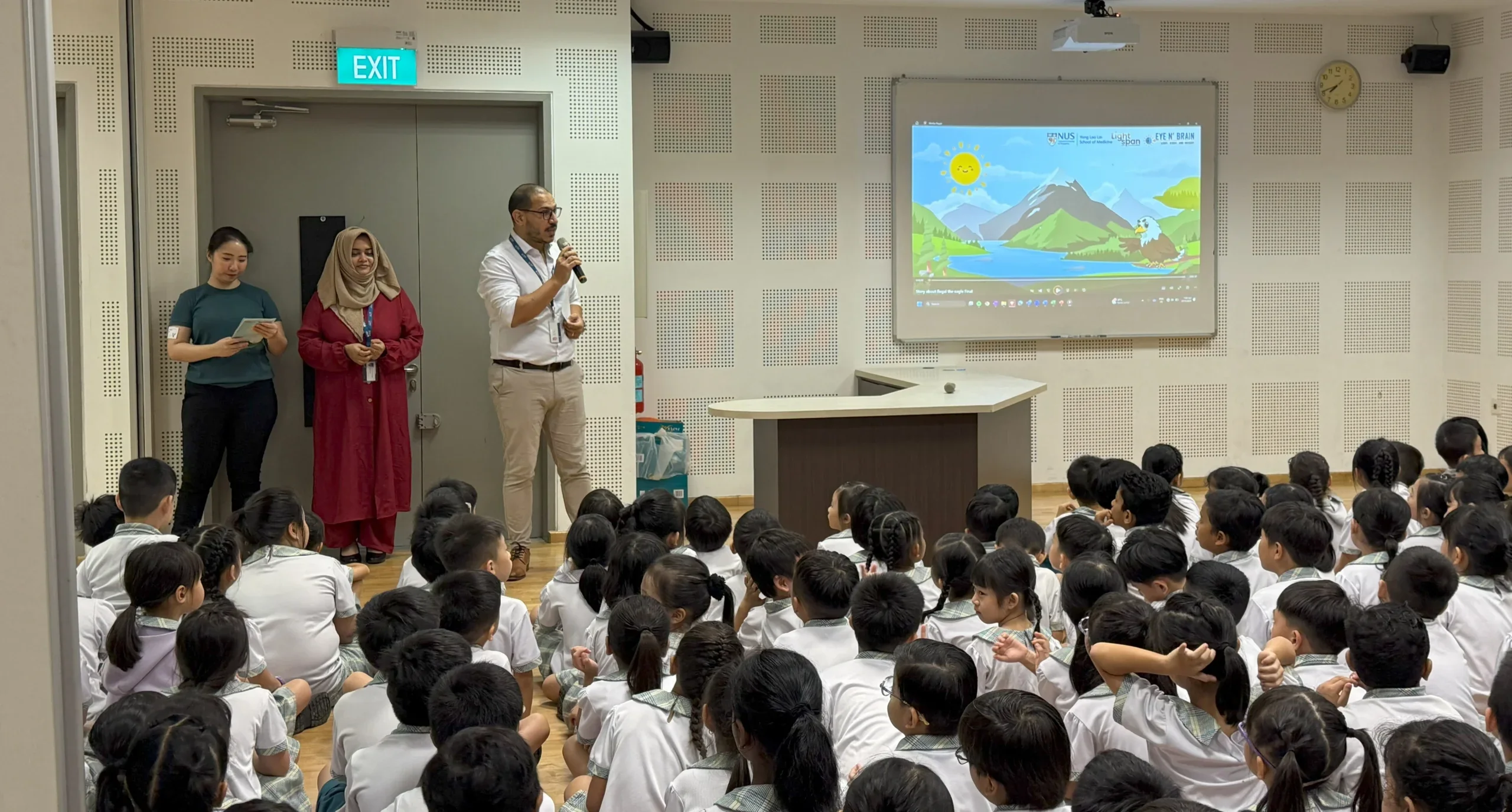
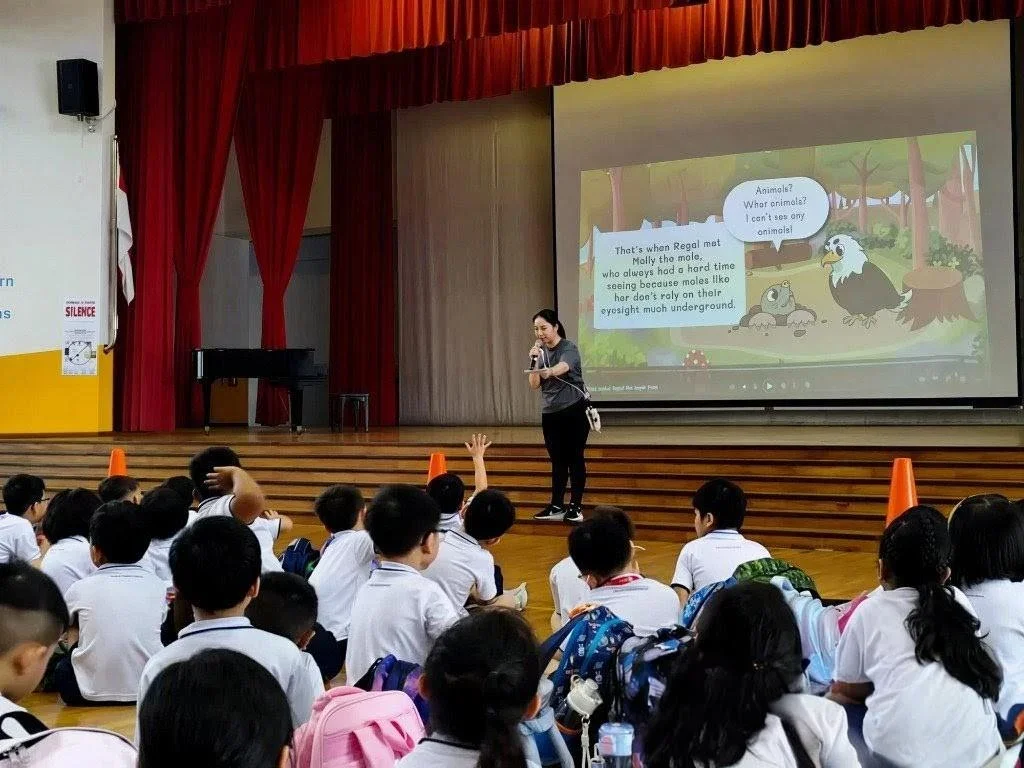
Dr Raymond P. Najjar addressing Westwood Primary School pupils.
Children today are spending less time outdoors and getting less natural sunlight, and it’s taking a toll on their eyesight. In Singapore, more than 6 in 10 children are myopic by the end of primary school, one of the highest rates in the world. The earlier myopia starts, the higher the risk of developing high myopia and severe sight-threatening eye problems later in life. That’s why it is crucial to delay or prevent the onset of myopia in childhood.
As part of Project LightSPAN, supported by the National Research Foundation and CREATE, and the NUSMedSci Alliance Brew Outreach Programme, a public education initiative held in celebration of NUS Medicine’s 120th anniversary, a team led by Assistant Professor Raymond Najjar, Research Director in the Department of Ophthalmology at NUS Medicine, went into schools to conduct talks for over 1,260 primary 1 and 2 students in August and September 2025.
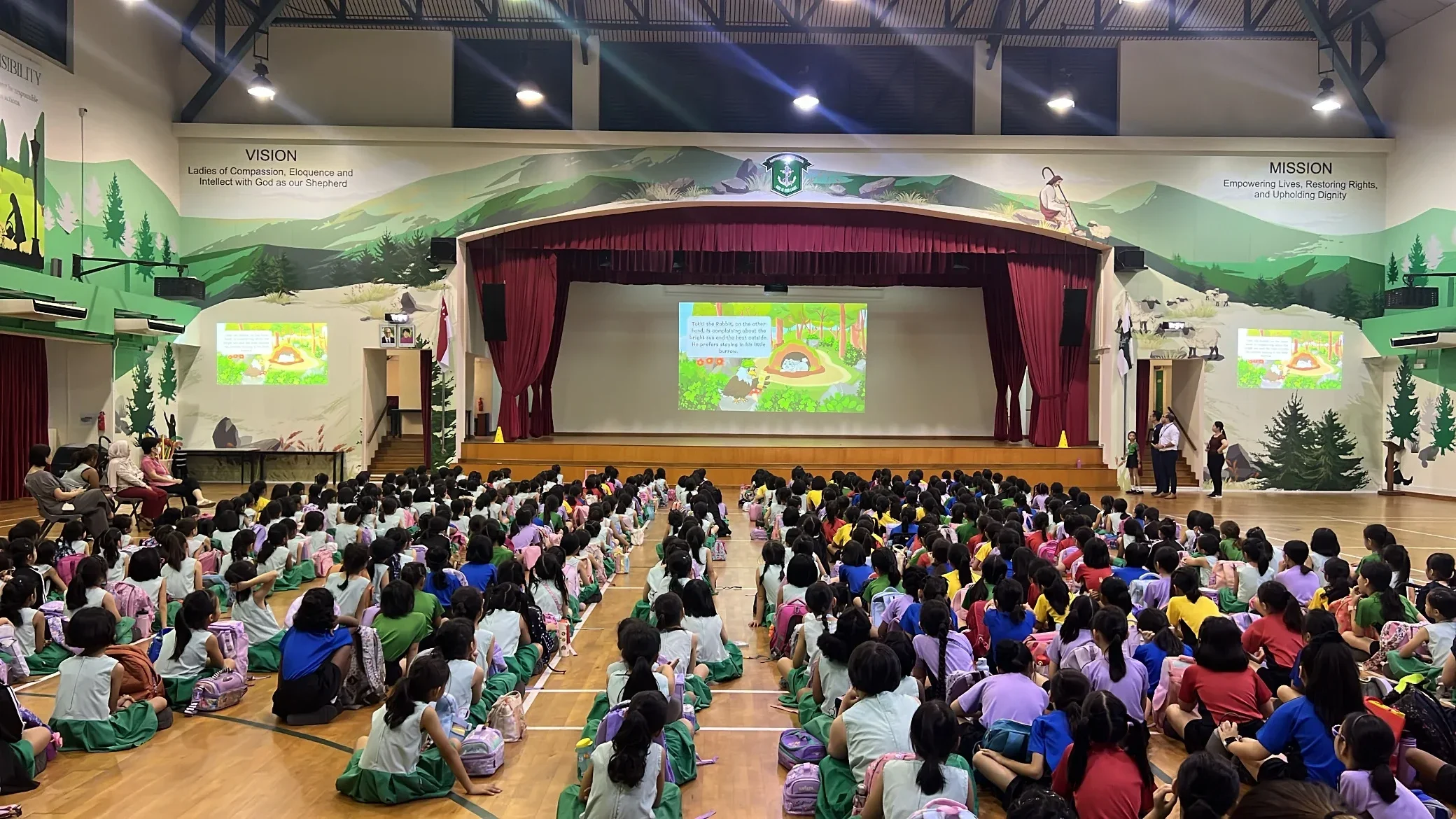
Pupils at Marymount Convent School listening at the assembly hall.
Armed with age-appropriate education material created by the NUS Medicine team, educators, researchers, ophthalmologists and optometrists conducted seminars for pupils at this year’s participating schools— Westwood Primary School, Marymount Convent School and Bedok Green Primary School—in a bid to help them understand how simple daily habits protect eye health.
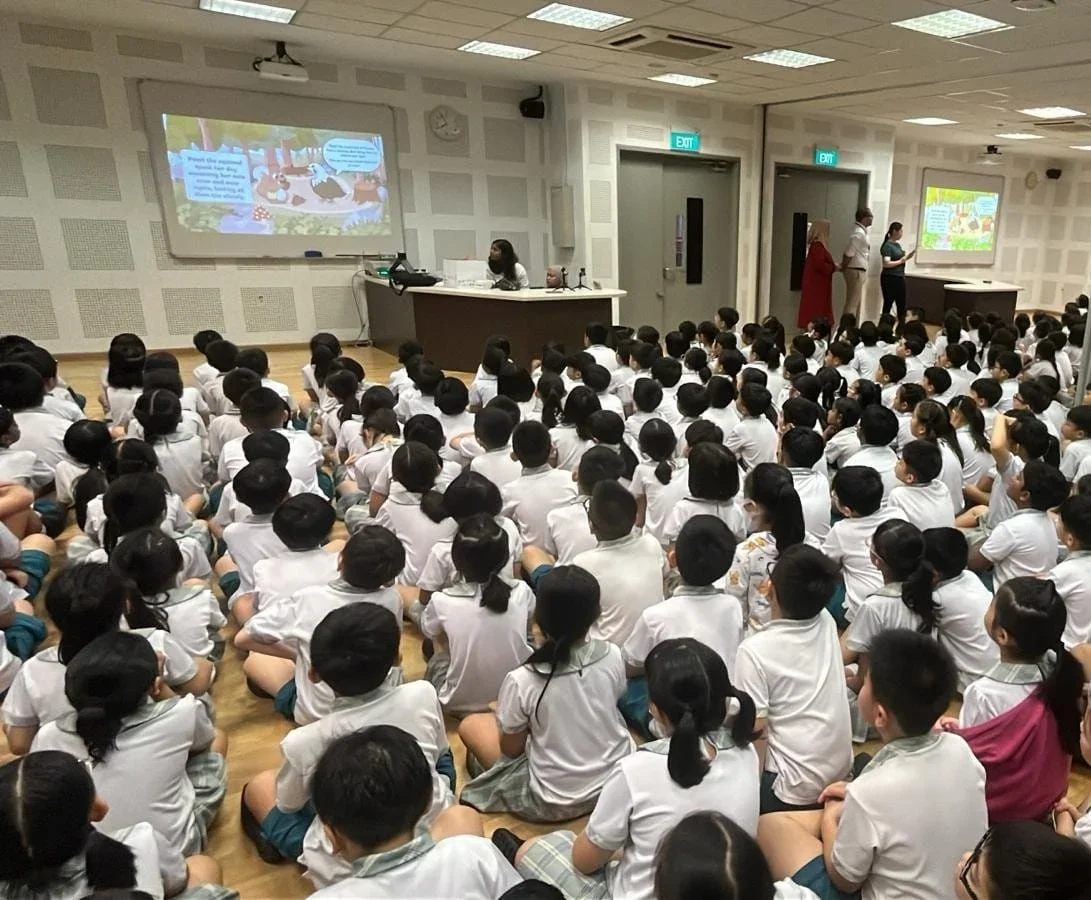
Westwood Primary School pupils engrossed in the programme.
Starting with either a dynamic storytelling session or using the animated video story, “Regal’s Mission for Clear Vision” (available here on YouTube), children learned, with an eagle friend, what myopia is, (a condition where the eye grows too long, causing distant objects to appear blurry) and how their daily habits can affect their vision.
Through the adventures of Twinky the monkey, Tokki the rabbit, Pearl the squirrel, and Molly the mole, they learned about the effects of too much screen time, poor posture, and limited outdoor play, and discovered the importance of building healthy eye habits from a young age.
Engaging Bedok Green Primary School pupils at an outreach session.
These sessions included fun pop-up quizzes and a Q&A segment to keep children engaged. In addition, parents were also encouraged to watch the story shared on the Parent Gateway portal together with their children.
“It was very heartwarming that children who attended last year’s programme all remembered what healthy eye habits are”, said Dr Raymond Najjar. Feedback from teachers and parents were also positive, with many noting that the messages resonated with the children and helped reinforce healthy behaviours.
The programme is part of Project LightSPAN, a research initiative funded by Singapore’s National Research Foundation and led by NUS Medicine (Principal Investigator: Dr. Raymond Najjar) in collaboration with TUMCREATE (Principal Investigator: Dr. Manuel Spitschan), which aims to promote healthier light exposure across all ages. Outreach began in August 2024 and will continue.
Special thanks and acknowledgement to the principals and teachers of the primary schools below, and to the ophthalmologists, optometrists, as well as NUS Medicine educators and researchers who participated in delivering the programme:
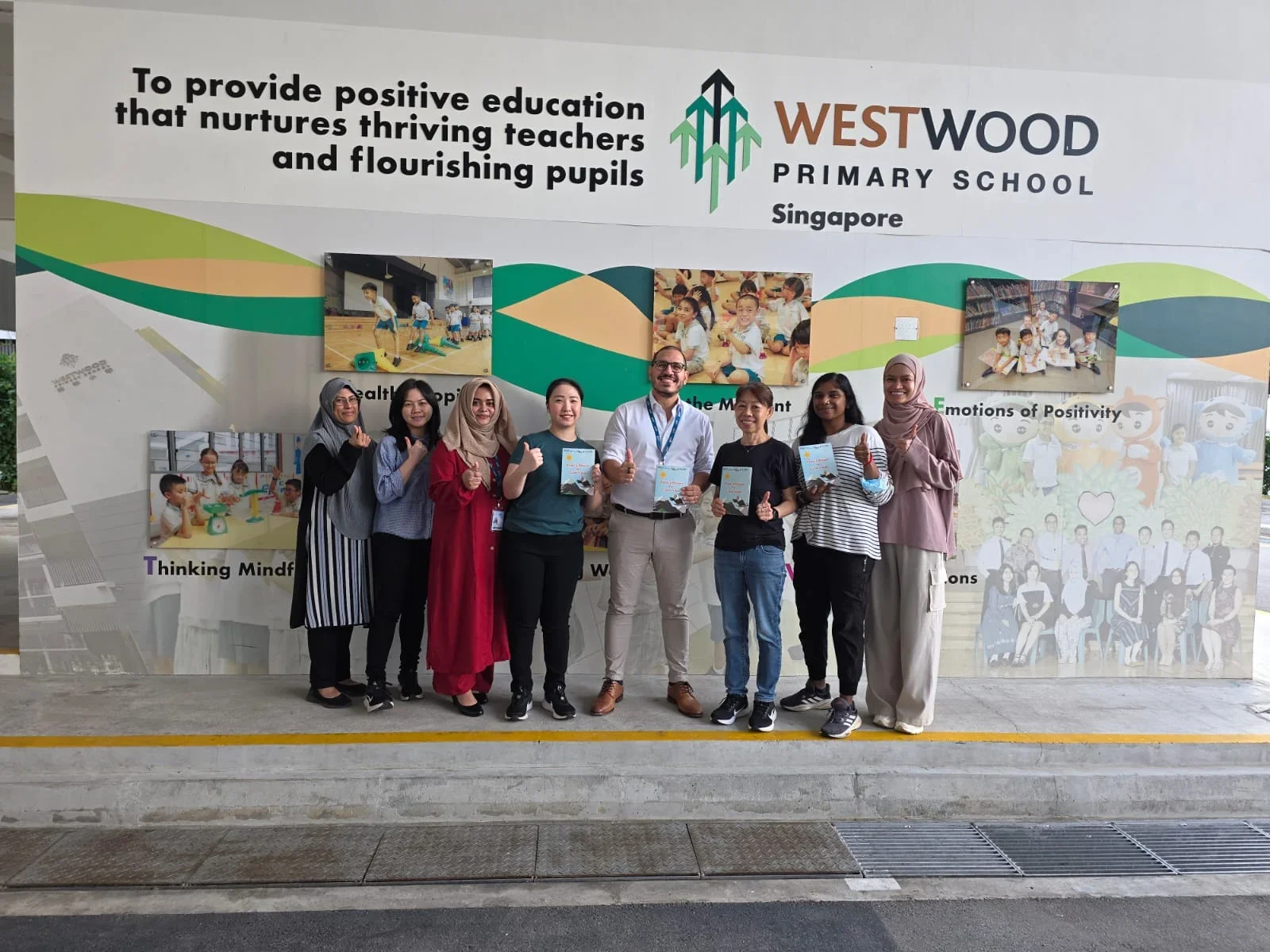
Westwood Primary School: (from left to right) Mdm Iyesha Mahaboob, Ms Ann Ting Tan, Dr Najiya Sundus Kadavath Meethal, Ms Wong Min, Dr Raymond P. Najjar (PI), Ms Huay Leng CHONG (Vice Principal), Ms T Vicknaswari, Mdm Liyana Nur Farah Binte Makribi.
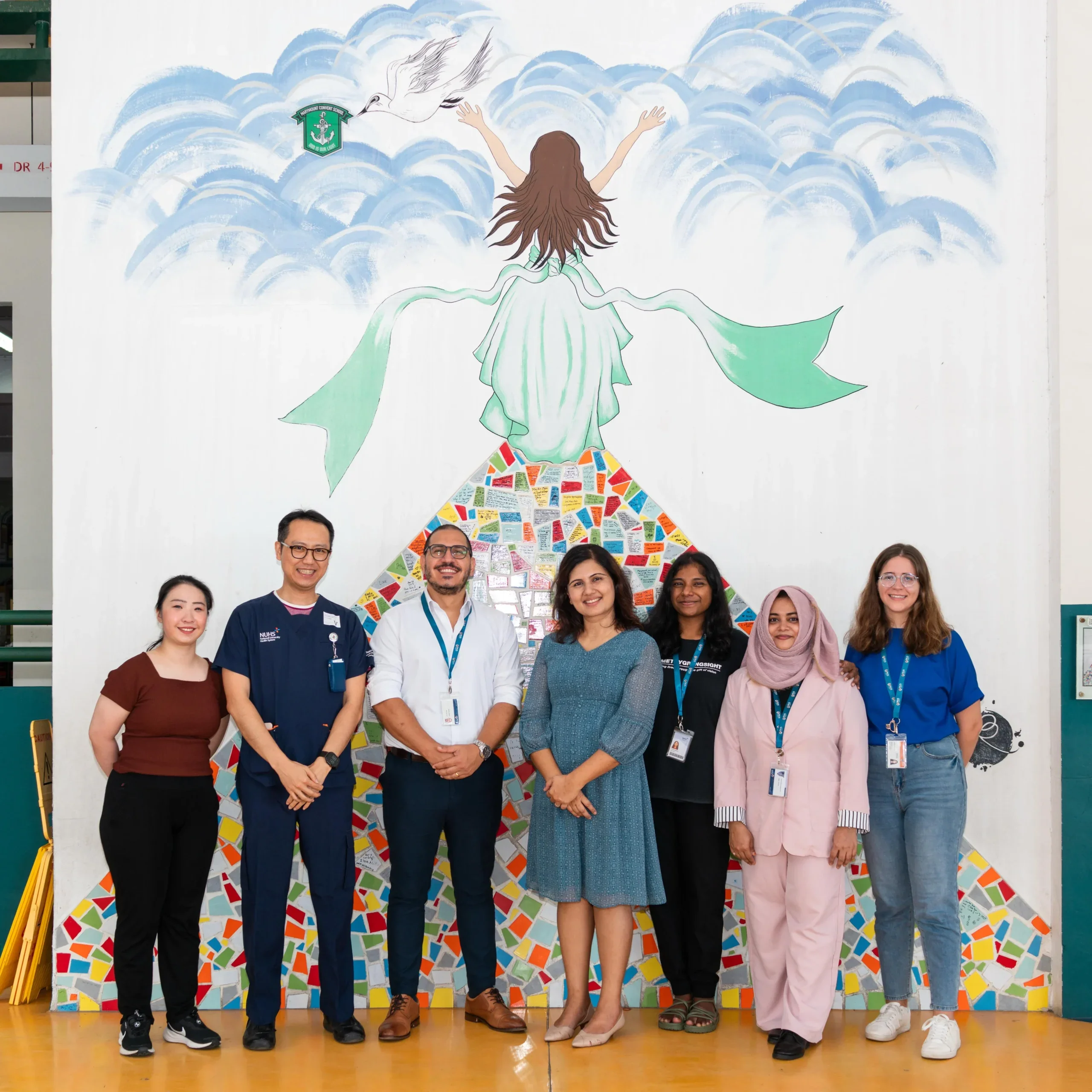
Marymount Convent School: (from left to right) Ms Wong Min, Dr Sun Chen Hsin, Dr Raymond P. Najjar (PI), Ms Sabrina Kaur Jit Singh (Vice Principal), Ms T Vicknaswari, Dr Najiya Sundus Kadavath Meethal, Ms Daniella Mahfoud.
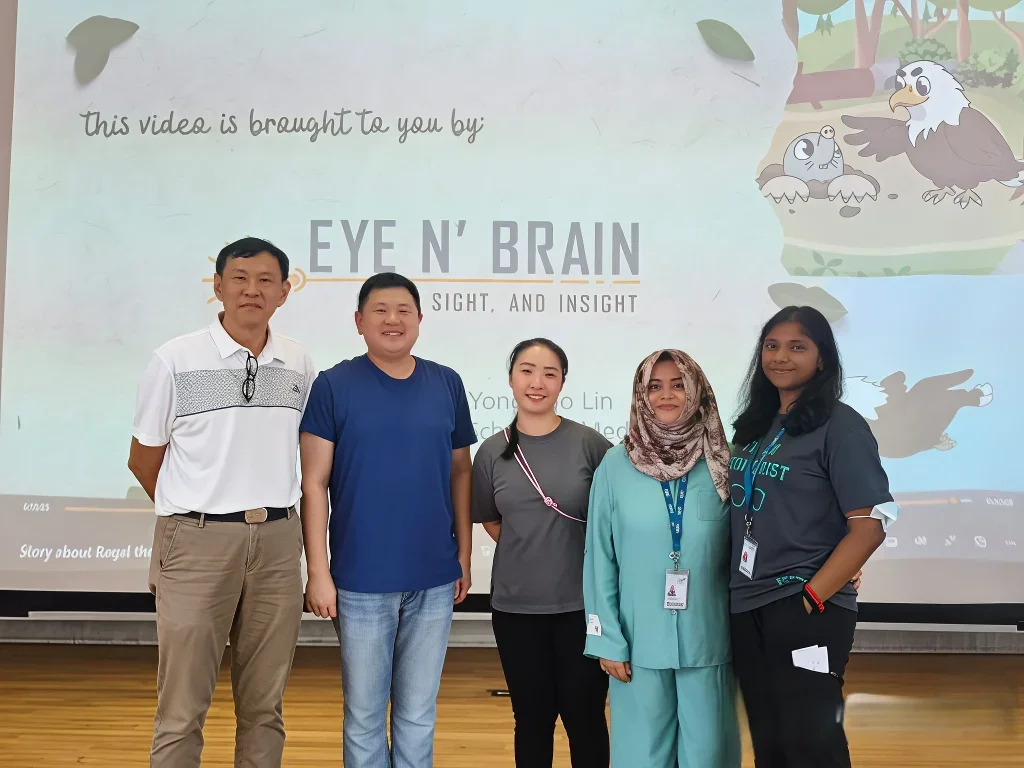
Bedok Green Primary School (BGPS): (from left to right) Mr Chua Kok Seng (Vice Principal), Mr Leow Zi Jian, Ms. Wong Min, Dr Najiya Sundus Kadavath Meethal, Ms. T Vicknaswari.