"If I Lived in the Time of Christopher Columbus, I'd Be an Explorer": Professor Roger Foo's Journey Through Medical Research
Published: 03 Jul 2025
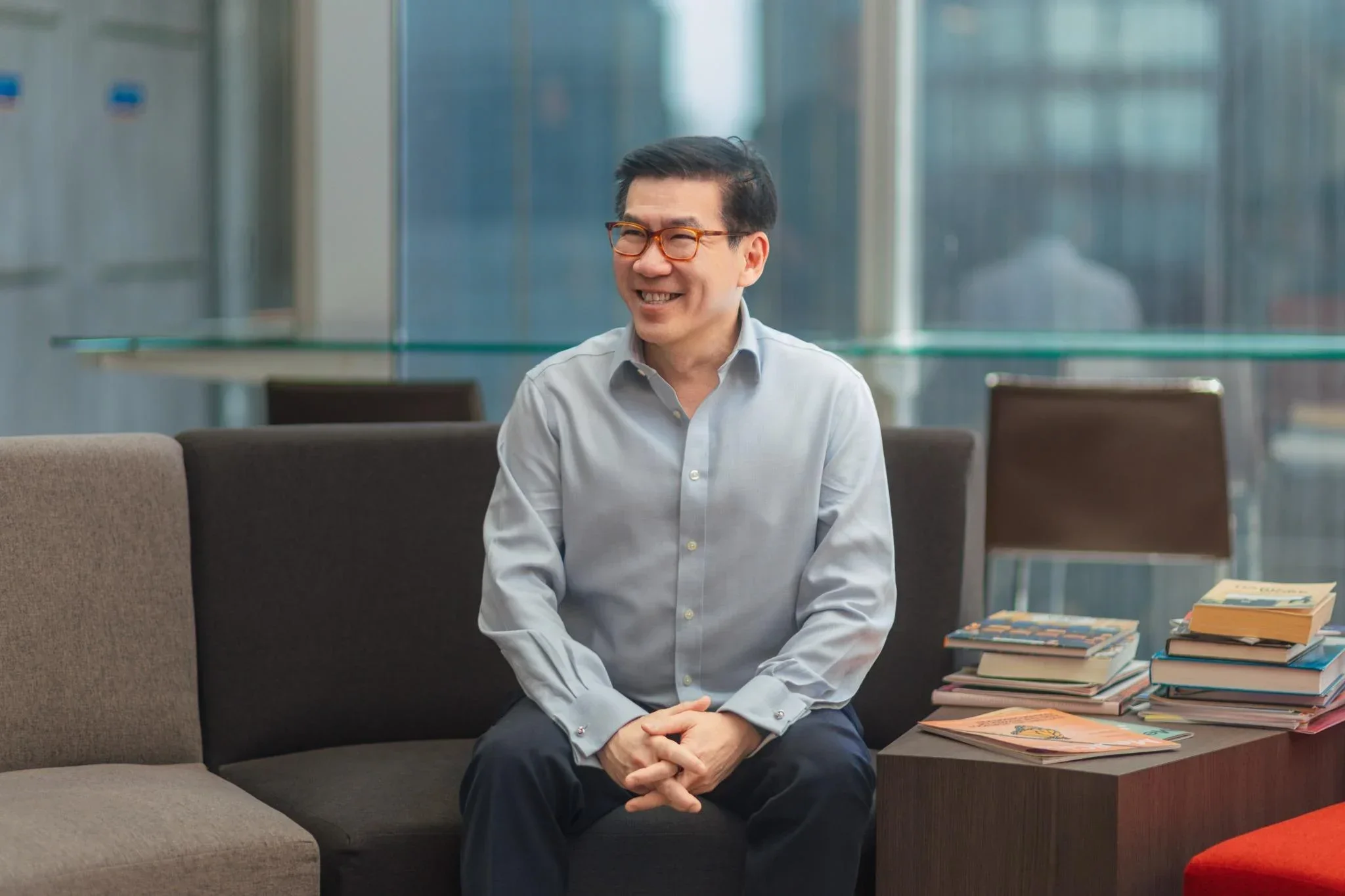
While the age of maritime discovery may have passed, Professor Roger Foo has found his own uncharted waters in cardiovascular research. As Vice-Dean (Research) at Yong Loo Lin School of Medicine, National University of Singapore (NUS Medicine), Prof Foo embodies the spirit of exploration that has driven the institution’s advancements over its 120-year history. In celebration of this significant milestone, his pioneering initiatives in Asian heart health research represent the forward-thinking vision that has established NUS Medicine as a globally recognised leader in medical education, research and healthcare.
From Singapore to the World and Back
The path to becoming a pioneering researcher began in Singapore’s heartlands, where a neighbourhood GP shaped his early understanding of medicine. “He’s very well-respected,” Prof Foo recalls. “A lot of parents, mine included, would point out how his is such a respectable profession.” This early exposure to the impact one doctor could have on a community would later influence his own approach to medical research.
After graduating from NUS Medicine, Prof Foo undertook clinical practice and research in the UK and New York, working with luminaries in cardiac research. Yet a serendipitous stopover in Singapore would change the course of his career.
“You know how you keep your head down and you are chipping away and you never notice what else is going on elsewhere?” he reflects. On transit through Singapore for a job interview in Sydney, what he discovered was a Singapore poised to make its mark in medical research.
The opportunities at the Agency for Science, Technology and Research (A*STAR) and the country’s vision “to go fast and far” convinced him to return. “It was so obvious that I have to do it here,” he says. Singapore’s pragmatic approach to medical research combined with strong institutional support has enabled him to pursue ambitious research projects that might have taken decades to implement elsewhere, or if even.
Project RESET: Uncovering Hidden Disease
Today, Prof Foo spearheads Project RESET, a nationwide preventive heart health study supported by a $25 million grant. The project aims to detect early signs of disease in seemingly healthy individuals through comprehensive screening that examines multiple systems in the body.
“We intend to go deep down into the bottom of the iceberg looking at individuals who are apparently healthy. Once we start screening them deeply, it starts to reveal all manner of early signs of disease,” he explains.
The findings have been startling: “40% of us who appear apparently healthy have fatty liver and nearly 70% of people we are seeing didn’t know they have coronary artery calcification.” These discoveries underscore the urgent need for preventive approaches to heart disease in Singapore.
Using advanced technologies including Artificial Intelligence (AI), smartwatches for continuous monitoring, and CardioSight (a digital dashboard that maps heart attack risk factors), Project RESET is recruiting over 10,000 Singaporeans, with 3,000 selected for a five-year follow-up programme.
Beyond clinical research, Prof Foo’s bench and fundamental science research has also led him to work on charting molecules and genes in heart cells and investigating the regulators and drivers of their cell state transitions. Earlier work from his lab, known as the Foo Lab, generated one of the world’s first maps of the heart genomic “connectome”. Further maps delineated how epigenetics modulate the gene programmes in cells as the heart fails. Today, he focuses on assessing which specific genes are suitable targets for new heart failure treatments.
Interdisciplinary Collaboration
Prof Foo’s approach to research mirrors the collaborative spirit of early explorers. Today, his team includes AI scientists, behavioural scientists, and engineers working alongside clinicians. “The way to push frontiers these days is through interdisciplinary research,” he explains. “One way to think about innovation is that it can happen horizontally, by venturing to the boundaries of your own discipline until you find that intersection where multiple fields converge and create something entirely new.”
One of the most rewarding aspects of his work has been collaborating with young researchers who share his passion for community impact. Among them is Lutfi Zulnizan, a second-year nursing student who has become an important partner in bridging scientific research and public engagement.
Their collaboration began when Lutfi volunteered for outreach activities connected to Project RESET, including community engagement at the Singapore Marathon. Together with professors at the Faculty of Arts and Social Sciences and the Lee Kuan Yew School of Public Policy, they’re addressing a critical disconnect between scientific advancement and public awareness.
A recent survey revealed that while 90% of Singaporeans respect scientists and researchers, but only 16% feel science is relevant to their daily lives. “I was really shocked,” Prof Foo says, “because science shapes our daily existence in the most fundamental ways – from the textiles that clothe us to the purification processes that ensure our drinking water is safe. It’s woven into the very fabric of modern life.” For Prof Foo, bridging this perception gap is essential if scientific discoveries are to be translated into real-world health improvements.
Charting the Course for Asian Heart Health
Looking beyond Singapore, Prof Foo envisions a broader mission for his research: understanding heart disease in the Asian context. “Our work in Asia addresses a critical gap in global heart research,” he explains. “With Asians making up at least half the global population, the knowledge we’re developing here has the potential to transform cardiovascular care for an unprecedented number of people.”
This distinctive Asian perspective drives his team’s approach to research and prevention. Rather than simply applying Western models, they’re developing strategies tailored to Asian genetics, lifestyles, and environmental factors – work that hopes to be piloted in other big platforms like the Health District @ Queenstown before being rolled out nationwide.
“We are trying to change that at NUS Medicine,” says Prof Foo. “By delving deeper and getting a better understanding of how biology, natural history, lifestyles, genetic susceptibility affect therapeutic responses to diseases in Singapore…we can potentially reverse disease trajectories not just in Singapore but Asia.”
For Prof Foo, the expedition continues, guided by the same sense of wonder that first drew him to medicine. Through Project RESET and beyond, he and his team are not just mapping the present landscape of heart disease – they’re charting a course toward a healthier future for Asia.