History of NUS Medicine

1905 - 1921

1905

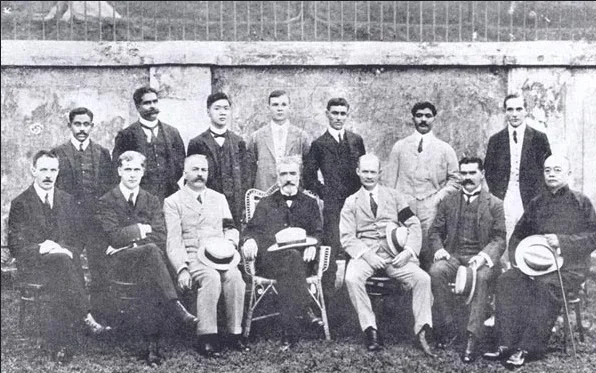
The Straits and Federated Malay States Government Medical School is born at Sepoy Lines, offering a full-time, five-year course to train doctors in Medicine, Surgery and Midwifery.

1905

1910


The pioneering class, comprising seven young men, graduates from the medical school with a Licentiate in Medicine and Surgery.

1910

1911

The second and third graduating classes included one woman each: Eugenie Nunes and Emily Pakiam Hitchcock.

1911

1913


The School changes its name to the King Edward VII Medical School, in recognition of an endowment by the King Edward VII Memorial Foundation.

1913

1918

Ms Lee Choo Neo, aunt of Singapore’s first prime minister Lee Kuan Yew, graduated and was the first female doctor to practice in Singapore.

1918

1921


Another change in name takes place: the medical school is renamed King Edward VII College of Medicine to reflect more accurately its status as an institution that provides tertiary-level education.

1921

1929 - 1962

1929

The Department of Dentistry admits seven students into its four-year course.

1929

1949

The University of Malaya is formed through the amalgation of the King Edward VII College of Medicine and Raffles College and the College of Medicine assumes the identity of a university faculty—the Faculty of Medicine.

1949

1950

The University of Malaya confers its first Degrees of Bachelor of Medicine and Bachelor of Surgery on 17 graduands. The first batch of Bachelor of Dental Surgery graduates.

1950

1959

The University of Malaya begins to function as two autonomous divisions, with one located in Singapore and the other in Kuala Lumpur. The Faculty of Medicine operates as the Faculty of Medicine of the University of Malaya in Singapore.

1959

1962


The Singapore division becomes a fully-fledged university as the University of Singapore. The Kuala Lumpur Division now also a national university, keeps the name of University of Malaya.

1962

1969 - 2005

1969

The School of Postgraduate of Medicine Studies is formed.

1969

1979

The Faculty of Dentistry celebrates 50 years of Dental education.

1979

1980

The University of Singapore merges with the Nanyang University to form the National University of Singapore at Kent Ridge.

1980

1983


The Faculty of Medicine begins its move from Sepoy Lines to Kent Ridge. The entire Faculty of Medicine finds a home on the new campus by 1987.

1983

1985

The National University Hospital is established and serves as the principal teaching hospital for the School.

1985

1991

The Medical Faculty undertakes a much-needed review of its curriculum, leading the setting up of new departments and the reorganisation of the five-year medical course into three distinct blocks.

1991

1997

A further revision of the medical curriculum takes place, with problem-based learning introduced in 1999.

1997

2002

In line with developments in the life sciences, the Faculty of Medicine broadens its entry criteria so that more students will be eligible to study Medicine.

2002

2005


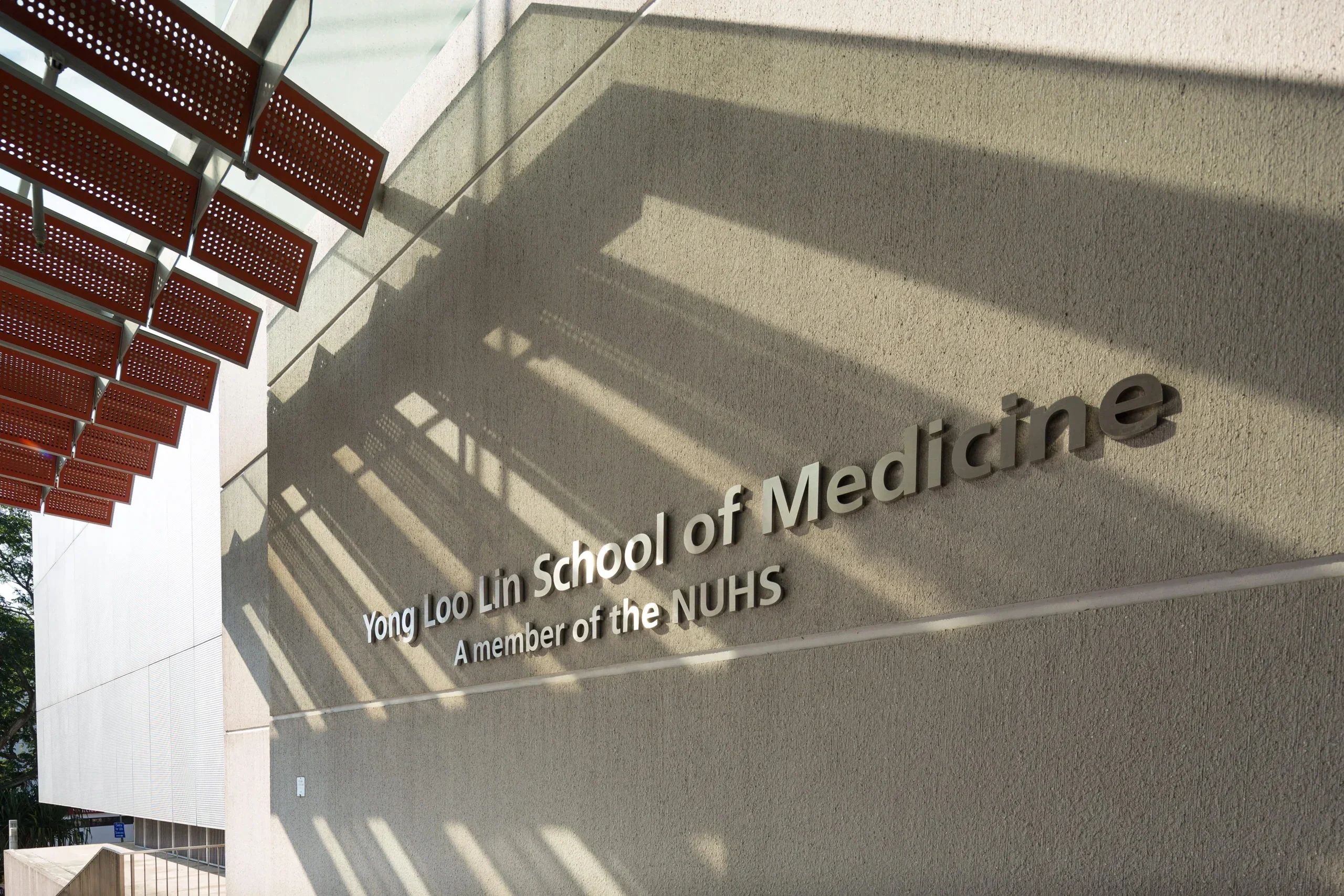
The Faculty of Medicine celebrates its centennial and is renamed the Yong Loo Lin School of Medicine in honour of a transformational gift of S$100 million from the Yong Loo Lin Trust.
The Alice Lee Centre for Nursing Studies is established, with support from a generous gift of S$30 million from the Lee Foundation. The Centre is the only institution in Singapore to offer academic nursing degree programmes ranging from baccalaureate to doctoral levels.

2005

2008 - Present

2008


The NUS Yong Loo Lin School of Medicine joins the NUS Faculty of Dentistry and the National University Hospital to form the National University Health System.

2008

2011

The Department of Epidemiology and Public Health becomes the NUS Saw Swee Hock School of Public Health, following a S$30 million gift from NUS alumnus Professor Saw Swee Hock. With an Asian focus, the School’s strengths include chronic disease epidemiology, statistical genomics and workplace health, as well as a well-developed Master of Public Health Programme.

2011

2012


The Centre for Translational Medicine is officially opened. A focal point for education and research in Singapore, the Centre houses the Medical Library, and laboratories for investigation into diseases important in Singapore, as well as one of the region’s largest simulation centres for medical and nursing students to learn and practise clinical skills.

2012

2013

The Department of Surgery celebrates 100 years.

2013

2015

The School celebrates its 110th year, while the Alice Lee Centre for Nursing Studies marks its 10th anniversary.

2015

2016


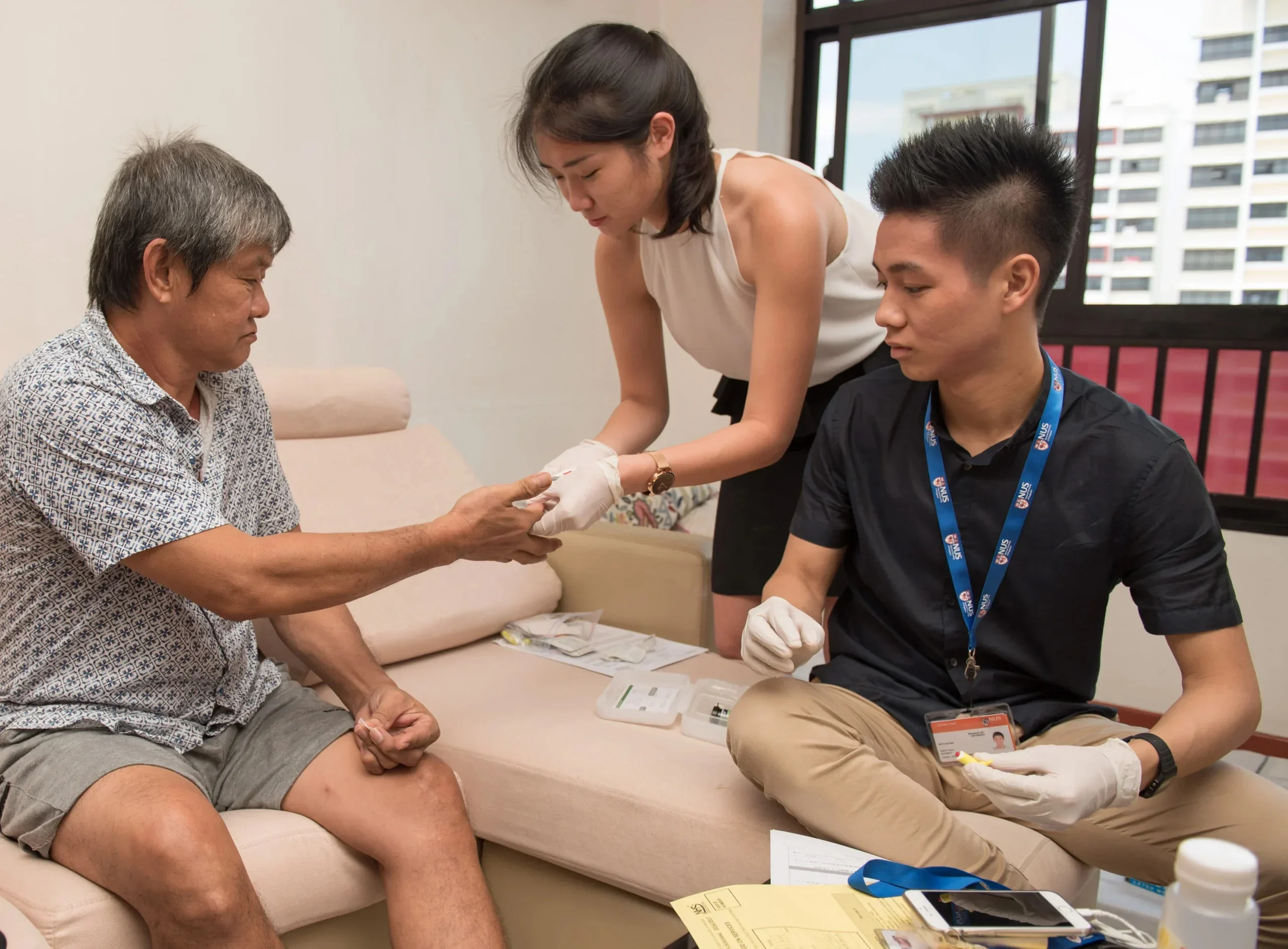
The School commemorates its 10th anniversary of Neigbourhood Health Service. Medical students conduct free health screenings and door-to-door checkups for elderly and lower-income residents at Taman Jurong, marking a decade of community service.

2016

2018


NUS Medicine integrates virtual reality (VR) technology into its anatomy curriculum, enhancing the learning experience by allowing students to explore 3D models of the human body.

2018

2019

To address health conditions and issues relevant to Singapore and Asia, the School reorganises its research into translational research programmes. These ten programmes include cancer, cardiovascular metabolic diseases, digital medicine, healthy longevity, human potential, infectious diseases, immunology, nanomedicine, precision medicine and synthetic biology.

2019

2022

The Department of Anatomy and the Department of Obstetrics and Gynaecology celebrate 100 years.

2022

2023

The Common Curriculum for Dentistry, Medicine, Nursing and Pharmacy undergraduates is established. The curriculum covers topics such as how social and environmental factors influence health outcomes and data literacy for healthcare, with emphasis on patient-centric and relationship-based healthcare in Singapore. Lessons are conducted through blended learning with a mix of online and in-person classes, which will be customised to feature groups as well as individual learning sessions such as case-based discussions, fireside chats and self-reflections.

2023

2025


The School celebrates 120 years. The Departments of Pathology and Physiology also celebrate their 120th year. The Department of Microbiology and Immunology turns 100.

2025

Genesis

On 3 July 1905, following a public appeal for funds led by local businessman and philanthropist Tan Jiak Kim, the Straits Settlements and Federated Malay States Government Medical School was established. In 1913, an endowment of $120,000 from the King Edward VII Memorial Fund saw the institution renamed the King Edward VII Medical School. Nine years later, it became the King Edward VII College of Medicine to reflect its academic standing as a university entity.
In October 1949, the College amalgamated with Raffles College to form the University of Malaya, which became known as the Faculty of Medicine. On 1 January 1962, the University of Singapore was founded. It then merged with Nanyang University to form the National University of Singapore (NUS) on 8 August 1980. In 1985, the Faculty of Medicine became part of the NUS campus at Kent Ridge.
In 2005, the National University of Singapore (NUS) School of Medicine celebrated its Centennial. It was renamed the Yong Loo Lin School of Medicine in acknowledgement of a generous gift from the Yong Loo Lin Trust. In 2008, the School joined the NUS Faculty of Dentistry and the National University Hospital to form the National University Health System (NUHS). The academic health system aims to exploit synergies, explore new models of care, develop multidisciplinary research and educational programmes that enrich faculty and students and benefit patients.

A gift for the ages

In 2005, the National University of Singapore (NUS) School of Medicine marked its Centennial Year, which was underlined with a gift of S$100 million from the Yong Loo Lin Trust. In honour and recognition of this transformational act of philanthropy, the School was re-named the Yong Loo Lin School of Medicine.
The gift enabled the School to realise its goal of strengthening its clinical research work and linking this more closely to the education and training of medical and nursing students. This was done through the development of two key areas, namely infrastructure and the NUS Medicine talent base.
There was significant upgrading of physical infrastructure and facilities. An example is the Centre for Translational Medicine, the School’s flagship building featuring state-of-the-art research and teaching facilities, and which is home to some of the most competitive research programmes.
A portion of the gift was also channelled into developing the School’s talent base by providing the faculty resources to pursue work that would advance medical care.

About Yong Loo Lin

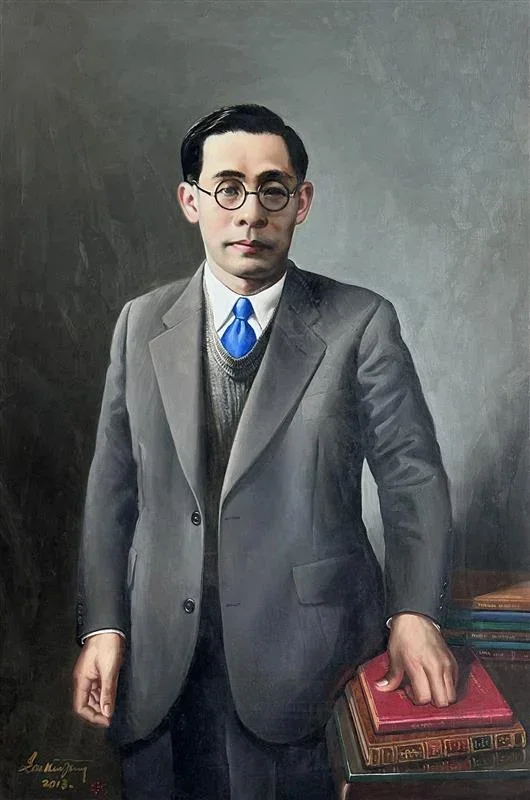
Kuala Lumpur-born Dr Yong Loo Lin graduated as a medical doctor from the University of Hong Kong in 1923. He established himself as a successful businessman in Hong Kong and was a strong advocate of education. Dr Yong passed away in 1959 and the Yong Loo Lin Trust was established by his family. The Trust has since made significant contributions in the name of medicine.
In 1996, S$2.5 million was given to establish the Yong Loo Lin Professorship in Medical Oncology. In 2004, an additional S$1 million was used to convert the Professorship from a visiting to a full-time Chair. In 2003, the Trust gave S$25 million to NUS for a music conservatory, which has been renamed the Yong Siew Toh Conservatory of Music after Dr Yong’s daughter, a music teacher.
The School received a further S$25 million from the Yong Loo Lin Trust to work with the National University Cancer Institute, Singapore (NCIS) in 2013 to develop new models of cancer care through research and education. This gift is meant for the development of better ways to prevent, screen, diagnose, and treat cancer. In appreciation and recognition of the Trust’s latest gift, the NCIS facility at the hospital’s NUH Medical Centre was named the Yong Siew Yoon Wing, the sister of the late Yong Siew Toh.

Click here to read more about the school’s history.